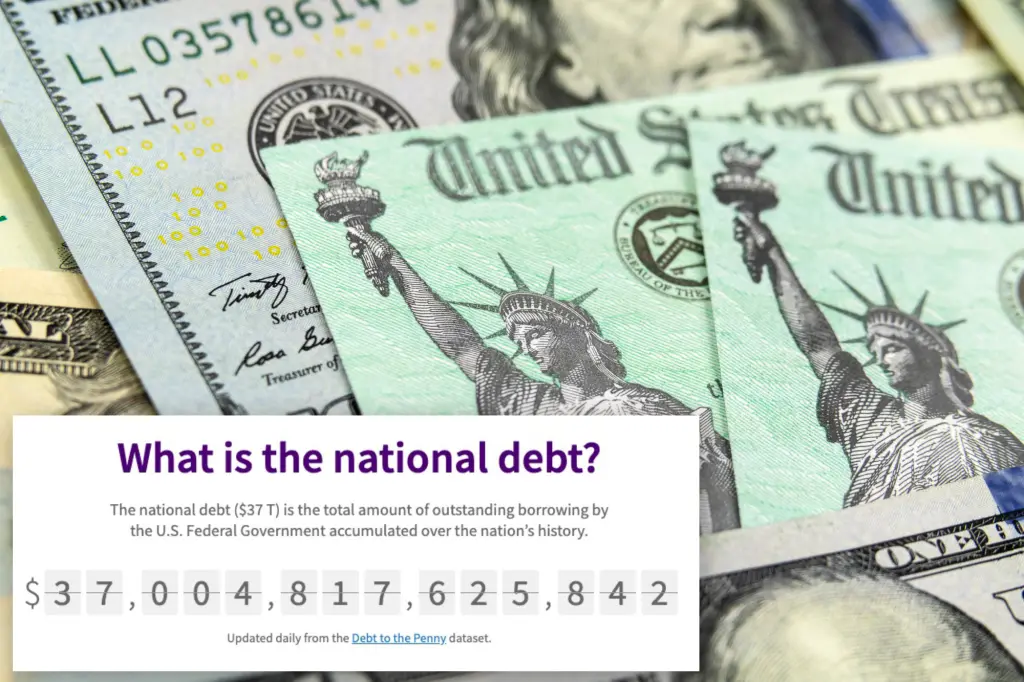
The US national debt has surpassed $38 trillion, growing rapidly due to deficit spending, rising interest costs, and the ongoing government shutdown, raising concerns about fiscal sustainability and economic stability.
The US national debt has surpassed $37 trillion, reaching this record earlier than expected due to rapid borrowing during the COVID-19 pandemic, legislative changes including tax cuts, and rising interest costs, raising concerns about long-term economic stability and government spending priorities.
The US budget deficit for May 2023 reached over $316 billion, increasing the year-to-date shortfall to $1.36 trillion, driven mainly by rising interest costs on the national debt, despite higher tax revenues and tariff collections. The deficit is now over 6% of GDP, raising concerns about fiscal sustainability amid warnings from financial leaders.
The US government posted a budget deficit of $1.695 trillion in fiscal year 2023, a 23% increase from the previous year, driven by falling revenues and increased spending on Social Security, Medicare, and interest costs on the federal debt. This deficit is the largest since the COVID-19 pandemic, and it marks a return to rising deficits after two years of decline under President Joe Biden. The deficit is expected to fuel fiscal battles with Republicans in Congress, who are demanding spending cuts. The Treasury Department also revealed that the deficit would have been even larger if not for the Supreme Court striking down Biden's student loan forgiveness program.
The US government posted a budget deficit of $1.695 trillion in fiscal year 2023, a 23% increase from the previous year, driven by falling revenues and increased spending on Social Security, Medicare, and interest costs on the federal debt. This deficit is the largest outside of the COVID era and marks a return to ballooning deficits after two years of decline. President Biden's proposed foreign aid and security spending, along with demands for spending cuts from Republicans, are likely to fuel fiscal battles. The deficit for September 2023 fell to $171 billion from $430 billion in September 2022.
The Federal Reserve has reported losses exceeding $100 billion, a result of paying out more in interest costs than it earns from bonds and financial services. Experts predict that these losses could potentially double before subsiding, with estimates ranging from $150 billion to $200 billion by next year. The losses are attributed to the Fed's aggressive campaign to raise interest rates, which has led to a net negative income. However, the losses are expected to eventually decrease as the Fed continues to shrink its balance sheet. Despite the losses, the Fed maintains that it can still conduct monetary policy effectively.