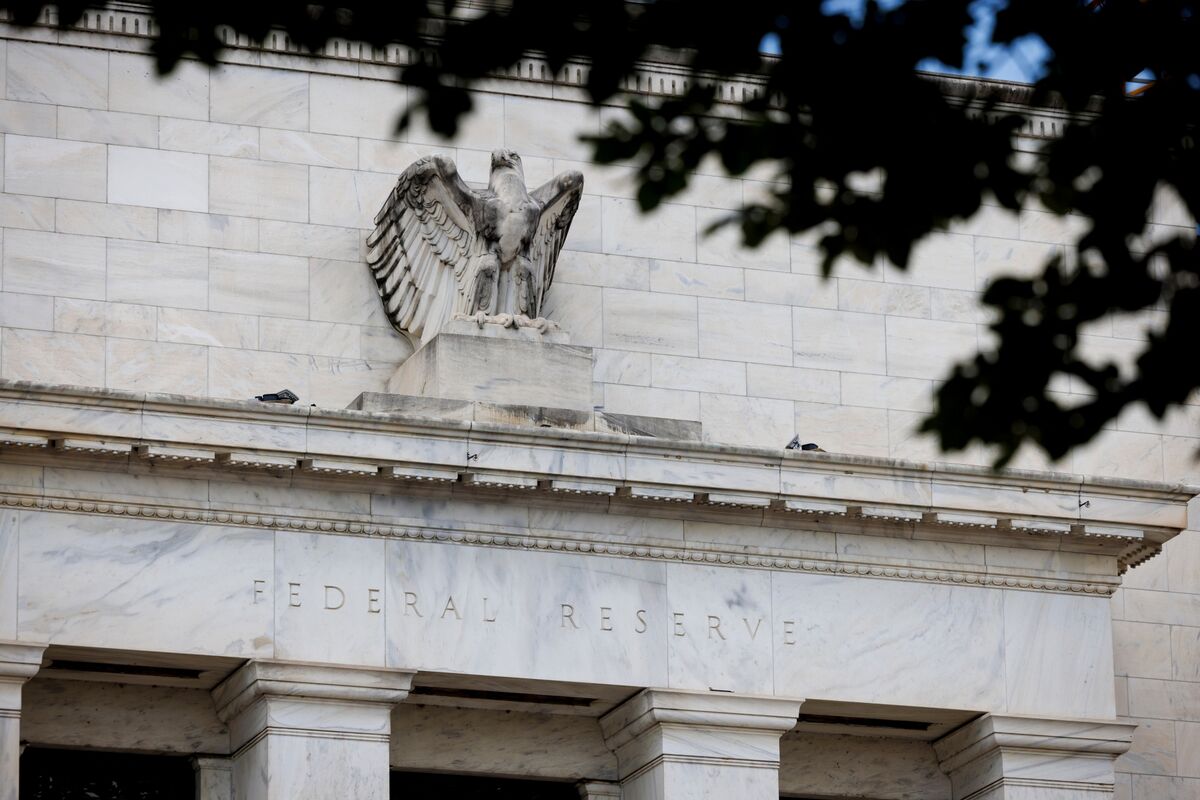
The Federal Reserve announced it will cease shrinking its Treasury holdings starting December 1 after a three-year process, while continuing to reduce mortgage-backed securities, amid rising funding costs and tightening money markets, without immediate plans to inject liquidity into the system.
The article discusses how the Federal Reserve's balance sheet is becoming a focal point amid rising liquidity concerns, with recent volatility in short-term interest rates and signs of potential distress in the repo market, leading to increased use of the Fed's Standing Repo Facility.
The Federal Reserve is considering ending its balance sheet reduction program to prevent market chaos, amid signs of tightening liquidity and rising short-term borrowing costs, which could influence future monetary policy and White House relations.
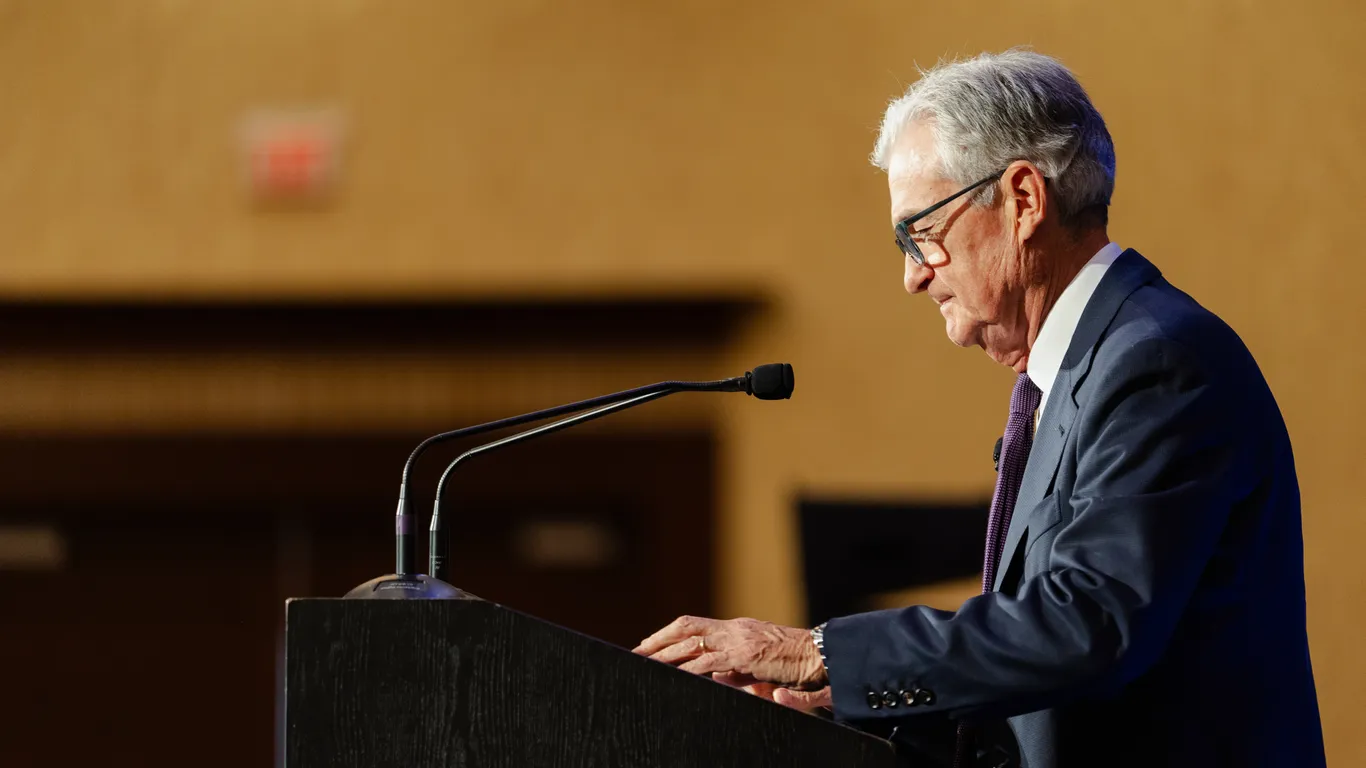
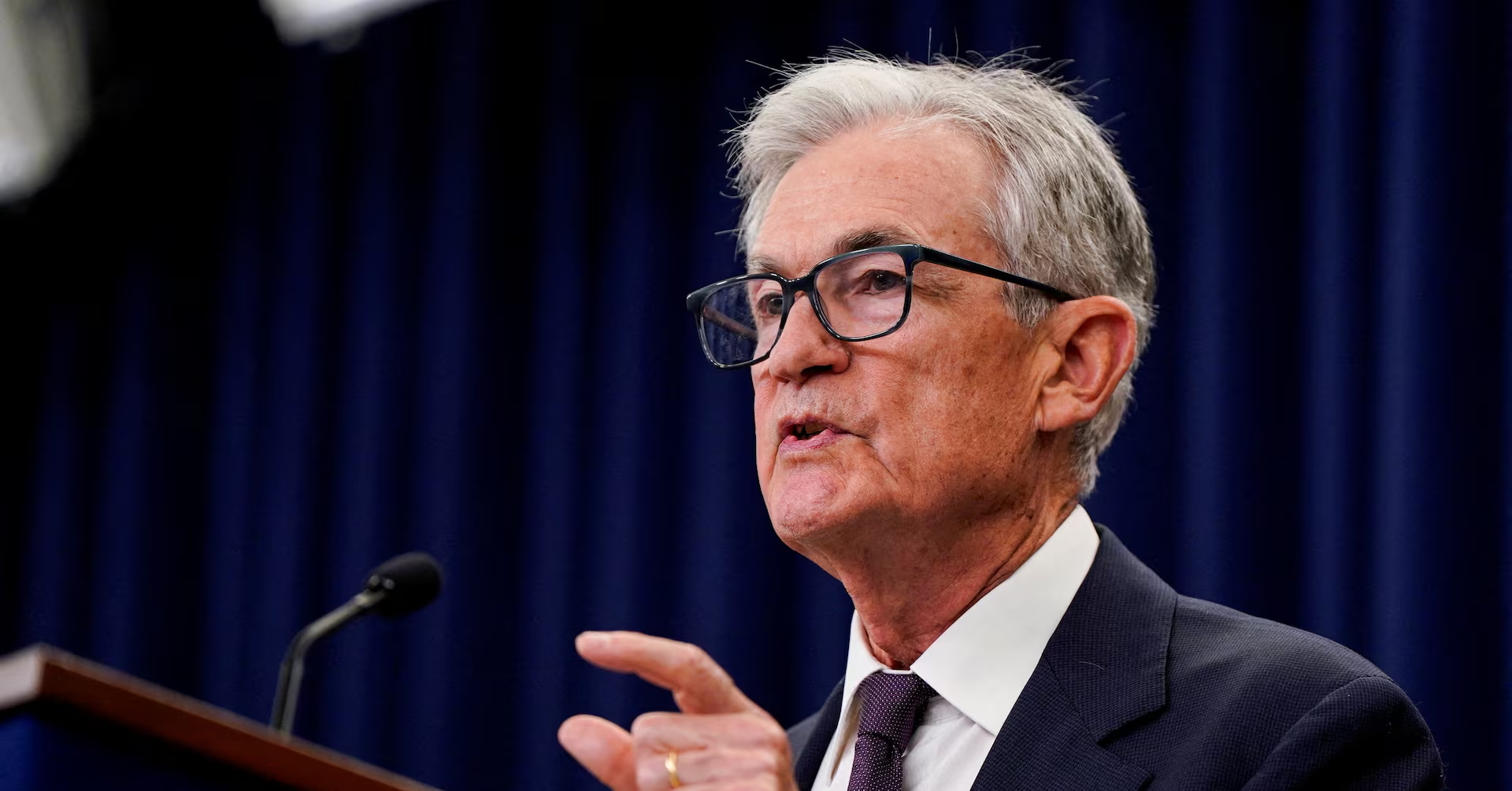
Federal Reserve Chair Jerome Powell indicated that the end of the Fed's quantitative tightening process may be near as liquidity conditions tighten and the reverse repo facility nears zero usage, signaling a potential shift in monetary policy. Powell emphasized the importance of the Fed's balance sheet tools and warned against removing its interest-paying powers, highlighting the delicate balance the Fed maintains to control interest rates and financial stability.
Federal Reserve Chair Jerome Powell indicated that the Fed may halt its balance sheet reduction in the coming months, citing signs of a weakening labor market and ongoing monetary policy adjustments, including interest rate cuts, to support economic stability.
Federal Reserve Chair Jerome Powell indicated that the central bank's quantitative tightening program, which involves reducing its balance sheet, may conclude in the coming months as signs of tightening liquidity emerge, with the Fed taking a cautious approach to avoid market strains.
Chair Powell discussed the Fed's balance sheet management during the pandemic, emphasizing its role in supporting financial stability and economic recovery, and highlighted the effectiveness of the ample reserves framework in controlling interest rates. He also provided an outlook on current economic conditions, noting a cautious approach to policy adjustments amid mixed signals on employment and inflation, and underscored the importance of communication and gradual normalization of the balance sheet.
Federal Reserve Chair Jerome Powell indicated that the Fed is nearing the end of its quantitative tightening process, with no clear guidance on future interest rate moves, emphasizing the importance of monitoring liquidity conditions and maintaining control over rates amid economic uncertainties.
The Federal Reserve plans to relax leverage rules for large US banks, potentially freeing up to $6 trillion in balance sheet capacity and billions in capital, which could boost participation in Treasury markets and improve market liquidity.
Investors are eagerly awaiting the Federal Reserve's policy decision and the updated "dot plot" to see if the central bank still expects three interest rate cuts in 2024, following recent inflation concerns. Fed Chair Jay Powell and colleagues have emphasized the need for sustainable inflation before considering cuts. Additionally, investors are keen to hear about the Fed's plans to slow the shrinking of its balance sheet, a policy tool used to tighten financial conditions, amid fears of market upheaval.
The Federal Reserve is expected to discuss how to slow the shrinking of its balance sheet, a policy tool used to tighten financial conditions and combat inflation. This "quantitative tightening," or QT, involves shedding Treasury and mortgage bonds accumulated during the pandemic, pushing up long-term interest rates. The timing of slowing this balance sheet runoff may depend on the level of money market reserves, with officials aiming to avoid market upheaval experienced in the past. Fed officials view QT and interest rates as separate tracks, with plans for the balance sheet independent of rate cuts.
The Federal Reserve will engage in discussions this week regarding its balance sheet, focusing on when and how to slow the pace of draining excess cash from the financial system. The central bank will consider how much more it can shrink its $7.5 trillion portfolio of assets before potential issues arise, similar to those seen in 2019 prior to a funding squeeze.
The Federal Reserve is considering how to slow the shrinking of its balance sheet, a policy tool used to tighten financial conditions and combat inflation. This "quantitative tightening" involves allowing bonds to mature, which pushes up long-term interest rates. The Fed aims to avoid market upheaval by slowing the pace of its balance sheet runoff, possibly tied to the level of money market reserves. Officials view this strategy as independent of interest rate policy, with some expecting a decision on the balance sheet at an upcoming meeting.
UBS CEO Sergio Ermotti defends the bank's enlarged balance sheet following its takeover of Credit Suisse, stating that concerns are fueled by academic indoctrination and urging the public to consider the low-risk nature of the new entity. Ermotti emphasizes the bank's contribution to the Swiss economy and highlights the need for informed opinions, while acknowledging lingering reservations among the Swiss population.
Federal Reserve Bank of Dallas President Lorie Logan suggests that the Fed may need to slow down the pace of shrinking its portfolio of assets due to dwindling liquidity in financial markets, stating that while there is still sufficient liquidity overall, individual banks could face constraints. She believes it is now "appropriate" to start discussing the parameters for a potential decision to slow the balance-sheet runoff.