Tag

Infrared Vision

All articles tagged with #infrared vision

space1 year ago

"Exploring the Infrared Skeleton: JWST's Breathtaking Images of Galaxies"

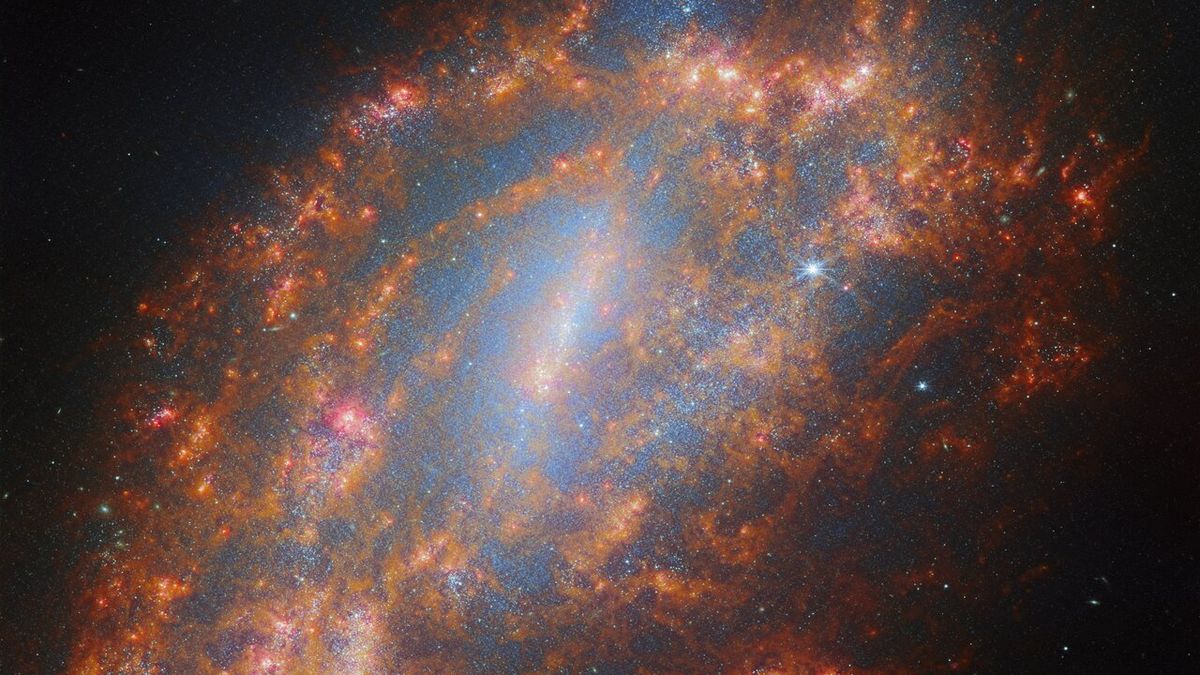
The James Webb Space Telescope's infrared vision has provided a new view of the barred spiral galaxy NGC 1559, revealing its dust skeleton and star-forming regions. The telescope's image is part of the PHANGS project, aiming to understand the life cycle of stars and their interaction with galaxies. NGC 1559, located in a remote area, has been the site of four supernovas, aiding in distance calculations and contributing to the study of the universe's expansion. Additionally, the galaxy hosts ultra-luminous X-ray sources, including a suspected compact binary ULX, making it a significant target for astronomical research.

astronomy2 years ago

JWST Anniversary Image Captures Mesmerizing Birth of Baby Stars

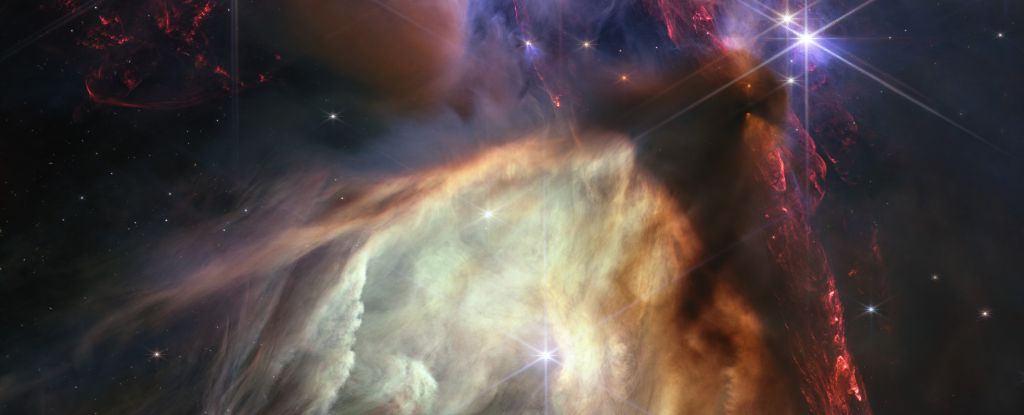
The James Webb Space Telescope (JWST) has captured a stunning image of the Rho Ophiuchi cloud complex, revealing a dense region of baby stars hidden within the dust. The JWST's infrared vision allows it to penetrate the dust clouds and observe the star formation process, providing new insights into the early stages of stellar lifecycle. The image shows 50 stars, including one significantly more massive than the Sun, as well as red bipolar jets of molecular hydrogen and a star carving out a glowing cave of dust. The JWST has revolutionized our understanding of the Universe, from our Solar System to the farthest reaches of space and time.

science2 years ago

James Webb Telescope Uncovers Secrets of the Universe's Origins

The James Webb Space Telescope (JWST) may have discovered evidence of the first stars in the universe, known as Population III stars, which existed when the universe was an infant. Using its infrared vision, the telescope examined the spectrum of galaxy GN-z11 and found signs of extremely hot helium, likely ionized by a mysterious entity. Astronomers believe that gigantic Population III stars were possibly cooking up the ancient elements. The discovery provides crucial pieces of the puzzle, but more information is needed to prove their presence.