
Hyperthermophile's Plasmid Enables Genetic Modification of Archaea
Originally Published 2 years ago — by Nature.com
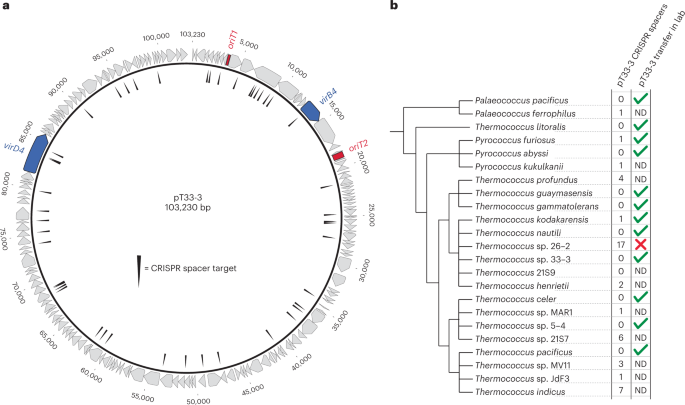
Researchers have discovered a self-transmissible plasmid from a hyperthermophile that can facilitate genetic modification of diverse Archaea. Plasmids are small, circular pieces of DNA that can replicate independently of the host genome and can carry genes that confer advantageous traits such as antibiotic resistance. The plasmid, named pTN1, was found in Thermococcus nautili, a hyperthermophilic archaeon isolated from a deep-sea hydrothermal vent. The discovery of pTN1 could lead to new tools for genetic modification of Archaea, which are important for biotechnology and environmental applications.