The first-ever transoceanic fiber-optic cable is being ripped from the ocean floor, signaling a major renewal of the global internet backbone and highlighting the vast network of subsea cables that carry most intercontinental traffic.
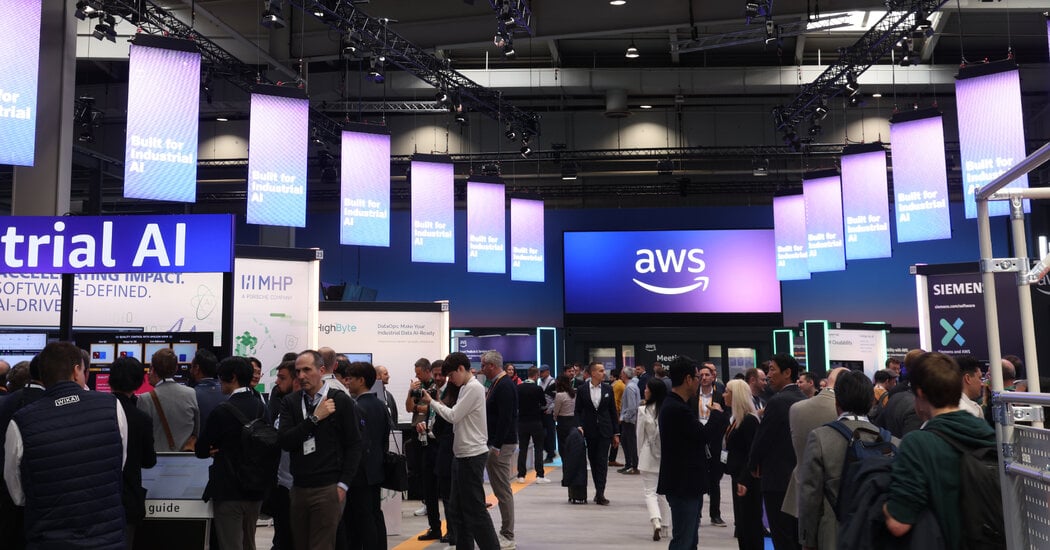
The recent AWS outage highlights the fragility of the global economy's reliance on centralized cloud providers like Amazon, Microsoft, and Google, as a failure in one region caused widespread disruptions across numerous services and companies worldwide, emphasizing the risks of centralization and the importance of resilient infrastructure.
An Amazon Web Services outage caused widespread disruptions for over two hours, affecting major websites and services like Hulu, Snapchat, Venmo, and government sites, highlighting the fragility of global internet infrastructure reliant on a few major providers. Experts warn of the risks of dependence on such cloud services, emphasizing the need for diversification and regional hosting to enhance digital resilience.
A Chinese commercial ship, Yi Peng 3, is suspected of deliberately dragging its anchor to damage undersea internet cables in the Baltic Sea, affecting connections between Sweden, Lithuania, Finland, and Germany. Investigators are exploring whether Russian intelligence ordered the sabotage, though Russia denies involvement. The ship's owner is cooperating with the investigation, and Western officials do not believe the Chinese government was involved. This incident adds to concerns about Russian interference in European infrastructure since the Ukraine invasion.
Betelgeuse, the red giant star in the constellation Orion, could go supernova in the next few decades, according to a new study. The star has entered the carbon fusion phase of its life, which only lasts on the scale of a hundred years for a star that size. Meanwhile, a pictorial guide to computer history shows machines going back to the 1940s, and an online converter helps convert metric drill sizes to fractional and letter-size drills. Finally, One Wilshire Boulevard, a dumpy 1960s skyscraper in Los Angeles, is home to some of the most expensive real estate in the United States as it houses the infrastructure for major telecom carriers and data centers for big players like Amazon, Google, and Netflix.