Tag

Hay Fever

All articles tagged with #hay fever

"Decoding the Symptoms: Distinguishing Between Cold, Allergies, and Covid"

Originally Published 1 year ago — by Express

Featured image for "Decoding the Symptoms: Distinguishing Between Cold, Allergies, and Covid"
Source: Express

As spring brings seasonal illnesses like hay fever, it's important to distinguish its symptoms from those of a cold or Covid-19. The NHS outlines key differences, noting that hay fever may cause itchy, red eyes, while colds can lead to a sore throat and a hoarse voice, and Covid-19 may involve a high temperature, loss of taste or smell, and shortness of breath. Understanding these distinctions can help in choosing the right course of treatment and managing symptoms effectively.


The Dangers of Suppressing a Sneeze: Man Rips Windpipe Open

Originally Published 2 years ago — by Interesting Engineering

Featured image for The Dangers of Suppressing a Sneeze: Man Rips Windpipe Open
Source: Interesting Engineering

A man in the UK suffered a rare injury when he attempted to suppress a sneeze and ended up ripping a hole in his windpipe. The incident occurred while he was driving and had hay fever. Instead of letting the sneeze go naturally, he squeezed his nose and shut his lips, resulting in severe neck pain. The case was reported in the BMJ case reports.

The Dangers of Holding in a Sneeze: Man's Windpipe Rips Open

Originally Published 2 years ago — by Gizmodo

Featured image for The Dangers of Holding in a Sneeze: Man's Windpipe Rips Open
Source: Gizmodo

A man in the UK tore open his windpipe after holding in a sneeze, which is believed to be the first documented case of such an injury. The man, who had a history of hay fever, experienced severe neck pain after stifling his sneeze by pinching his nose and closing his mouth. Medical tests revealed a spontaneous tracheal perforation, a hole in his windpipe. While more serious cases require urgent surgery, the man was treated conservatively with painkillers and allergy medication, and his tear healed completely after five weeks. Holding in sneezes can lead to rare but serious complications, and doctors advise against it.

The Dangers of Holding in a Sneeze: Man Tears Windpipe in Rare Incident

Originally Published 2 years ago — by NDTV

Featured image for The Dangers of Holding in a Sneeze: Man Tears Windpipe in Rare Incident
Source: NDTV

In a rare case, a man tore his windpipe while trying to hold in a sneeze, causing a tiny hole in his windpipe. The force of the suppressed sneeze resulted in a 20 times stronger sneeze, causing significant damage. The man sought medical attention and was diagnosed with surgical emphysema. Although he did not require surgery, he was kept under observation for two days and advised to avoid physically demanding activities. Doctors warn against stifling sneezes and emphasize that windpipe injuries are extremely rare but not impossible.

"Rising Cases of Autumn Sneezing Syndrome: Hay Fever Experts on Alert"

Originally Published 2 years ago — by Daily Mail

Featured image for "Rising Cases of Autumn Sneezing Syndrome: Hay Fever Experts on Alert"
Source: Daily Mail

Medical experts are reporting a rise in cases of Autumn Sneezing Syndrome, also known as allergic rhinitis or hay fever, during the colder months. Many individuals are experiencing sneezing fits and runny noses without other cold or flu symptoms, leading them to believe they have a different illness. The increase in cases may be attributed to higher levels of airborne mould and fungal spores during autumn, which can trigger hay fever allergies. Common triggers include dead vegetation, grass cuttings, compost heaps, and garden sheds. Allergy experts recommend taking antihistamines and using nasal steroid sprays to alleviate symptoms. Showering and changing clothes after being outside in areas with high mould spore levels can also help reduce exposure.

Gut health linked to childhood allergies, study finds

Originally Published 2 years ago — by KTLA Los Angeles

Featured image for Gut health linked to childhood allergies, study finds
Source: KTLA Los Angeles

A study published in Nature Communications suggests that childhood allergies, including eczema, hay fever, asthma, and food allergies, may be caused by disorders in the gut bacteria. Researchers found that all four conditions share a common cause, which is a breakdown in the ecosystem of bacteria, fungi, and archaea in the intestine, leading to compromised gut lining and heightened inflammation. The study also found that antibiotic usage in the first year of life increases the risk of later allergic disorders, while breastfeeding for the first six months is protective. Developing therapies that target gut bacteria interactions during infancy may prevent the development of childhood allergies.

The Progression of Pediatric Allergies: Insights from EHR Data

Originally Published 2 years ago — by NBC News

Featured image for The Progression of Pediatric Allergies: Insights from EHR Data
Source: NBC News

Babies with eczema are more likely to develop food allergies, asthma, and hay fever in a specific order known as the "allergic march," according to a study published in Pediatrics. The research, which analyzed medical records of over 200,000 children, found that eczema was typically diagnosed at 4 months, followed by food allergies and asthma at around 13 months, and hay fever at 26 months. Some children may also develop eosinophilic esophagitis by 35 months. The study highlights the importance of monitoring children with early eczema for other allergies and suggests that preventing eczema could potentially prevent the development of other allergies.

Unusual and Surprising Hay Fever Symptoms and Remedies.

Originally Published 2 years ago — by Daily Mail

Featured image for Unusual and Surprising Hay Fever Symptoms and Remedies.
Source: Daily Mail

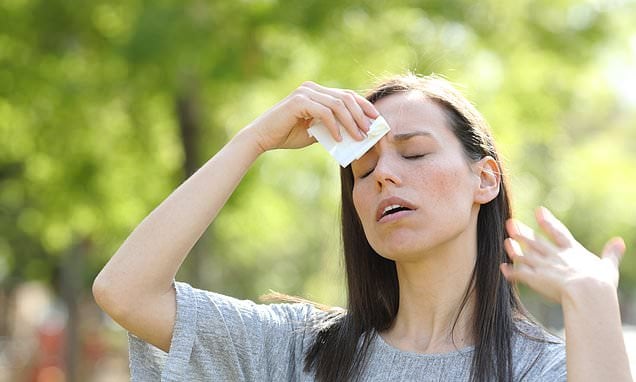
A UK pharmacist has advised on unusual hay fever symptoms to look out for, including excessive sweating, loss of smell and taste, headaches and migraines, face pain, and asthma. Hay fever sufferers may experience these symptoms due to inflammation caused by pollen. While hay fever can be managed with allergy treatments and lifestyle changes, severe symptoms may require medical attention. People with hay fever are also more likely to develop asthma.

Testing Drug-Free Hay Fever Remedies: From Pollen App to Vaseline.

Originally Published 2 years ago — by The US Sun

Featured image for Testing Drug-Free Hay Fever Remedies: From Pollen App to Vaseline.
Source: The US Sun

With hay fever affecting an increasing number of people, drug-free remedies are becoming more popular. Quercetin, a plant pigment found in many foods, has antioxidant and anti-inflammatory effects and acts as an antihistamine for allergies including hay fever. The Klarify: Pollen And Allergy app offers free pollen and air quality forecasts based on location, helping users determine which type of pollen triggers their hay fever. Vaseline can also be used as a balm to trap pollen before it enters the body.

The Increasing Severity of Allergies in Various Regions.

Originally Published 2 years ago — by Daily Mail

Featured image for The Increasing Severity of Allergies in Various Regions.
Source: Daily Mail

Allergy seasons are getting longer and pollen levels are rising, causing many Americans to reach for over-the-counter medication to treat their allergies. However, these medications come with side effects that can disrupt daily life, and overuse can be dangerous. This guide breaks down the most common OTC allergy medications, including Benadryl, Claritin, Allegra, Zyrtec, and Sudafed, explaining how they work, their forms, side effects, dangers, and effectiveness. It's important to follow recommended dosages and consult with a doctor before taking any medication.

The Worsening Allergy Season: Pollen Counts Increase and Mental Health Impacts

Originally Published 2 years ago — by Daily Mail

Featured image for The Worsening Allergy Season: Pollen Counts Increase and Mental Health Impacts
Source: Daily Mail

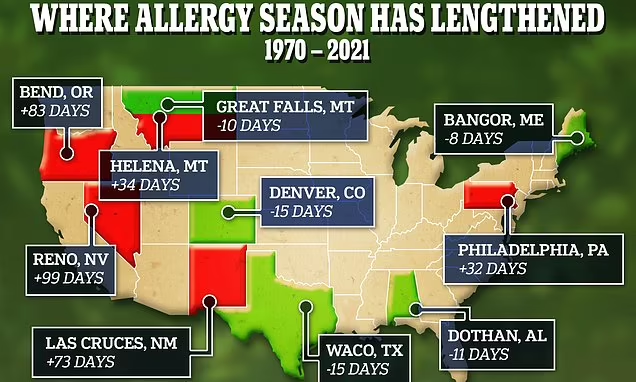
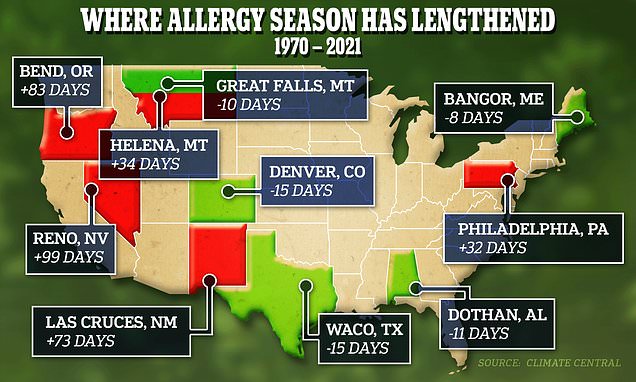
Allergy season is getting longer and stronger, with pollen counts increasing by 21% across the US since 1990, according to new data. Over 85% of US cities have seen their allergy seasons lengthen by an average of 15 days since 1970. For those in Reno, Nevada, allergy season has extended by a hefty 99 days. An extended stint of pollen exposure can have significant health ramifications for those affected by seasonal hay fever, which hits roughly 26% of adults and 19% of children. Climate change is believed to be a contributing factor to the worsening of allergy season.

The Science Behind the Intensified Allergy Season

Originally Published 2 years ago — by KXLY Spokane

Featured image for The Science Behind the Intensified Allergy Season
Source: KXLY Spokane

Warm weather has caused an explosion of pollen levels this spring, causing allergies to worsen in some parts of the US. Oak trees in the Southeast are contributing to record-high levels of pollen early in the season. Invasive plants such as Dalmatian toadflax and Johnsongrass can also trigger allergies and aggravate hay fever. Pollen from weeds, grasses, and trees are the primary sources of pollen that can cause allergies.

Pollen season wreaks havoc on allergy sufferers across the US.

Originally Published 2 years ago — by The Wall Street Journal

Featured image for Pollen season wreaks havoc on allergy sufferers across the US.
Source: The Wall Street Journal

This year's allergy season is particularly severe, causing discomfort for both those with diagnosed allergies and those without. The pollen season started earlier and more forcefully than usual in some parts of the US, leading to wheezing, sneezing, and irritated eyes. Allergic rhinitis, or hay fever, is an allergic reaction to irritants such as airborne pollens or molds that often occur in the spring.

Navigating Spring Allergies: Expert Tips and Forecasts.

Originally Published 2 years ago — by The Jerusalem Post

Featured image for Navigating Spring Allergies: Expert Tips and Forecasts.
Source: The Jerusalem Post

Spring brings beautiful flowers and pleasant weather, but also seasonal allergies and insect bites. Symptoms of hay fever include runny nose, cough, red/itchy eyes, and more. Insect bites can cause skin reactions and infections. Practical solutions include using insect repellent, nets on windows, and mosquito repellent preparations. Contact a doctor for a diagnosis and appropriate treatment, which may include ointments, drops, or anti-allergy medicines. Understanding symptoms is important to avoid unnecessary treatments and medications.