A study across Southeast Asia reveals a concerning rise of antibiotic-resistant superbugs in newborns, with high rates of resistance to standard treatments, especially among Gram-negative bacteria, highlighting the urgent need for updated guidelines and new antibiotics to combat neonatal infections.
Researchers at Uppsala University in Sweden have identified a new class of antibiotics that targets an enzyme essential to the functioning of gram-negative bacteria, which are known for their resistance to antibiotics. In tests on mice, the antibiotic showed promise in eliminating drug-resistant E. coli and K. pneumoniae infections with just one dose, offering hope in the fight against antibiotic resistance. The study's findings are significant as gram-negative bacteria pose a major threat due to their resistance to broad-spectrum antibiotics, and the new antibiotic class could potentially address this critical health challenge.
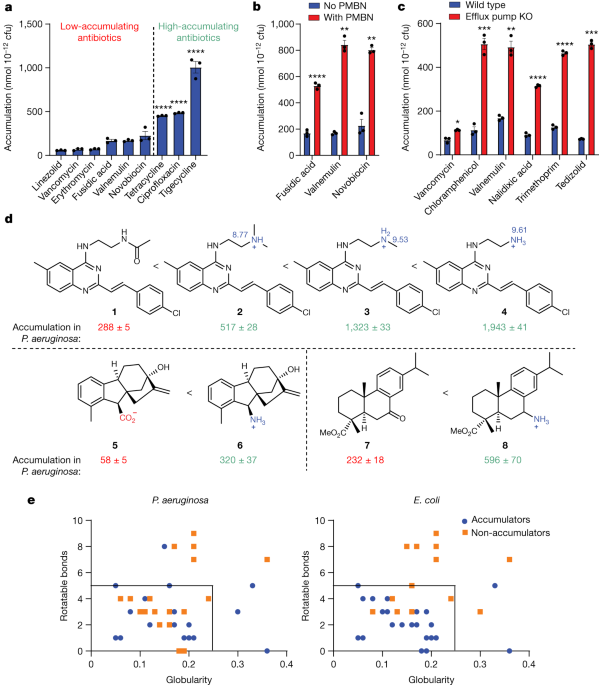
Researchers have discovered a porin-independent accumulation mechanism in Pseudomonas bacteria that enables the discovery of new antibiotics. Porins are outer membrane proteins that regulate the entry of molecules into the bacterial cell, and their presence has been a major barrier to developing effective antibiotics. By bypassing the need for porins, the researchers were able to identify compounds that accumulate in Pseudomonas cells and exhibit broad-spectrum antibacterial activity. This discovery opens up new possibilities for combating drug-resistant Gram-negative bacteria.
An antibiotic called streptothricin, developed 80 years ago but abandoned due to toxicity concerns, is being revisited by researchers at Harvard University. Now known as nourseothricin, one of its components, streptothricin F (S-F), has shown promise in killing drug-resistant gram-negative bacteria without toxicity. The antibiotic works by interfering with the protein-making machinery of the bacteria. Researchers hope to enhance streptothricins to develop a new class of antibiotics to combat highly resistant bacteria.
Scientists at Duke University have developed a synthetic molecule called LPC-233 that has shown promise in combating drug-resistant gram-negative bacteria, including Salmonella, Pseudomonas, and E. coli. The compound disrupts the synthesis of the bacterial outer membrane, leading to the bacteria's inability to survive. LPC-233 has demonstrated effectiveness in animal tests, reducing bacterial viability by 100,000-fold within four hours. It has also shown durability and the ability to reach the urinary tract, making it a potential treatment for stubborn urinary tract infections. The compound is now being prepared for phase 1 clinical trials to assess its safety and efficacy in humans.
Researchers have discovered that Nourseothricin, an old antibiotic, could be effective against drug-resistant Gram-negative bacteria. Improved purification techniques have identified less toxic forms of the antibiotic, specifically Streptothricin-F, that show strong activity against these bacteria by inducing translation errors in the bacterial ribosome. This finding offers a unique approach to combating difficult-to-treat infections and could potentially provide a new strategy to fight against multidrug-resistant pathogens.
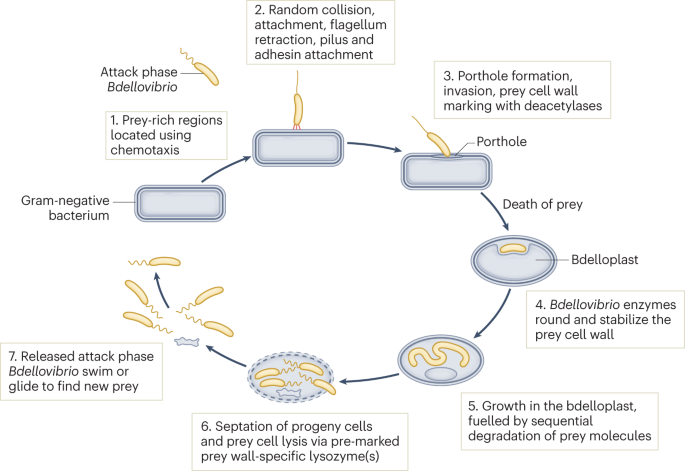
Liz Sockett discusses the fascinating predatory bacterium Bdellovibrio bacteriovorus and the lessons learned from studying its interactions with Gram-negative bacteria. Bdellovibrio has revealed intricate molecular processes, strategies to avoid getting trapped inside prey, and its ability to invade and kill diverse bacteria in natural environments, including pathogens inside hosts.
A forgotten antibiotic called streptothricin, which was abandoned due to its toxicity to human kidneys, could be a solution to the emerging threat of drug-resistant superbugs. Researchers have now established that one of its compounds, called S-F, is highly effective at killing drug-resistant gram-negative bacteria but at concentrations that are not toxic. S-F managed to kill off a strain of bacteria that has proved resistant to numerous existing drugs, all with minimal to no toxicity. Researchers are exploring how to enhance natural streptothricins to work even better as superbug killers.