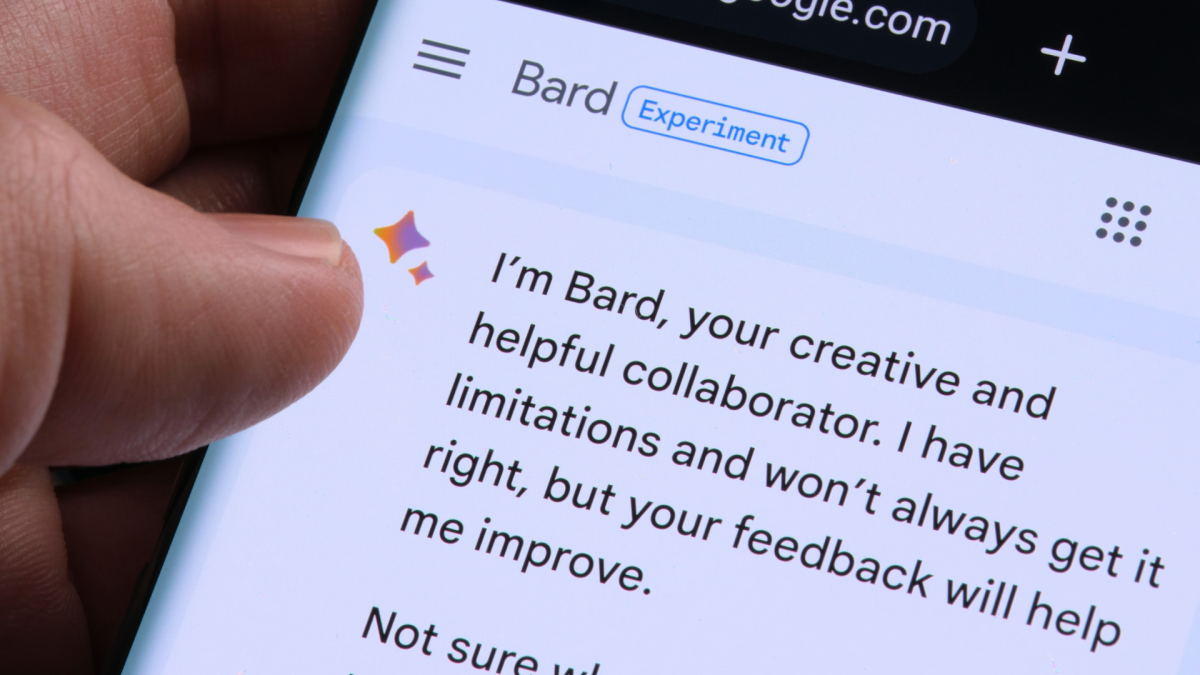
Google Bard, Google's AI chatbot, now allows users of its free version to create AI-generated images using the Gemini Pro and Imagen 2 model, promising "photorealistic outputs." Users can simply prompt the chatbot to create an image on the Bard website, and while the quality of the results may vary, the system typically offers different style options for each prompt. Notably, the images generated will bear a digital watermark from Google's SynthID, indicating their AI-generated nature.
Google Bard is set to be renamed as Gemini, with a dedicated Android app and integration into apps like Gmail, Google Maps, and YouTube. A leaked update also hints at a paid subscription tier called Gemini Advanced, and the possibility of chatting with the AI in Google Messages. This move suggests that Google's AI assistant could soon be integrated into various apps, potentially making it one of the biggest weeks for Google's AI projects.
Google's conversational AI tool Bard has been upgraded to include an image generation feature, allowing users to input prompts and receive custom visuals in response. While the tool generally produces relevant images, it's not always accurate and has safeguards in place to prevent the creation of inappropriate or offensive content. Additionally, Google is expanding Bard's availability to more than 40 languages and territories, along with adding a fact-checking feature.
Despite Google Bard's supposed safeguards to prevent the generation of images of named people, a user was able to easily create an image of Taylor Swift using the AI image generating capabilities. The user's prompt, designed to test Bard's safety guardrails, successfully produced an image of Swift eating a hot dog. This incident highlights the challenges of moderating generative AI models and the potential dangers of AI-generated images, especially for public figures. Google has not responded to requests for comment on the matter.
Google Bard has introduced a free AI image generator feature powered by its updated Imagen 2 model, allowing users to create photorealistic images by entering English prompts. The tool is available worldwide except in certain regions and is designed to prevent commercial use through digitally identifiable watermarks. Google Bard's AI capabilities are also being enhanced, potentially replacing Google Assistant, as Google plans to remove 17 features from Assistant.
Google has finally made its AI image generator, Imagen 2, available to the public, allowing users to create images from text using the new ImageFX tool. The company has also integrated Imagen 2 into Google Bard, enabling the chatbot to generate high-quality images. To address concerns about misuse, Google has implemented guardrails to prevent the generation of inappropriate content and will watermark all images with SynthID for identification.
Large language models like Microsoft Copilot and ChatGPT are facing threats such as model collapse, legal challenges from copyright holders, and the potential for manipulated data injected by independent creators and hostile state governments. The rush to profit from AI without considering the negative outcomes and fostering a healthy relationship with human creators may lead to a future where AI exacerbates global issues and economic instability. Despite the potential positive aspects of AI, the lack of forethought and consideration for potential harm could result in a timebomb for AI corporations.
Google Bard, Google's AI assistant, is developing new features including 'Create Bots', 'Gallery', 'Tasks', a sharing option, and 'Power Up'. These features aim to enhance user interaction by allowing bot creation, exploring topics, improving prompts, sharing queries, and assisting with searches. The exact functionalities of some features remain speculative, but they indicate a more customizable and collaborative AI experience.
Michael Cohen, former lawyer for Donald Trump, inadvertently submitted fake AI-generated legal case citations to a New York judge, which he obtained through Google Bard, mistaking it for a reliable search engine. The false citations were part of a motion to end Cohen's court supervision early, after his conviction on charges including tax evasion and campaign finance violations. Cohen's current attorney, David M. Schwartz, did not verify the citations before submission, leading to an investigation by the court. This incident marks the second time this year that Manhattan federal court has dealt with fake legal citations from AI, highlighting the risks of emerging legal technologies.
Michael Cohen, in a court document, admitted to unintentionally sending his former attorney, David Schwartz, fake legal case citations generated by an AI tool called Google Bard. Cohen, not being a lawyer, assumed Schwartz would verify the information before submission. Schwartz, on the other hand, mistakenly thought the cases were found by Cohen's current attorney, Danya Perry, and did not independently review them. Perry clarified she had no involvement with the citations. The issue arose when a federal judge questioned the existence of the cited cases in Cohen's request for early termination of supervised release. Both Cohen and Perry emphasized that there was no intent to mislead the court.
Google Bard is a strong competitor to OpenAI's ChatGPT, offering an AI chatbot powered by the latest Gemini language model. Bard supports over 40 languages and can answer questions, help with coding, and solve math problems. It also offers multimodal search and internet access for up-to-date information. While Bard is free to use currently, an advanced option utilizing Gemini Ultra will be introduced in 2024. Bard's accuracy has improved, but users should still verify information. Overall, Bard is a solid alternative to ChatGPT, with a similar interface and functionality. Google is continuously working on improving Bard and exploring other AI-driven systems.
Google Bard product lead Jack Krawczyk addressed concerns about artificial intelligence (AI) in an interview, stating that computers now do things with people rather than just for them. He emphasized that AI is not meant to replace humans but to accelerate creativity and improve outcomes. Krawczyk highlighted the use of AI in job hunting, where it can help find open positions and prepare individuals for interviews. He also discussed the positive impact of Google Bard in the workplace, with users reporting increased productivity and higher-quality work. Krawczyk emphasized the importance of responsible and ethical use of AI, acknowledging the need for continuous evaluation of its societal, psychological, and ethical implications.
Google has released an update to its AI-powered platform, Bard, which includes new math and data visualization features. The expansion aims to provide a safer and more enriching educational experience for English-speaking teenagers. Bard now offers step-by-step guidance for solving math problems and the ability to create informative charts from user-generated data. Common Sense Media has introduced an AI ratings system, with Bard receiving three stars for its creative applications but also raising concerns about potential biases and misinformation. Marketers are reminded to align AI-generated content with ethical practices when targeting younger users.
Google is launching Bard access for teens with safety guardrails in place, allowing them to use the language model with appropriate content. Safety features are implemented to prevent unsafe or inappropriate content from appearing in responses. Google will run a double-check response feature to evaluate the accuracy of Bard's answers and promote critical thinking skills. Teens will have a tailored onboarding experience with access to Google's AI Literacy Guide and an overview of Bard Activity. Bard can be used for various purposes, including finding inspiration, learning new hobbies, and explaining complex concepts. New features include step-by-step explanations for math equations and the ability to generate charts from data.
Google Bard, a conversational AI chatbot developed by Google, now has a "respond in real time" option, allowing users to see responses as they are being created. This feature saves time and includes a "Skip response" button if the answer is not helpful. Google is also expected to bring Bard's AI capabilities to an updated version of Google Assistant in the future.