Google Labs has unveiled an upgrade to its Gemini Pro AI tool, enabling it to process up to 1 million tokens, making it theoretically 700% more powerful than OpenAI’s GPT-4 model. This enhancement sets a new benchmark for large language models, with the ability to handle vast amounts of information in one go. The upgrade also incorporates Mixture of Experts technology for faster and higher quality responses. While the stable version will handle up to 128K tokens, the move solidifies Google's position in the AI industry's ongoing competition.
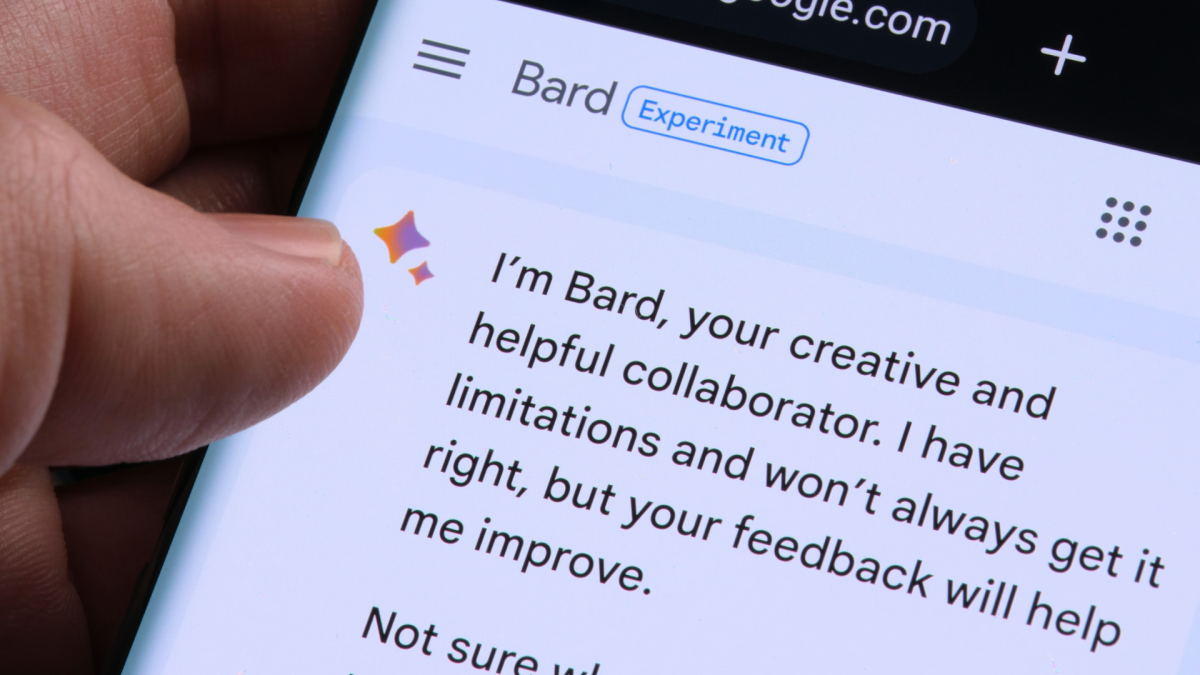
Google Bard, Google's AI chatbot, now allows users of its free version to create AI-generated images using the Gemini Pro and Imagen 2 model, promising "photorealistic outputs." Users can simply prompt the chatbot to create an image on the Bard website, and while the quality of the results may vary, the system typically offers different style options for each prompt. Notably, the images generated will bear a digital watermark from Google's SynthID, indicating their AI-generated nature.
Google's conversational AI tool Bard has been upgraded to include an image generation feature, allowing users to input prompts and receive custom visuals in response. While the tool generally produces relevant images, it's not always accurate and has safeguards in place to prevent the creation of inappropriate or offensive content. Additionally, Google is expanding Bard's availability to more than 40 languages and territories, along with adding a fact-checking feature.
Google's Bard AI, now equipped with Gemini Pro in multiple languages, can generate images using the Imagen 2 model, providing high-quality, photorealistic outputs. The AI embeds digitally identifiable watermarks into the images and allows users to cross-check its responses with Google search results in over 40 languages. It has been praised by evaluators as one of the top-performing conversational AIs, marking a significant advancement in its capabilities.
Google's Bard chatbot is now powered by the Gemini Pro model globally, supporting over 40 languages, and has been updated to improve understanding, summarizing content, reasoning, brainstorming, writing, and planning. The chatbot will now be available in more than 230 countries and has introduced image generation support through the Imagen 2 model, with a SynthID digital watermark embedded in the images. Additionally, Google has extended support for more than 40 languages and integrated Bard's AI capabilities into Google Assistant, while also opening up Bard in English to teenagers with content restrictions.
Google has made its AI-powered code completion and generation tool, Duet AI, and Gemini Pro generally available. Duet AI now includes support for datasets from 25 partner companies, while Gemini Pro offers capabilities for log summarization, error explanation, and automated test generation. Google positions these tools as complementing coding skills and increasing productivity. Meanwhile, GitHub announced that GitHub Copilot Chat will become generally available in December as part of the current GitHub Copilot subscription.
Google has launched Gemini Pro for developers and enterprises through AI Studio and Vertex AI, offering a 32K context window and supporting text input/output. Gemini Pro Vision is also available, accepting text and image input to output text. The tools are free to use with a 60 requests per minute quota, and Google plans to use the data to improve the model. Gemini will be integrated into other developer tools and consumer-facing products in the future. Pricing for Google AI Studio and Vertex AI will be $0.00025 per 1K characters or $0.0025 per image of input.
Google has made its top-of-the-line artificial intelligence program, Gemini Pro, available as a preview version in its AI Studio programming tool and Vertex AI for enterprise users. Gemini is part of Google's AI hyper-computing infrastructure and utilizes the Tensor Processing Unit (TPU) for enhanced performance. The AI Studio allows individuals and small teams to build applications using natural-language prompting, while Vertex AI is designed for enterprise use with access to corporate data sources. Google Cloud also announced the availability of TPU v5p, which offers four times the performance of the previous version. Gemini Pro is one of three versions, with Ultra in private preview and Nano set for release on mobile devices. Additionally, Google introduced Imagen 2, an enhanced text-to-image neural network, available in the Vertex AI feature called Model Garden.
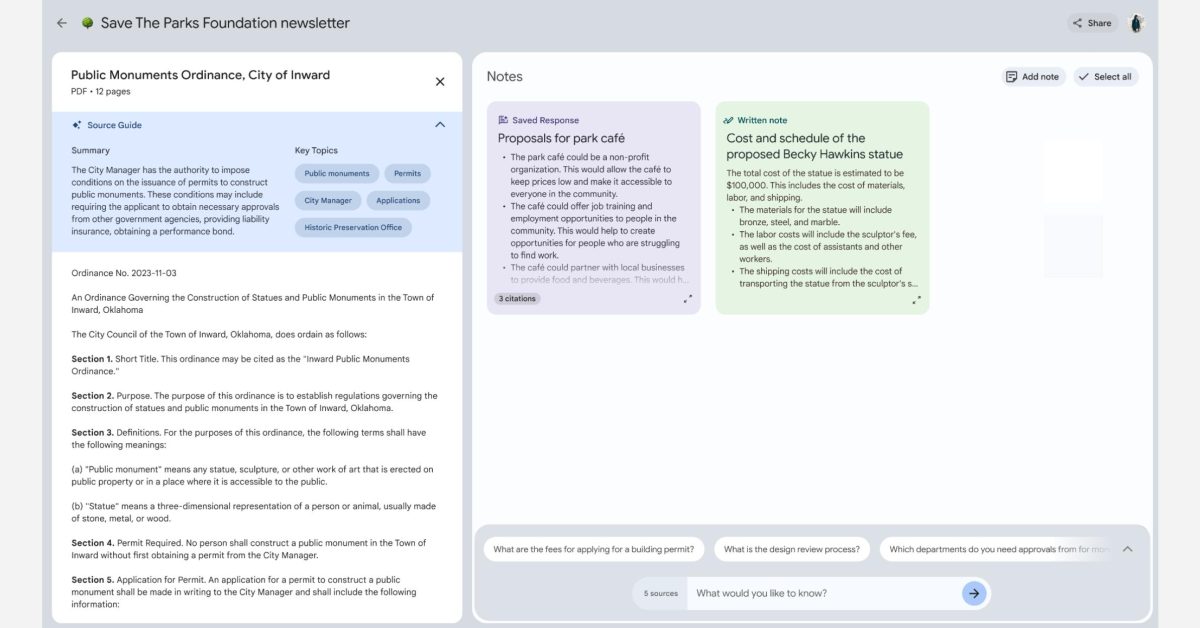
Google has expanded the availability of its AI note-taking service, NotebookLM, to all US users aged 18 and up. The service, based on Google's Gemini Pro AI, allows users to upload documents and receive AI-generated summaries and follow-up questions. NotebookLM also offers new features such as turning chatbot interactions into notes, organizing curated notes into structured documents, and providing dynamic suggestions for actions. Google considers NotebookLM an experiment and welcomes user feedback to improve the service.
Google's new AI language model, Gemini Pro, has been integrated into its chatbot, Bard, to compete with OpenAI's ChatGPT. A comparison was made between the two chatbots using a series of questions. While both chatbots performed well in areas such as math problems and handling ambiguous writing, ChatGPT outperformed Bard in coding problems. Overall, Bard won three out of seven questions, but its refusal to complete a programming task resulted in a hollow victory.
Google is making its AI-powered notebook, NotebookLM, publicly available to users in the US starting December 8. NotebookLM uses Google's new Gemini Pro AI model and allows users to upload their own sources for more accurate responses. The notebook has received 16 new features based on feedback from early access testers and can now save interactions as notes with relevant citations. Google is also adding suggested actions to NotebookLM, which will dynamically change based on user interactions.
Google has announced that its AI-assisted note-taking app, NotebookLM, is now available to all users in the United States. The app, which uses Google's new large language model, Gemini Pro, can generate summaries and suggest follow-up questions based on uploaded documents. New features include tools to help users organize their notes into structured writing projects, the ability to pin quotes from chats or written notes, and the option to hide the source for a distraction-free experience. NotebookLM now supports up to 20 sources and a source can include up to 200,000 words.
Google has officially launched NotebookLM, an "AI-first notebook" powered by Gemini Pro. NotebookLM offers features such as auto-generated summaries, suggested follow-up questions, and the ability to save responses, excerpts, and notes. Users can select multiple notes and prompt NotebookLM to summarize, combine, or export them. The tool also dynamically suggests actions based on user activities, such as summarizing selected passages or offering writing tools. NotebookLM now allows users to chat with specific information sets and increases the per source notebook limit to 100. Additional usability updates are rolling out in the coming weeks.