Tag

Global Climate

All articles tagged with #global climate

business7 months ago

China’s Solar Overcapacity: A Double-Edged Sword for Industry Profitability

Chinese solar manufacturers face a significant overcapacity issue due to aggressive investments, leading to falling prices and profits. While this glut has caused financial strain domestically, experts suggest that leveraging this excess capacity for global renewable deployment could help meet climate goals and boost China's soft power. The industry is expected to stabilize as production constraints are implemented, but the overcapacity may persist, presenting both challenges and opportunities for China's role in global clean energy efforts.
climate-science1 year ago

"Warning: Impending Catastrophic Tipping Point for Atlantic Ocean Current"

Scientists have modeled a potential climate tipping point involving the collapse of the Atlantic Meridional Overturning Circulation (AMOC), which could lead to severe global climate repercussions, particularly impacting Europe. The collapse could result in a deep freeze in parts of Europe, with temperatures plunging by up to 30C, while the southern hemisphere would experience rising temperatures and changes in rainfall patterns. The study suggests that the AMOC tipping point could be closer than previously thought, but more research is needed to determine the likelihood and timeframe of such an event.

science2 years ago

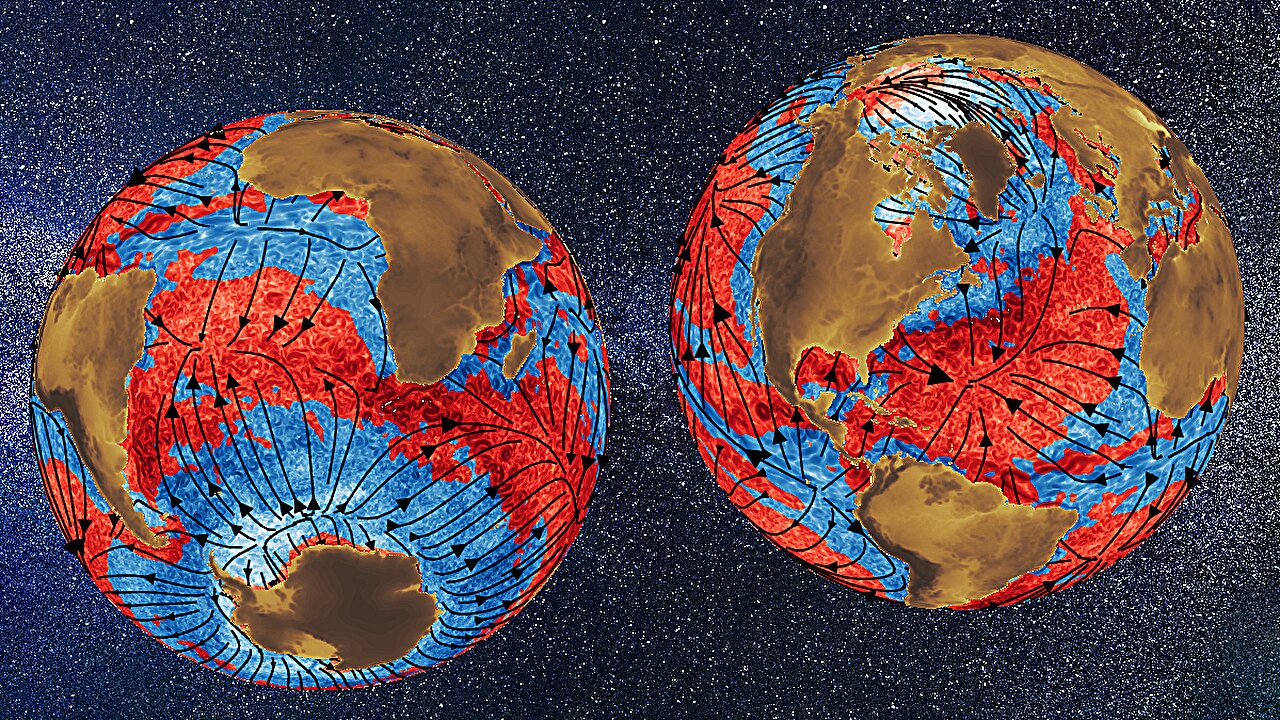
Mechanical analysis reveals ocean weather's impact on global climate

Scientists have discovered a direct link between ocean weather systems and global climate, using a mechanical analysis approach instead of statistical methods. The study, led by researchers at the University of Rochester, found that oceanic weather patterns interact with climate scales, with energy transfer occurring in a pattern that mirrors the global atmospheric circulation. The researchers also identified the role of the intertropical convergence zone in producing ocean turbulence. This mechanistic analysis provides a promising framework for understanding the climate system and its connection to extreme weather events.

science2 years ago

The Impact of Phytoplankton Physiology on Global Climate

A new study explores the relationship between phytoplankton physiology and global climate. Phytoplankton, tiny photosynthetic organisms in the ocean, play a crucial role in the global carbon cycle. Variations in phytoplankton physiology, particularly nutrient uptake, can impact the chemical composition of the ocean and atmosphere, potentially affecting global climate. The study emphasizes the importance of variable stoichiometry of phytoplankton for regulating dissolved oceanic nutrient ratios and highlights marine oxygen levels as a critical regulator in the Earth system. Understanding these connections could help scientists make more accurate predictions about the future of ecosystems and climate.

climate-change2 years ago

Antarctic Deep Ocean Warming Poses Global Climate Threat.

Deep ocean waters in Antarctica are warming and shrinking at an alarming rate, with significant consequences for the global climate and the world's oceans. The Antarctic Bottom Water, the coldest and densest water mass on the planet, has shrunk by 20% over the past 30 years, while shallower waters warmed at a rate five times higher than the rest of the global ocean. The shrinking of deep waters in Antarctica can have far-reaching consequences, from reducing the ocean's ability to absorb carbon to decreasing the oxygen supply to abyssal waters, affecting deep ecosystems.

environment2 years ago

Antarctic Ice Melt Threatens Oceans for Centuries

Rapidly melting Antarctic ice could cause a decline of up to 40% in deep ocean water flows by 2050, which could have disastrous effects on global climate, the marine food chain, and even the stability of ice shelves. The “overturning circulation” of the oceans, which helps deliver heat, carbon, oxygen, and vital nutrients around the globe, could be threatened by the decline. The study warns that the effects of the decline could last “for centuries to come” and that the world urgently needs to reduce greenhouse gas emissions to avoid disaster scenarios.

environment2 years ago

Antarctic ice melt threatens global ocean currents.

Rapidly melting Antarctic ice is causing a dramatic slowdown in the flow of water through the world's oceans, which could have a disastrous impact on global climate, the marine food chain, and even the stability of ice shelves. The deep ocean water flows from the Antarctic could decline by 40% by 2050, according to a study published in the journal Nature. The effect of meltwater on global ocean circulation has not yet been included in the complex models used by the IPCC to describe future climate change scenarios, but it is going to be considerable.