The FDIC has approved a proposed rulemaking to establish application procedures for FDIC-supervised institutions seeking to issue payment stablecoins under the GENIUS Act, including application review, processing timelines, and an appeal process, with public comments open for 60 days.
The GENIUS Act, enacted in July, is expected to lead to significant deposit withdrawals from traditional banks as stablecoin yields become more attractive, potentially causing a $6.6 trillion shift and challenging the banking sector's profitability, with big tech companies exploring stablecoin issuance to capitalize on this trend.
Tether launches USA₮, a U.S.-regulated stablecoin under the GENIUS Act, aiming for significant growth in the American market, while Circle rapidly increases USDC supply and Japan’s JPYC targets ¥1 trillion in stablecoin holdings, reflecting a global expansion in the stablecoin sector.
The US passed the GENIUS Act, regulating stablecoins by requiring full backing with cash or Treasury bonds, audits, and AML compliance, while banning interest payments, which has sparked a high-stakes clash with the banking industry.
The U.S. Department of the Treasury has issued a request for public comments on the implementation of the GENIUS Act, which aims to establish a comprehensive regulatory framework for stablecoin issuers and promote U.S. leadership in digital assets, focusing on innovative tools for detecting illicit activity involving digital assets.
The U.S. has enacted the GENIUS Act, establishing federal rules for stablecoins, prompting major financial firms like Bank of America and Fiserv to consider issuing their own tokens. While this legal framework aims to facilitate the use of stablecoins for payments and cross-border transactions, experts highlight significant strategic, technical, and regulatory hurdles, including compliance costs, blockchain choices, and the timing of regulatory implementation.
The recent legislation on stablecoins, which mandates they be backed by safe assets like U.S. Treasuries, could inadvertently trigger a financial crisis by increasing foreign capital inflows, exposing banks to crypto sector risks, and reinforcing dollar dominance, ultimately heightening the likelihood of systemic banking issues and global economic instability.
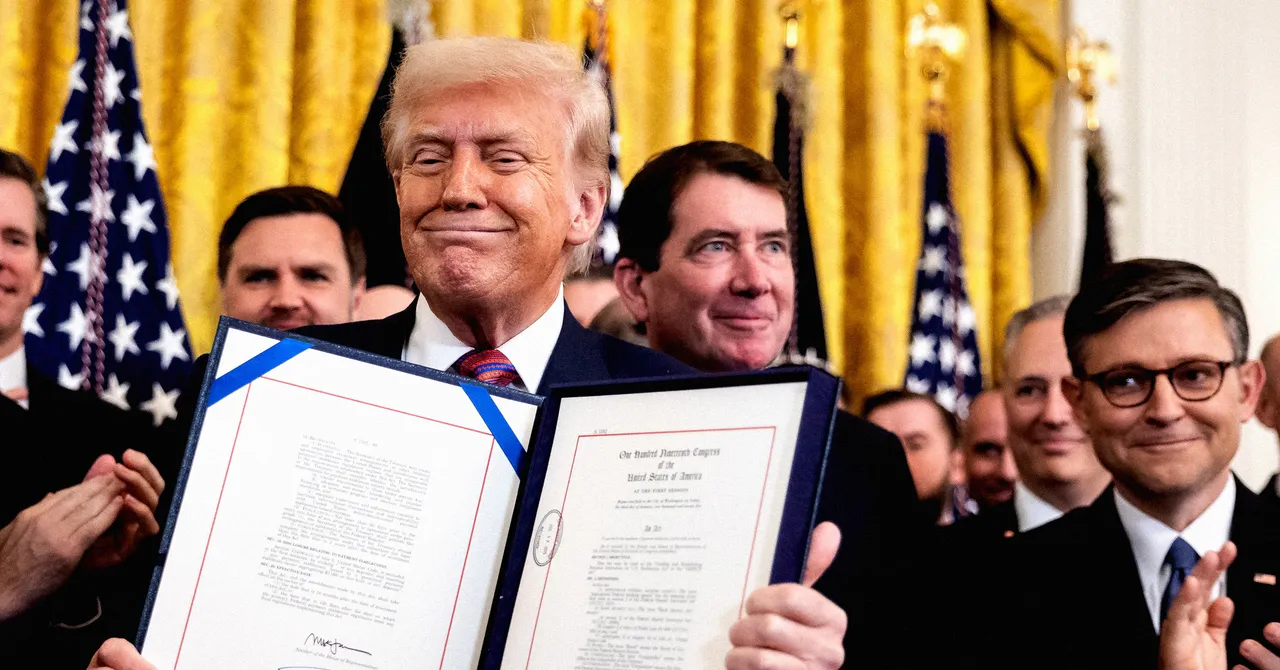
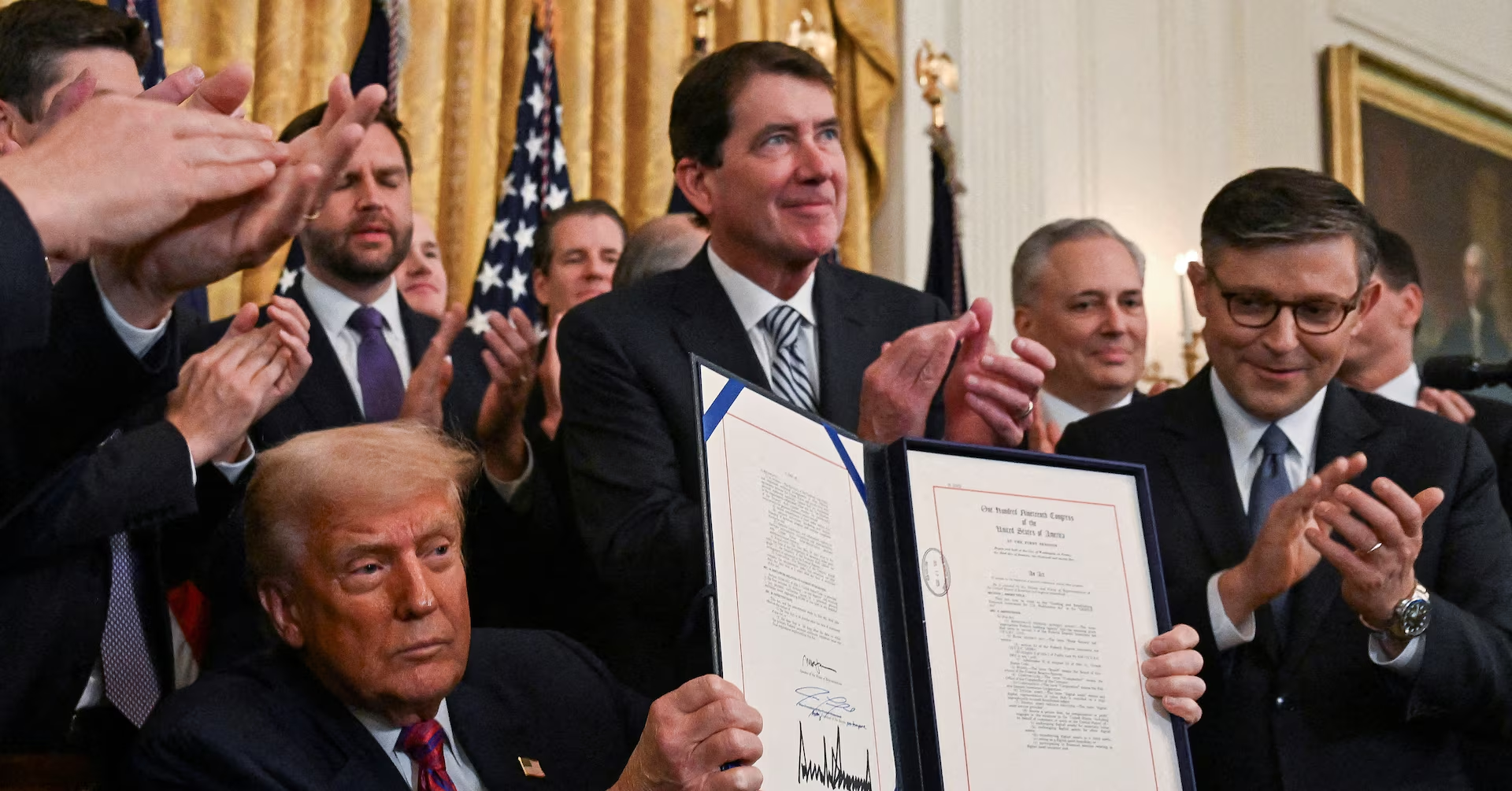
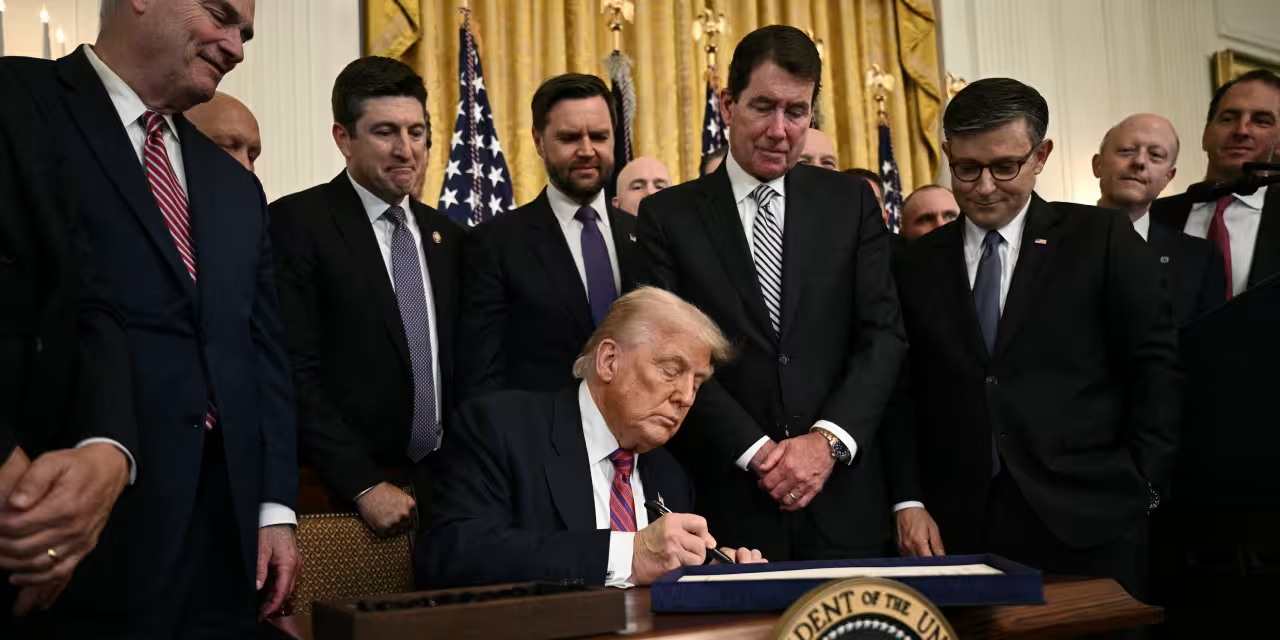
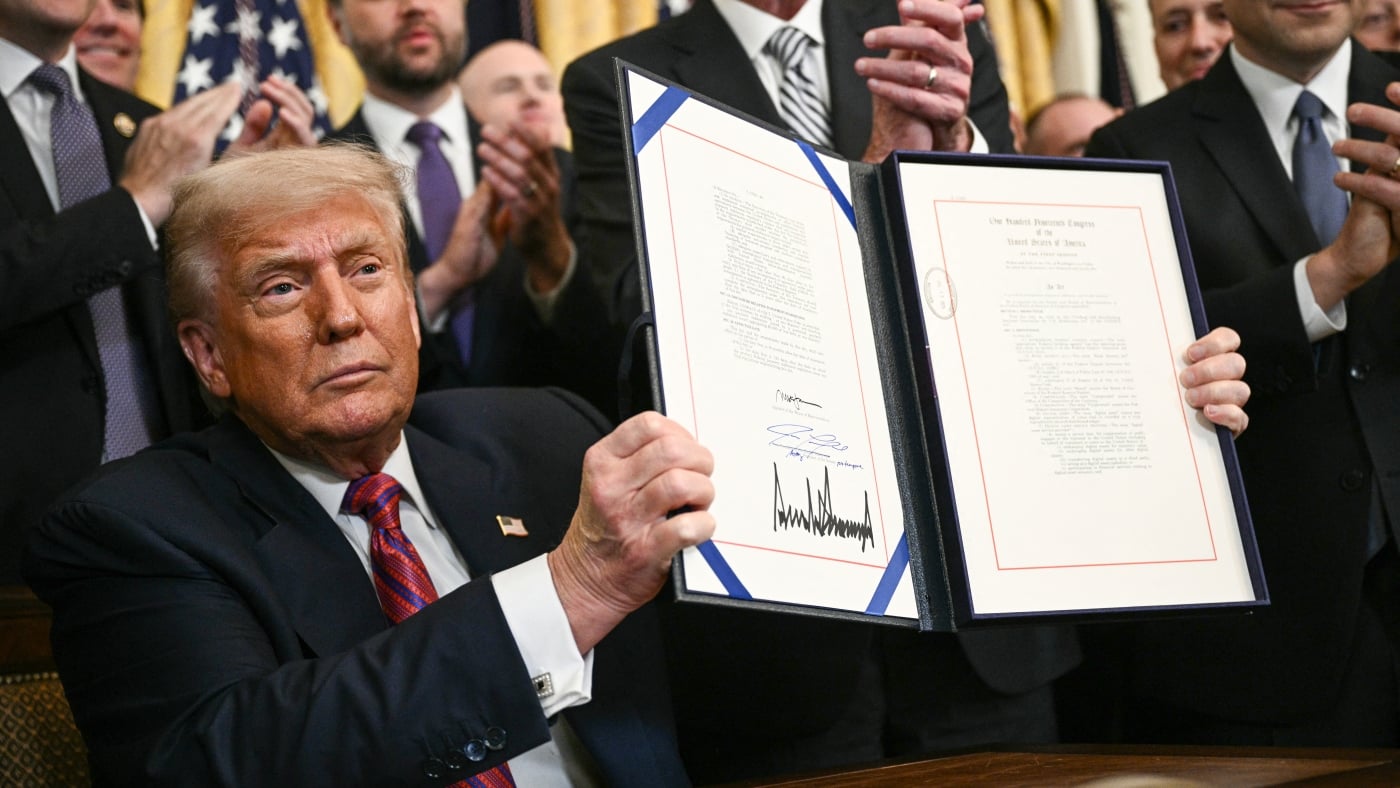
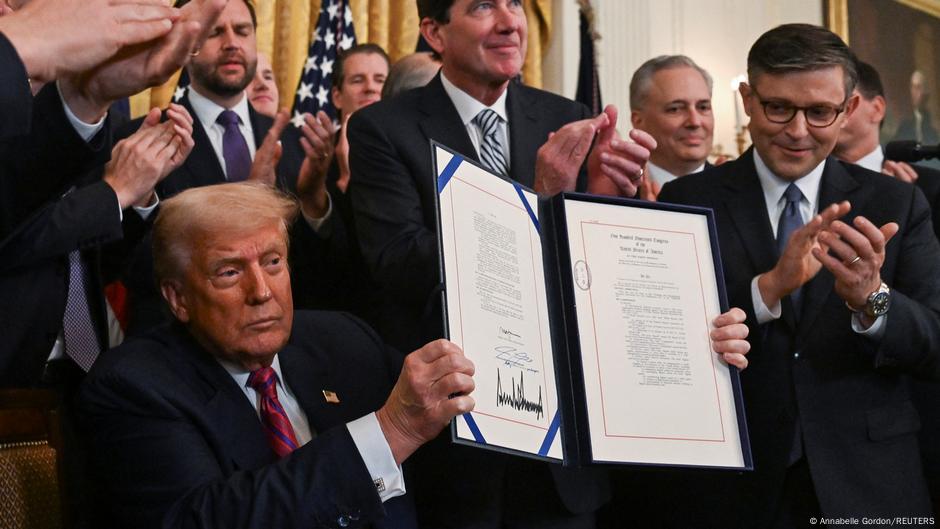
President Trump signed the GENIUS Act into law, marking the first major cryptocurrency legislation in the U.S., providing a regulatory framework for payment stablecoins and giving industry legitimacy, though broader crypto regulation is still in development.
Crypto Week concluded with significant regulatory progress, notably the passage of the GENIUS Act, which provides legal clarity for digital assets and stabilizes the foundation for future innovation in crypto and DeFi. Experts see this as a starting point for broader adoption and integration, emphasizing the need for scalable infrastructure, user-friendly systems, and credible markets to realize crypto's full potential.
The GENIUS Act aims to prevent Big Tech and Wall Street from dominating the stablecoin market by imposing strict rules on non-bank issuers and banning interest-bearing stablecoins, potentially boosting DeFi platforms and reshaping the digital currency landscape in the US.
The article humorously critiques Donald Trump's speech about the GENIUS Act, a law related to stablecoins, highlighting his incoherent and exaggerated claims, his obsession with Biden, and his promotion of crypto interests, while also noting opposition from Marjorie Taylor Greene who links crypto to biblical prophecy. The piece portrays Trump as unhinged and disconnected from reality, especially regarding his comments on the law, Japan, and crypto industry.
The U.S. has taken a historic step in cryptocurrency regulation with the passage of the GENIUS Act, signed into law by President Trump, marking a shift from a hands-off approach to a more regulated environment focused on stablecoins. The legislation has sparked both optimism among crypto supporters, who see it as a move towards financial innovation, and criticism from opponents concerned about weaker oversight and potential risks. The crypto sector is celebrating this victory, while also preparing for ongoing legislative battles, notably over the CLARITY Act and regulatory powers.
President Trump signed the GENIUS Act into law, establishing the first clear regulatory framework for stablecoins in the U.S., which could lead to increased adoption by banks and fintechs, offering benefits like higher savings interest and instant rebates for consumers, though traditional finance may resist these changes.
US President Donald Trump signed the GENIUS Act, establishing a regulatory framework for US-dollar-based stablecoins, which could boost their use in payments and finance, and potentially grow the market to $2 trillion by 2028. The law is seen as a victory for the crypto industry, though critics warn of insufficient anti-money laundering protections and potential risks to the US financial system.
President Trump signed the Genius Act into law, establishing a regulatory framework for stablecoins in the U.S., which aims to enhance financial stability, support the dollar's reserve currency status, and boost crypto industry innovation. The legislation has positively impacted crypto prices, with Bitcoin and other tokens seeing gains, and contributed to the crypto market surpassing $4 trillion in value.