
Tag

Foundation Models

All articles tagged with #foundation models

technology7 months ago

Apple Defends AI Strategy Amidst WWDC Disappointment

Apple executives clarified that the AI-powered Siri demoed at WWDC 25 was not vaporware, but a work-in-progress technology that will be shipped in a more advanced form in 2026. They emphasized that Apple's AI strategy focuses on integrating intelligence across its platforms rather than creating a chatbot to compete with ChatGPT, and that the current demonstrations involved real software with a large language model, though still not ready for release due to error rates.

technology7 months ago

Apple Unveils AI Enhancements and Innovative Features at WWDC 2025

At WWDC 2025, Apple announced a new version of Xcode that integrates OpenAI's ChatGPT for coding and documentation, allowing developers to connect AI models from other providers via API keys. Additionally, Apple launched the Foundation Models framework for on-device AI, enabling developers to access AI models with minimal code, and demonstrated Swift Assist, a coding assistant for Xcode.

technology7 months ago

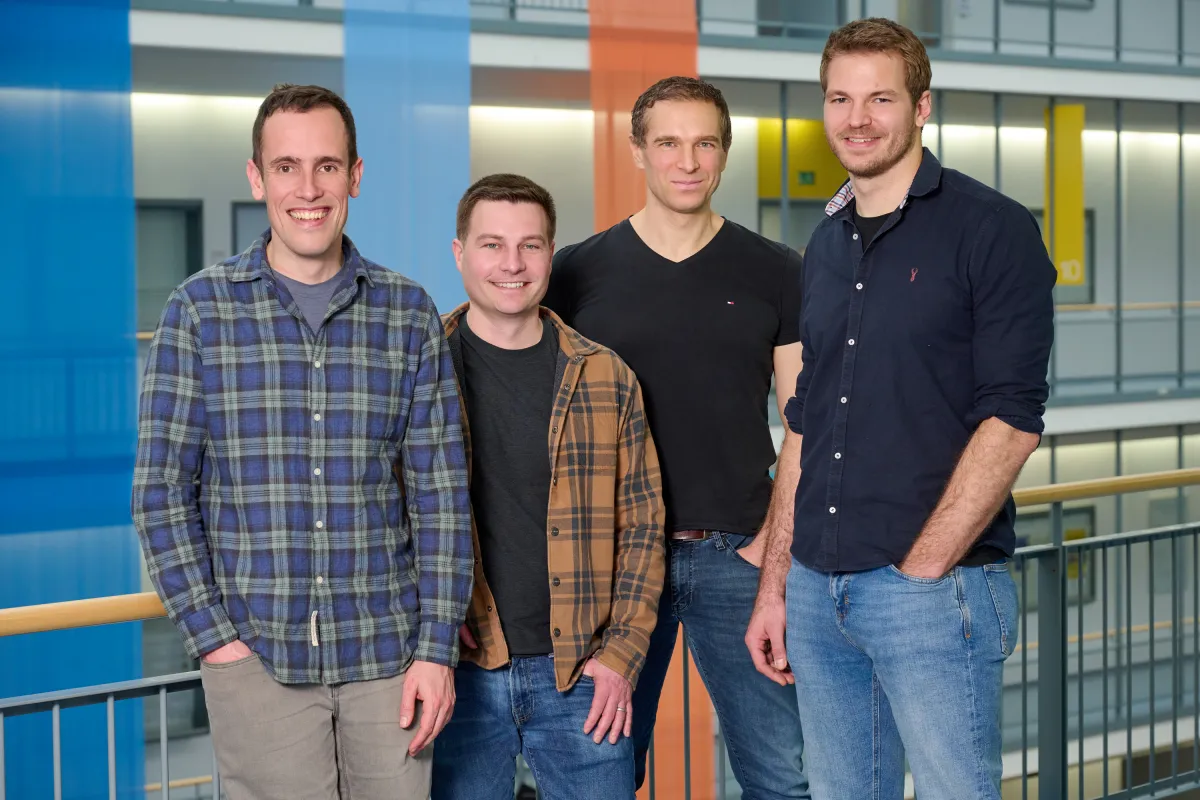
Synthesia Co-Founder Secures $13M to Revolutionize 3D AI Creation

European AI researcher Matthias Niessner has raised $13 million to develop advanced 3D environment generation models from text prompts, aiming to create interactive, photorealistic 3D worlds with potential applications in gaming, entertainment, and real-world simulations. The startup SpAItial, founded by Niessner and a team of experts, seeks to license its technology for various downstream uses, focusing on quality and interactive 3D spaces, with the ambitious goal of enabling anyone to create their own video game in minutes.

technology1 year ago

"Developing Earth Observation-Powered Chat Tools"

ESA, in collaboration with technology partners, is developing AI applications to revolutionize information retrieval in Earth observation by creating a ChatGPT-style text-based enquiry tool. These applications, supported by the ESA InCubed programme, use AI to monitor events like earthquakes and create flood maps for disaster response teams. ESA is also working on foundation models dedicated to Earth observation-related tasks, such as the PhilEO model, which recognizes features without human supervision. Separate initiatives are focused on creating a digital assistant that can process natural language questions and provide answers based on Earth observation data, with the goal of yielding game-changing results in the near future.

science-and-technology1 year ago

"The Evolution of AI Understanding Life"

Artificial intelligence programs, known as foundation models, are revolutionizing biology by making discoveries about genes, cells, and development. These models, trained on vast amounts of raw data, have the potential to reveal secrets about diseases, create new cell types, and even answer the fundamental question of what separates life from nonlife. While some scientists are optimistic about the profound insights these models may provide, others caution that their limitations and potential risks, such as privacy breaches and the creation of new biological weapons, need to be carefully considered and regulated.

technology2 years ago

"Europe's Quest for Global AI Regulation: Can Leaders Reach a Deal?"

The European Union's push to approve comprehensive artificial intelligence (AI) rules is at risk of being upended due to the emergence of generative AI systems. The EU's Artificial Intelligence Act, hailed as a pioneering rulebook, is facing challenges as negotiators struggle to reach a deal on issues such as regulating generative AI and banning police use of facial recognition systems. If a deal is not reached in the current round of talks, the legislation could be delayed or take a different direction. One major sticking point is the regulation of foundation models, which underpin general-purpose AI services. France, Germany, and Italy are calling for self-regulation, seen as an attempt to support their own generative AI players.

technology2 years ago

"France, Germany, and Italy Unite for Mandatory Self-Regulation in EU's AI Law"

France, Germany, and Italy are pushing for "mandatory self-regulation" through codes of conduct for foundation models in the EU's AI Act, rather than prescriptive obligations. The three countries argue that regulating General Purpose AI systems instead of foundation models would be more in line with the risk-based approach. They propose that foundation model developers define model cards summarizing information about trained models, and an AI governance body could help develop guidelines and check the application of model cards. The three countries also suggest that sanctions should only be applied following systematic infringements of the codes of conduct. The approach to foundation models will be discussed in upcoming meetings.

technology2 years ago

The Future of AI in Healthcare: Regulations, Integration, and Collaboration

AI-based tools are increasingly being used in medical care, particularly in the field of medical imaging. However, many clinicians remain skeptical and cautious about their performance and impact on patient care. While AI tools have shown promise in assisting with tasks such as flagging potential issues in medical scans, they also have limitations and can make mistakes. The current focus is on developing generalist medical AI models that can assess and diagnose various anomalies in medical scans, similar to a physician. These models, known as foundation models, are trained on large datasets and show potential in overcoming the limitations of first-generation AI tools. However, there is still a long way to go before these tools can be safely integrated into clinical care.

technology2 years ago

UK Regulator Outlines Principles for Responsible and Transparent AI Use

The UK's Competition and Markets Authority (CMA) has outlined seven principles to guide the regulation of AI and the companies developing the technology. The focus is on foundation models, such as OpenAI's GPT-4 and Meta's Llama 2, which form the basis for many generative AI applications. The principles include accountability for developers and businesses using these models, ensuring access to necessary resources, offering diverse business models, providing choice and flexibility for users, avoiding anti-competitive actions, and promoting transparency. The CMA aims to protect competition and prevent low-performing AI systems from dominating the market. The principles were developed following an initial review, and the CMA plans to engage with various stakeholders before finalizing its approach.

technology2 years ago

The Intersection of Generative AI and Blockchain: Implications and Ethical Considerations

The emergence of open-source alternatives to API-based generative AI models, along with concerns about centralized control, has sparked speculation about the potential for a blockchain dedicated to generative AI. The abundance of high-quality open-source models and the need for transparency and control in the field create an opportunity for Web3 architectures. While integrating generative AI capabilities into existing blockchains is a valid proposition, the unique requirements of generative AI models may necessitate a specialized blockchain infrastructure. Such a blockchain could enable the execution of foundation models, pretraining, fine-tuning, and inference workflows, as well as facilitate transparency and interpretability. Neglecting to build new blockchains for generative AI could widen the technological gap between Web2 and Web3 architectures and hinder innovation in the field.