Mortgage rates have slightly decreased, with the 30-year fixed mortgage now averaging 6.17%, which is over half a point lower than a year ago. Refinance rates are also slightly lower, and various mortgage options and strategies are discussed to help borrowers find the best rates and terms. Economic factors primarily influence these rates, and borrowers are advised to shop around and consider their financial goals when refinancing.
As inflation rates decrease, I bonds purchased during high inflation periods are now paying significantly lower rates, prompting financial experts to advise selling and reinvesting. With the current I bond rate at 5.27%, consisting of a fixed rate of 1.30% and a variable rate of 3.97%, individuals are encouraged to consider alternative investment options such as money markets, laddered CDs, and corporate bond bullets.
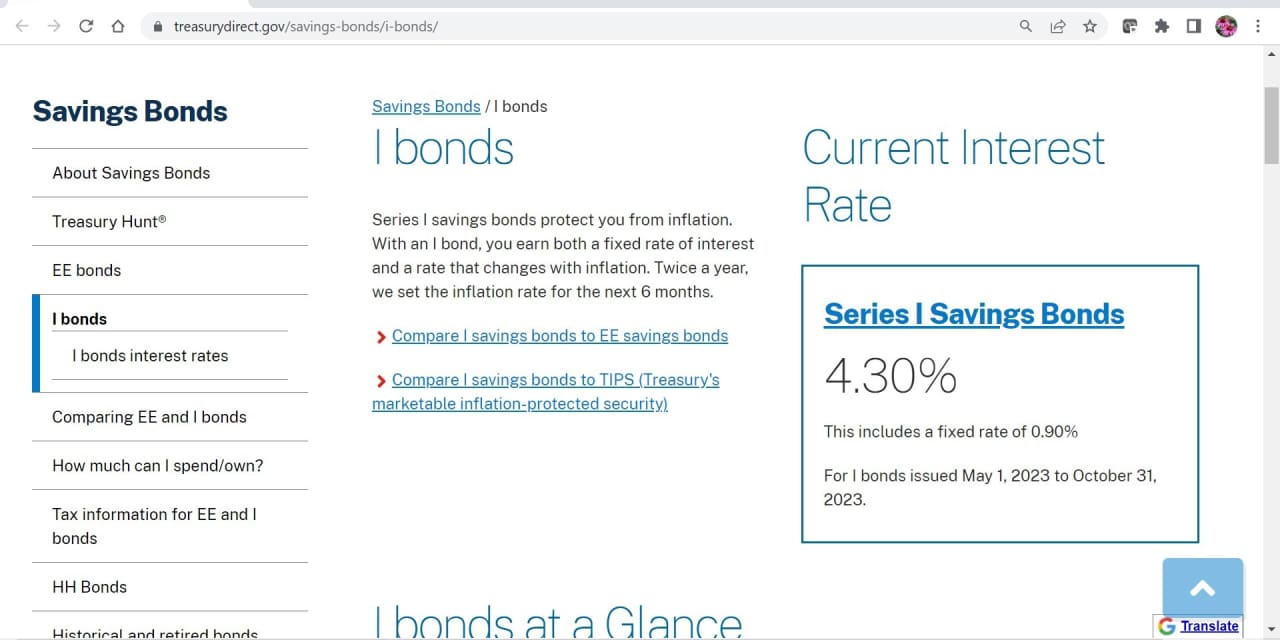
The US Treasury Department has announced two key improvements to I bonds, making them more attractive for investors. First, the annualized yield for new I bond purchases made through April has increased to 5.27%, up from the previous 4.30% annual return. Second, the fixed rate for I bonds has risen to 1.30%, up from 0.9% for the past six months. This fixed rate will ensure a return above inflation for the next 30 years, making I bonds a safe and attractive long-term investment option. I bonds are government-backed savings bonds tied to the Consumer Price Index, providing protection against inflation.
The new rate for I Bonds purchased from November through April 2024 is 5.27%, with the fixed rate increasing to 1.3%, a significant jump from the previous rate of 0.9%. The rate for I Bonds is a blend of the fixed rate and an inflation-driven rate, which adjusts every six months. Savers are advised to wait until November to buy I Bonds for a higher fixed rate. I Bonds cannot be redeemed for the first 12 months, and those held for less than five years are subject to a three-month interest penalty.
The new rate for Series I Bonds starting on Nov. 1 will be 5.27%, consisting of a 1.3% fixed rate and a 3.94% inflation rate. This is the highest fixed rate since 2007. Investors who purchased Series I Bonds during high inflation periods received a 0% fixed rate, while those buying now will receive the 1.3% fixed rate for as long as they hold the bond. There are purchase limits and cash-out restrictions, but strategies can be employed to maximize returns.
Financial experts predict that the annual rate for newly purchased Series I bonds could rise above 5% in November, making it the fourth-highest yield since the bonds were introduced in 1998. The variable rate, which is adjusted every six months based on inflation, is expected to increase to 3.94% in November. The fixed rate, which is harder to predict, is anticipated to rise based on higher yields from 10-year Treasury inflation-protected securities (TIPS). Long-term investors in I bonds could be significantly impacted by the fixed rate increase.
Electric prices have risen in Ohio, but customers can choose a supplier for the electric supplier portion of their bill. Retail suppliers are often more responsive to changing market conditions, and there are currently many options cheaper than the default option from local utilities. Customers will have to choose between fixed or variable rates and how long they want the rate to last. Pennsylvania's Attorney General warns people to be aware of door-to-door salespeople pressuring them into quick decisions about energy prices.
The U.S. Department of the Treasury has announced that Series I bonds will pay 4.3% annual interest through October, a drop from 6.89% in November amid falling inflation. The new variable rate is 3.38% and the fixed rate is 0.9%. While I bonds may still appeal to longer-term investors, the 4.3% annual rate may be less attractive to those with shorter-term goals. Experts say I bonds are now more of a "strategy investment" for those who want to know how much they're earning above inflation for the long run.
The fixed rate on I Bonds has increased to 0.9% for bonds bought from May through October, up from 0.4% for bonds bought from November 2022 through April. The inflation-adjusted rate, which changes every six months, is added on top of the fixed rate. Savers can buy I Bonds for as little as $25 at TreasuryDirect.gov and the bonds are held in an online account. An individual can buy up to $10,000 in I Bonds each calendar year.
The rate for Series I savings bonds, also known as I-bonds, will reset to 4.3% from May 1 to the end of October, including a 0.9% fixed rate and a 1.69% six-month rate, according to the Treasury Department. While the new rate is lower than the previous six-month rate of 6.89%, it is higher than estimates based on known inflation data, making it a potentially attractive option for investors seeking a fixed rate of return.
California's three largest power companies have submitted a joint proposal to the Public Utilities Commission outlining a fixed rate restructuring that would be based on one's income. The plan would break down monthly bills into the fixed rate plus a reduced usage charge based on consumption. The fixed-rate proposal is part of the companies' compliance with Assembly Bill 205 passed last year, which requires utilities companies implement these fixed-rate plans. The California Public Utilities Commission would have to approve the proposal and make a final decision by mid-2024.
California's three largest utility companies, PG&E, Southern California Edison, and San Diego Gas & Electric, have proposed a fixed-rate plan for residential customers based on income levels to help stabilize rates and make bills more affordable. The plan would reduce monthly bills for low-income customers and could cost as little as $15 a month for low-income households and up to $85 more per month for households making more than $180,000 a year. The California Public Utilities Commission would have to approve the proposal, and if it does, changes to bills could be seen as soon as 2025.