Scientists at Los Alamos have successfully replicated a 1938 nuclear fusion experiment, confirming key hypotheses about DT fusion using modern detection methods, which could influence future energy and security technologies.
Researchers at the University of Michigan have developed ZEUS, the world's most powerful laser system, capable of generating 2 petawatts of power for a brief moment, opening new frontiers in scientific research across fields like medicine, astrophysics, and quantum physics, while fueling international competition in ultra-high-intensity laser technology.
Researchers at Princeton and the Princeton Plasma Physics Laboratory have developed a machine learning method to control plasma edge bursts in fusion reactors, significantly enhancing performance without causing damage. This breakthrough allows for real-time optimization, reducing computation times from tens of seconds to milliseconds, and has been successfully tested at two different fusion facilities. The approach holds promise for future fusion devices, including ITER, and represents a significant advancement in the quest for sustainable fusion energy.
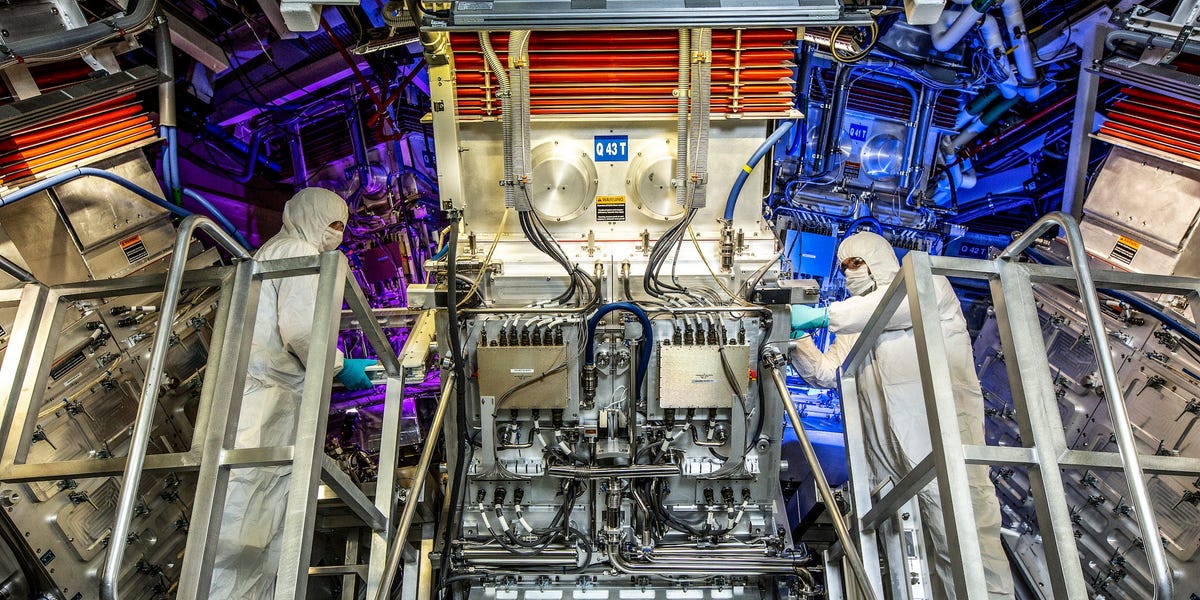
The National Ignition Facility (NIF) at Lawrence Livermore National Lab has achieved fusion ignition multiple times since its breakthrough in 2022. NIF uses lasers to create extreme temperatures and pressure, generating more energy from nuclear fusion than it consumes. Fusion power is considered a clean and abundant energy source, but there are still challenges to overcome before it can be widely implemented. Private companies and investors are also entering the fusion research race, hoping to provide commercial electricity within a decade. However, there are still scientific, engineering, and cost-related obstacles to overcome before fusion power becomes a reality.
Researchers at the University of California – Santa Barbara have discovered that anaerobic fungi can break down tough, woody lignin in plant waste, which could be converted into biofuels and other commodity chemicals. The fungi, Neocallimastigomycetes, can extract cellulose and hemicellulose from plant biomass without the need for pre-treatment. The team tracked the progress of the fungi as they broke down the plants’ rigid cell walls and identified specific lignin bond breakages in the absence of oxygen. The next challenge is to find out exactly how the fungi break down the lignin.