U.S. President Donald Trump announced plans for major U.S. oil companies to invest billions in Venezuela's oil infrastructure following the overthrow of President Maduro, aiming to restore the country's oil production and benefit economically, amidst ongoing political and military upheaval.

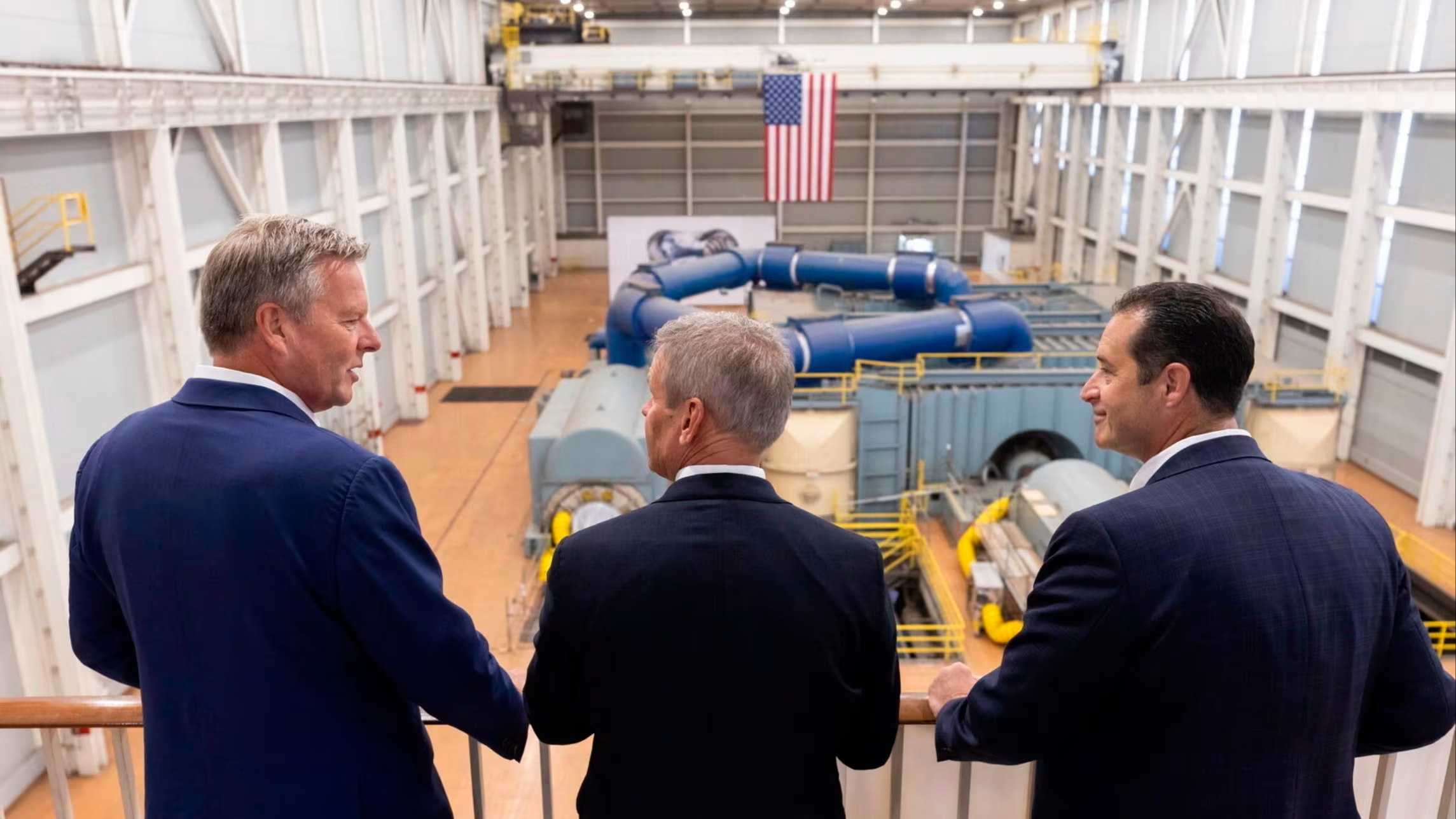
Fermi Inc. has announced plans to build four large nuclear reactors in Texas to power private data centers, partnering with Doosan Enerbility and Hyundai Engineering & Construction, signaling a bold move to revive large-scale nuclear energy in the US amidst rising demand for AI infrastructure, though the project faces high costs and supply chain challenges.
The article discusses the declining confidence in Carbon Capture and Storage (CCS) technology, highlighting technological challenges, high costs, delayed projects, and limited effectiveness, which have led to reduced investor interest and questions about its viability as a solution for decarbonization.
US utility companies are making significant investments in nuclear fusion technology as the demand for AI-driven applications increases, highlighting a shift towards advanced and sustainable energy sources.
During President Trump's UK visit, the US and UK are set to sign major agreements to develop nuclear power, including building up to 12 advanced modular reactors and data centers powered by small modular reactors, aiming to create jobs, boost private investment, and lead a nuclear renaissance, despite environmental concerns.
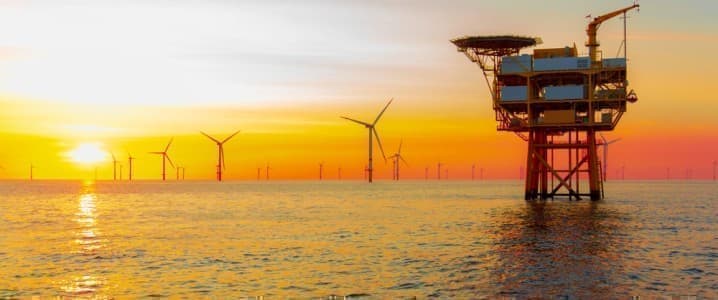
The U.S. government abruptly halted Ørsted's nearly complete Revolution Wind offshore wind project in Rhode Island, citing vague national security concerns, despite the project's economic viability and strategic importance, leading to significant financial losses for Ørsted, undermining investor confidence, and delaying the U.S. energy transition, while highlighting the risks of political interference in long-term infrastructure projects.
BP has announced its largest oil and gas discovery in 25 years off Brazil's coast, signaling a shift back to fossil fuels as the company reduces renewable energy investments and aims to boost crude production, amidst financial and strategic challenges.
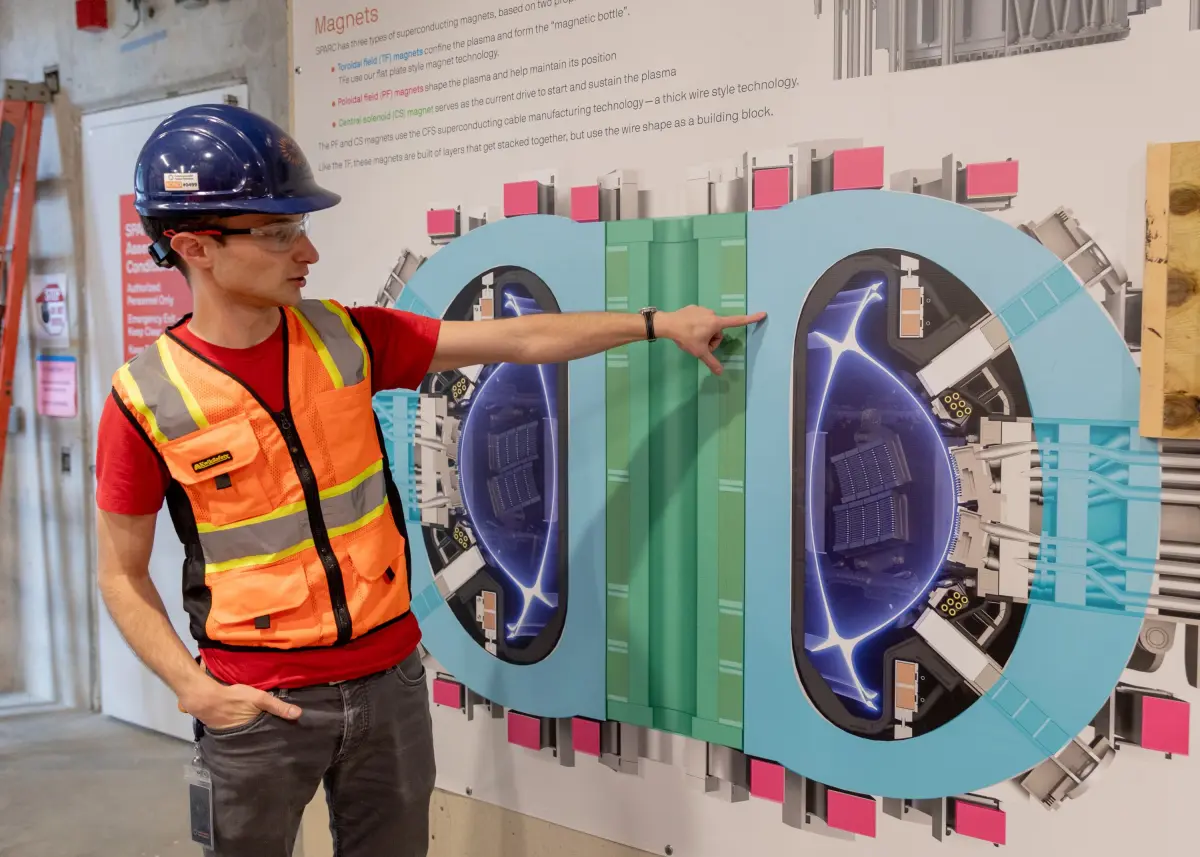
Google has announced a deal to buy 200 MW of power from Commonwealth Fusion System's upcoming Arc fusion power plant, expected to be operational in the early 2030s, marking a significant step in fusion energy development and corporate investment in clean energy solutions.
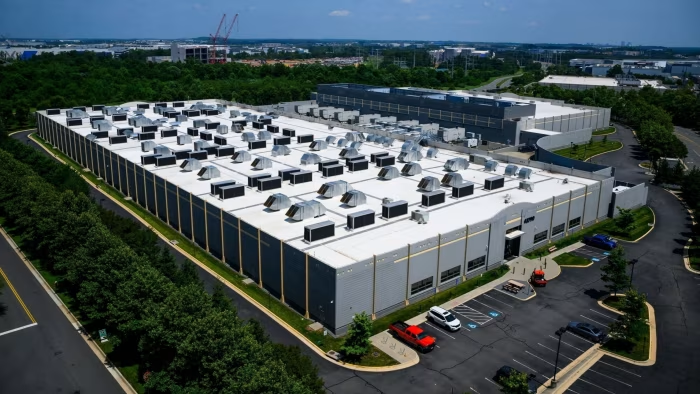
US energy companies are investing heavily in new power plants and transmission lines to support the growing demand from data centers, with utility spending expected to reach record highs by 2027. While this could boost the economy, there are concerns about rising costs being passed to consumers and the challenges of funding infrastructure, especially as demand for electricity is projected to increase significantly by 2030 and 2050.
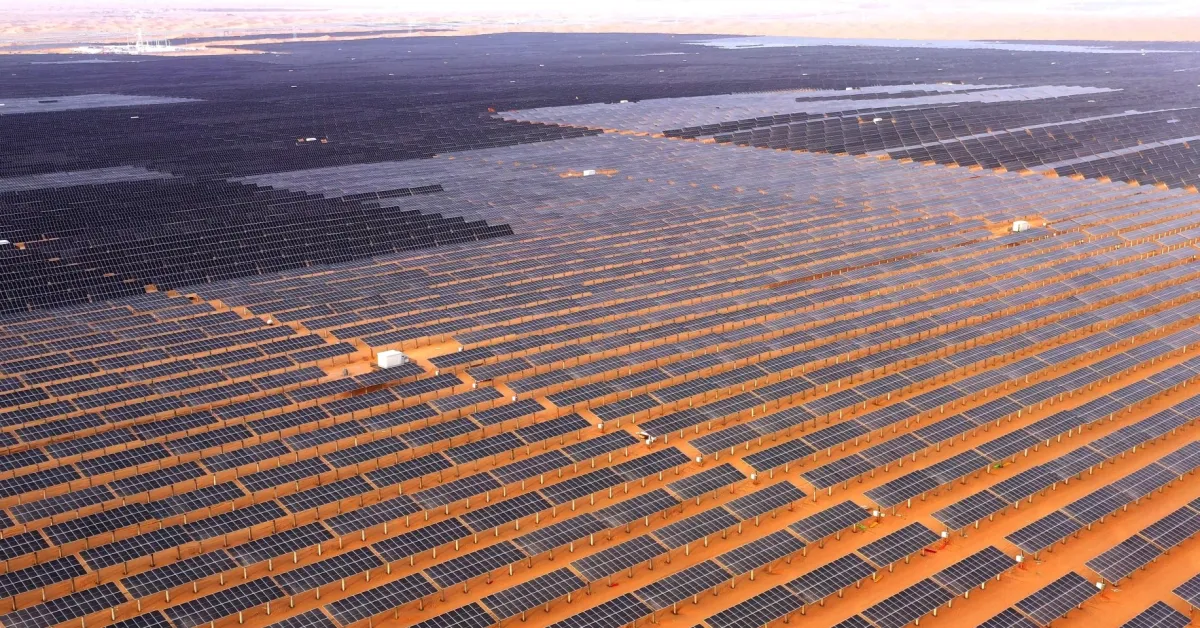
Global energy investment is projected to reach a record $3.3 trillion by 2025, with China leading as the top investor, nearly matching the US and EU combined, especially in clean energy sectors like solar, wind, and batteries. While clean energy investments surge, concerns remain over insufficient grid upgrades and continued coal investments in China and India, alongside a significant investment gap in Africa. The shift towards electrification and renewables is evident, but challenges in infrastructure and developing economies could hinder progress toward energy security and climate goals.
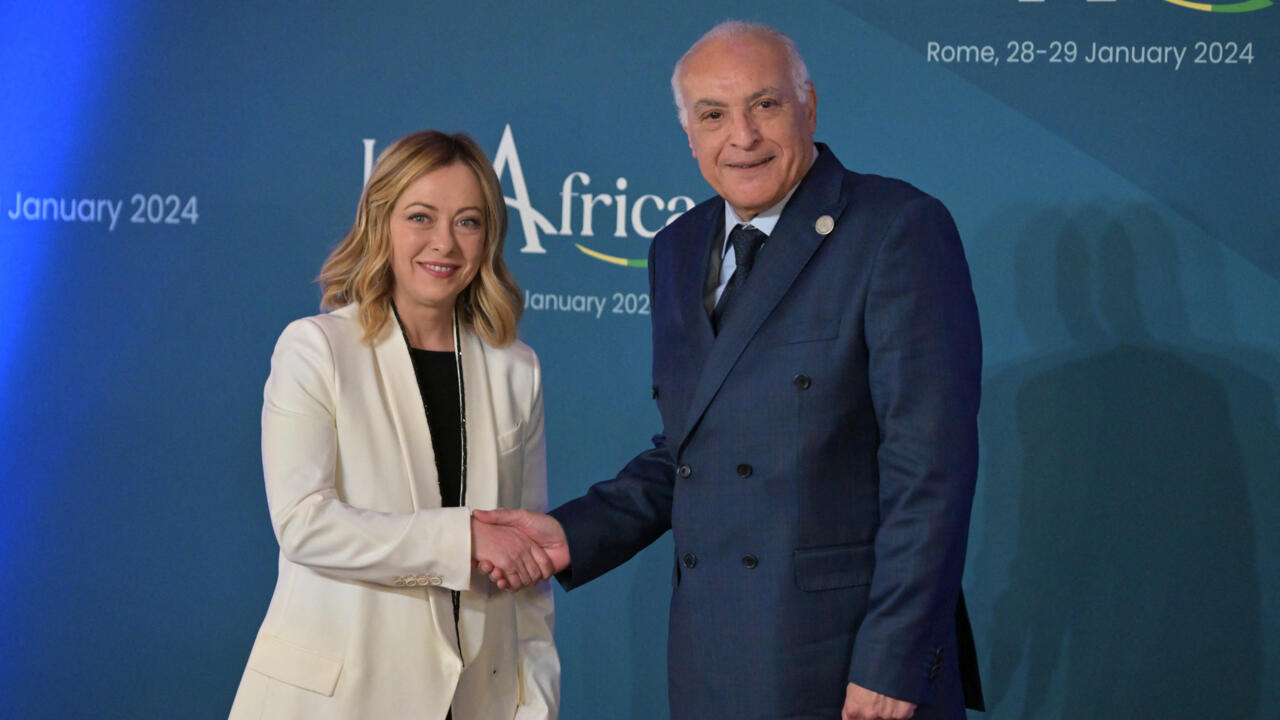
Italian Prime Minister Giorgia Meloni's development plan for Africa aims to swap energy investments for African efforts to curb migration, positioning Italy as a key bridge between Africa and Europe. The plan, inspired by Enrico Mattei, founder of Italy's state-owned energy giant Eni, initially involves €5.5 billion in funding focused on energy, agriculture, water, health, and education sectors. Critics argue the plan is too focused on fossil fuels and call for a renewable energy drive. The summit, attended by representatives from over 25 countries, aims to address the factors fueling deadly migrant crossings in the central Mediterranean.
Physicists explore the feasibility of building a Dyson sphere around our sun to capture solar energy. While the technology to build such a structure is not yet available, the thought experiment can help us understand fundamental principles of energy, orbit, and motion. Building a Dyson sphere would require a significant energy investment, and the optimal design would need to minimize this initial cost. Simplifying the problem helps cover up mistakes and enables a general sense of feasibility.