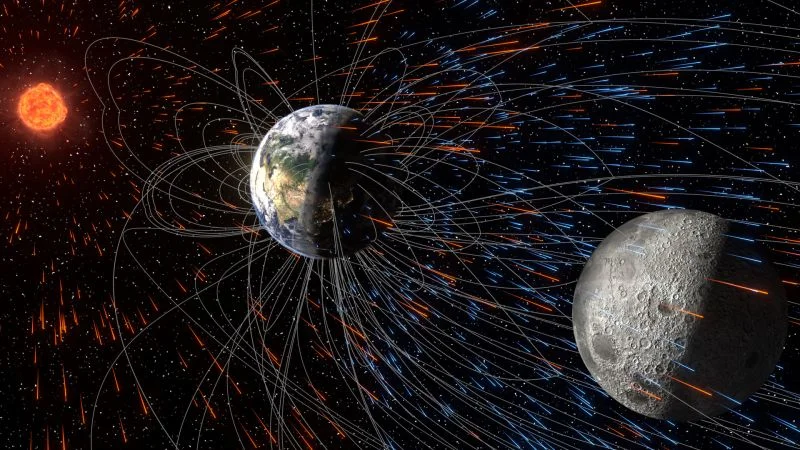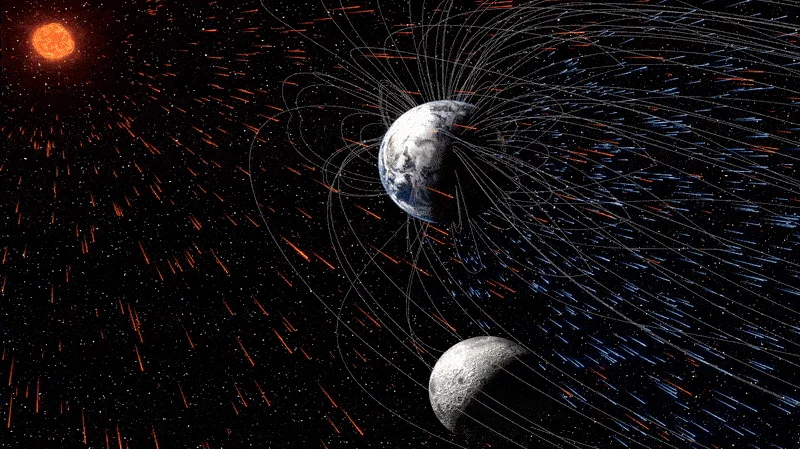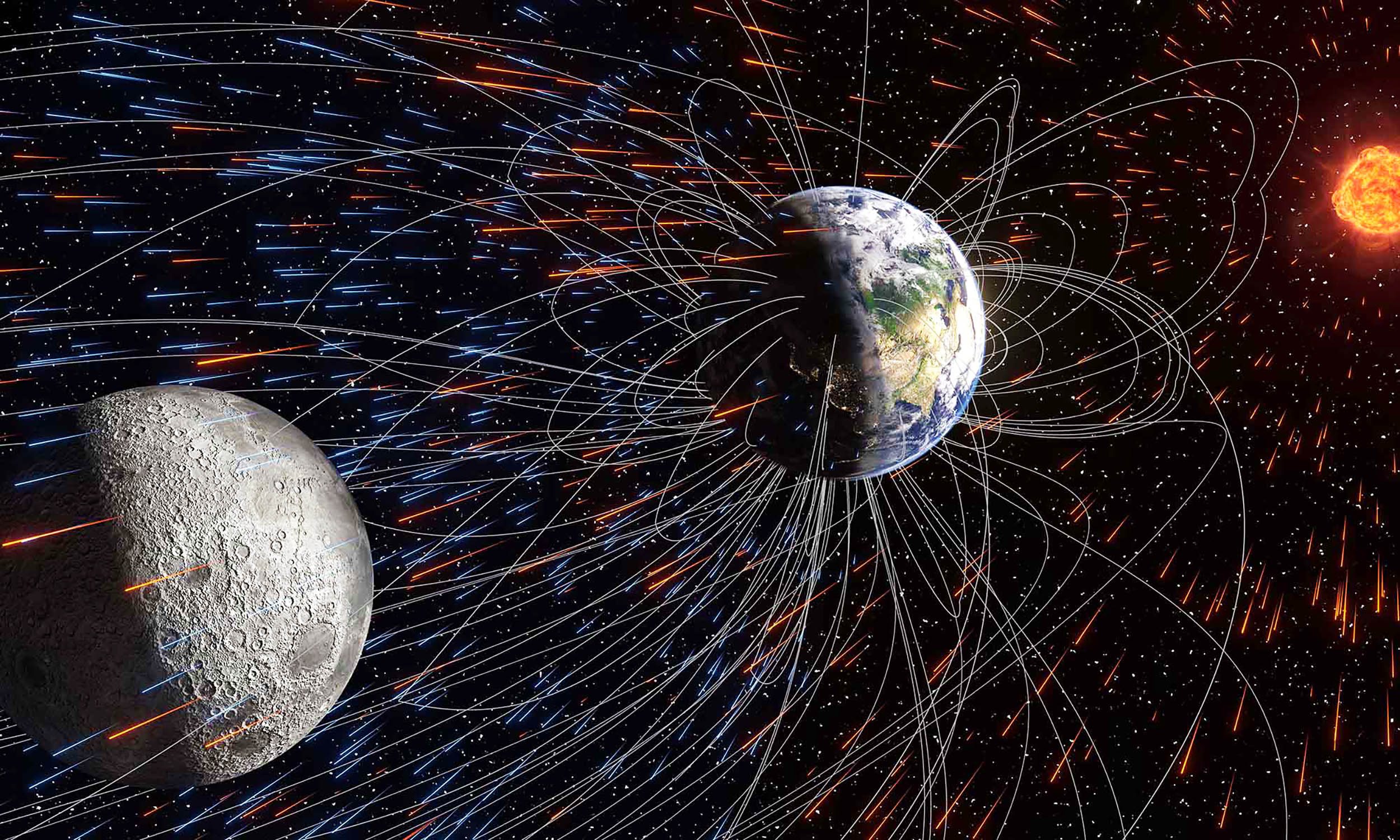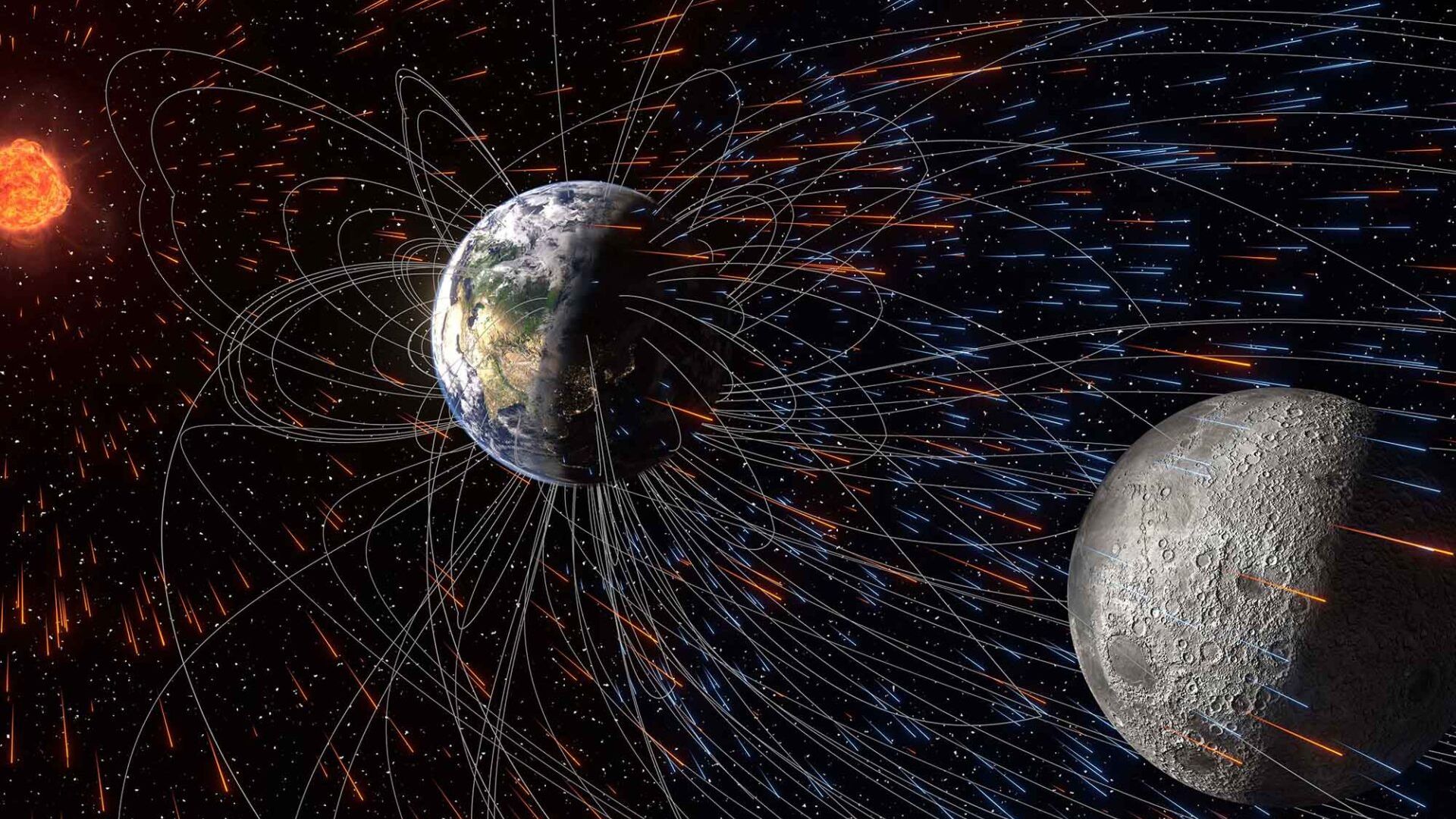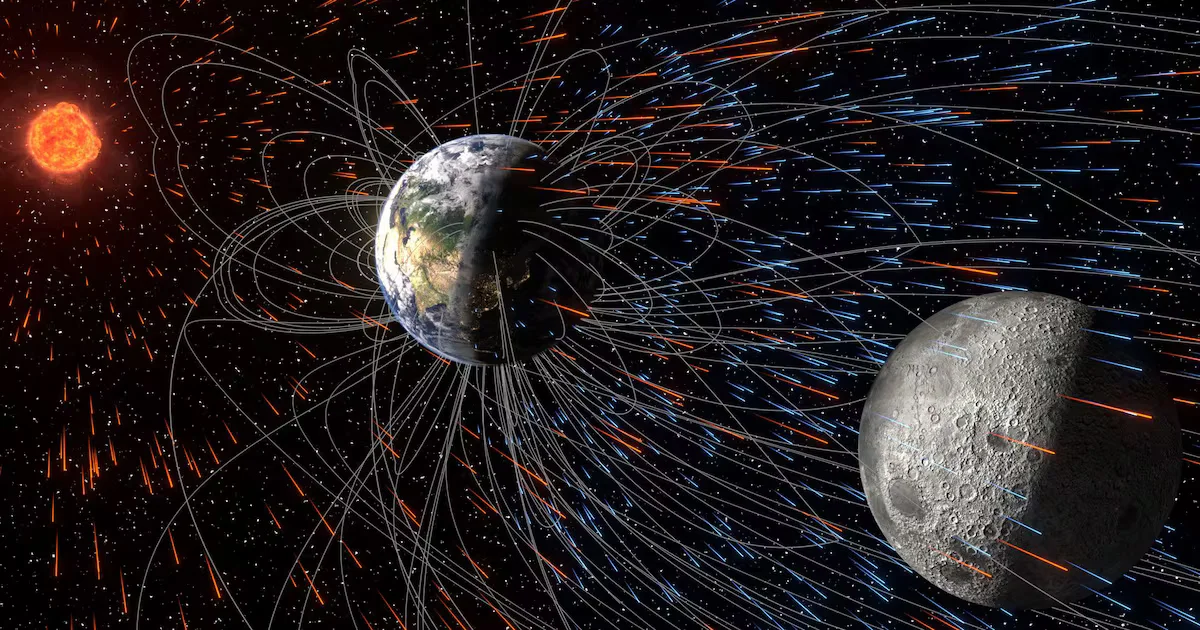
A new study shows that the moon has been absorbing Earth's atmospheric ions for billions of years through Earth's magnetic tail, challenging previous theories and providing insights into planetary atmospheric loss and history, with implications for future lunar and planetary research.
New research suggests that Earth's atmosphere has been gradually leaking particles, including water and nitrogen, to the Moon over billions of years, facilitated by Earth's magnetic field, which acts more like a guiding rail than a shield. These particles are preserved in lunar soil, creating a long-term archive of Earth's atmospheric history and potentially providing resources for future lunar exploration.
Research shows Earth's atmospheric particles have been traveling to the moon for billions of years via magnetic field lines, potentially creating a long-term record of Earth's atmospheric history on the lunar surface and offering resources for future lunar bases.
Scientists successfully used ripples in Earth's ionosphere, caused by atmospheric disturbances from a tsunami, to detect and track the event in real time, demonstrating a promising new method for early tsunami warning systems that could save lives by providing crucial extra minutes of warning.
Currently, 1 to 2 Starlink satellites reenter Earth's atmosphere daily, burning up and creating space debris concerns, with projections indicating this could increase to 5 reentries per day due to satellite lifespan and increased deployment, raising environmental and safety issues related to space junk and atmospheric particles.
Scientists in China have developed a machine learning method to detect invisible equatorial plasma bubbles in Earth's ionosphere by analyzing changes in airglow, which could help prevent disruptions to GPS and radio signals caused by these cavities.