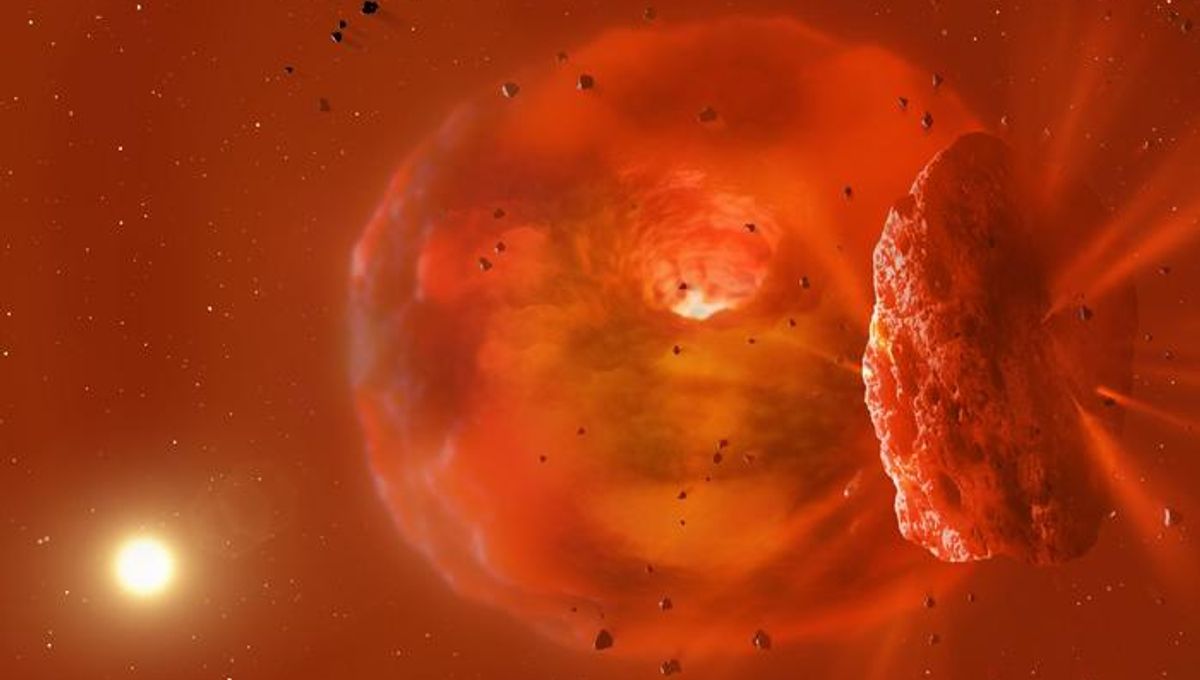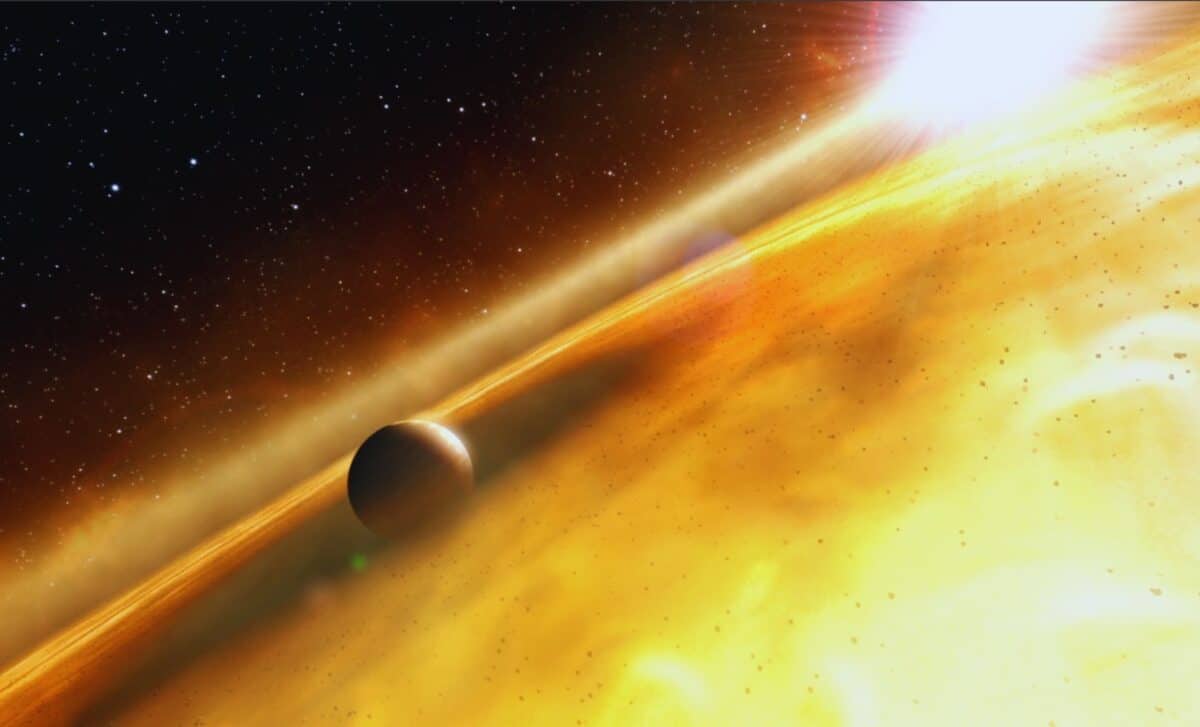
Astronomers observed what they thought was a planet around star Fomalhaut, but it vanished due to a collision between asteroid-sized bodies, creating a debris cloud. A second similar object appeared nearby, indicating violent impacts rather than a new planet, challenging existing models of planetary formation and raising concerns for future exoplanet detection methods.
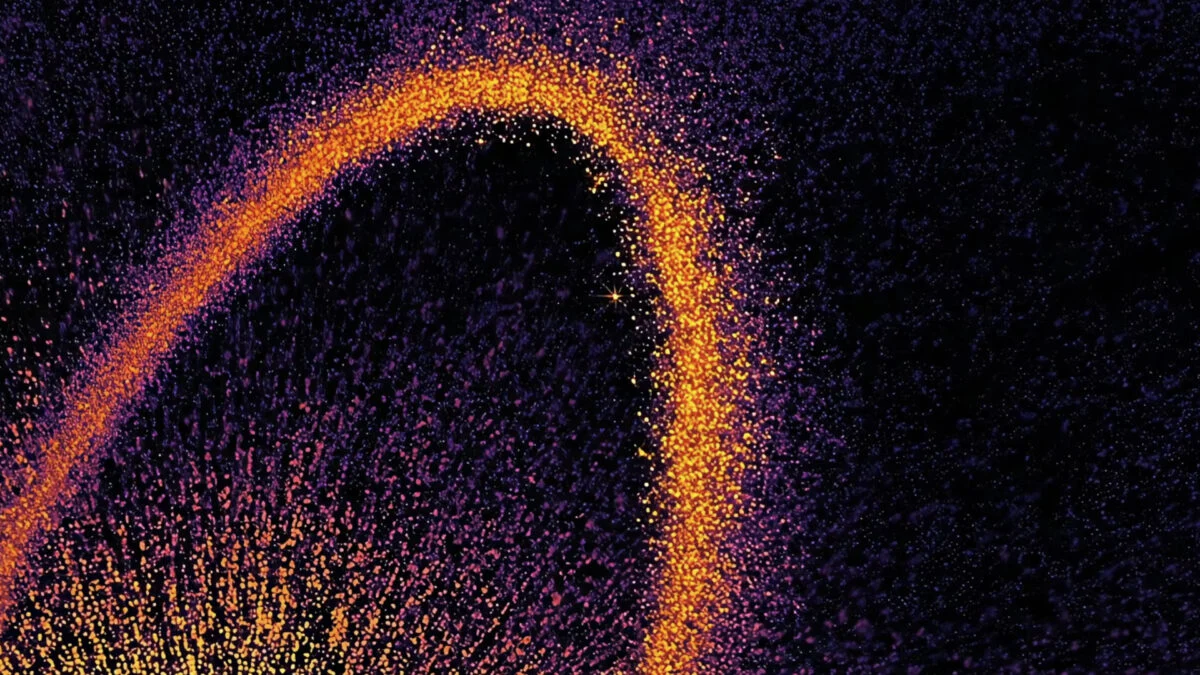
Astronomers observed a rare collision between two protoplanets around star Fomalhaut, creating a bright dust cloud, providing a unique real-time glimpse into celestial collisions and challenging previous assumptions about exoplanets.
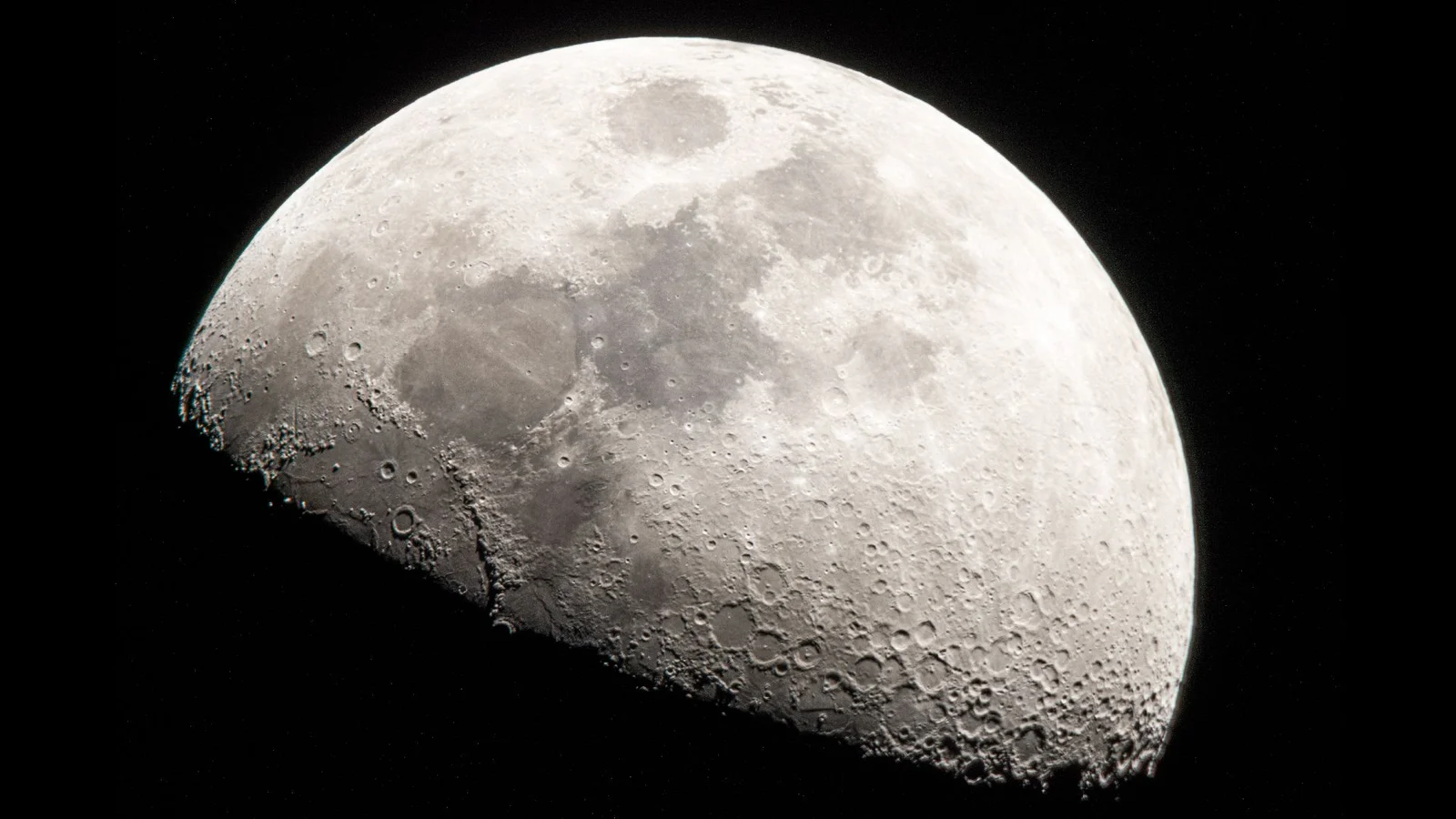
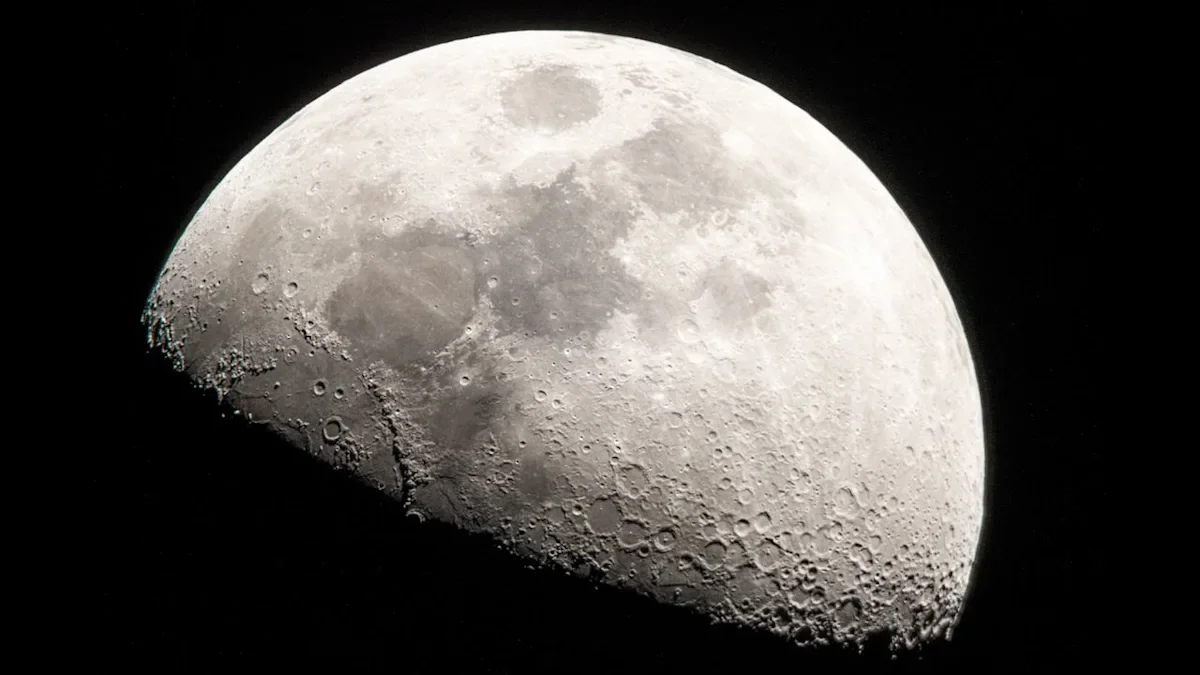
Scientists have explained the lopsided dust cloud following Earth's moon as a result of micrometeoroid impacts influenced by the moon's temperature differences between day and night, with hotter daytime impacts lifting more dust and creating an asymmetrical cloud.
Scientists have explained the asymmetrical dust cloud around Earth's moon as a result of temperature differences between the moon's day and night sides, which affect how meteoroids lift lunar dust, with hotter daytime impacts creating more lofted dust and explaining the cloud's skewed shape.
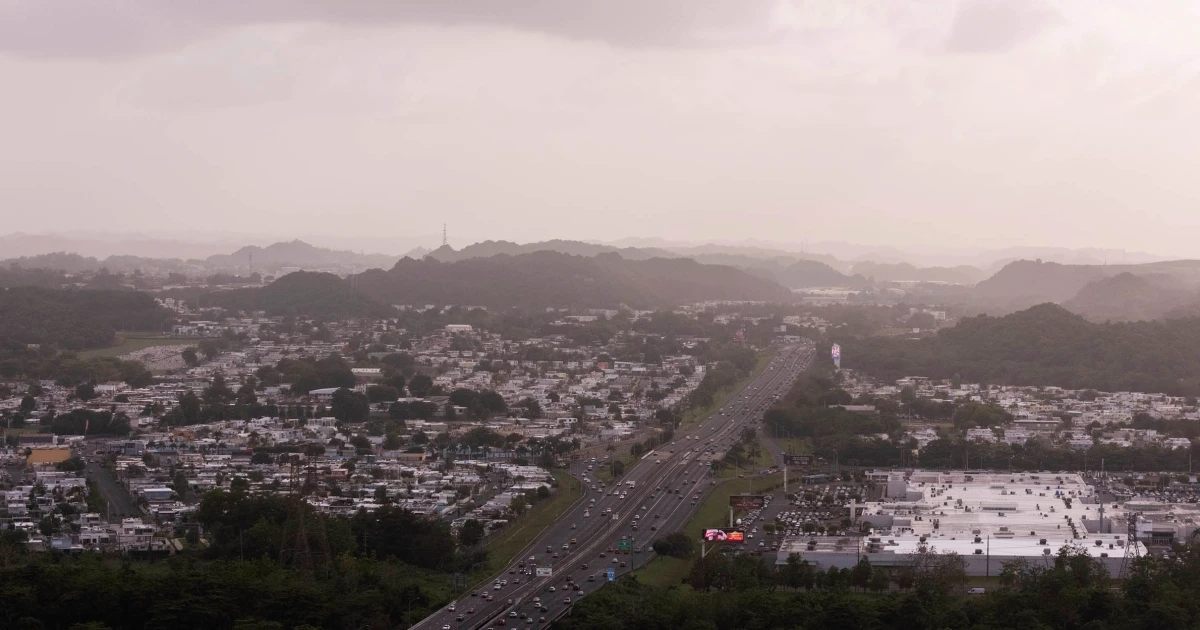
A large Sahara dust cloud is covering the Caribbean and heading towards the U.S., causing hazy skies and health warnings, with the highest concentration this year and potential impacts on air quality and sunlight.
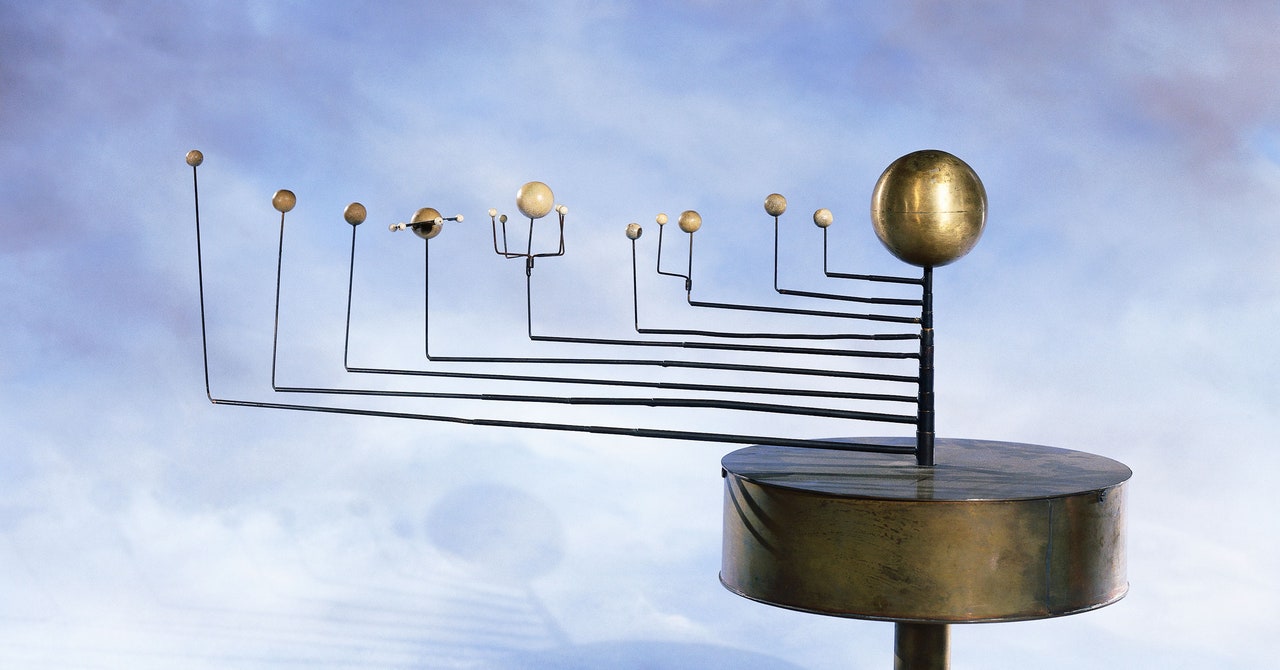
The solar system is flat because it started as a rotating cloud of dust, with particles near the equator finding stable orbits due to balanced gravitational and centrifugal forces, while those near the poles formed a flat disk. This phenomenon is explained by physics principles such as centripetal acceleration and fake forces like centrifugal force. Numerical models demonstrate how collisions among dust particles led to the formation of a flatter solar system, resembling the one we observe today.
An amateur astronomer's social media post led to the discovery of a collision between two ice giant exoplanets in a distant space system. The collision created a bright heat afterglow and a dust cloud that dimmed the parent star over time. The sighting was confirmed by a network of professional and amateur astronomers, and further observations will be made to study the system's development.
Astronomers have observed the aftermath of a collision between two giant planets for the first time. The collision caused a sudden brightening of a star in infrared light, followed by a fade in visible light. The event was marked by the formation of a massive cloud of dust, which eventually blocked enough light to cause the fading. The collision likely involved two ice giant planets similar to Neptune and Uranus, and the majority of their mass is expected to form a new planet. The researchers have also detected light from this new planet, which may eventually condense to form moons.
Astronomers have captured the afterglow of a planetary collision for the first time, as two icy exoplanets collided 1,800 light-years away. The collision created a blaze of light and enormous plumes of dust, which was detected by an amateur astronomer who noticed a quirk in a social media post. The fading of a star's brightness was caused by the dust cloud generated by the collision. Scientists believe that the dust cloud will eventually thin out and may form a retinue of moons orbiting the parent star. The discovery was published in the journal Nature.
Astronomers have discovered the first evidence of a possible co-orbital "Trojan planet" sharing the same orbit as the exoplanet PDS 70b. The detection of a cloud of dust following PDS 70b suggests the presence of a Trojan planet, which could either condense into a planet or be debris from a previous Trojan pairing. This discovery provides insights into how planetary systems form and could have implications for the formation of large moons. Further observations and confirmation are needed to solidify the existence of Trojan planets.