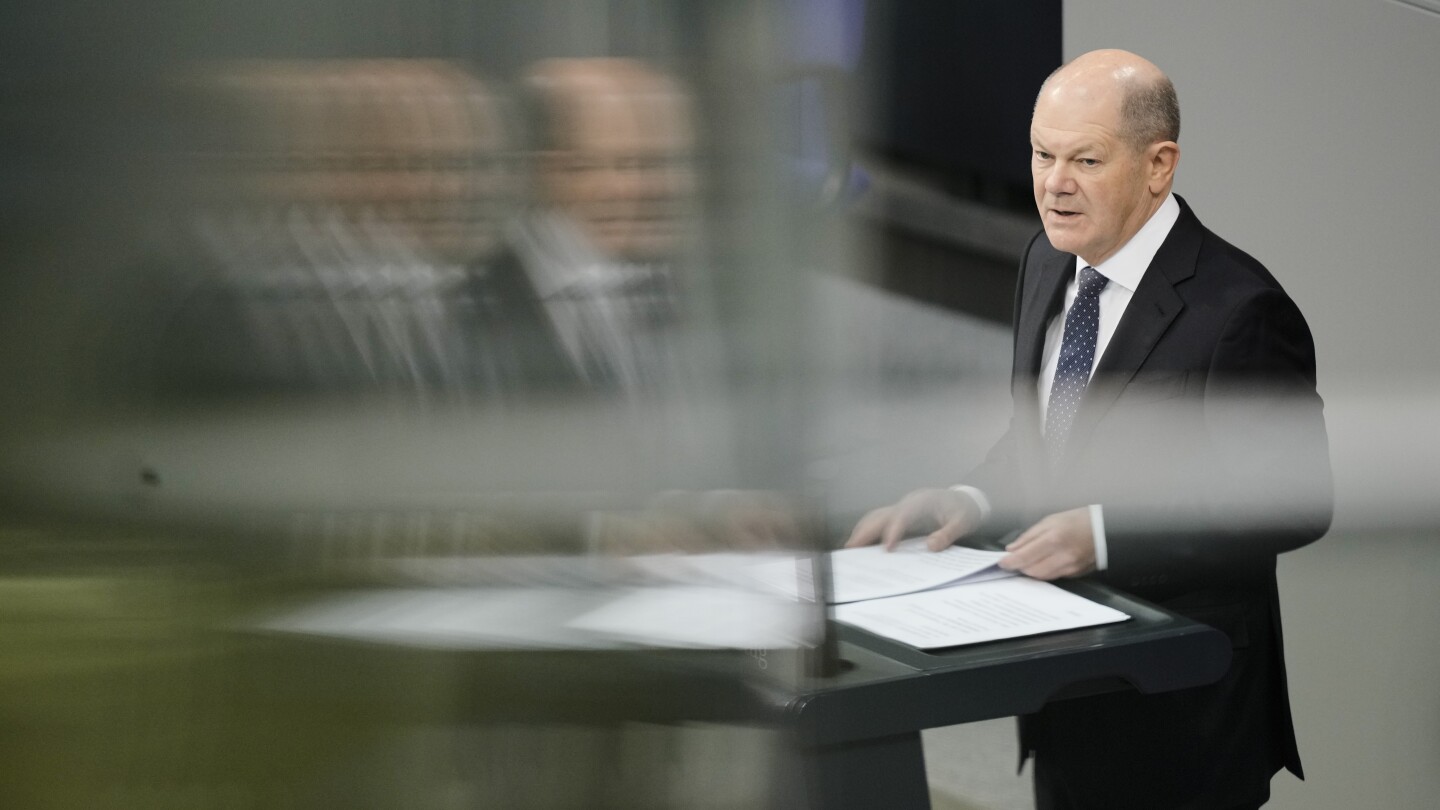
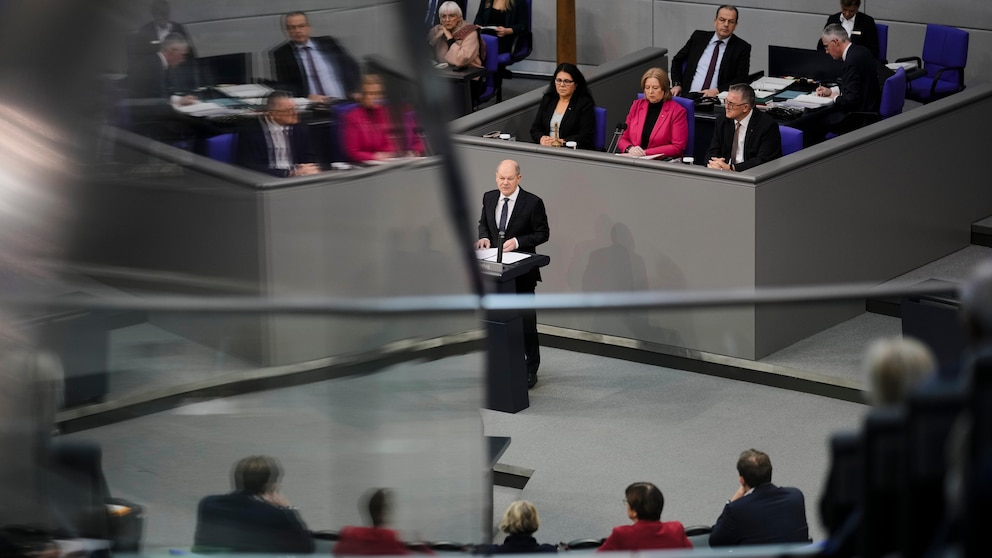
German Chancellor Olaf Scholz faces the challenge of solving a budget crisis after Germany's top court ruled that 60 billion euros in funding for renewable energy projects and relief for consumers violated debt limits. The government must decide on spending cuts for next year, potentially further slowing down the struggling economy. Scholz vows to promote clean energy and modernize the economy but offers few details on how to achieve these goals. The opposition criticizes Scholz for lacking a vision for the country's development. The long-term solution may take years, and economists warn that spending cuts could worsen Germany's challenges, including the impact of Russia's natural gas cutoff.
Germany is facing a budget crisis after its top court ruled that planned spending on renewable energy projects and relief for consumers violated debt limits. Chancellor Olaf Scholz promised to work quickly to solve the crisis and maintain goals of reducing carbon emissions and protecting social spending. However, the cuts needed could further slow down the struggling economy. The government is now tasked with deciding what to cut next year, with a potential shortfall of billions of euros. Economists warn that spending cuts will add to the challenges faced by Germany, including the impact of Russia's natural gas cutoff and competition from Chinese automakers.
Germany's Chancellor Olaf Scholz has promised to address the country's budget crisis caused by a court ruling that struck down billions in planned spending. However, he provided few details on how he plans to promote clean energy and modernize the struggling economy. The cuts that need to be made next year could further slow down the already worst-performing major economy. Scholz's coalition government lacks the majority to loosen debt limits, which restrict the government's response to new challenges. Economists warn that spending cuts will add to the challenges facing Germany, including the impact of Russia's natural gas cutoff. The government will have to scramble to cover shortfalls in the budget, and spending may be reduced by as much as 0.5% of annual economic output for the next two years. Germany's economy is projected to be the worst-performing major economy this year, and prospects for next year are not much better.