Tag

Cryovolcanoes

All articles tagged with #cryovolcanoes

science-and-space1 year ago

Pluto's Salty Subsurface Ocean Could Enable Effortless Floating

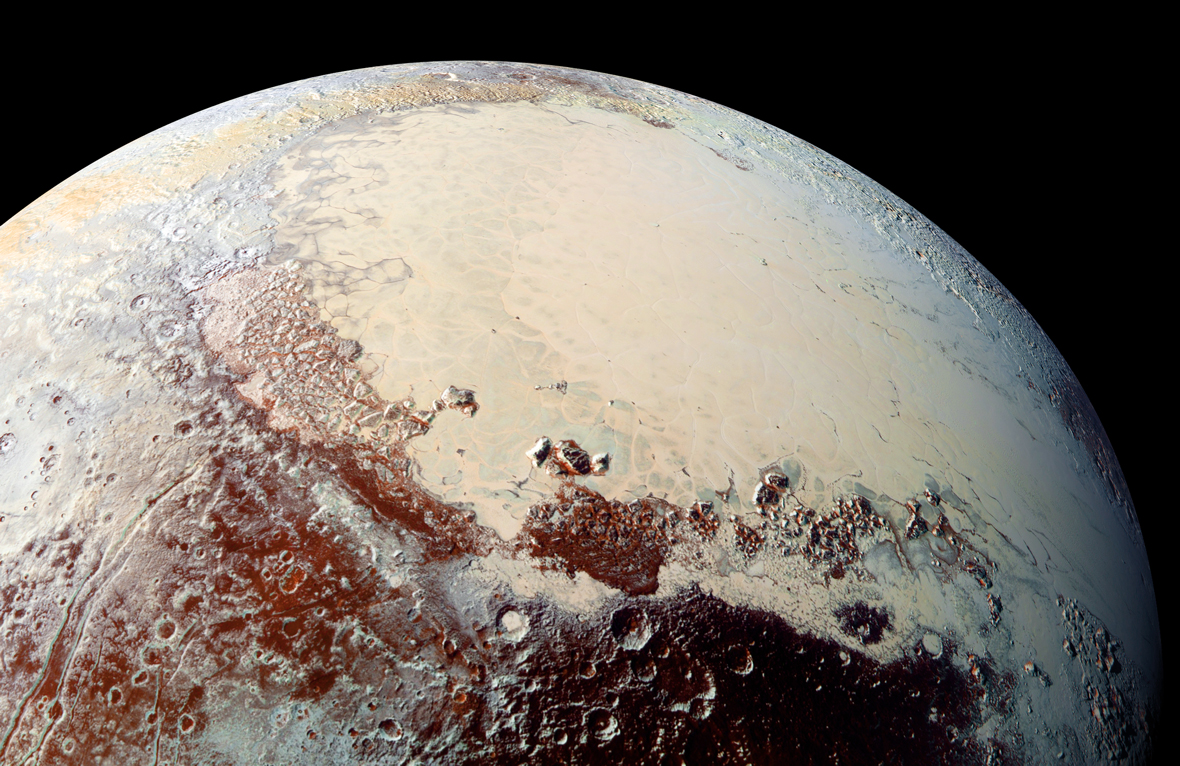
New research based on data from the New Horizons spacecraft suggests that Pluto has a subsurface ocean beneath a 40-80 km thick ice shell. This ocean, potentially as salty as Earth's Great Salt Lake, challenges previous assumptions that Pluto was too cold to support liquid water. The findings, derived from mathematical models and surface feature analysis, add to the growing evidence that Pluto is a dynamic world with an interior ocean.

space-exploration1 year ago

"Effortless Floating in Pluto's Hidden Ocean"

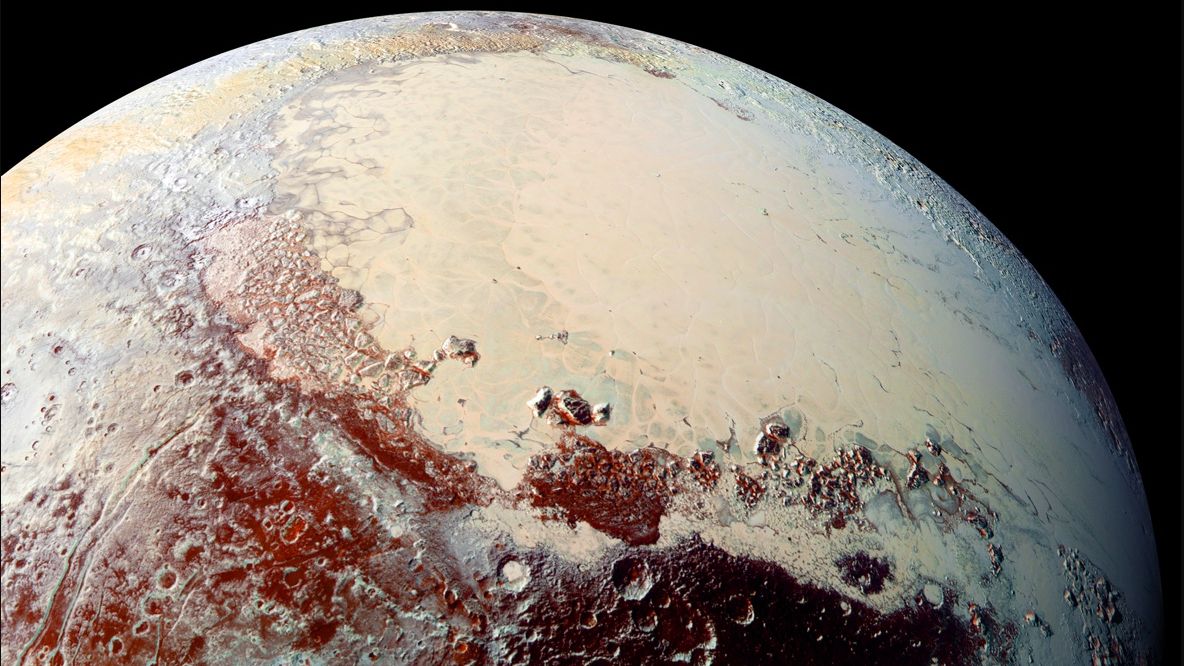
A recent study suggests that Pluto may have a subsurface ocean beneath its frozen surface, potentially deeper and denser than Earth's seawater. Clues from the New Horizons mission, such as the lack of an equatorial bulge and surface fractures, hint at this possibility. Researchers modeled the ocean's characteristics, estimating it to be 25-50 miles thick and 8% denser than Earth's seawater. However, the idea remains controversial, and more data is needed to confirm the existence of this ocean.

science-and-astronomy2 years ago

"Debunking the Myth: No, an Everest-sized 'Devil Comet' isn't on a collision course with Earth"

Contrary to misleading headlines, the comet 12P/Pons-Brooks is not on a collision course with Earth. It will pass by at a safe distance of 224 million km, closer to Earth than it is now but still far from any danger. This periodic comet, known for its cryovolcanoes that erupt water, offers valuable insights into the primordial state of the solar system. Researchers study comets like 12P/Pons-Brooks to understand the building blocks of the solar system and their potential role in delivering water and organic compounds to Earth. While astronomers keep an eye on potentially hazardous objects, this comet is not one of them.

science2 years ago

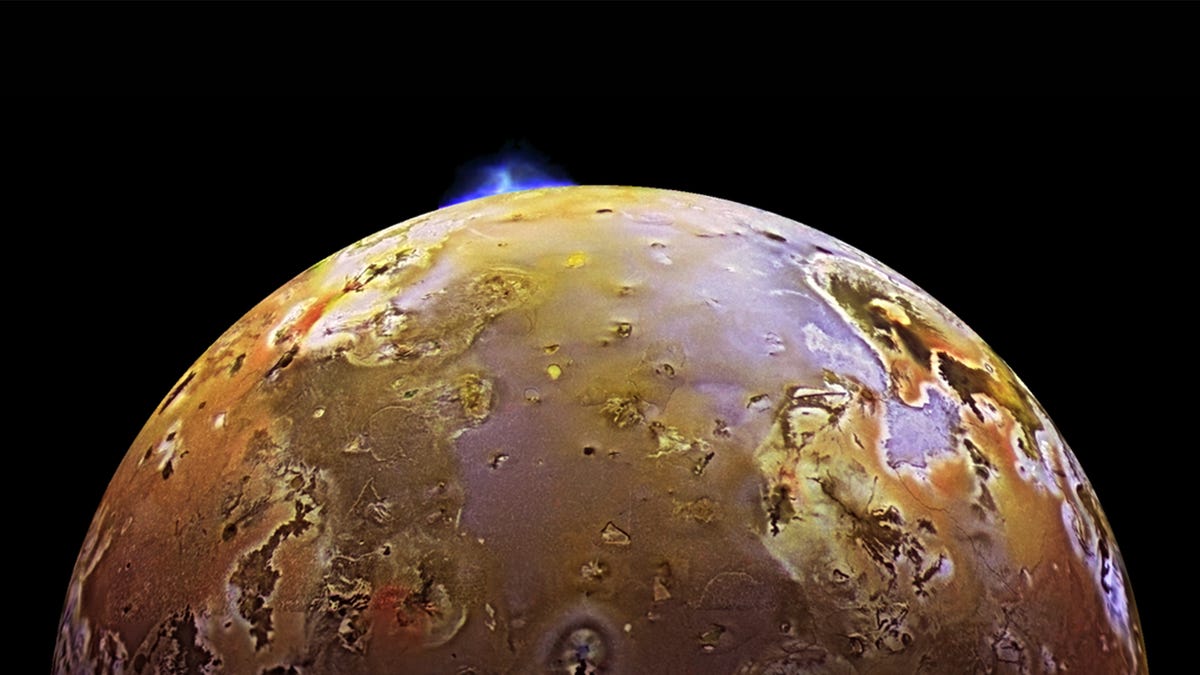
Exploring the Volcanoes Across Our Solar System

Earth, Jupiter’s moons Io and Europa, Neptune’s moon Triton, and Saturn’s moon Enceladus have active volcanoes. Cryovolcanoes, which shoot out liquids and ices made of water, methane, ammonia and chlorine instead of lava, are also present in some of these worlds. Io is the most volcanic place in the solar system, while Enceladus is a frozen ball that has geysers of water erupting through cracks in the moon’s south pole and blasting into space. Many worlds in our solar system show signs of ancient volcanoes and lava flows solidified in fascinating rock formations.