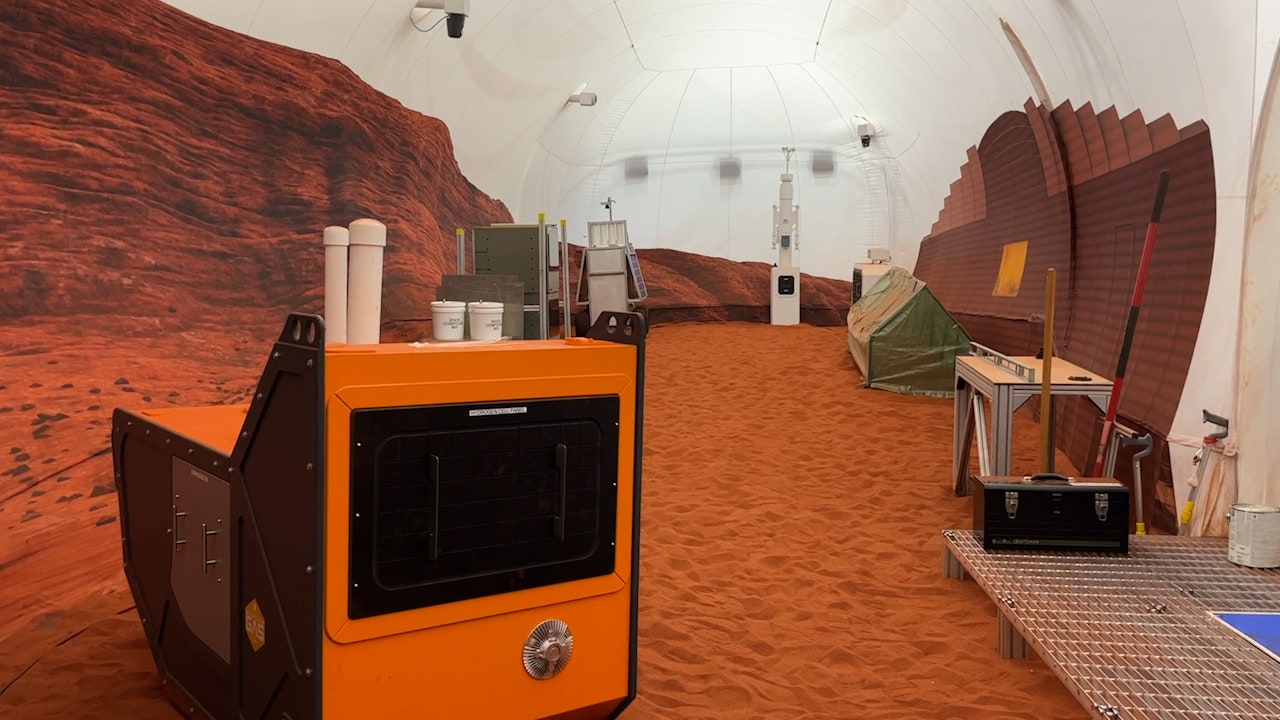
NASA is conducting a year-long Mars mission simulation called CHAPEA at Johnson Space Center with four crew members living in a habitat to study human health and performance under Mars-like conditions, providing vital data for future exploration missions.
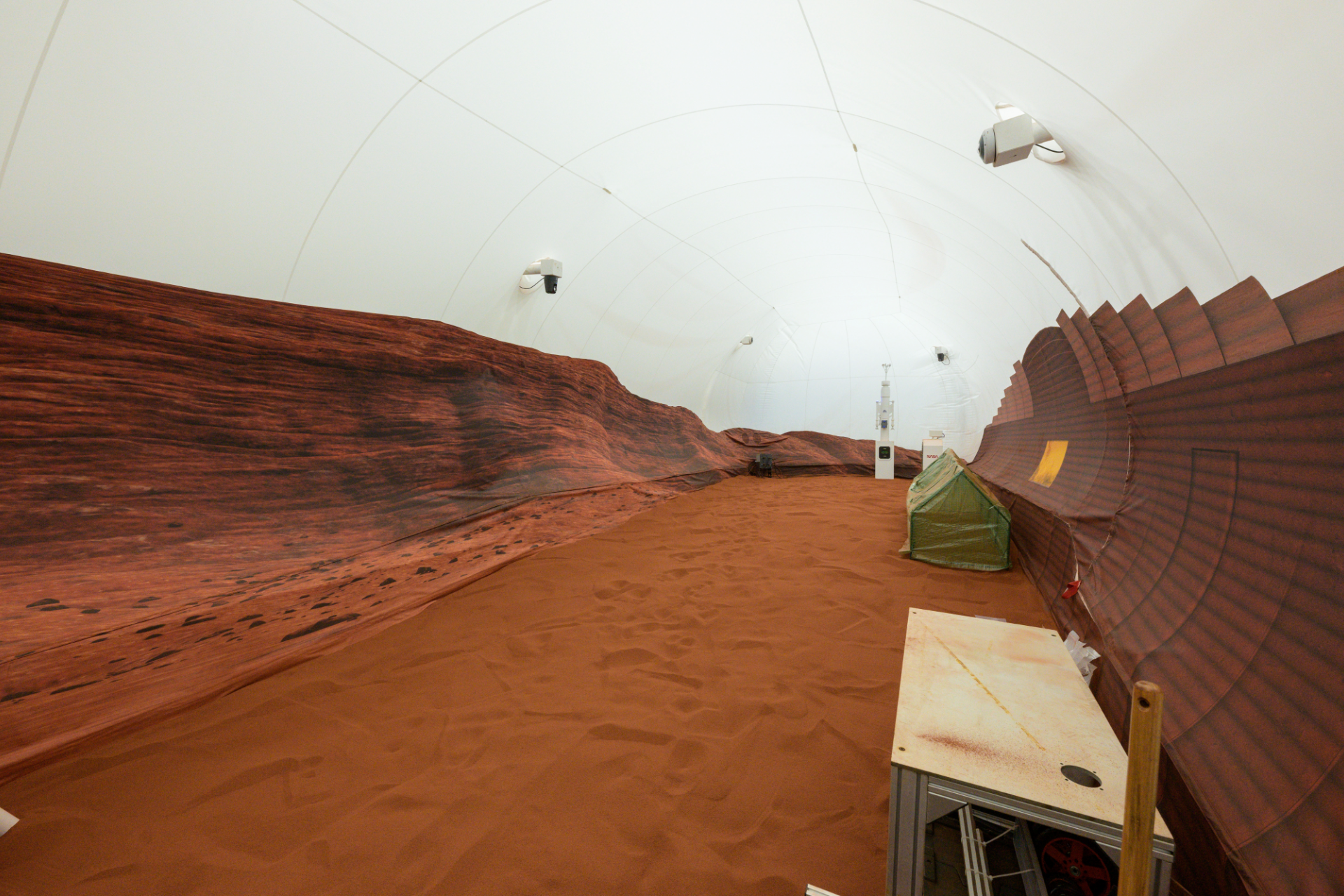
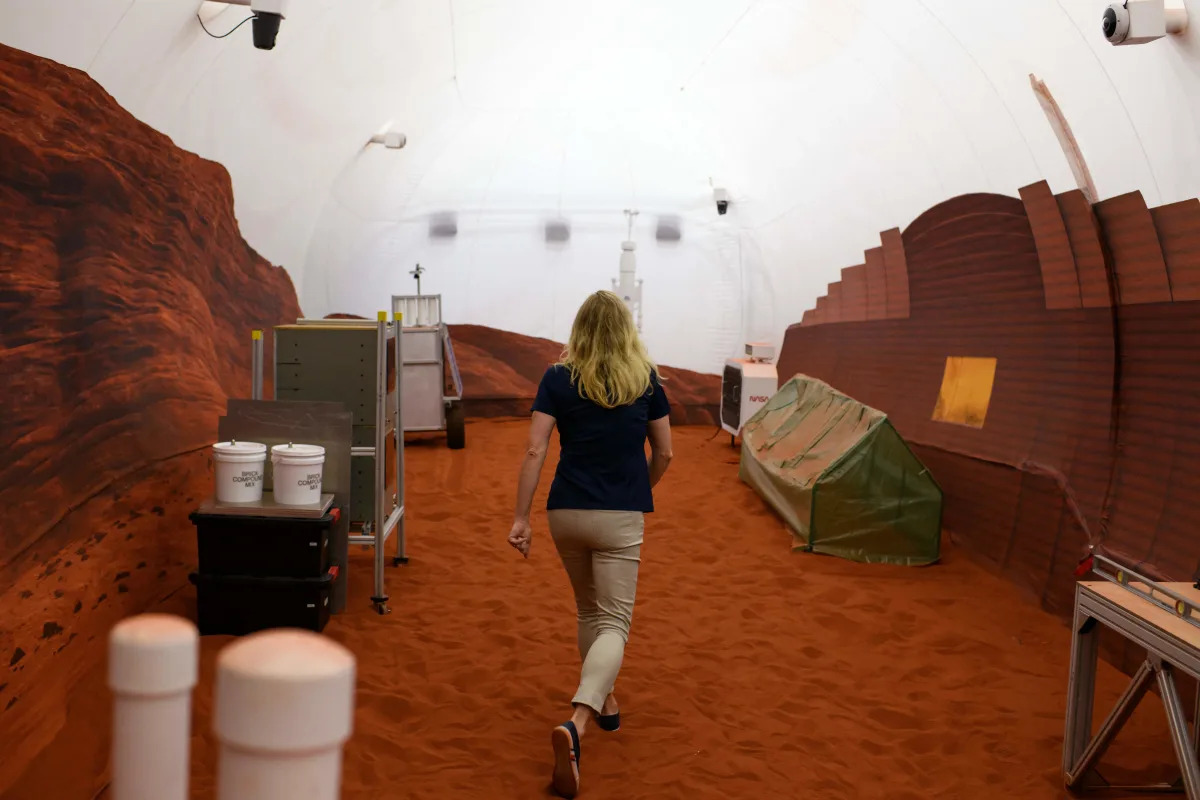
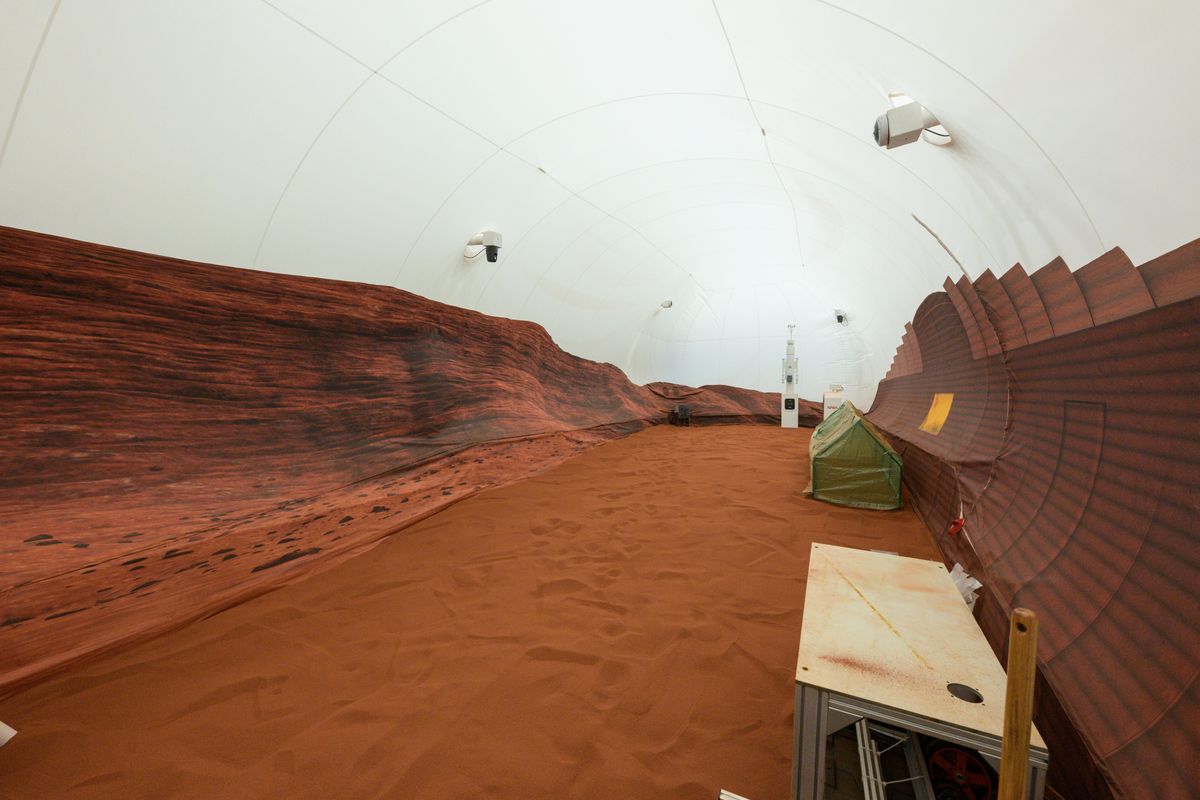
Four volunteers have entered a simulated Mars habitat in Houston, Texas, where they will remain for 378 days while facing a range of challenges designed to anticipate a real-life human mission to the red planet. The participants were selected from a pool of applicants to be part of NASA's Crew Health and Performance Exploration Analog, or CHAPEA, in its first yearlong mission. The crew will carry out an array of "mission activities," including simulated spacewalks, robotic operations, growing of crops, habitat maintenance, personal hygiene and exercise, while facing a series of obstacles that likely mirror those of a true Mars mission.
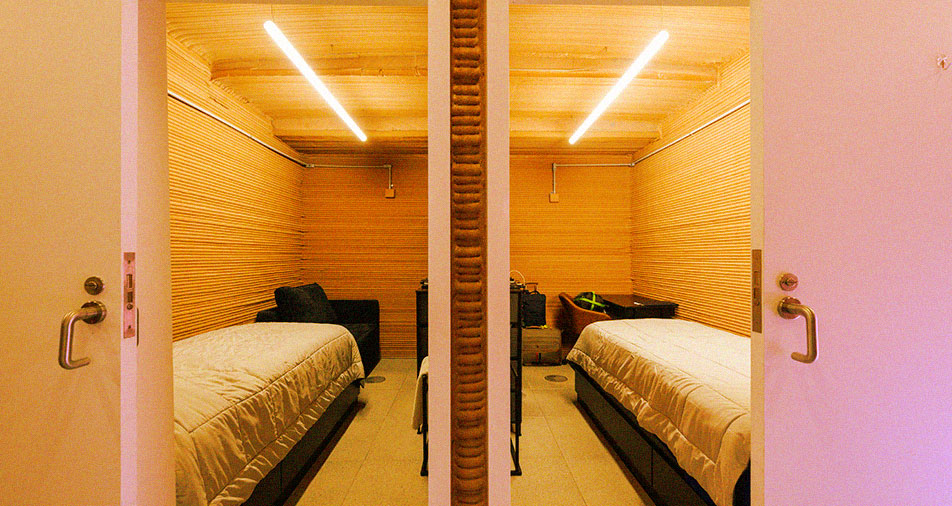
NASA is set to begin its first long-duration analog mission called the Crew Health and Performance Exploration Analog (CHAPEA) in June, where four crewmembers will live in a 1,700-square-foot habitat for a year to simulate a Mars surface mission. The crew will participate in activities that astronauts on Mars would do, from cooking to exercise to cleaning, as well as maintenance work on the habitat, crop growth, and scientific research. The simulation will allow NASA to collect cognitive and physical performance data to give more insight into the potential impacts of long-duration missions to Mars on crew health and performance.
NASA has selected four civilians to participate in the first stage of its Crew Health and Performance Exploration Analog (CHAPEA) mission, which will test how humans would fare living on Mars. The participants will be locked inside a 1,700-square-foot habitat for roughly a year, with limited food and resources, and will have to contend with equipment failure and other "environmental stressors." The simulation will allow NASA to collect cognitive and physical performance data to give more insight into the potential impacts of long-duration missions to Mars on crew health and performance.
NASA is preparing for a Mars mission by conducting a simulation at the Johnson Space Center with four volunteers from outside of NASA. The volunteers will live in a Mars habitat for one year, where they will perform realistic Mars tasks, exercise, grow food, and collect geology samples. The simulation will help NASA understand crew health and performance with limited resources. The habitat will be used for NASA's longest analog mission to date: 365 days. NASA could not simulate the gravity on Mars, so virtual reality will be used to simulate space walks and other tasks.