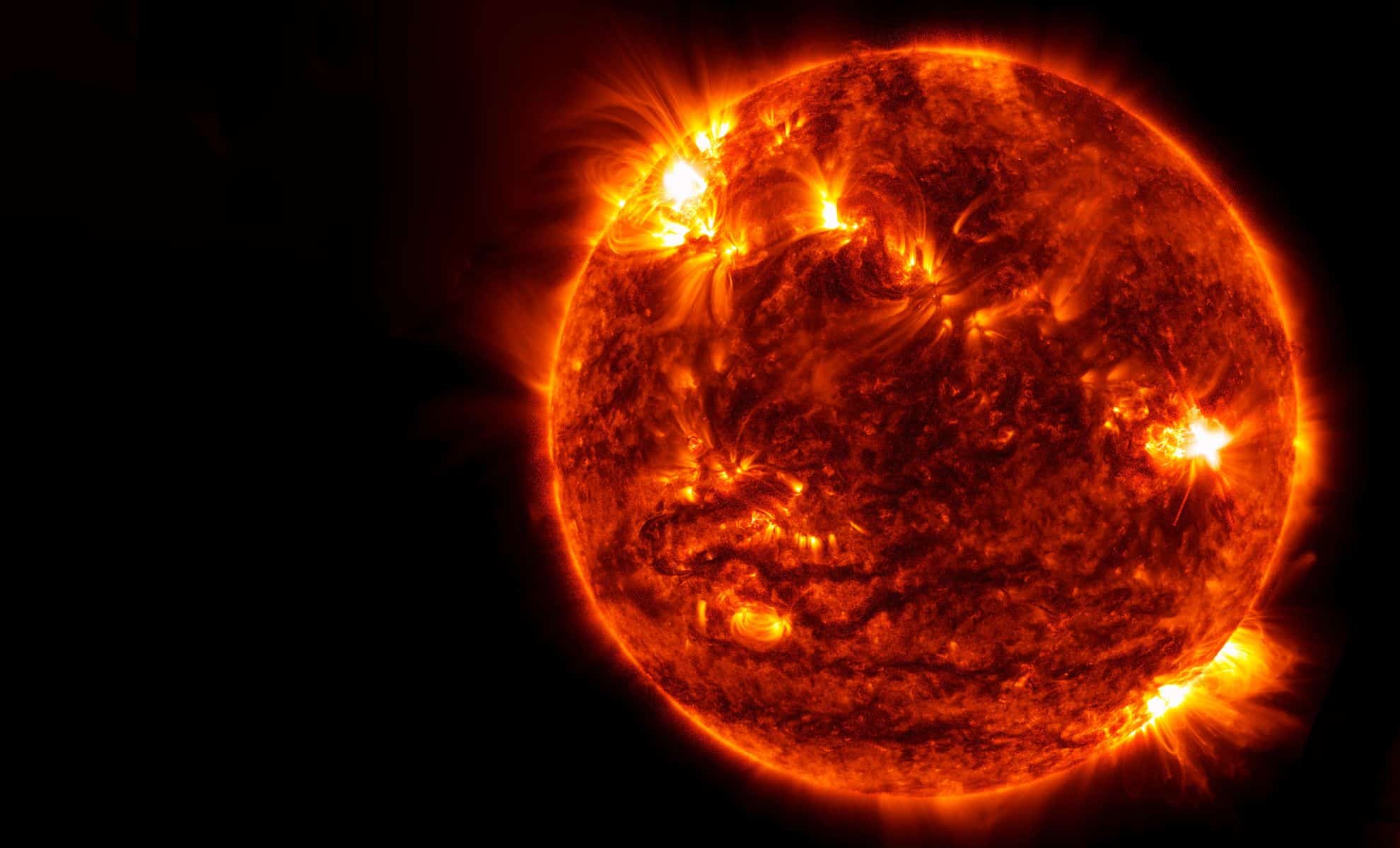
A groundbreaking collaboration between the ground-based DKIST telescope and the space-based Solar Orbiter has provided new insights into the Sun's activity, including the discovery of tiny structures called 'campfires' and detailed observations of the Sun's magnetic fields, advancing our understanding of solar phenomena and their impact on Earth.
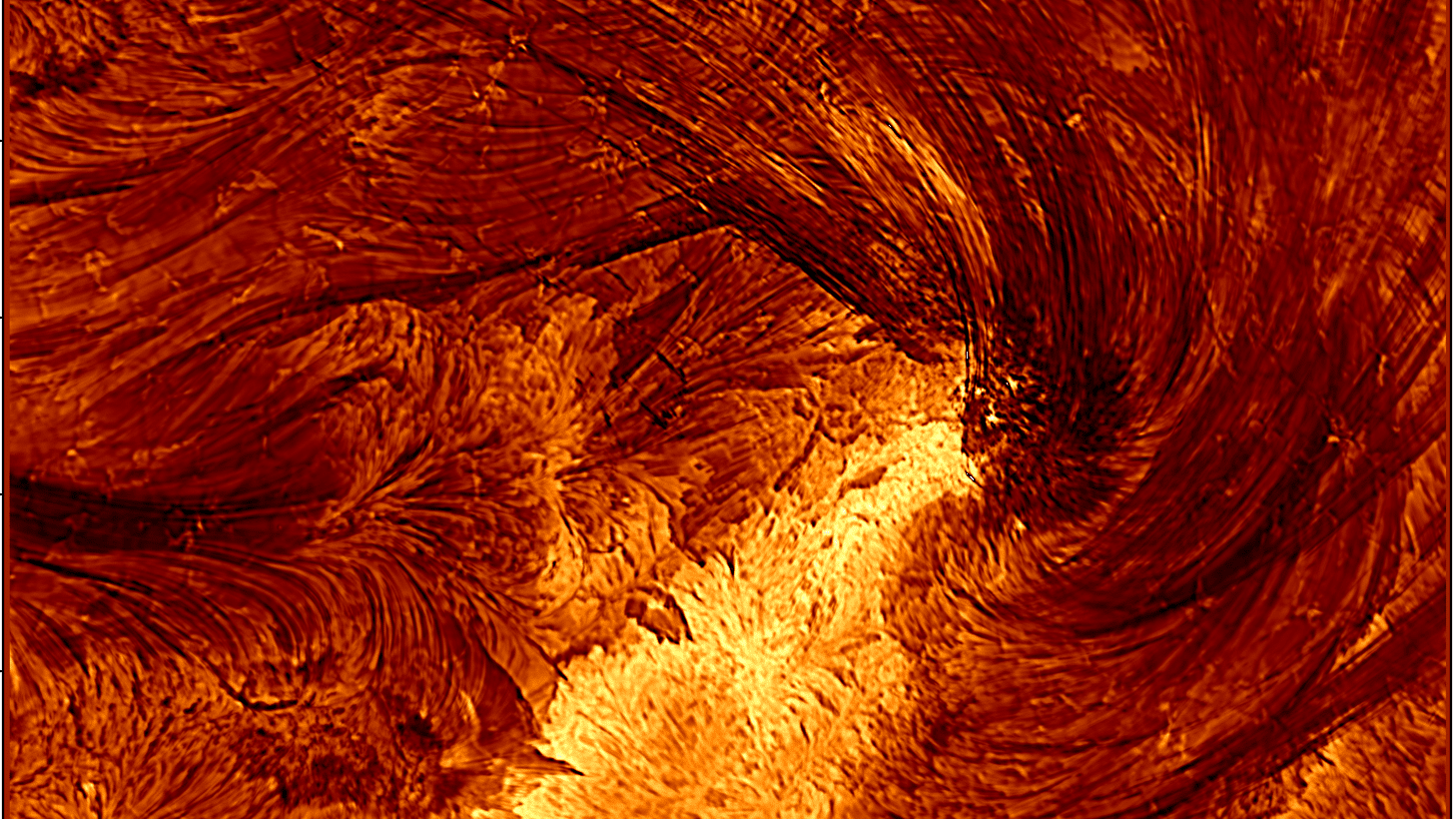
The Daniel F. Inouye Solar Telescope has captured the smallest magnetic loops ever seen in the sun's corona, revealing details that could help understand the mechanisms behind solar flares. These tiny loops, some as narrow as 13 miles, were observed during a powerful X-class flare, providing new insights into solar magnetic activity. However, funding cuts threaten the telescope's future, risking loss of valuable solar research and expertise.
Scientists have captured unprecedented data from the sun's magnetic field using the Daniel K Inouye Solar Telescope (DKIST), providing the most detailed representations to date of the magnetic field of the sun's 'quiet' surface. The data has implications for understanding energy transfer between the layers of the sun and may help explain why the outermost layer (corona) is hotter than the surface (photosphere). The observations revealed a serpentine topology of the magnetic field in the lower solar atmosphere, which is fundamental for understanding energetic phenomena and driving plasma dynamics. The complex snake-like pattern of energy in the magnetic field suggests the possibility of magnetic reconnection, contributing to atmospheric heating. This research brings scientists closer to understanding the sun and its mysteries.