Tag

Coronal Holes

All articles tagged with #coronal holes

science-and-technology1 year ago

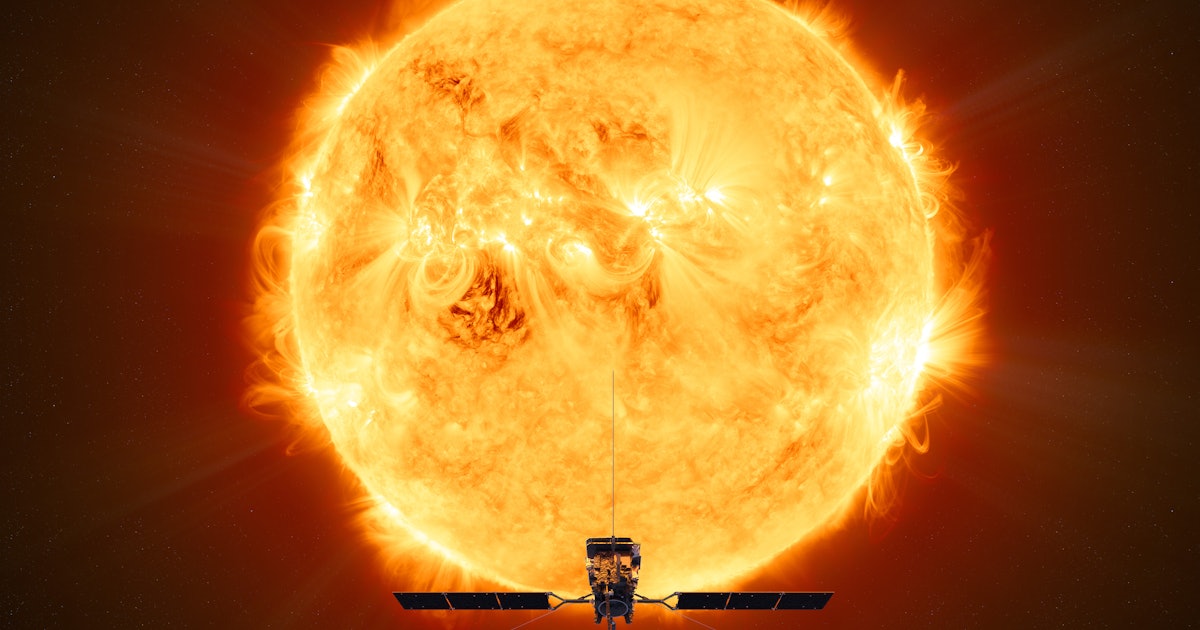
Solar Orbiter Unveils Source of Mysterious Solar Wind

The European Space Agency’s Solar Orbiter has helped trace the origins of space weather by linking solar wind measurements to specific surface features on the Sun, such as sunspots and coronal holes. This discovery, published in Nature Astronomy, confirms that different solar surface features produce distinct types of solar wind, aiding future predictions of space weather that impact satellites and other space-based technologies.
science2 years ago

Unveiling the Power Source of Solar Winds: Insights from the Solar Orbiter

The Solar Orbiter spacecraft has potentially discovered the source of solar winds, capturing images of "picoflare jets" emanating from a dark region of the sun called a coronal hole. These jets, which are much weaker than solar flares but still contain substantial energy, could be responsible for producing the charged particles that make up solar winds. Scientists have long known that coronal holes are source regions for solar winds, but the mechanism of how plasma streams emerge from them has remained a mystery. The discovery of these picoflare jets could provide the answer and help explain the high temperature of the sun's corona.

science2 years ago

New Insights into Solar Wind from Parker Solar Probe and NASA Spacecraft

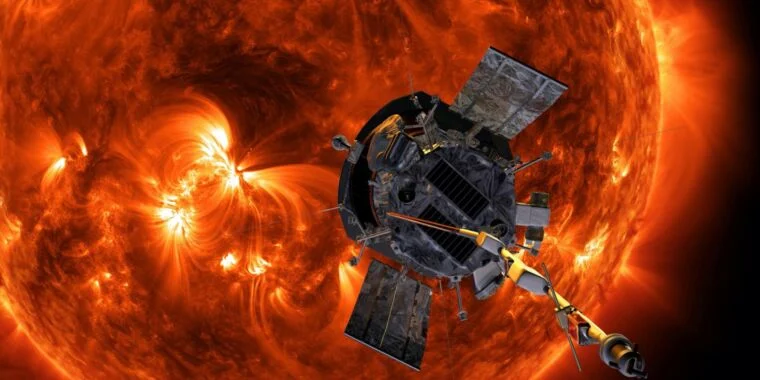
NASA's Parker Solar Probe has captured images of the region where the solar wind originates, revealing that it starts close to the surface and then gushes through "holes" in the Sun's corona before being ejected into space. These "coronal holes" are open areas in the Sun's magnetic field where magnetic fields going in opposite directions collide, break, and then connect again in a phenomenon known as magnetic reconnection, spewing out plasma that flows along the field lines. Understanding where the solar wind originates should help us predict when it is headed our way and how quickly it will reach our planet, enabling us to protect satellites, electrical grids, and other sensitive equipment.

science2 years ago

Parker Solar Probe Links Solar Wind to Internet Apocalypse.

The Parker Solar Probe has confirmed that interchange reconnection is the source of fast solar wind, which originates from coronal holes in the Sun's corona. Interchange reconnection is the reestablishing of a coronal hole's field lines after interaction with convection cells on the Sun's photosphere, resulting in the ejection of hotter plasma than with the slow solar wind. The PSP's measurements have given us the clearest picture yet of how this phenomenon works and how we might be able to predict it.

science2 years ago

Parker Solar Probe reveals secrets of fast solar winds.

NASA's Parker Solar Probe has detected structures inside coronal holes that are responsible for "fast" solar winds. Researchers have identified streams of high-energy particles that match the supergranulation flows within the Sun's coronal holes. By identifying areas of supergranulation, the team believes they've determined how the fast solar winds are formed, through a concept called magnetic reconnection. The discovery of how fast solar winds form couldn't come at a better time because the Sun's 11-year activity cycle is approaching its most energetic period, meaning more solar storms that could be a major problem for our increasingly electrified society.

science2 years ago

NASA's Solar Probe Mission Reveals Secrets of Solar Wind and Protects Earth from Internet Apocalypse.

The Parker Solar Probe has discovered the source of solar wind, uncovering fine structures of the wind where it generates near the photosphere. The coronal holes act like showerheads, where jets appear on the sun's surface in the form of bright spots, marking where the magnetic field passes in and out of the photosphere. The fast solar wind is created by the reconnection of magnetic fields within these funnel structures, providing the energy source of the fast solar wind.

science-and-technology2 years ago

NASA's Parker Solar Probe uncovers mysteries of solar wind.

NASA's Parker Solar Probe has captured information about the solar wind that flows from the sun's coronal holes towards Earth, answering questions scientists have asked for six decades. The information gathered will help predict "solar storms," which create "beautiful auroras on Earth" but also "wreak havoc with satellites and the electrical grid." The probe flew closer than about 13 million miles to the sun to study these winds. The wind is made during a process called magnetic reconnection and by the time it travels the 93 million miles to Earth, "it has evolved into a homogeneous, turbulent flow of roiling magnetic fields intertwined with charged particles that interact with Earth's own magnetic field and dump electrical energy into the upper atmosphere."

science2 years ago

NASA's Parker Solar Probe discovers source of solar wind causing aurora borealis.

NASA's Parker Solar Probe has captured information about the solar wind that flows from the sun's coronal holes towards Earth, answering questions scientists have asked for six decades. The information gathered will help predict "solar storms," which create "beautiful auroras on Earth" but also "wreak havoc with satellites and the electrical grid." The probe flew closer than about 13 million miles to the sun to study these winds and detected streams of high-energy particles that match the large convection cells inside coronal holes, suggesting the "fast" solar winds originate in coronal holes.

science-and-technology2 years ago

NASA's Parker Solar Probe Reveals Origin of Fast Solar Wind

NASA's Parker Solar Probe has captured information about the solar wind that flows from the sun's coronal holes towards Earth, answering questions scientists have asked for six decades. The information gathered will help predict "solar storms," which create "beautiful auroras on Earth" but also "wreak havoc with satellites and the electrical grid." The probe flew closer than about 13 million miles to the sun to study these winds. The wind is made during a process called magnetic reconnection and by the time it travels the 93 million miles to Earth, "it has evolved into a homogeneous, turbulent flow of roiling magnetic fields intertwined with charged particles that interact with Earth's own magnetic field and dump electrical energy into the upper atmosphere."

science-and-technology2 years ago

Parker Solar Probe Uncovers Source of Fast Solar Wind.

NASA's Parker Solar Probe has detected the origin and structure of the solar wind close to the sun's surface, revealing details that are lost as the wind exits the corona as a uniform blast of charged particles. The probe has detected streams of high-energy particles that match the supergranulation flows within coronal holes, which suggests that these are the regions where the so-called "fast" solar wind originates. Understanding how and where the solar wind originates will help predict solar storms that can wreak havoc with satellites and the electrical grid.

science-and-astronomy2 years ago

Parker Solar Probe solves mystery of fast solar wind source.

NASA's Parker Solar Probe has identified the source of the "fast" solar wind, which can disrupt communication and power infrastructure and pose a threat to satellites, spacecraft and even astronauts. The spacecraft tracked the solar wind back to its origin, "coronal holes" in the sun's atmosphere, and found that the streams of high-energy particles that make up the solar wind match so-called "supergranulation flows" within these holes. This discovery could aid the prediction of potentially disruptive solar storms.

science2 years ago

Massive Coronal Holes on the Sun Pose Threat to Earth

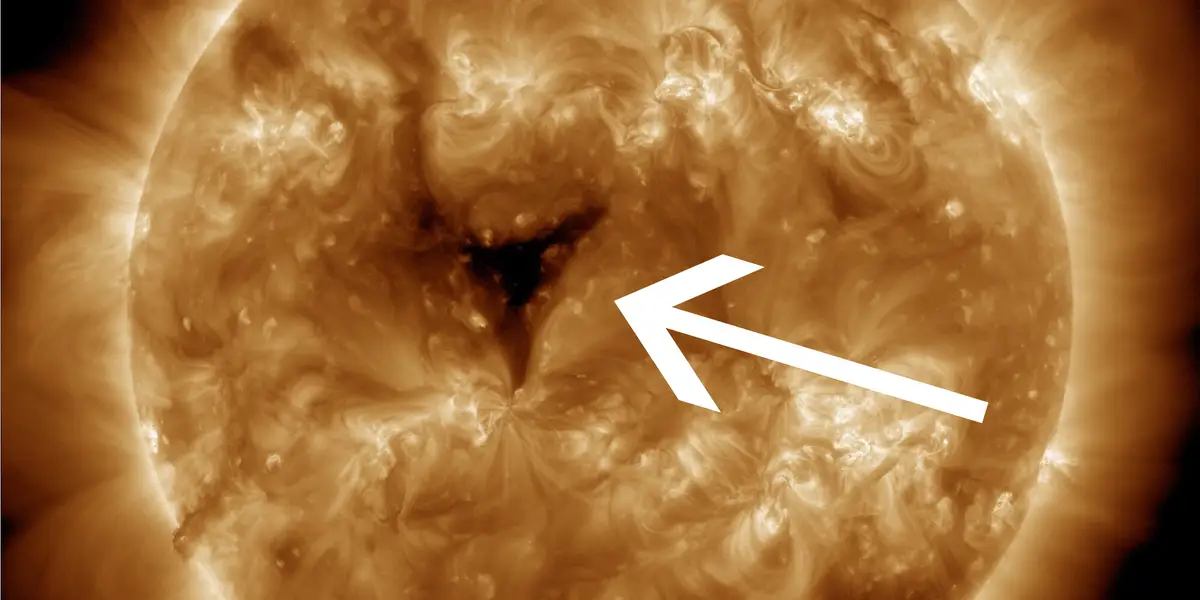
Two huge coronal holes on the sun have been spewing fast solar winds towards Earth as fast as 1.8 million mph, which can cause stunning auroras and disrupt satellites. Coronal holes are made by magnetic fields on the sun, which crash into each other, merge, and split, creating open field lines that allow sun plasma to shoot outwards. These holes aren't particularly dangerous on their own, but if they happen at the same time as another big solar event, they can create a "perfect storm" capable of disrupting power grids and causing radio blackouts.

science2 years ago

Sun Develops Mysterious Low Key Hole

A second giant "hole" has appeared on the Sun, which could send 1.8 million mph solar winds towards Earth, causing stunning auroras. While coronal holes are not uncommon, this one appeared near the equator, making it particularly interesting. Last week, a severe geomagnetic storm triggered by the Sun's powerful eruptions caused spectacular auroras across North America, but it won't be powerful enough to damage satellites or power grids back on Earth.