President Biden announced new executive actions to bar migrants who unlawfully cross the Southern border from receiving asylum, aiming to ease the burden on immigration officers and Border Patrol agents. These measures will be in effect when high levels of border encounters exceed the system's capacity. Despite these actions, Biden emphasized the need for Congressional action to provide the necessary personnel and funding for comprehensive border security and immigration reform.
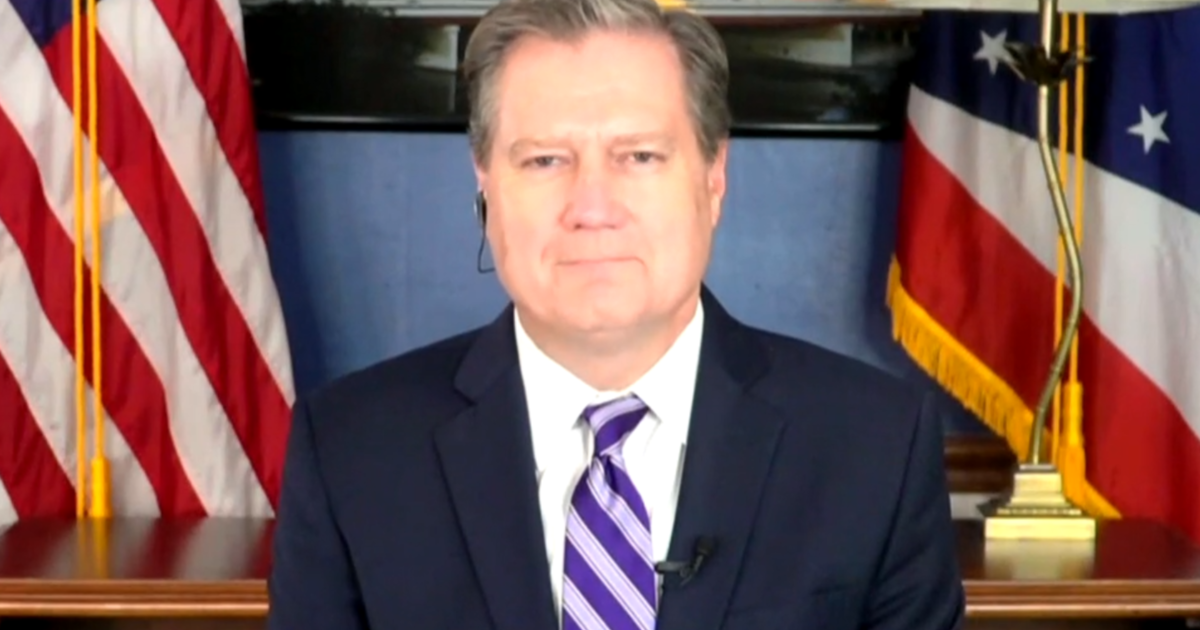
Rep. Mike Turner criticized a group of lawmakers as the "chaos caucus" for obstructing Congressional action, particularly regarding additional aid to Ukraine and a potential effort to remove House Speaker Mike Johnson. Turner emphasized the necessity of the aid package for Ukraine's national security and expressed confidence in its passage. He also noted that House Democratic leadership is unlikely to support the effort to oust Johnson, despite a motion filed by Rep. Marjorie Taylor Greene. Turner highlighted the challenges posed by recent departures in the House Republican conference and emphasized the importance of getting national security agenda items done.
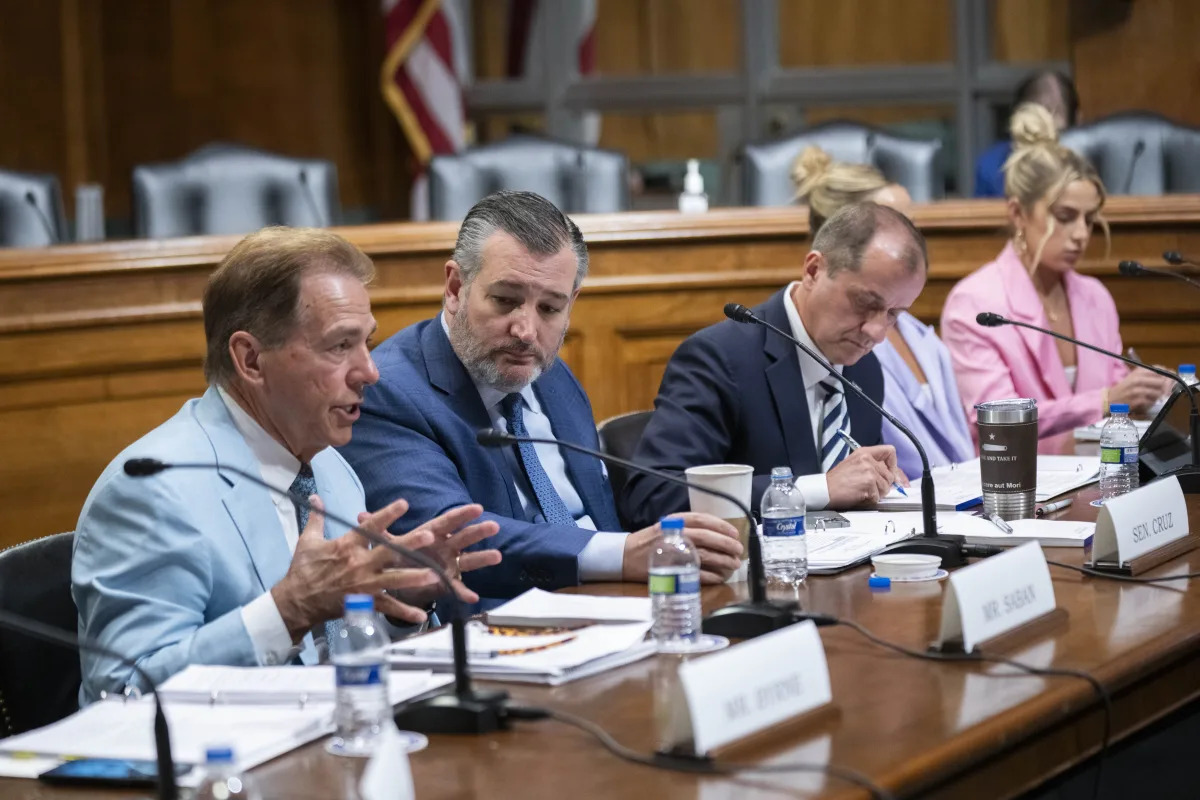
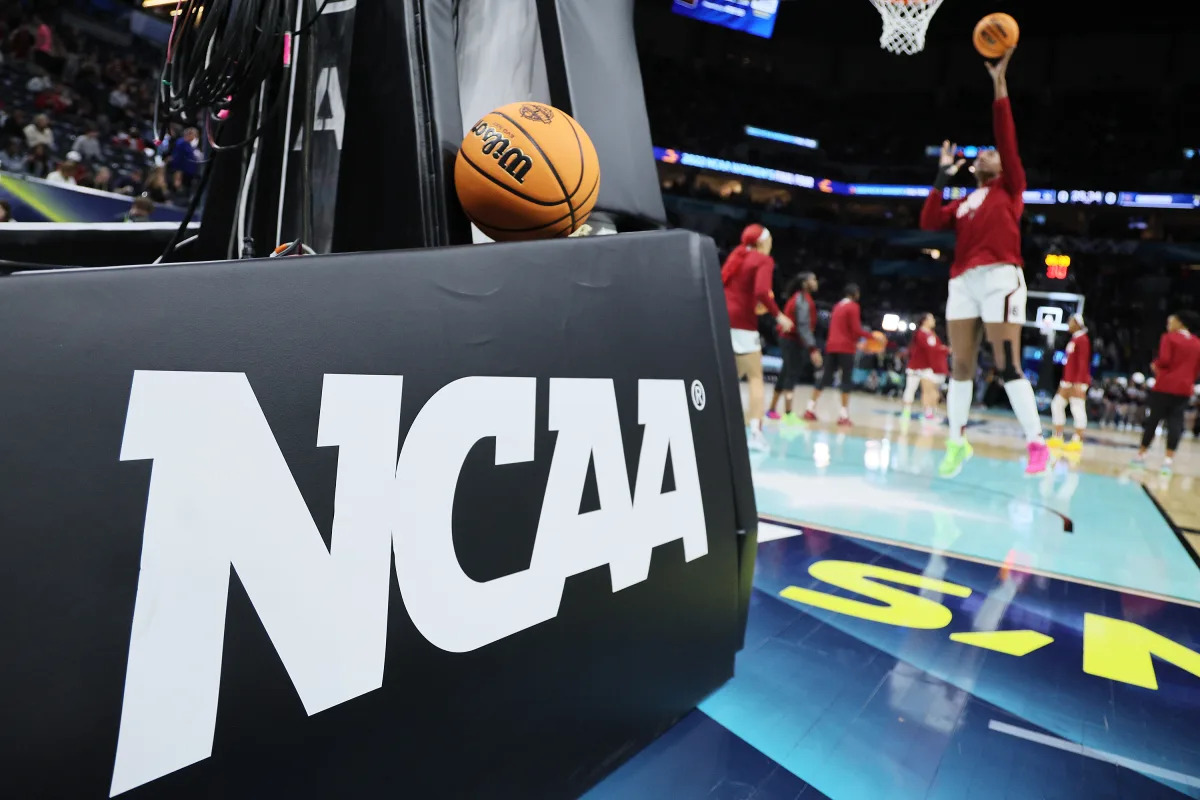
Former Alabama coach Nick Saban advocated for college athletes to be paid but not as employees during a roundtable discussion on Capitol Hill, emphasizing the need for a regulated framework around athlete compensation. He expressed concerns about the current unregulated nature of college athletics pay system and criticized booster-led collectives that have transformed the sport into a "pay for play" industry. Saban, along with other college athletic stakeholders, urged lawmakers to pass legislation that allows athletes to share in revenue without being classified as employees, while also addressing competitive equity and parity in the game. Congressional negotiations on athlete employment and oversight of college athletics are ongoing, with the possibility of college athletes being deemed employees by a national governing board or federal judge in the coming months.
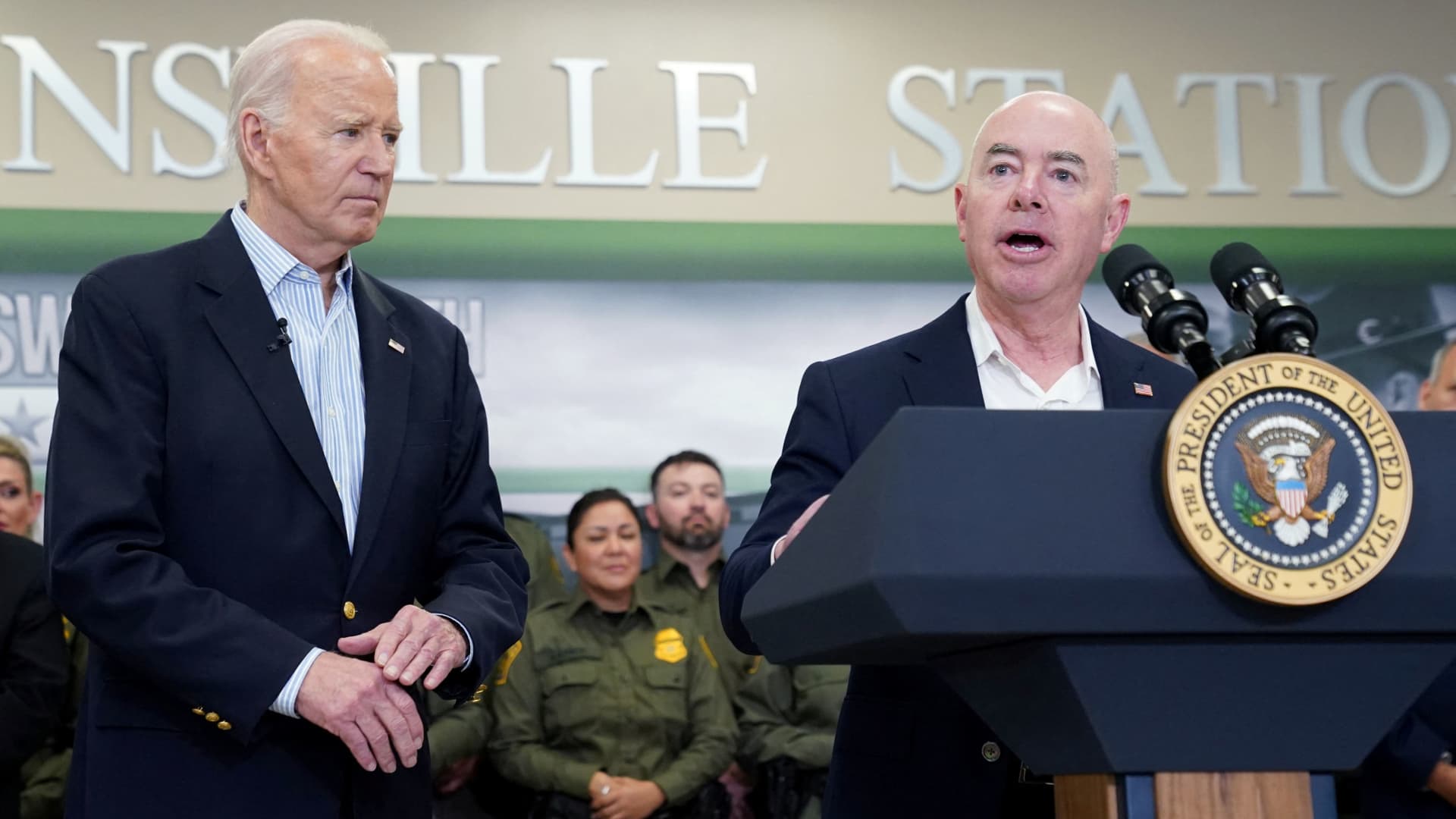
Homeland Security Secretary Alejandro Mayorkas rebukes Republican claims that the border can be managed solely through President Joe Biden's executive action, emphasizing the need for an enduring solution from Congress. While the White House privately considers implementing harsher asylum standards without Congress, Mayorkas insists that executive action is not a substitute for a lasting fix and urges Congress to pass bipartisan border proposals. The border issue has become a political battleground, with both Biden and former President Donald Trump visiting southern border towns to address the crisis and exchange criticisms.
NCAA president Charlie Baker's Project DI proposal to modernize college athletics by recommending direct pay to athletes and the creation of a new subdivision has met with mixed reactions, particularly from Power Five schools. The proposal, which aims to address the issue of compensating college athletes, faces challenges in implementation, congressional action, and potential NCAA secession. With mounting legal challenges and growing discord among industry leaders, the future of college sports hangs in the balance, as the most powerful executives in the sport gather to discuss the industry's unresolved issues.
The Securities and Exchange Commission (SEC) has filed a lawsuit against Kraken, one of the world's largest cryptocurrency exchanges, accusing it of operating as a securities exchange without proper registration. The move by the SEC has sparked criticism from the crypto industry and advocates, leading to renewed calls for Congress to provide regulatory clarity for digital assets. Kraken denies dealing in securities and plans to vigorously defend its position. The SEC has previously filed similar lawsuits against Binance and Coinbase, and the industry has spent over $20 million on federal lobbying in 2023. Congress has yet to pass a comprehensive framework for regulating the crypto industry, prompting calls for legislative action.
Democrats in the Senate and House are discussing the possibility of conditioning future military aid to Israel, as fighting in Gaza intensifies and the civilian death toll rises. While the discussions are preliminary and it remains uncertain if they will lead to congressional action, White House officials are aware of the talks. The erosion of Democrats' unequivocal support for Israel's military has raised questions among traditional allies about aid red lines. If more moderate Democrats join calls for conditioning aid, it could complicate President Biden's policy of staunchly standing by Israel. The conversations revolve around using existing authorities, such as the Leahy Law, which prohibits sending funds to countries with credible human rights violations.
Two members of Congress, Sen. Richard Blumenthal and Rep. Jan Schakowsky, are urging the Consumer Product Safety Commission (CPSC) to take action on pillow-like infant loungers following an NBC News investigation that revealed more deaths linked to the products than previously reported. At least 25 deaths have been linked to baby loungers since 2015, including those manufactured by The Boppy Company. The CPSC is expected to implement new safety regulations for infant loungers, which could include warning labels or design standards that effectively ban certain types of loungers. Blumenthal and Schakowsky praised the CPSC for suing manufacturers who refused to cooperate with recalls, and a hearing for the safety commission's lawsuit against Leachco is scheduled for August 7.