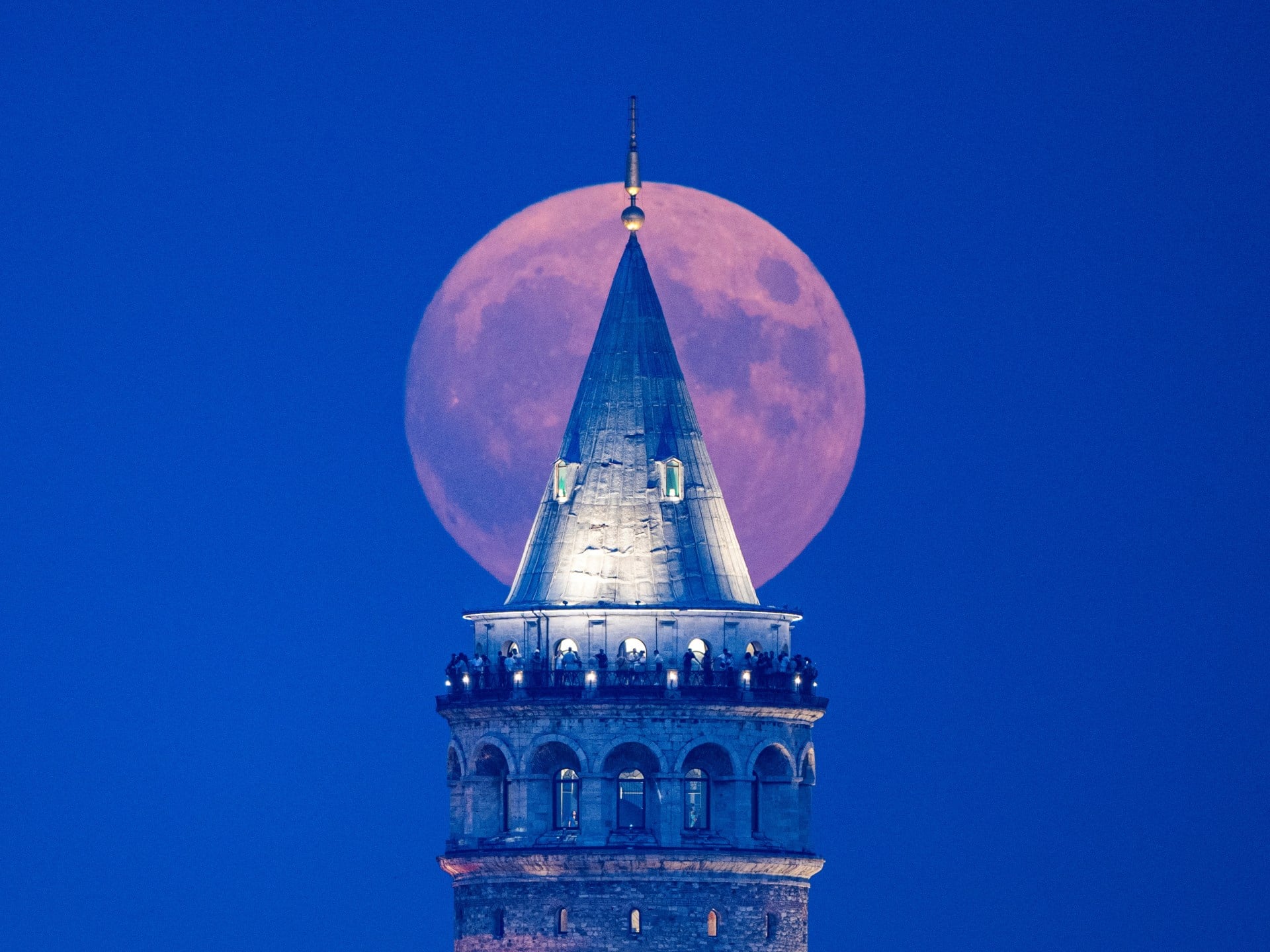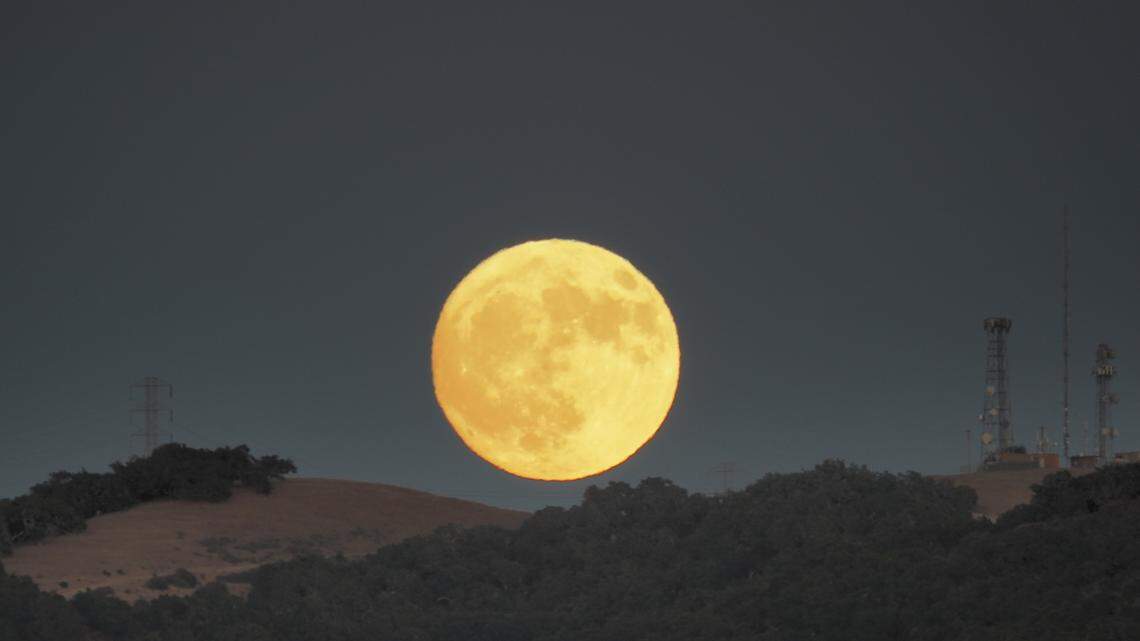
In September, California viewers can enjoy a bright full moon called the corn moon and observe Saturn at its brightest during opposition on September 21, while most of the world will witness a rare total lunar eclipse turning the moon 'blood red'. The fall equinox occurs on September 22, marking the start of autumn in the Northern Hemisphere.
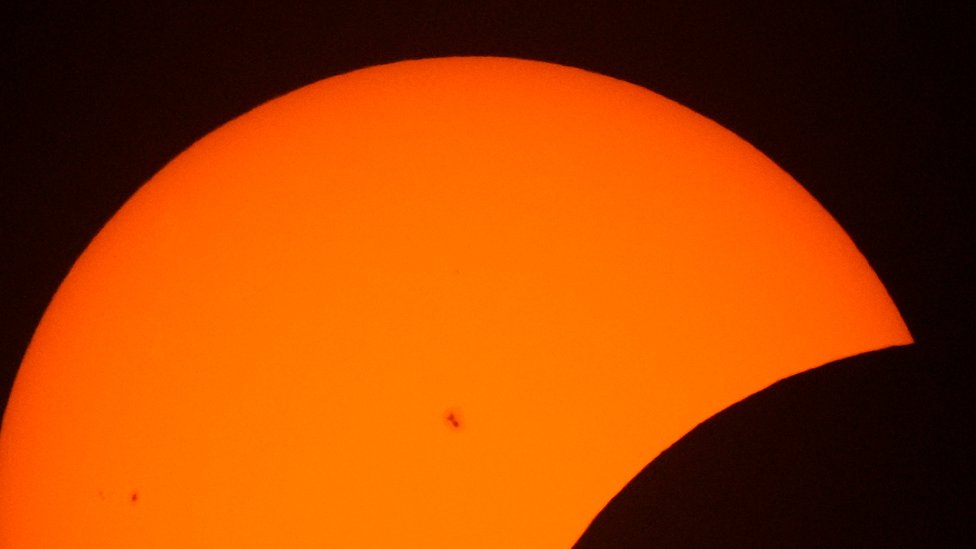
Thousands of people across North America witnessed a celestial spectacle as the Moon perfectly blocked the Sun, plunging parts of the continent into momentary darkness. The path of totality was 115 miles wide and home to nearly 32 million Americans, with people using special protective glasses to observe the event. While New York City wasn't in the path of totality, it still experienced up to 90% coverage of the sun by the moon, and couples even wed at the Total Eclipse of the Heart festival in Russellville, Arkansas.
Millions of Americans are eagerly anticipating the rare solar eclipse on April 8, but fickle cloud forecasts are causing anxiety for totality tourists hoping for clear skies. While some are making game-day decisions about their viewing spots, others remain hopeful and are planning eclipse viewing parties regardless of the weather. Despite the uncertainty, there is optimism that even a cloudy day during the eclipse can still provide a unique and interesting experience.
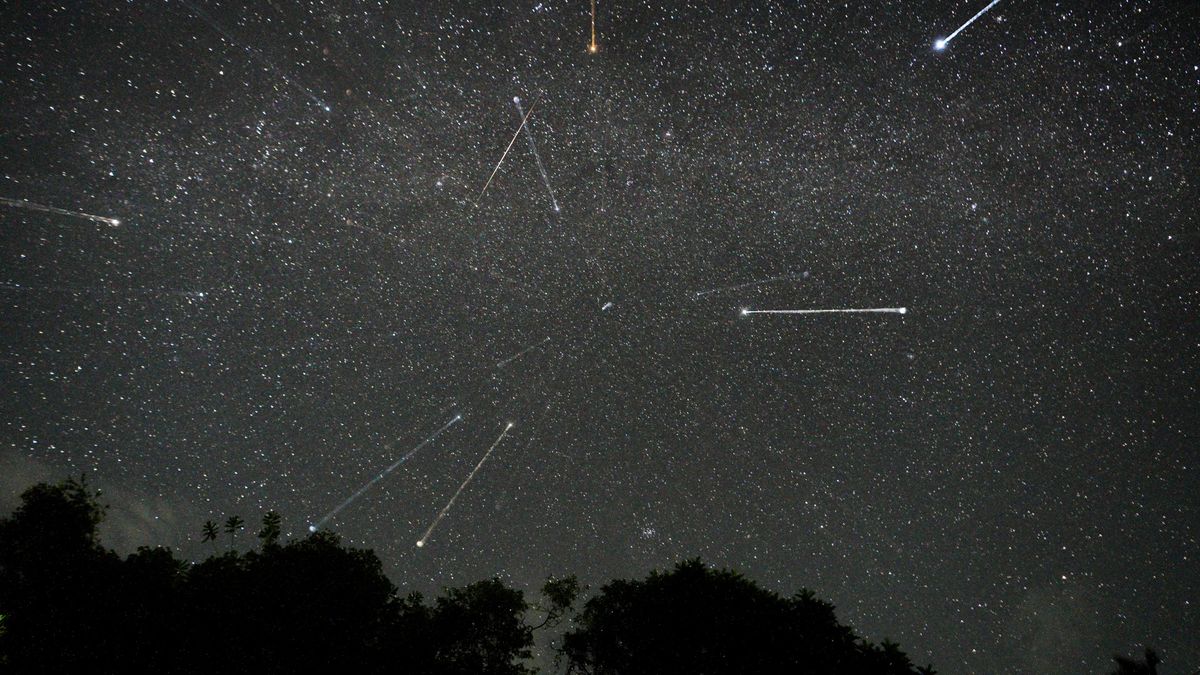
The Geminid meteor shower dazzled viewers around the world with its stunning display of shooting stars. The shower, caused by debris from the asteroid 3200 Phaethon, peaked on December 13 and 14, with up to 100 meteors per hour expected. Photographers captured breathtaking images of the meteor shower from various locations, including Sri Lanka, California, and New Jersey. Webcasts were also available for those unable to witness the event in person.
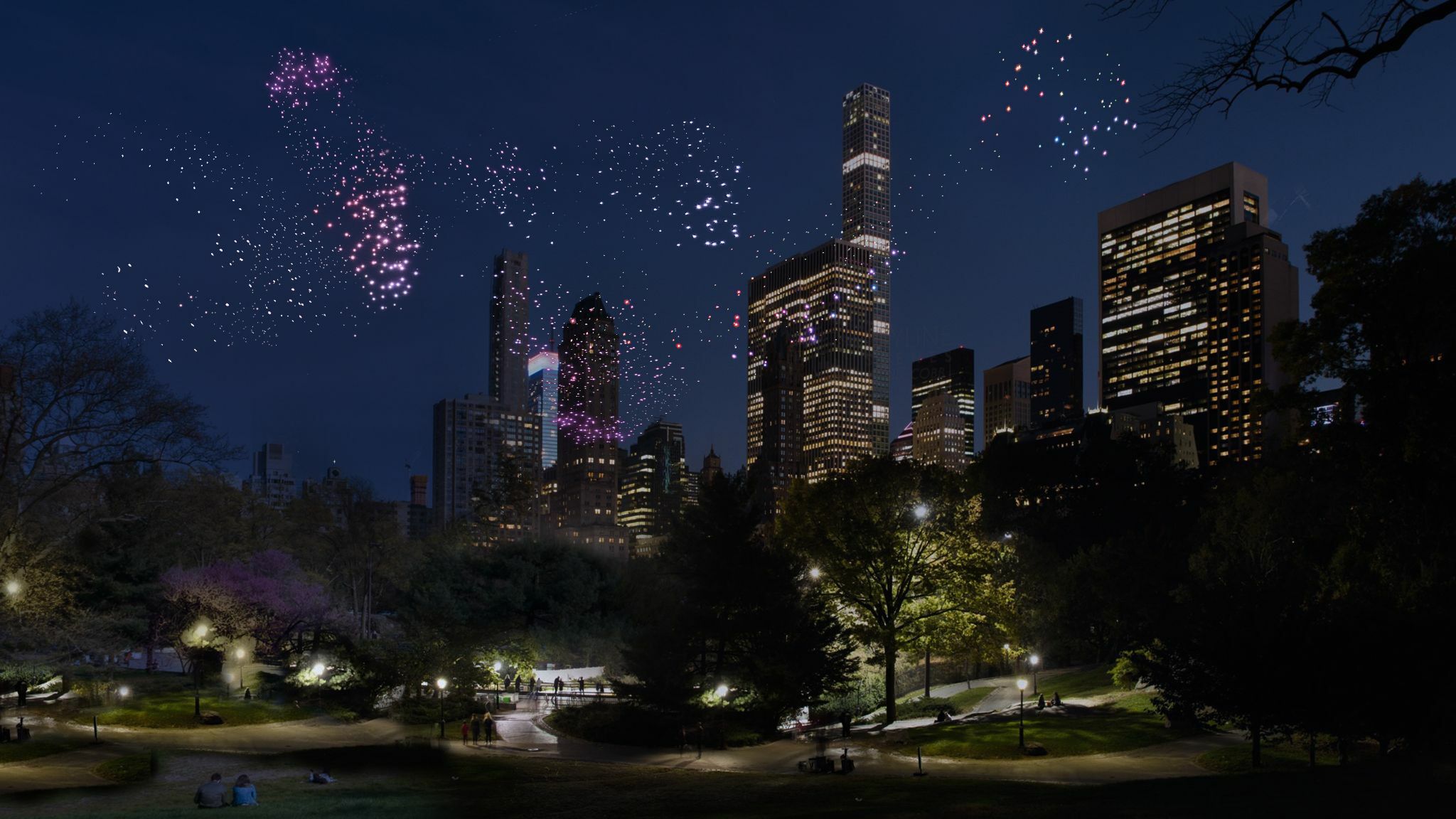
Dutch studio DRIFT will present "Franchise Freedom," an open-air public art performance featuring 1,000 drones flying over Central Park in New York City. The drones will illuminate the night sky in a spectacle exploring the relationship between humans, nature, and technology. The free shows will take place on October 21 at 7pm, 8pm, and 9pm, with recommended viewing locations at Bethesda Fountain, Dead Road, Bandshell and Frisbee Hill, and the Boat Landing and drive overpass on west 77th Street. The performance is the largest public art work in Central Park since "The Gates" in 2005.
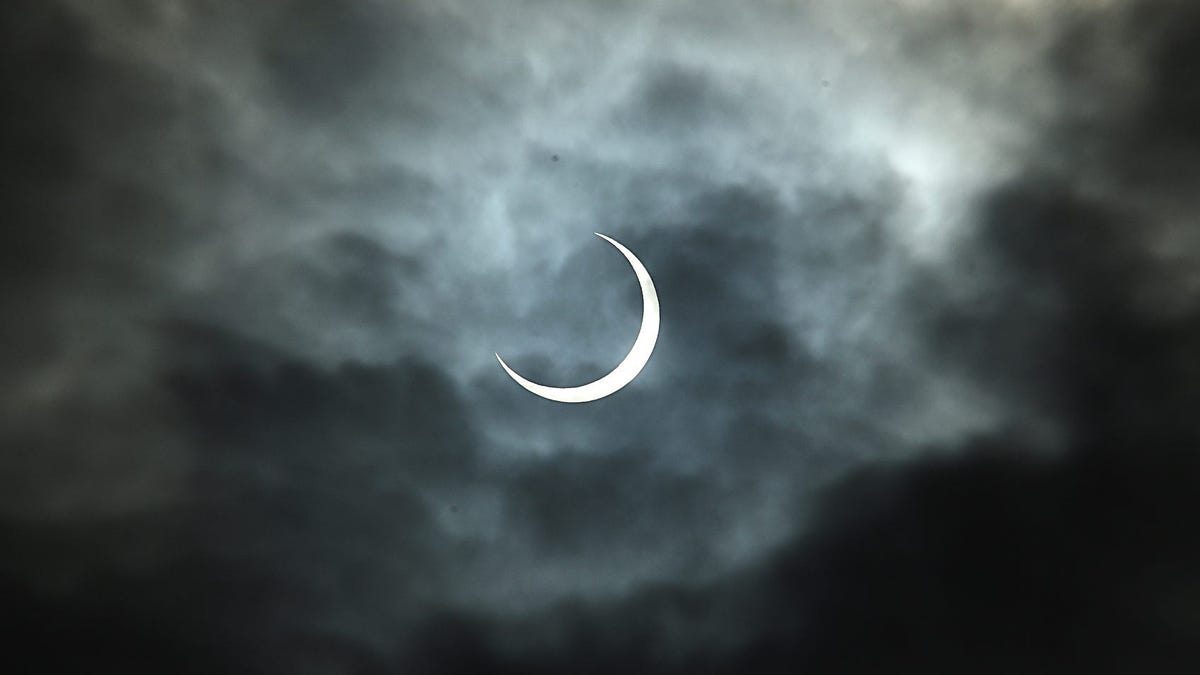
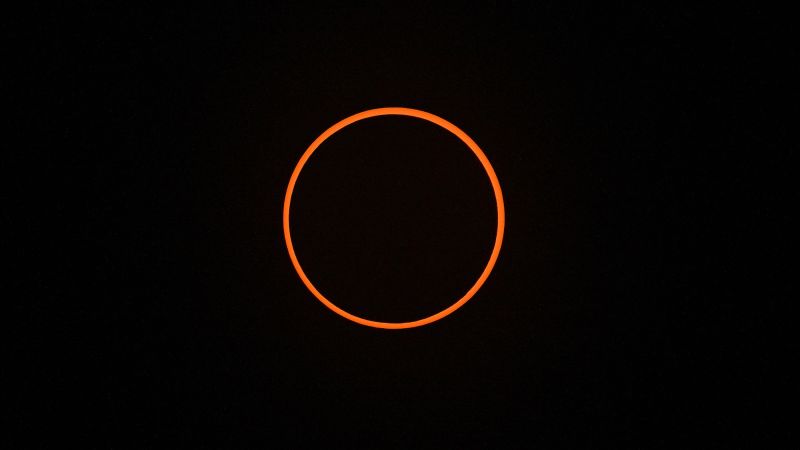
A rare annular solar eclipse, also known as a "ring of fire," appeared over the Americas on Saturday, creating a celestial spectacle. The eclipse, which won't be seen again in this part of the world until 2046, darkened the skies as the moon moved in front of the sun, causing temperatures to drop. Those outside the path of the eclipse were treated to a crescent-shaped partial solar eclipse. Sky-gazers can look forward to another total solar eclipse on April 8, 2024.
A rare blue supermoon, the closest full moon of the year, delighted stargazers worldwide on Wednesday night. This phenomenon occurs when a full moon is seen twice in a single month. Saturn also made an appearance alongside the moon, adding to the celestial spectacle. The next blue supermoon is not expected until 2037, but another regular supermoon is anticipated at the end of September.
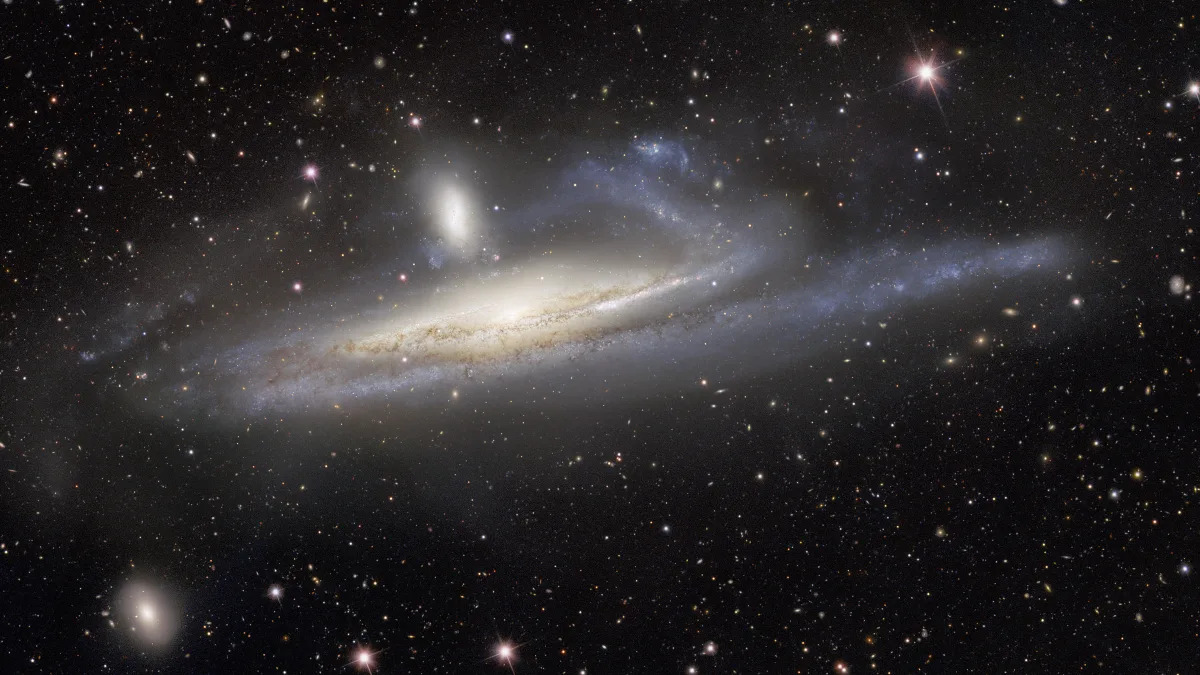
The Dark Energy Camera has captured a captivating celestial spectacle as the spiral galaxy NGC 1532, also known as Haley's Coronet, engages in a cosmic tug-of-war with its smaller companion, the dwarf galaxy NGC 1531. The images reveal the mutual gravitational influences and distortions caused by the merger of these galaxies, offering a glimpse into the early stages of galactic growth and evolution. The Dark Energy Camera's wide field of view and high sensitivity allow astronomers to study faint objects and deepen our understanding of the universe.
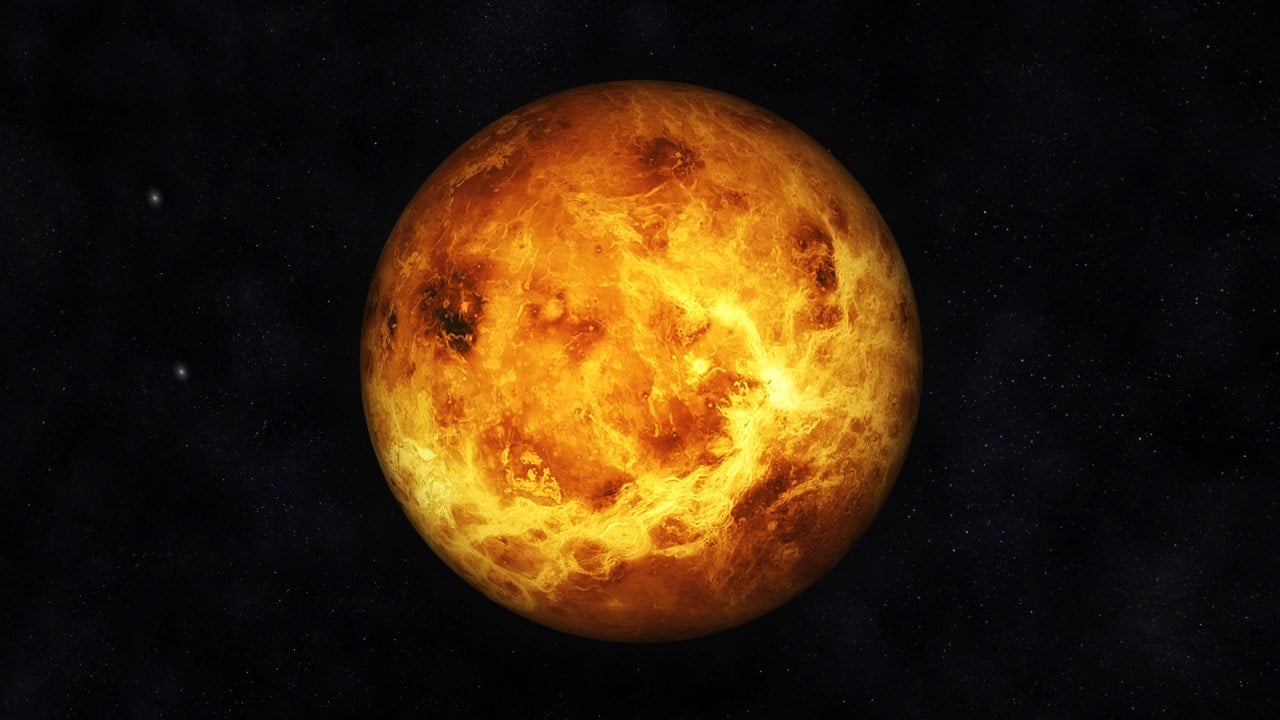
Venus, the hottest planet in the solar system, will be at its highest point in the sky on June 4, making for great viewing during the evening hours. Although often called Earth's "twin," Venus is a "hellish world" with surface temperatures hot enough to melt lead. NASA's upcoming DAVINCI Mission to Venus aims to collect unprecedented detail and information about the planet to help solve the mystery of how it became a smoldering terrestrial sphere. Sunday's dazzling view of Venus is a great opportunity for sky gazers to spot our planetary neighbor as it burns alongside our spinning world.
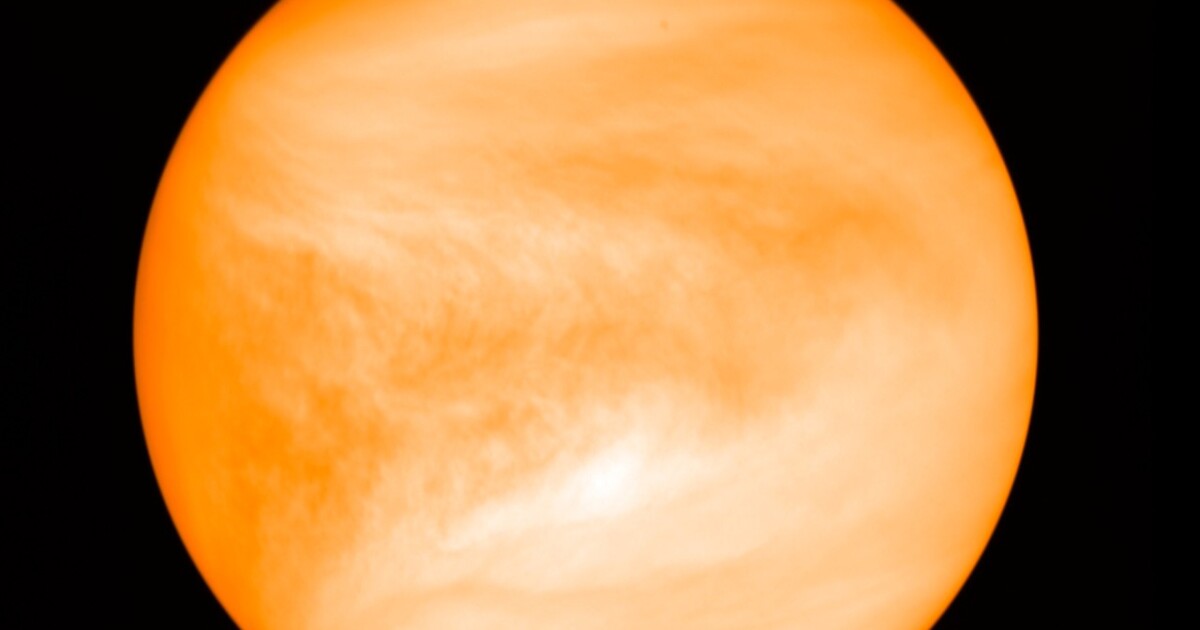
Venus, the hottest planet in the solar system, will be at its highest point in the sky on June 4, making for great viewing during the evening hours. Although often called Earth's "twin," Venus is a "hellish world" with surface temperatures hot enough to melt lead. NASA's upcoming DAVINCI Mission to Venus aims to collect unprecedented detail and information about the planet to help solve the mystery of how it became a smoldering terrestrial sphere.
Venus will be shining brightly and at its highest point in the sky on June 4th, providing a celestial spectacle visible at sunset. Mars will also be visible nearby as a reddish point of light. NASA has two unmanned missions planned within the decade to explore Venus and learn more about the planet's mysterious and extreme environment, including the DAVINCI mission which will drop a probe to the surface to gather data and take up-close images. These will be the first missions to Venus in almost thirty years.