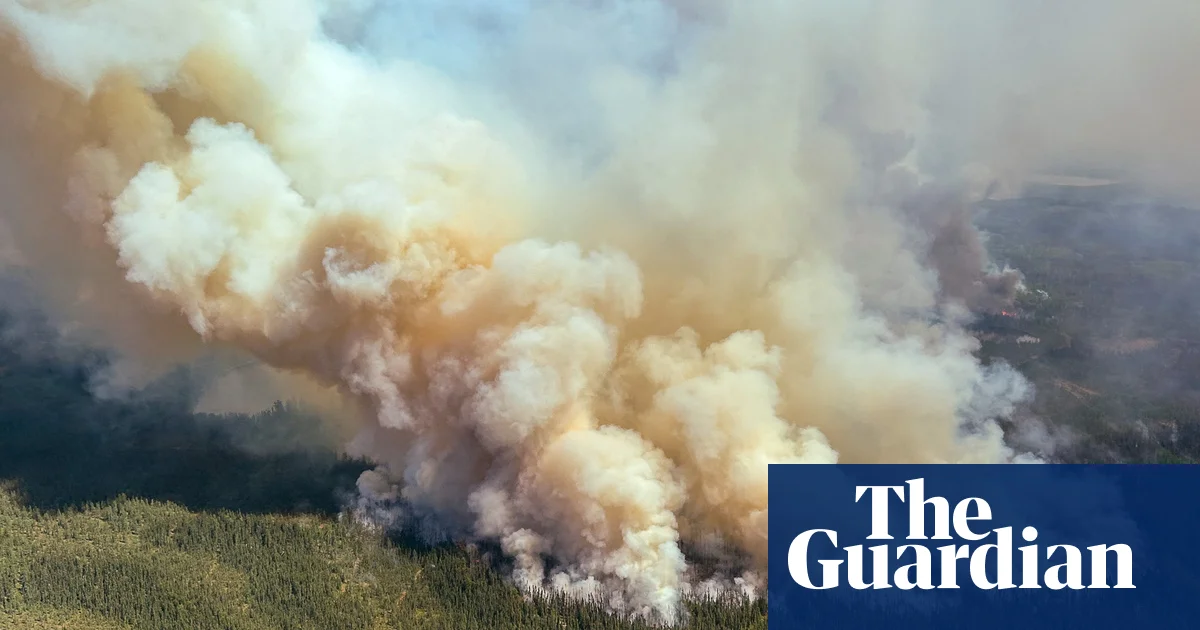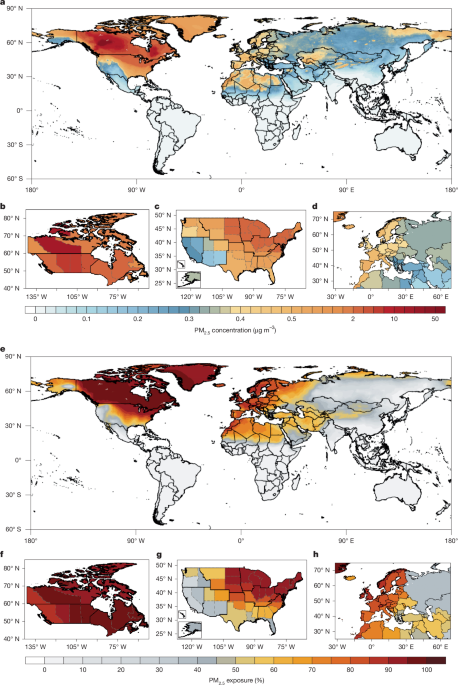
The 2023 Canadian wildfires burned a record amount of forest, significantly increasing PM2.5 pollution globally, affecting air quality and causing an estimated 5,400 acute and 82,100 chronic deaths worldwide, with impacts reaching North America, Europe, and beyond, highlighting the extensive health and environmental consequences of large-scale wildfires.
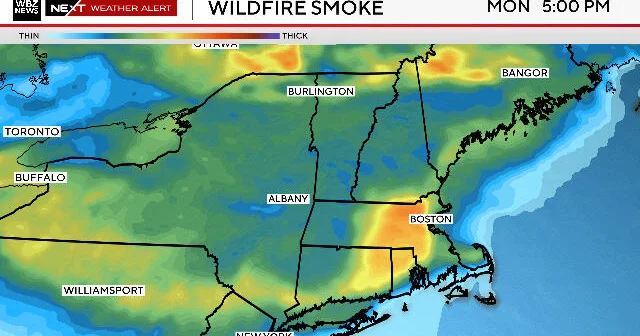
Massachusetts is experiencing its worst air quality of the year due to smoke from Canadian wildfires, with an air quality alert in effect and health risks for sensitive groups, though some improvement is expected by Tuesday.
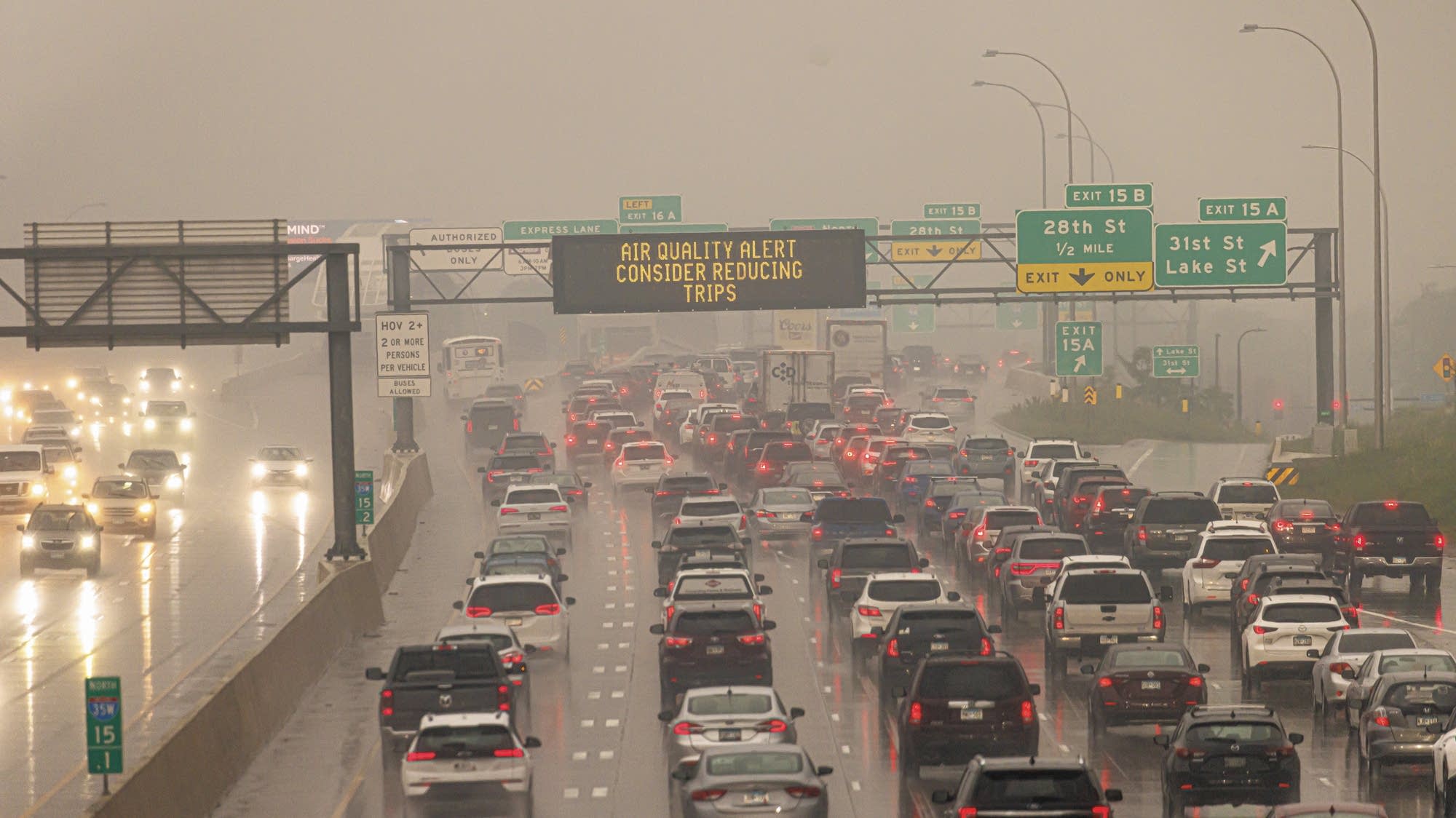
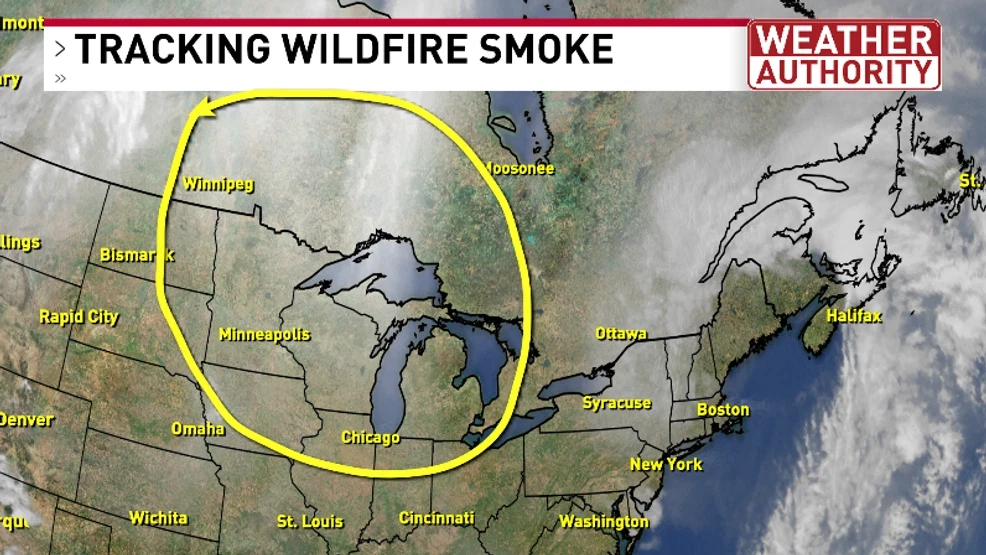
The Upper Midwest is experiencing unhealthy air quality due to smoke from Canadian wildfires, impacting outdoor activities and leading to park closures and evacuations in affected areas, with residents and businesses affected by the poor air conditions.
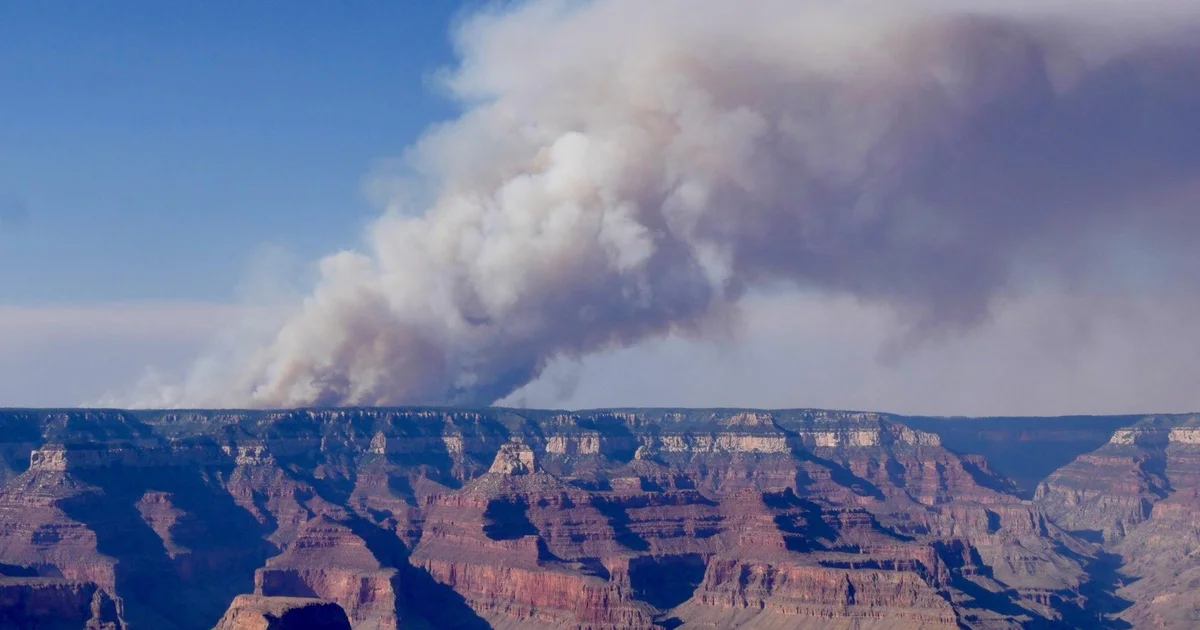
A wildfire near the Grand Canyon has expanded over 20 times in 24 hours, prompting evacuations and highlighting the ongoing wildfire season, while Canadian wildfire smoke has caused unhealthy air quality across the U.S. Midwest, with warnings of dangerous heat and smoke conditions.
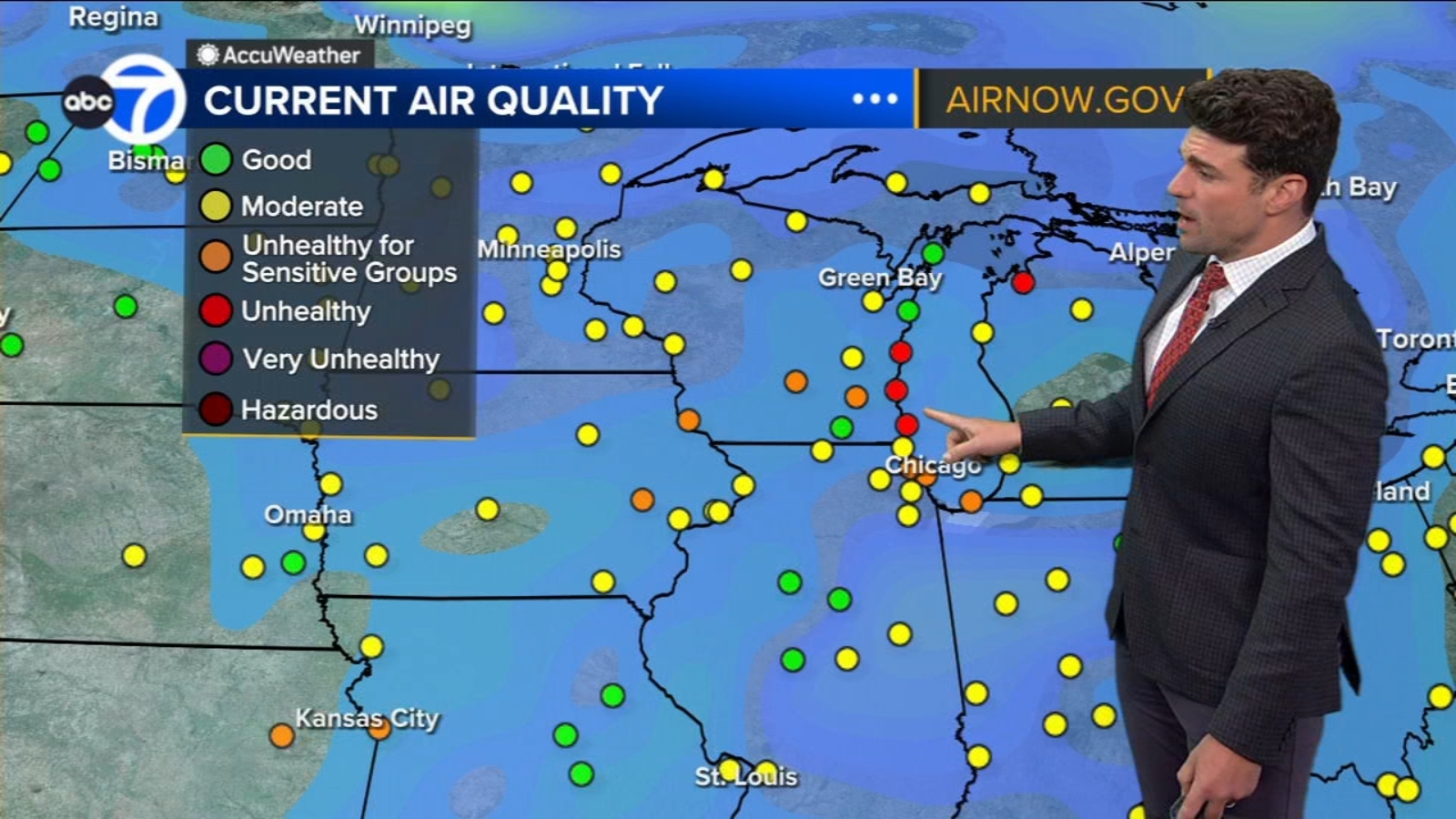
Chicago's air quality has deteriorated to some of the worst levels in the world due to smoke from Canadian wildfires, prompting health warnings and an air quality alert, with conditions expected to improve by Saturday.
The Chicago area is under an air quality alert until Thursday due to smoke from Canadian wildfires, with health warnings for vulnerable populations, as the region experiences unhealthy air conditions caused by ongoing wildfires in Canada.
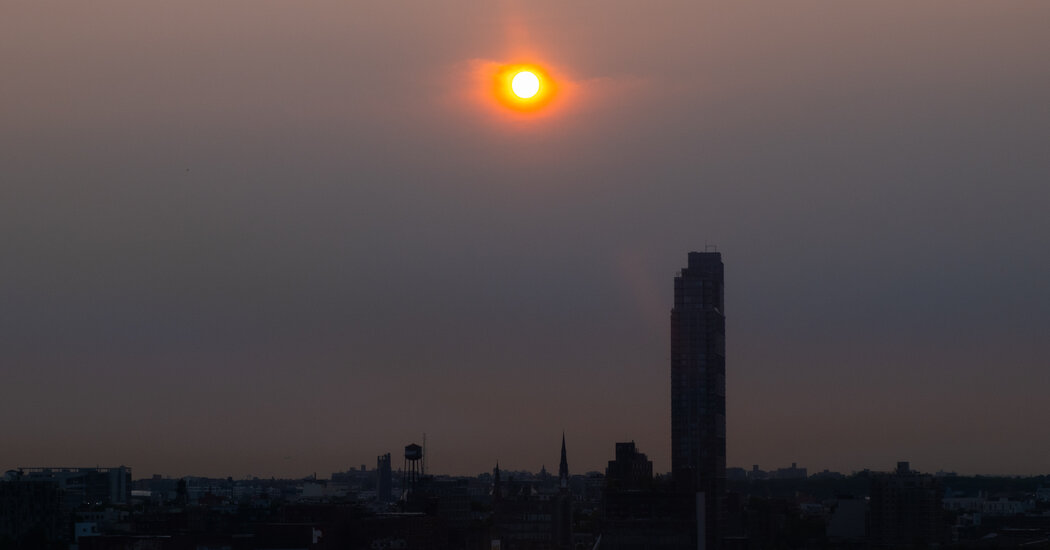
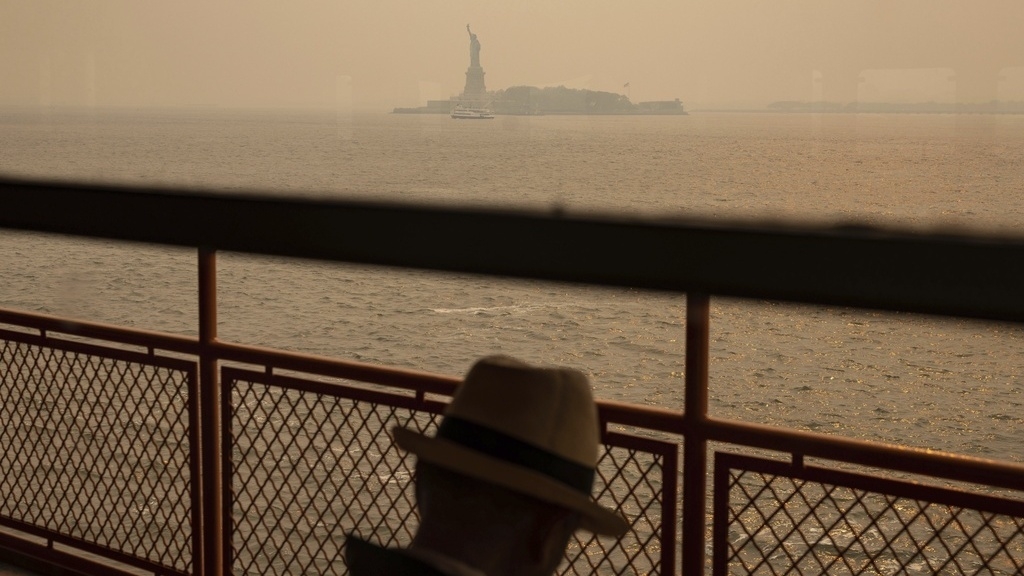
Wildfire smoke from Canada and dust from the Sahara are causing hazy skies and unhealthy air quality across the Eastern U.S., prompting air quality alerts and health advisories, especially for sensitive groups in New York City and surrounding areas.
A significant wildfire smoke front from Canada caused record-high air pollution levels across Minnesota, prompting health alerts and affecting visibility, but conditions are expected to improve by Wednesday as the smoke clears and weather conditions change.
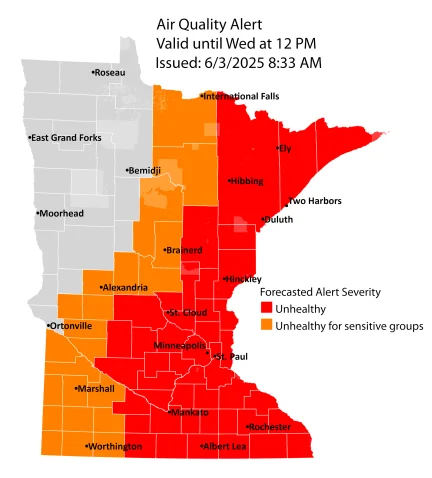
Much of Minnesota is experiencing unhealthy air quality due to smoke from Canadian wildfires, prompting an air quality alert and advisories to limit outdoor activity, with conditions expected to improve later in the week.
An extended air quality alert is in effect across Minnesota until Wednesday due to smoke from Canadian wildfires, with conditions ranging from unhealthy to hazardous, prompting health precautions and expected improvement as a cold front and westerly winds help clear the smoke.
Smoke from ongoing Canadian wildfires is causing air quality alerts across the Midwest and Plains, with health risks especially for sensitive groups, as smoke travels thousands of miles, exacerbating health and environmental concerns amid climate change-induced wildfire frequency.
Canadian wildfires are causing smoke to drift into Midwestern U.S. states like Minnesota, Wisconsin, and Michigan due to northerly winds, prompting air quality alerts. The smoke may also reach Central New York by midweek as winds shift, potentially impacting air quality again. Monitoring updates is advised.
Recent record-breaking wildfires across Canadian provinces are causing hazardous air quality that threatens to impact US cities with smoke and health risks, driven by climate change and prolonged dry conditions, with ongoing evacuations and health concerns.
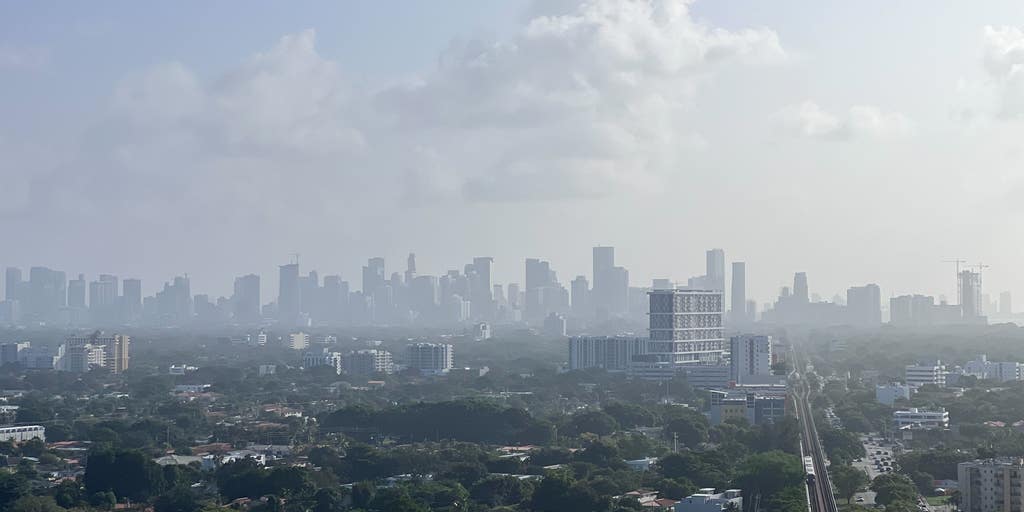
Smoke from the ongoing Canadian wildfires has reached Florida, causing a thick haze and unhealthy air quality across the state. The smoke was carried south by a combination of low-pressure and high-pressure systems, covering areas from Miami to Jacksonville. Satellite imagery shows the smoke enveloping the Sunshine State, and the air quality index in Florida currently ranges from "moderate" to "unhealthy." Jacksonville, Orlando, West Palm Beach, and Delray Beach experienced the worst air quality with an AQI of 156, while the Tampa Bay area and Southwest Florida also reached "unhealthy" levels. Conditions are expected to improve on Wednesday.
Smoke from Canadian wildfires that drifted into the U.S. caused a spike in asthma-related emergency room visits, particularly in the New York area. Three studies conducted by the U.S. Centers for Disease Control and Prevention found that asthma-associated ER visits were 17% higher nationally during the days of wildfire smoke. In New York and New Jersey, hospital traffic rose by 46%. The smoke, which contained tiny particles that can cause severe problems for asthmatics, led to an 82% increase in asthma-associated ER visits statewide on the worst air quality day. However, the smoke had lower amounts of some toxic elements found in urban air pollution.