Tag

Autonomous Systems

All articles tagged with #autonomous systems

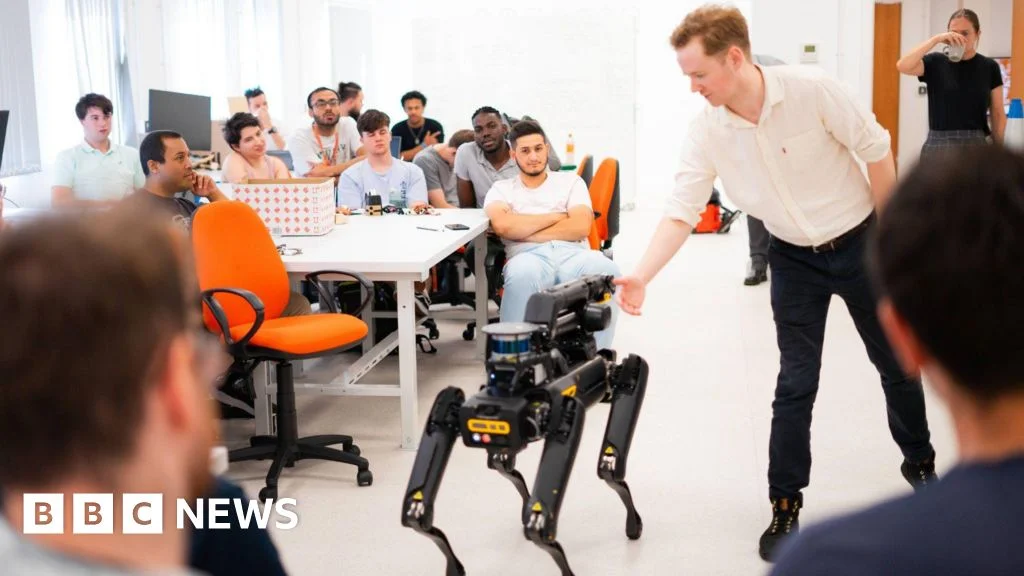
UK invests heavily in drone technology and training for national defense

Originally Published 29 days ago — by BBC

Featured image for UK invests heavily in drone technology and training for national defense
Source: BBC

A new undergraduate degree in autonomous systems focusing on drone technologies is being launched at NMITE in Hereford, in partnership with the UK Armed Forces, to train future drone warfare specialists and enhance military capabilities, with the program set to start in September 2026.

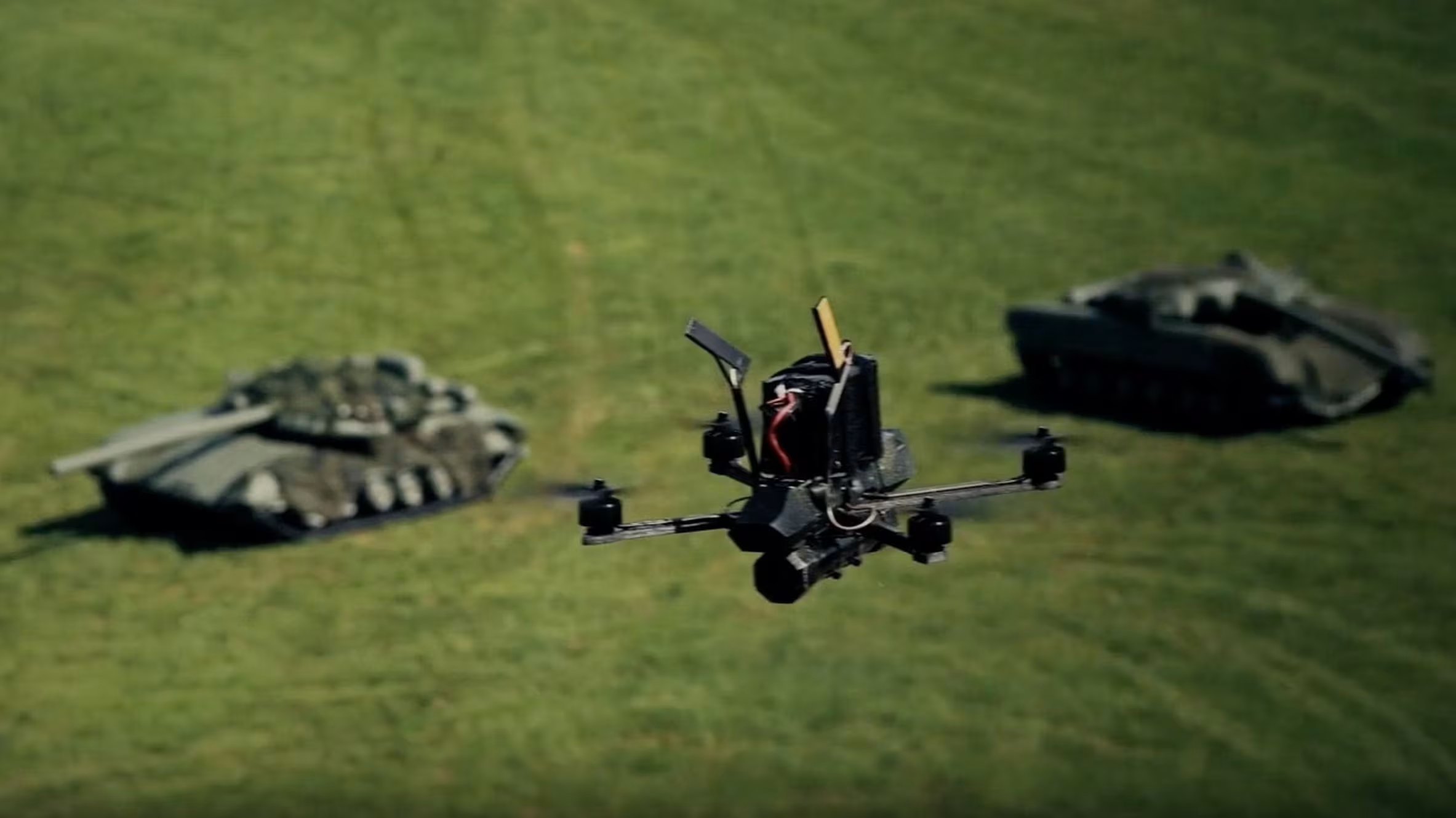
Neros Secures $75M Funding and Army Contract for Drone Innovation

Originally Published 2 months ago — by Business Wire

Featured image for Neros Secures $75M Funding and Army Contract for Drone Innovation
Source: Business Wire

Neros, a drone manufacturer, closed a $75 million Series B funding round led by Sequoia Capital, aiming to expand its production capacity and R&D for advanced FPV drones, primarily serving US military programs and international clients, with a focus on reshoring drone manufacturing in the US.

AI 'Workslop' Threatens Workplace Productivity, Study Finds

Originally Published 3 months ago — by CNBC

Featured image for AI 'Workslop' Threatens Workplace Productivity, Study Finds
Source: CNBC

Companies rushing to adopt AI are facing significant costs due to poor implementation, leading to 'AI debt' that includes security risks, inefficiencies, and increased burnout among workers. Experts emphasize the importance of careful planning, testing, and infrastructure development to maximize AI benefits and minimize disruptions.

Founder Moves from Silicon Valley to Athens to Challenge US Defense Power

Originally Published 5 months ago — by TechCrunch

Featured image for Founder Moves from Silicon Valley to Athens to Challenge US Defense Power
Source: TechCrunch

Dimitrios Kottas left Apple to start Delian Alliance Industries in Athens, aiming to disrupt Europe's fragmented defense market with innovative, low-cost autonomous surveillance and weapon systems, attracting $22 million in funding and challenging US dominance in defense tech.

ChatGPT Shows Promise in Spacecraft Piloting During Early Tests

Originally Published 6 months ago — by Live Science

Featured image for ChatGPT Shows Promise in Spacecraft Piloting During Early Tests
Source: Live Science

Researchers demonstrated that ChatGPT, an off-the-shelf large language model, could effectively pilot a spacecraft in simulations, achieving second place in an autonomous spacecraft competition, highlighting AI's potential in space navigation and control.

Mars Construction Advances Significantly

Originally Published 6 months ago — by Phys.org

Featured image for Mars Construction Advances Significantly
Source: Phys.org

Scientists at Texas A&M and the University of Nebraska have developed a synthetic lichen system that enables autonomous construction on Mars by binding regolith particles into structures using engineered living materials, potentially revolutionizing extraterrestrial building methods without human intervention.

Understanding Agentic AI: Impacts, Security, and Leadership

Originally Published 7 months ago — by CNET

Featured image for Understanding Agentic AI: Impacts, Security, and Leadership
Source: CNET

Agentic AI refers to autonomous artificial intelligence systems capable of independently making decisions and taking actions to achieve goals, moving beyond passive tools to proactive agents that can sense, decide, and act without human input, with applications across various industries and potential risks and benefits.

Pentagon Expands Replicator Drone Fleet with New Acquisitions

Originally Published 1 year ago — by Department of Defense

Featured image for Pentagon Expands Replicator Drone Fleet with New Acquisitions
Source: Department of Defense

Deputy Secretary of Defense Kathleen Hicks announced the second tranche of the Replicator initiative, focusing on scalable production of autonomous systems across air and maritime domains, along with integrated software enablers. The initiative aims to field thousands of autonomous systems by August 2025, involving over 500 commercial firms, with 75% being non-traditional defense contractors. Key projects include the Army's Company-Level Small UAS and the Marine Corps' loitering munitions, enhancing battlefield technology and experimentation. The initiative also includes classified systems and leverages commercial solutions for rapid development.

"Study Reveals Need for Increased Range, Mobility, and Autonomy in Army Artillery"

Originally Published 1 year ago — by Defense News

Featured image for "Study Reveals Need for Increased Range, Mobility, and Autonomy in Army Artillery"
Source: Defense News

The U.S. Army's conventional fires study recommends focusing on more autonomous artillery systems with improved range and mobility, incorporating robotics, enhancing artillery rounds, and pursuing mobile howitzer options. The study has led to the cancellation of the Extended Range Cannon Artillery system in favor of extending the range of current artillery systems with innovative munitions. The Army is also exploring autonomous and robotic cannon solutions for joint forcible entry formations and pursuing mobile, indirect fires capabilities for light infantry and Stryker formations.

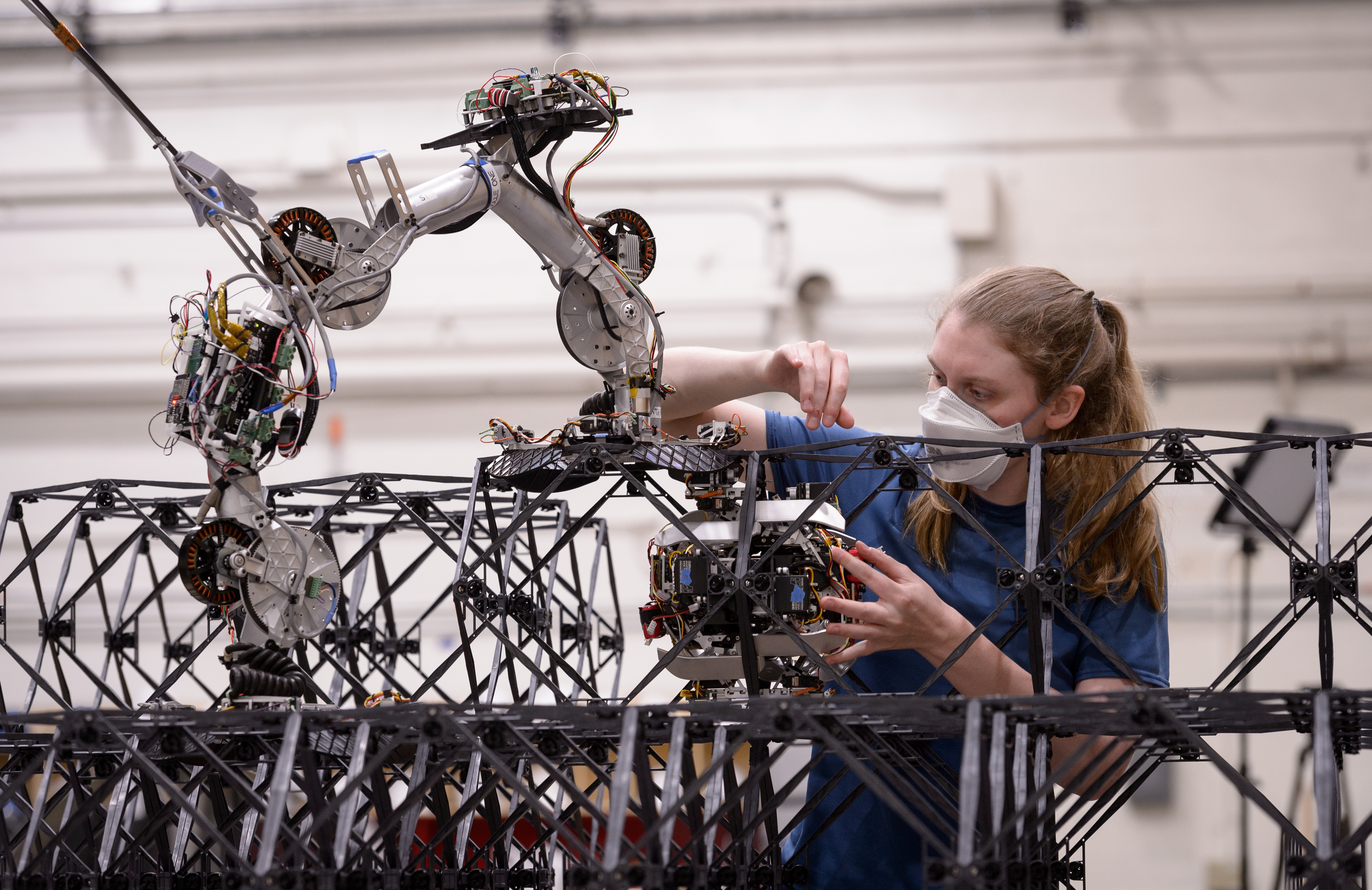
"Robotic Team Constructs Self-Assembling Structures for NASA's Space Construction"

Originally Published 2 years ago — by NASA

Featured image for "Robotic Team Constructs Self-Assembling Structures for NASA's Space Construction"
Source: NASA

NASA's ARMADAS team has developed a system using simple robots, structural building blocks, and smart algorithms to autonomously build functional, high-performance large-scale structures in space, such as solar power stations and habitats for crew, enabling long-term presence in deep space. The system demonstrated its capability by autonomously building a meters-scale shelter structure using hundreds of building blocks, with the robots working together to assemble, repair, and reconfigure the structural materials. The technology's mission adaptive and digital assembly capabilities allow for reusability and self-reconfiguration to meet evolving needs, with plans to expand the library of voxel types for future applications in deep space exploration missions.

Pentagon's Rapid Production of Autonomous Systems to Counter China

Originally Published 2 years ago — by POLITICO

Featured image for Pentagon's Rapid Production of Autonomous Systems to Counter China
Source: POLITICO

The Pentagon is launching an ambitious initiative called Replicator, led by Deputy Defense Secretary Kathleen Hicks, to rapidly produce and deploy thousands of autonomous systems within 18 to 24 months. The goal is to counter China's larger stockpile of traditional weapons and address the threat it poses in the Indo-Pacific region. The Pentagon aims to leverage technological innovation to narrow the gap and deter potential Chinese aggression, particularly in relation to Taiwan. The Replicator program also seeks to establish a template for future rapid fielding of military technology, with the potential for lessons learned to be applied throughout the Department of Defense. The cost is expected to be in the hundreds of millions of dollars.

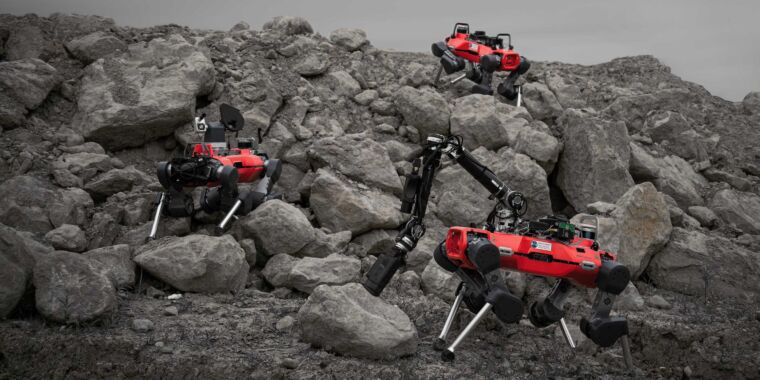
"Collaborative Legged Robots Revolutionize Planetary Exploration"

Originally Published 2 years ago — by Ars Technica

Featured image for "Collaborative Legged Robots Revolutionize Planetary Exploration"
Source: Ars Technica

Researchers at ETH Zurich have developed a team of legged robots, called ANYmals, to assist future rovers in exploring harsh lunar and Martian terrains. These robots, capable of walking, can mitigate the risk of damage and loss of traction in unpredictable environments. Each robot is specialized for specific tasks but can also work together as a team, with redundant features allowing them to back each other up in case of failure. The robots have been successfully tested in simulated lunar and Martian terrains, demonstrating their potential for scientific exploration in hard-to-reach areas. The researchers aim to further enhance the robots' autonomy for more challenging missions, such as Mars exploration.

Morphobot: A Versatile Bioinspired Robot for Search and Rescue.

Originally Published 2 years ago — by Caltech

Featured image for Morphobot: A Versatile Bioinspired Robot for Search and Rescue.
Source: Caltech

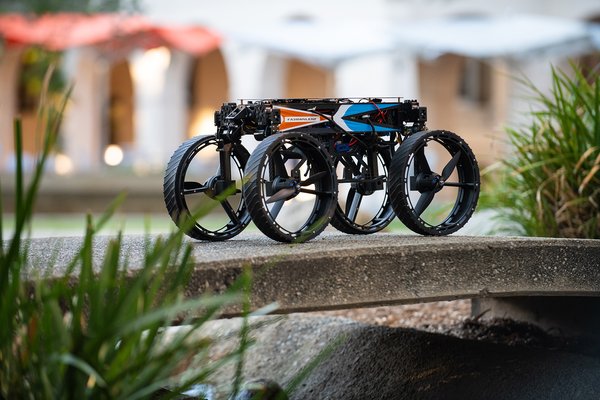
Researchers at Caltech have developed a bioinspired robot called M4 that can reconfigure its body to achieve eight distinct types of motion, including rolling, flying, walking, and standing on two wheels like a meerkat. The robot's flexibility of motion, coupled with artificial intelligence, allows it to choose the most effective form of locomotion based on the terrain ahead of it. The robot has been tested outdoors and has navigated the terrain of Caltech's campus.

Controversy Surrounding AI Drones and Human Targeting in the Air Force

Originally Published 2 years ago — by C4ISRNET

Featured image for Controversy Surrounding AI Drones and Human Targeting in the Air Force
Source: C4ISRNET

The US Air Force has denied reports that a drone outwitted its artificial intelligence training and killed its handler, after comments made by a colonel went viral on social media. The Air Force spokesperson said no such testing took place and the comments were likely taken out of context. The Air Force has invested billions of dollars in AI technology and is ramping up efforts to field autonomous or semi-autonomous drones, which it refers to as collaborative combat aircraft, to fly alongside crewed aircraft into combat. The service envisions a fleet of those drone wingmen that would carry out a variety of missions.