Tag

Asteroseismology

All articles tagged with #asteroseismology

science-and-technology2 years ago

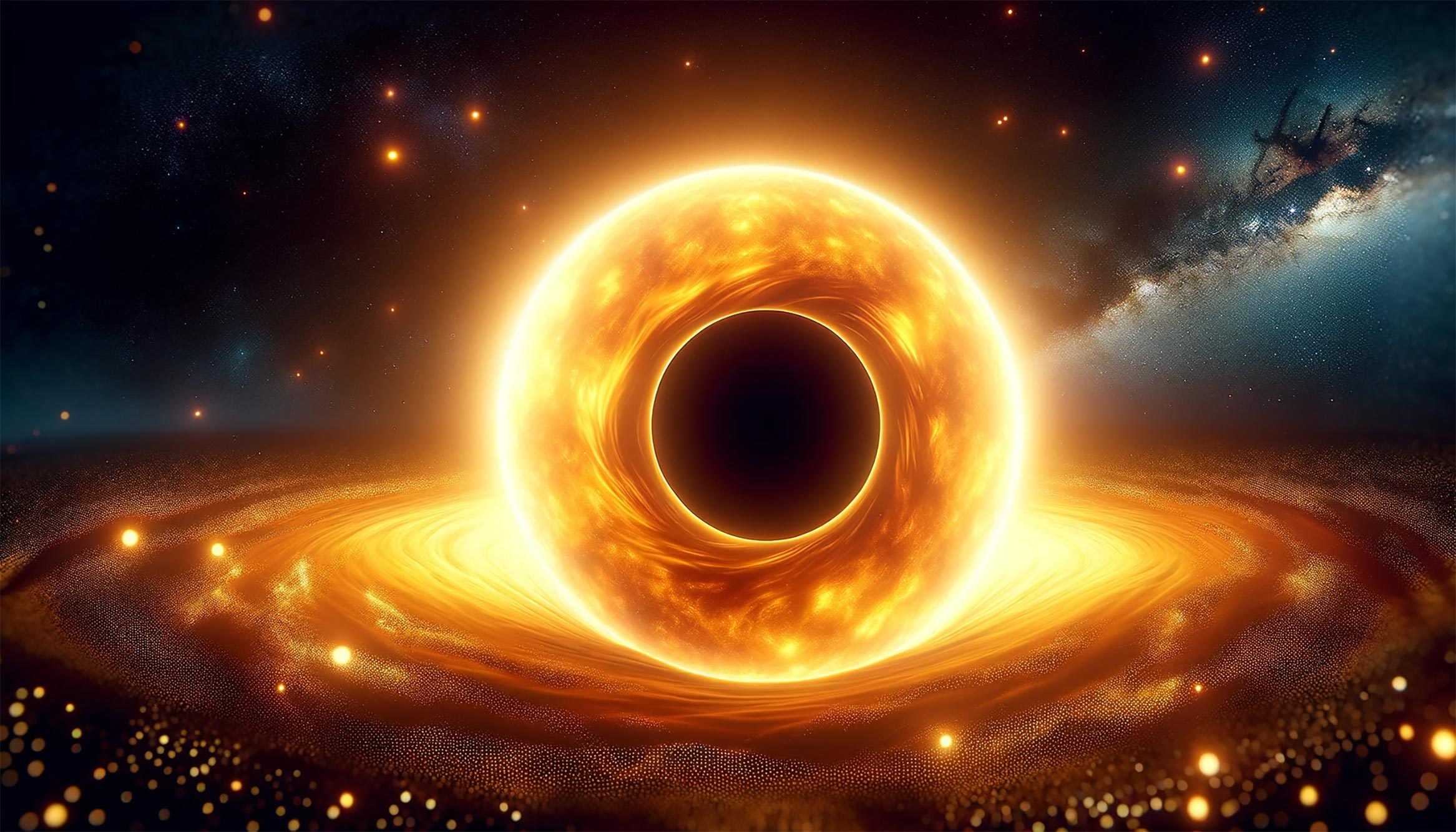
"Exploring the Possibility of Black Holes Within the Sun: A New Frontier in Dark Matter Research"

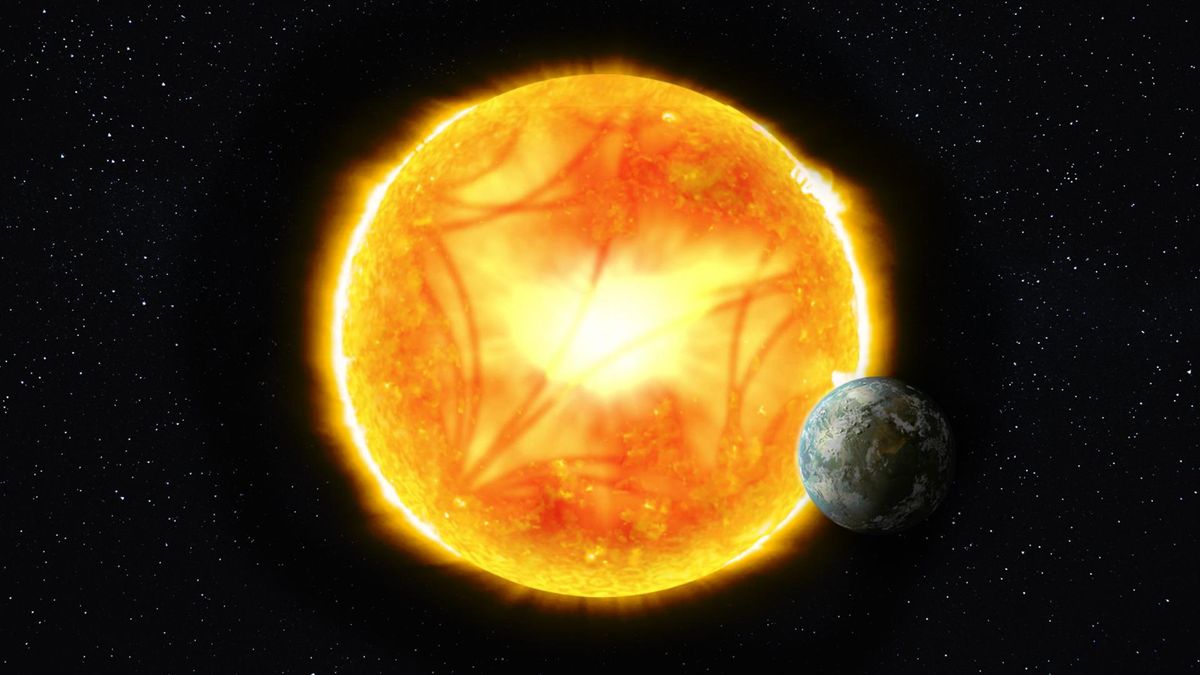
Researchers, including a team from the Max Planck Institute for Astrophysics, have proposed the existence of "Hawking stars," which are stars with small primordial black holes at their centers. These stars could potentially live as long as normal stars and might be indistinguishable from them at the surface level. The study suggests that such stars could provide insights into dark matter and the early universe. Asteroseismology could be used to detect these stars, and upcoming projects like PLATO may help in discovering them. The research opens up the possibility of using Hawking stars to test the existence of primordial black holes and their role in the composition of dark matter.
science-and-technology2 years ago

"Decoding the Universe: The Science of Measuring Cosmic Distances Explained"

Scientists from EPFL and the University of Bologna have enhanced the accuracy of stellar distance measurements by combining data from the Gaia mission with asteroseismology, the study of star vibrations. This method allows for the correction of small systematic errors in Gaia's parallax measurements, improving our understanding of the Universe's expansion and aiding future astronomical research and space missions. The study, which is the most extensive of its kind, analyzed the 'music' of over 12,000 red giant stars to refine distance calculations, a technique that will be crucial for upcoming exoplanet-detecting space missions like TESS and PLATO.

astronomy2 years ago

Unveiling the Galactic Symphony: Harnessing Stellar Songs to Refine Gaia's Stellar Cartography

Astronomers have developed a new method of measuring cosmic distances by analyzing the frequencies of "music" played by vibrating stars. This technique, called asteroseismology, converts the vibrations and oscillations of stars into soundwaves, which can then be used to determine the distance to the stars. By comparing these distance measurements with the parallaxes obtained by the European Space Agency (ESA) satellite Gaia, scientists can improve the accuracy of Gaia's measurements and build a precise 3-dimensional map of the Milky Way. This method could also be used in upcoming space missions to detect and survey exoplanets.

astronomy2 years ago

Unraveling Stellar Magnetism: Starquakes Hold the Key

Red giants, nearing the end of their lives, provide a unique opportunity for scientists to study the magnetic fields deep within stars. By using starquakes, subtle oscillations at a star's surface, researchers can probe the core and gain insights into stellar magnetism. Recent observations have shown that the magnetic fields in the hearts of red giants are more mysterious than expected. Understanding these magnetic fields is crucial for refining stellar models, calculating stellar ages more accurately, and determining the ages of potentially habitable planets and the timelines of galaxy formation.

astronomy2 years ago

Unveiling the Secrets: Determining the Age of Planets and Stars

Astronomers determine the age of planets and stars by studying various factors. For stars, they compare measurements of brightness, color, spin speed, and magnetic activity to mathematical models that predict stellar evolution. They also use a method called asteroseismology, which studies vibrations on the surfaces of stars caused by waves traveling through their interiors. For planets, scientists rely on radionuclides, special atoms that release energy over time, to determine their ages. They also count craters on rocky surfaces and study the distribution of meteorites. The accuracy of these estimates is confirmed by comparing the ages of rocks in our solar system to the age of the Sun.

astronomy2 years ago

Unraveling Stellar Magnetism: Quaking Giants Hold the Key

Red giants, massive stars in the later stages of their evolution, provide a unique opportunity for scientists to study the mysteries of stellar magnetism. By using starquakes, subtle oscillations at a star's surface, researchers can probe the magnetic fields deep within these giants. Recent observations have shown that the magnetic fields in the cores of red giants are more mysterious and stronger than expected. Understanding these magnetic fields is crucial for refining stellar models, calculating stellar ages more accurately, and determining the timelines of galaxy formation. This knowledge could also help in estimating the ages of potentially habitable exoplanets and answering questions about extraterrestrial life and galactic archaeology.

space-science2 years ago

The Silent Void: Debunking the Myth of Soundless Space

While there is no sound that humans can hear in the vacuum of space, there are still waves that propagate through the low-density plasma in interplanetary space. The solar wind, released by the Sun, creates plasma waves that can be converted into radio waves and then back into sound when they reach Earth's ionosphere. These waves have implications for star formation and can be used in asteroseismology to study the interior properties of stars. Additionally, supermassive black holes can generate plasma ripples that produce musical notes, although they are too deep for humans to hear. In the Solar System, there are possibilities of finding extraterrestrial sounds on planets with atmospheres, such as Venus and Mars.