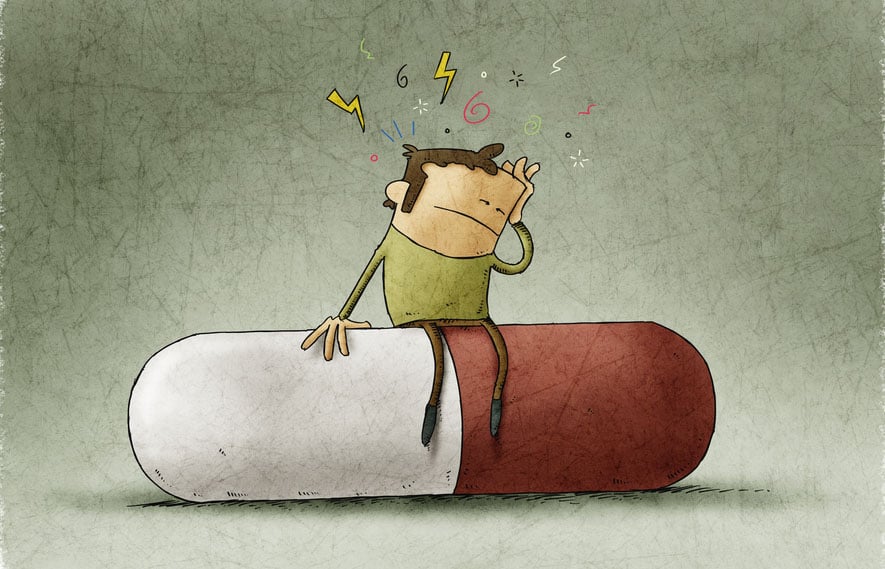
Certain medications, including antidepressants, antipsychotics, corticosteroids, diabetes drugs, beta-blockers, and some OTC allergy meds, can cause weight gain by affecting appetite, metabolism, or fat storage. If concerned, consult a healthcare provider for alternatives or strategies to manage weight.
A study of 500,000 Canadian nursing home residents found that antipsychotic medications, often prescribed off-label for dementia-related symptoms, significantly worsened behaviors in nearly 68% of patients. Researchers advocate for non-drug therapies like music and exercise, and emphasize person-centered care to improve outcomes and reduce reliance on antipsychotics, which can have serious side effects. The findings suggest a need to reevaluate the use of these medications in non-psychotic conditions.
Adding antipsychotic drugs to antidepressant treatment for people with psychotic depression increases the risk of death and rehospitalization, according to a study. The research challenges the common practice of combining antipsychotics with antidepressants as a first-line intervention for psychotic depression. The study found that after two years, those receiving combination therapy had a higher rate of readmission or death by suicide compared to those on antidepressants alone. The results suggest that antipsychotics may not prevent relapses and may even increase the risk. The study also found that combination therapy was particularly dangerous for young people. Further research is needed to evaluate the effect of antipsychotics in the maintenance phase of psychotic unipolar depression.
Some psychiatrists are prescribing the diabetes medication Ozempic, and similar drugs, to counteract the weight gain that often occurs as a side effect of antipsychotics and certain antidepressants. While some mental health facilities and psychiatric departments are recommending or prescribing these weight-loss drugs, others have concerns about safety and side effects, as there is limited data on their use in patients with serious mental illnesses. Patients who experience significant weight gain on psychiatric medications can face increased health risks, and the weight-loss drugs offer a potential solution. However, there are ongoing debates about the risks and benefits of prescribing these medications to a vulnerable population.
After 22 years on antipsychotics, the author shares their journey of recovery from the side effects and symptoms associated with schizophrenia. They emphasize the importance of listening to one's deep emotions and reasoning, separating delusion from reality, and seeking ethical reasoning and positive self-talk. The author also explores their newfound interest in astronomy and cosmic exploration, as well as the need for a holistic approach to mental healthcare that combines psychiatry, psychology, faith studies, philosophy, and peer counseling. They advocate for individuals to be allowed to go through an inner process of personal growth and recovery, in order to create positive change in themselves and the world.
A new study published in Nature Neuroscience challenges the long-held assumption about the target receptors of antipsychotic drugs. Neuroscientists have traditionally believed that these drugs primarily interact with D2 receptors in the brain, but the study conducted by Jones Parker at Northwestern University reveals that the most significant drug interaction actually occurs at D1 receptors. This finding could revolutionize the development of more effective antipsychotic medications with fewer side effects, as targeting D1 receptors may lead to better treatment outcomes for psychosis.
Lumateperone, a second-generation antipsychotic, has been approved by the FDA for the treatment of schizophrenia. It has a unique mechanism of action compared to other antipsychotics in that it antagonizes the central 5HT2A receptors and postsynaptic D2 receptors. Lumateperone has been shown to have similar efficacy and adverse effect profiles as commonly used first-line, second-generation antipsychotics. It may be used as a first-line treatment for schizophrenia and may be beneficial to patients who failed other second-generation antipsychotics.