The critically endangered red-bellied toad in Brazil, known for halting a dam construction in 2014, is now facing the impacts of severe floods in 2024, highlighting the challenges of climate change and habitat threats, but recent fieldwork shows signs of resilience and ongoing conservation efforts.
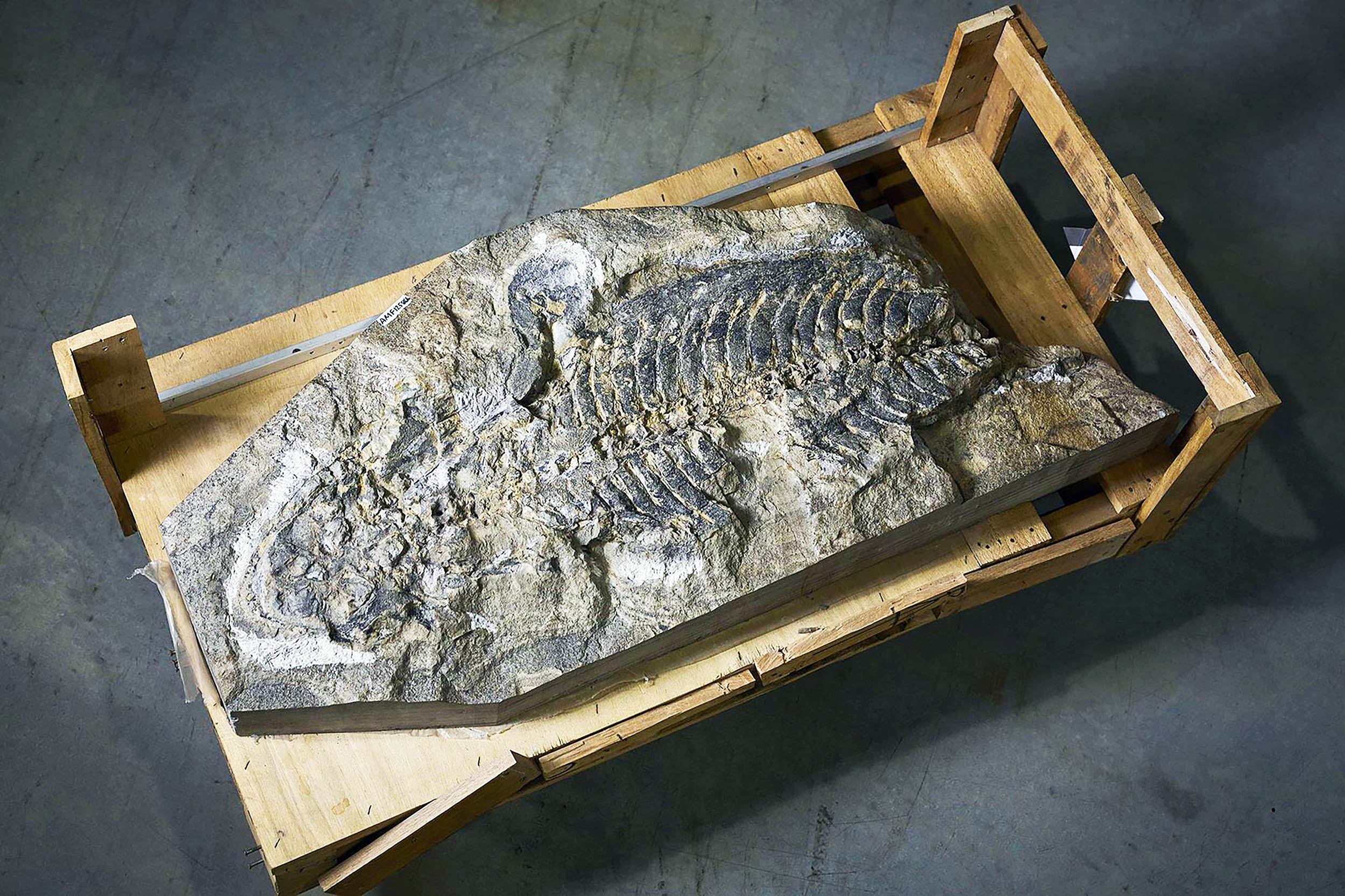
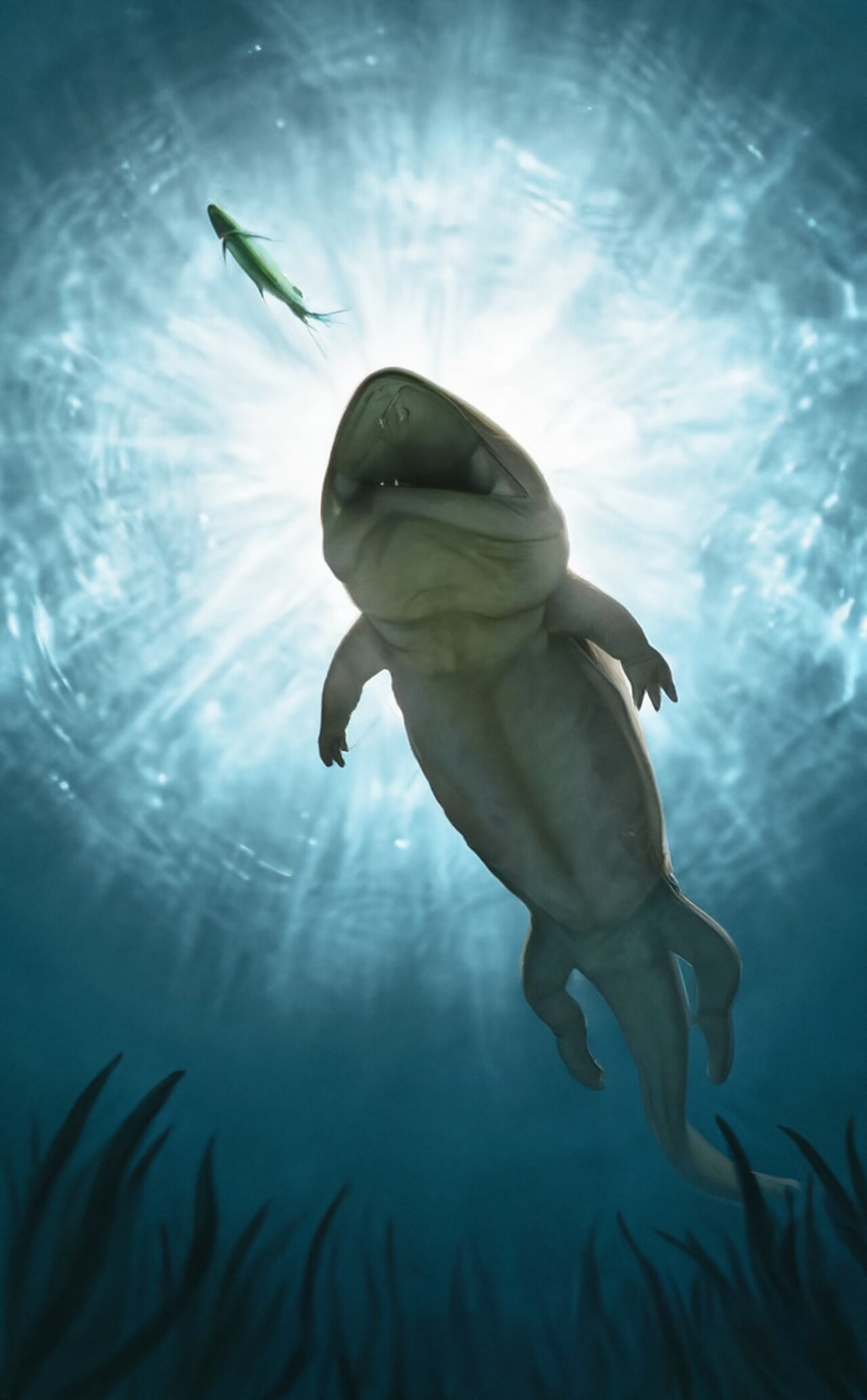
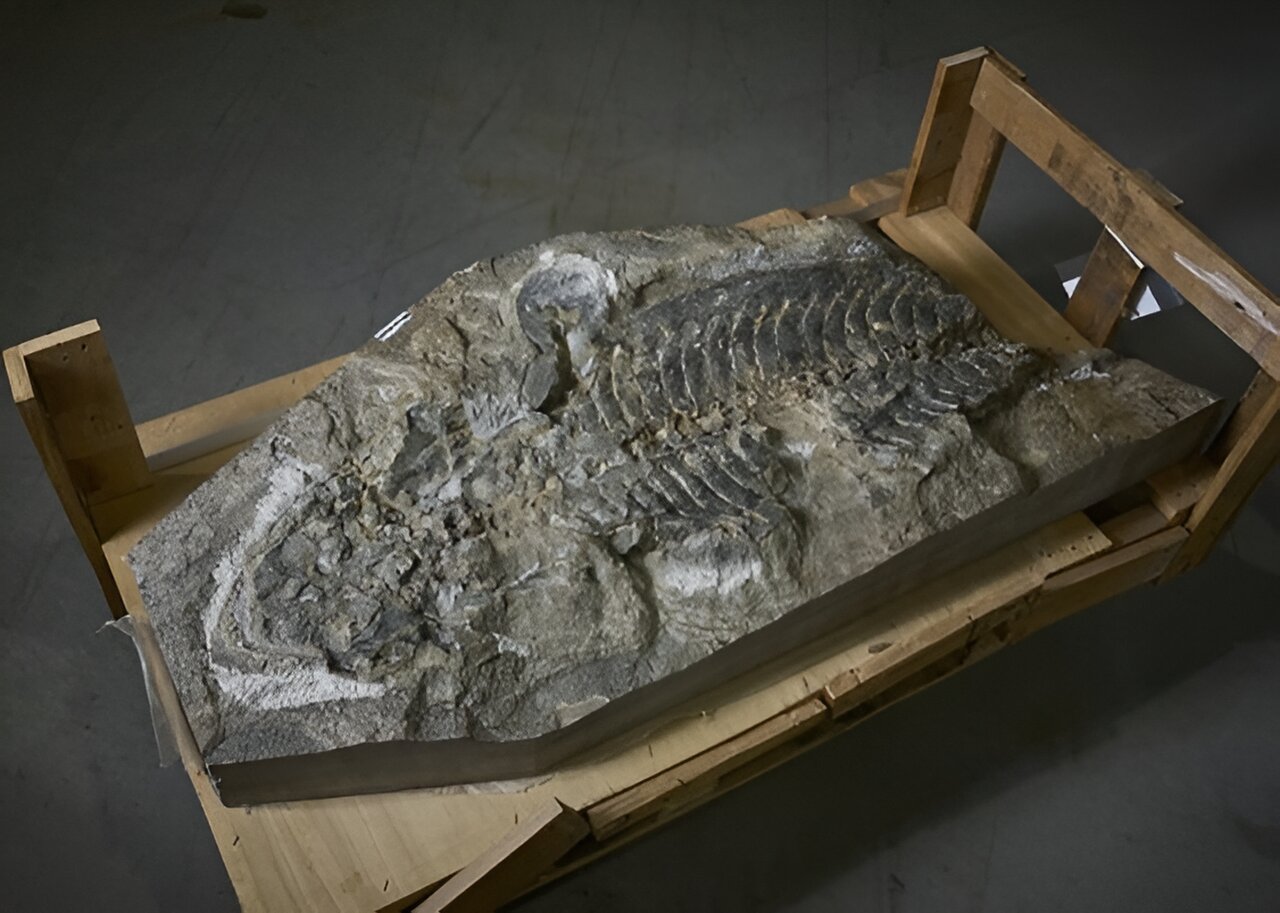
A well-preserved 240-million-year-old fossil of a new amphibian species, Arenaerpeton supinatus, was discovered in Australia, providing insights into early Triassic life and the evolution of temnospondyls, and highlighting the importance of community and scientific collaboration in paleontology.
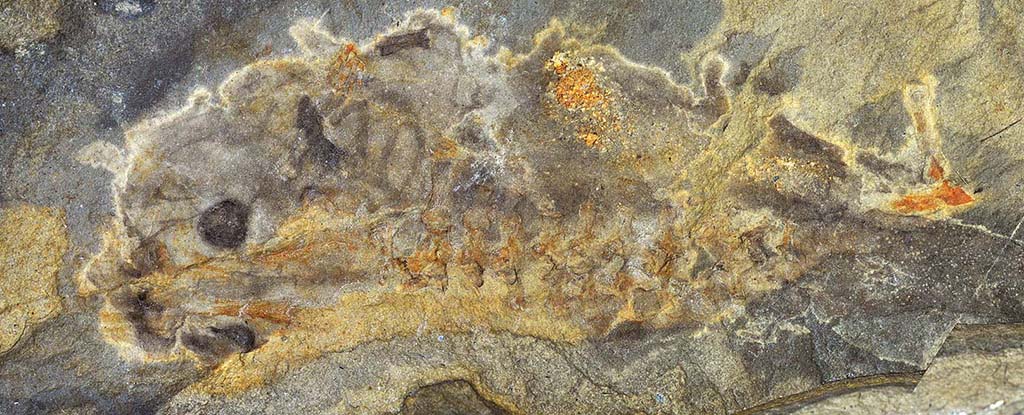
A 240-million-year-old amphibian fossil, belonging to a new species called Arenaerpeton supinatus, was discovered in New South Wales, Australia, providing rare insights into ancient life and the evolution of amphibians during the Triassic period, with exceptional preservation of bones and soft tissues.
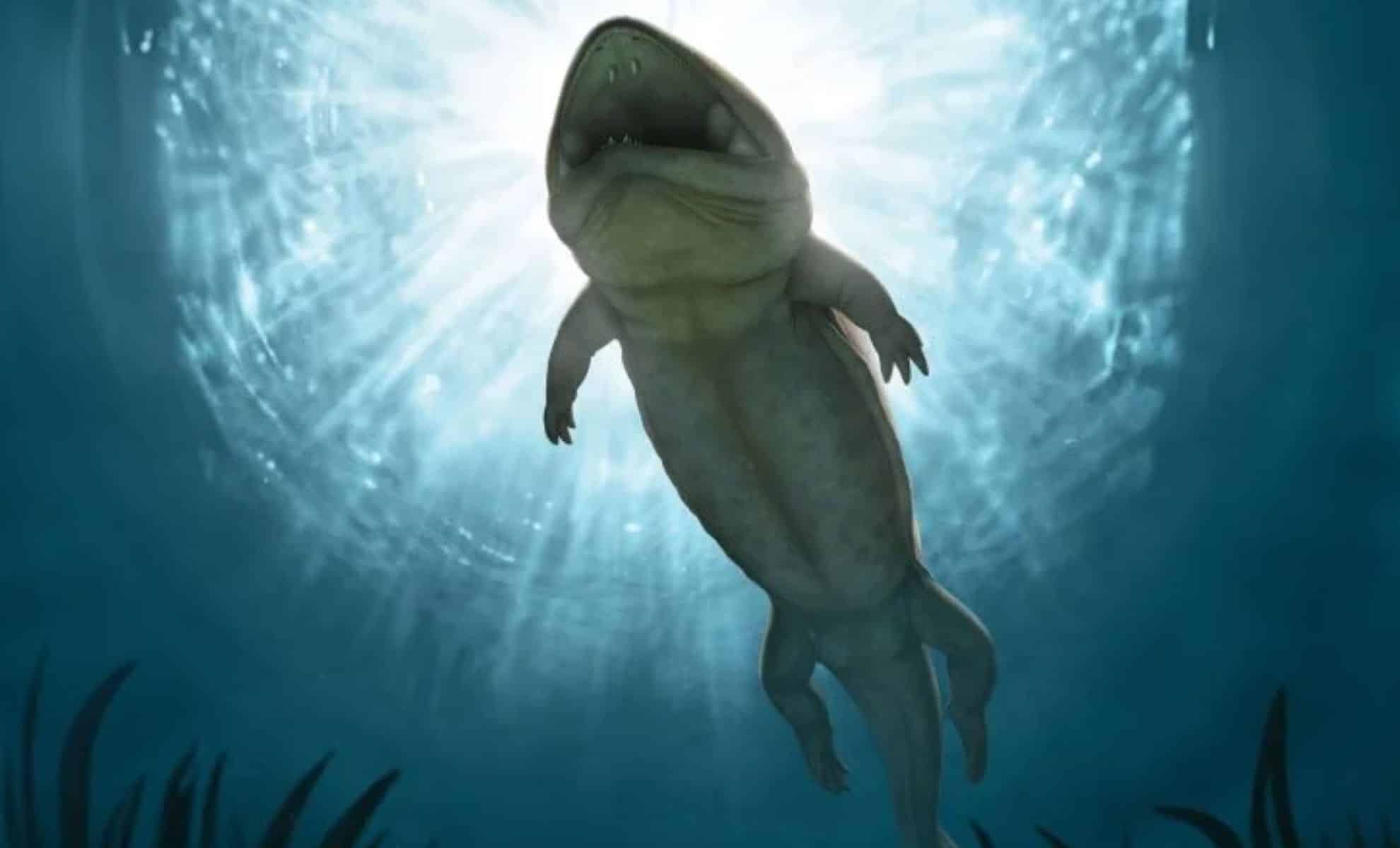
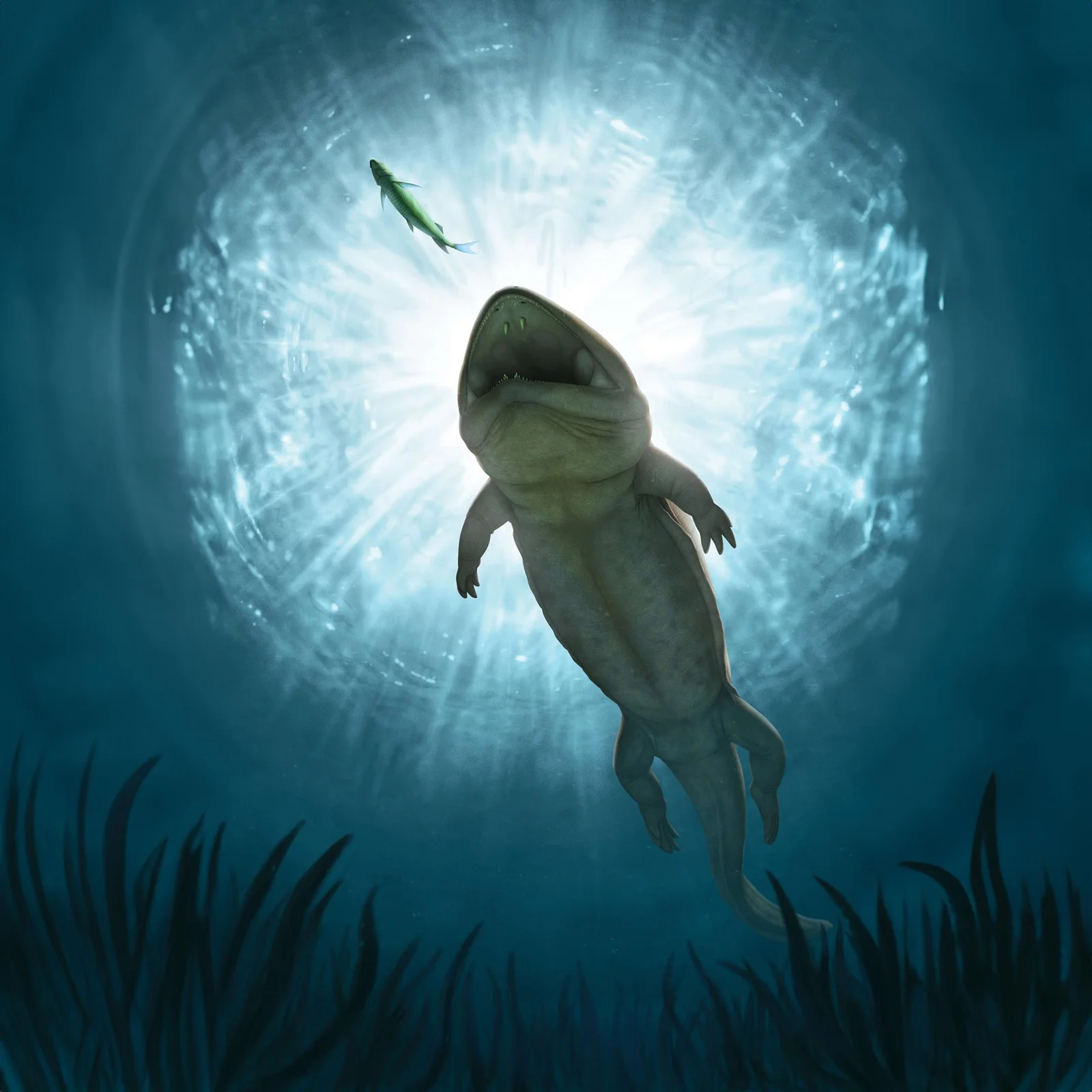
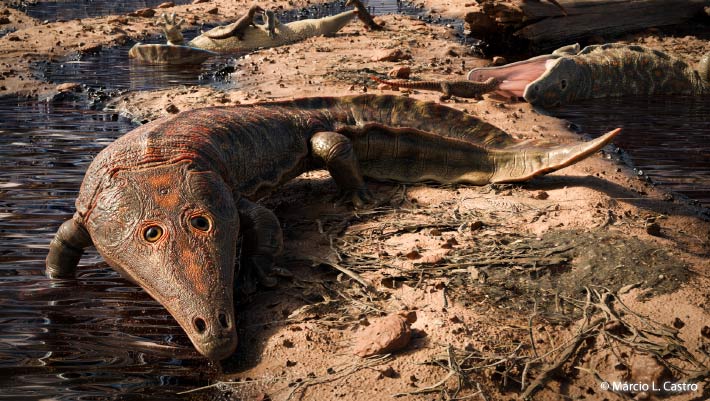
A 240-million-year-old amphibian fossil, named Arenaerpeton supinatus, was discovered in a backyard wall in New South Wales, providing rare soft tissue preservation and insights into prehistoric life, resembling a giant salamander and offering clues about extinct temnospondyls' evolution.
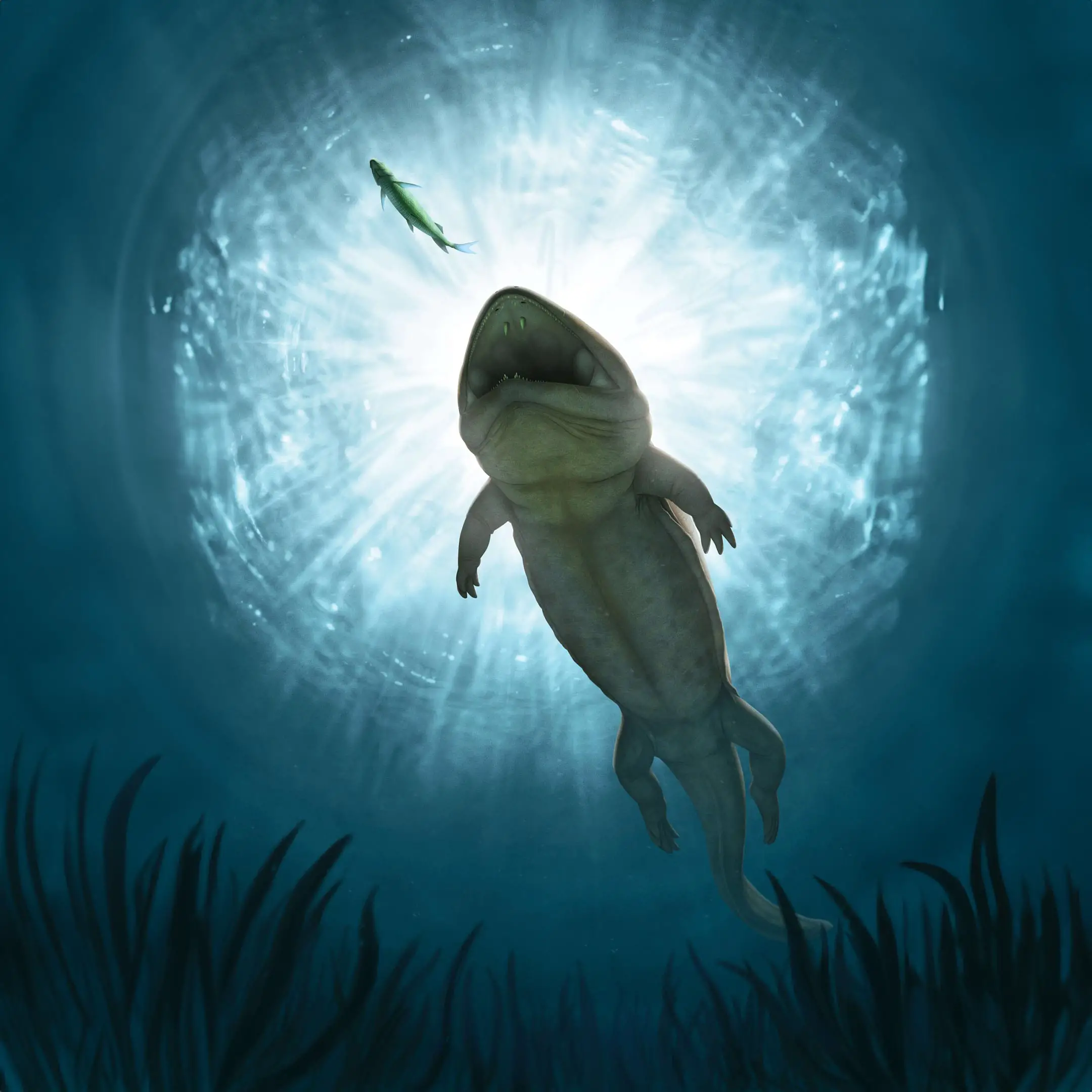
A 160-million-year-old tadpole fossil, discovered in Argentina, has set a new record as the oldest known tadpole, belonging to the ancient frog species Notobatrachus degiustoi. This find pushes the evidence of tadpole metamorphosis back by 15 million years and provides insights into the early evolution of the anuran life cycle. The fossil's preservation reveals key features of modern tadpoles, such as the filter-feeding system, indicating that tadpole gigantism existed among stem-anurans. The research, led by Mariana Chuliver, was published in Nature.
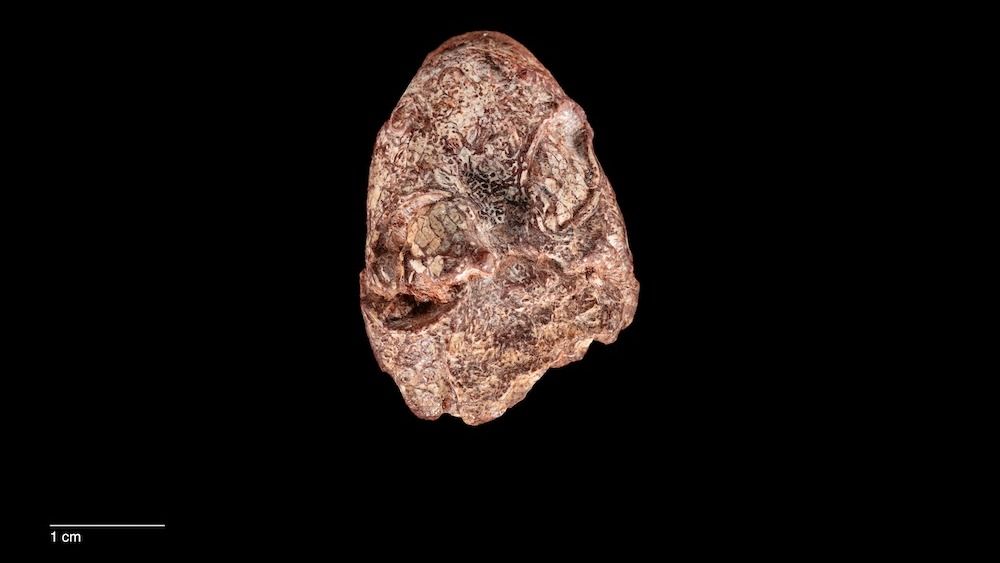
A newly described species of proto-amphibian, named Kermitops gratus after Kermit the Frog, has been discovered by paleontologists at the Smithsonian National Museum of Natural History. The fossilized skull, resembling a "stout salamander" with a "cartoonishly wide-eyed face," was found in the museum's archives and is thought to be a distant relative of modern amphibians. This finding could provide insights into the evolution of amphibians and their common ancestors, shedding light on how frogs and salamanders developed specialized traits.
A newly identified ancient ancestor of modern-day amphibians, resembling Kermit the Frog, has been named Kermitops gratus in honor of the beloved Muppet. The salamander-like species, with bug-eyed appearance and a lopsided smile, lived over 270 million years ago in what is now Texas. The fossilized skull was unearthed in 1984 and was recently recognized as a new species by a team of paleontologists.
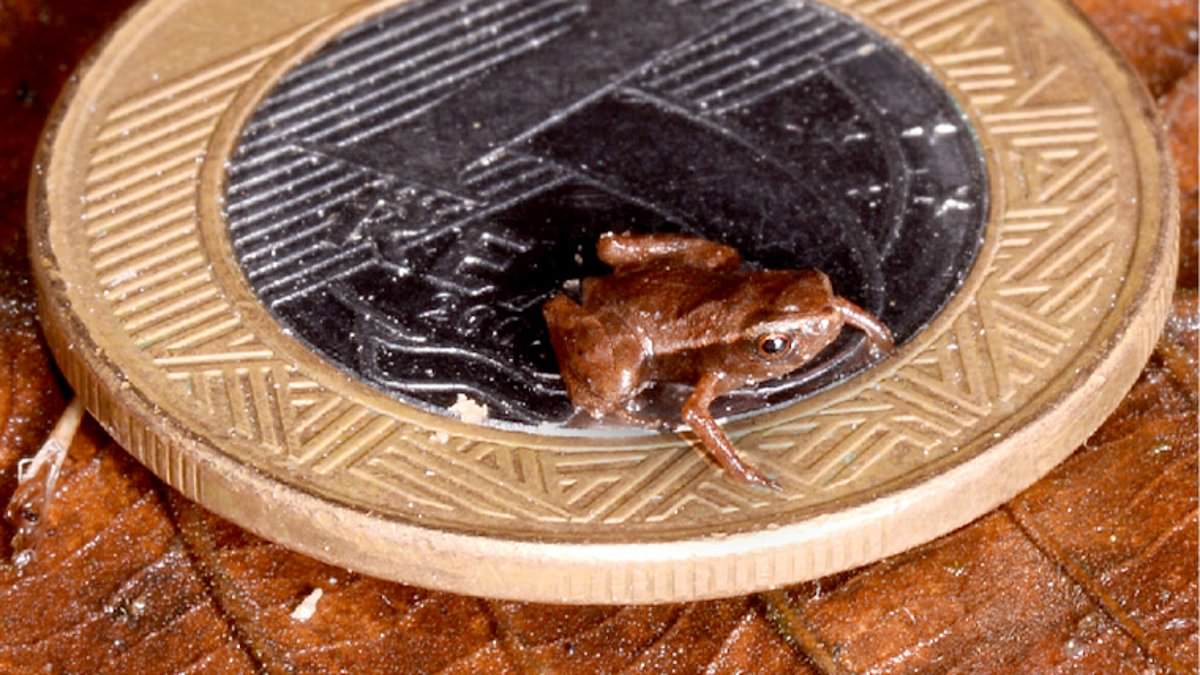
Scientists have discovered a frog the size of a pea in a Brazilian forest, measuring just 7.1 millimeters on average, making it the world's smallest vertebrate. The 'flea toad' was confirmed as the tiniest after researchers measured 46 specimens in its hilltop forest habitat in southern Bahia, Brazil. The male flea toads are even smaller than the females, showcasing sexual dimorphism. The discovery raises questions about the lower limit of vertebrate size and the potential for even smaller species to be found.
A new genus and species of temnospondyl amphibian, named Kwatisuchus rosai, has been discovered in Brazil by a team of paleontologists. This ancient amphibian lived during the Early Triassic epoch, approximately 249 million years ago, and belonged to the Benthosuchidae group of giant crocodile-like amphibians. The fossilized skull was found in the Sanga do Cabral Formation in Rio Grande do Sul, Brazil, shedding light on the survival of temnospondyl amphibians in an environment devastated by mass extinction. The discovery helps in understanding the effects of extinctions on the planet and provides insights into the diverse group of primitive tetrapods that existed across geological periods.
A 240-million-year-old fossil of a giant amphibian, believed to be the ancestor of the Chinese giant salamander, has been named Arenaerpeton supinatus. The fossil, discovered by a chicken farmer in the 1990s, provides a rare complete view of the skeleton and shows similarities to its modern-day descendants. Researchers believe it had sharp teeth and fang-like tusks, which it likely used to hunt ancient fish. The fossil is considered one of the most important discoveries in New South Wales in recent decades, providing valuable insights into the Earth's past.
Scientists at the University of New South Wales and the Australian Museum have formally named and described a 240-million-year-old fossil of an amphibian called Arenaerpeton supinatus, which was discovered in a retaining wall in the 1990s. The fossil, which shows nearly the entire skeleton and outlines of its skin, belonged to a group of extinct animals known as temnospondyls and inhabited freshwater rivers in what is now the Sydney Basin during the Triassic period. The discovery of this large amphibian is significant as it sheds light on the evolution and size variation of temnospondyls, and it represents an important part of Australia's fossil heritage.
Scientists have identified a new species of amphibian, named Arenaepeton supinatus, that lived in Australia approximately 247 million years ago. The discovery of this lizard-like creature, based on a nearly complete fossil, may rewrite the evolution of amphibians in Australia. The fossil was found by a retired chicken farmer in New South Wales in the 90s and has since been studied by a team of paleontologists. The findings suggest that Australia was a favorable environment for animal evolution and refuge after mass extinctions. The fossil will be displayed at the Australian Museum.
Scientists have identified a 240 million-year-old fossil discovered by an Australian chicken farmer as a stout amphibian resembling a cross between a crocodile and a giant salamander. The creature, named "Arenaerpeton supinatus," measured 1.2 meters in length and likely preyed on freshwater fish using its gnarly teeth and fang-like tusks. The fossil, which represents a key part of Australia's fossil heritage, has puzzled scientists for almost 30 years and was recently identified through X-ray scanning and analysis.
Scientists at UNSW Sydney and the Australian Museum have formally named and described a new species of extinct giant amphibian called Arenaerpeton supinatus. The 240-million-year-old fossil was discovered in rocks intended for a garden retaining wall and shows nearly the entire skeleton, as well as the outlines of its skin. Arenaerpeton inhabited freshwater rivers in what is now known as the Sydney Basin during the Triassic period and is estimated to have been about 1.2m in length. The fossil is a significant find in Australian paleo history and will be on display at the Australian Museum later this year.