Micron Technology's shares have surged 236% in 2026, driven by strong demand for high-end memory chips used in AI GPUs, partnerships with NVIDIA, and increased investment plans, with analysts optimistic about continued price rises and capacity expansion.
Mizuho Securities predicts strong AI-driven demand will boost semiconductor stocks in 2026, highlighting Nvidia, Broadcom, and Lumentum as top picks due to their roles in AI accelerators, optical networking, and advanced chips, while also noting potential growth in related sectors like wafer fabrication and memory, despite some sector weaknesses.
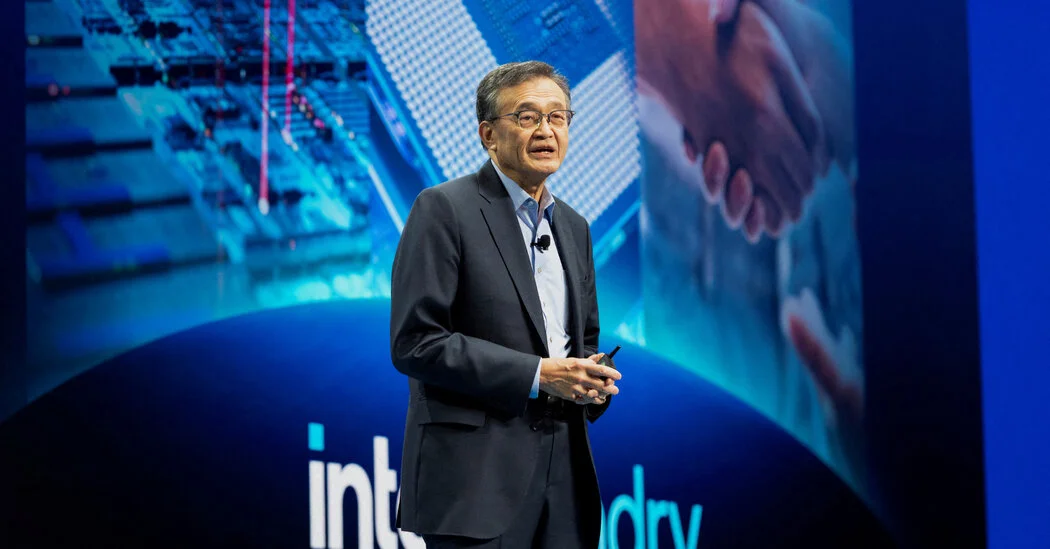
Intel is shifting its strategy to focus on AI and robotics with its new Core Ultra Series 3 chips, aiming to regain market dominance and innovate in emerging tech like humanoid robots, despite stiff competition from AMD, Nvidia, and Qualcomm. The company is also leveraging US government support to bolster domestic manufacturing and aims to improve its core PC business by enhancing AI capabilities and battery life in laptops.
Nvidia announced its new Vera Rubin superchip platform at CES 2026, featuring six new chips designed for large-scale AI computing, aimed at hyperscalers like Microsoft and Google. The chips are expected to improve AI efficiency significantly, with the Vera Rubin superchip combining a CPU and GPUs. While the release date remains uncertain, Nvidia assured the chips will launch later this year, marking a major development in AI hardware.
Nvidia's CEO Jensen Huang announced that the company's next-generation AI chips are now in full production, featuring the Vera Rubin platform designed for large AI workloads, promising up to five times the speed of previous models, with major tech companies expected to adopt them early. Despite increasing competition from AMD and Google, Nvidia maintains its leadership in AI hardware innovation.
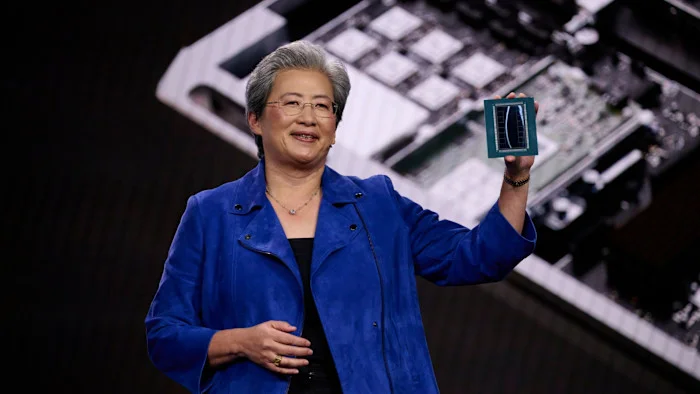
At CES 2026, AMD unveiled new high-performance AI chips, including the MI455 for data centers and the MI440X for enterprise use, aiming to compete with Nvidia's dominance in AI hardware. The company also previewed the upcoming MI500, promising significant performance improvements, and launched new Ryzen AI processors for PCs. Despite AMD's efforts and key deals with OpenAI, Nvidia remains the market leader in AI chip sales.
AMD showcased its new high-performance AI chips at CES, including the MI455 and MI440X, targeting data centers and enterprise use, with future chips like the MI500 expected to significantly boost performance. The company aims to compete with Nvidia, which dominates the AI chip market, and has secured key deals with OpenAI, signaling growth in AI hardware. AMD also launched Ryzen AI processors for AI PCs, as the industry advances towards more powerful AI computing solutions.
Dow Jones futures and major indices are slightly higher ahead of the market open, with key tech stocks like AMD, Apple, Palantir, Nvidia, and Tesla showing mixed movements. Nvidia announced a new AI chip, boosting its stock, while other stocks like AMD and Apple declined. The market is awaiting key economic data, including the December jobs report, as Wall Street watches for further cues. Nvidia's new AI processor and CEO Jensen Huang's speech could drive future gains, amid ongoing market rally conditions.
Nvidia unveiled its new AI data center platform, Vera Rubin, which aims to address the increasing demands of AI models and is set to launch in late 2026. The company is positioning itself as a leader in AI infrastructure amidst growing industry competition and significant investments in AI technology, with major cloud providers and AI labs expected to adopt the new system.
Intel is set to unveil its new AI laptop chip, Panther Lake, at CES 2026, highlighting advancements in transistor design and power delivery, as it aims to regain market share and demonstrate progress with its 18A manufacturing process amidst competition from AMD and Nvidia.
Nvidia CEO Jensen Huang announced that the company's next-generation AI chips, including the Vera Rubin platform, are in full production and promise five times the AI computing power of previous models, with deployment expected later this year. These chips are already being tested by AI firms and are designed to significantly enhance AI performance, especially for chatbots and AI applications, amid rising competition. Nvidia also introduced new storage and networking technologies, and software improvements for autonomous vehicles.
CES 2026 showcased significant advancements in AI chips and devices, highlighting the next growth phase for AI technology and its increasing integration into consumer and industrial products.
US export controls on chips are effectively slowing China's technological progress and maintaining America's military and AI edge, which is crucial for deterrence and preventing conflict with China. Recent relaxations, like the sale of Nvidia's H200 chips, threaten this advantage, potentially enabling China to catch up in AI capabilities and increasing geopolitical risks. The article argues that maintaining strict export controls is vital for US strategic interests and global stability.
Baidu's AI chip subsidiary Kunlunxin filed for a Hong Kong IPO, potentially valuing it at up to $23 billion, as Baidu's stock surged on AI sector optimism; the move aims to showcase Kunlunxin's value and attract AI-focused investors amid China's push for domestic AI chip production.
Nvidia's stock is poised for growth in 2026, driven by its $20 billion Groq acquisition, upcoming CES event, potential H200 chip exports to China, and strong analyst forecasts, with a predicted 41% rise in stock price.