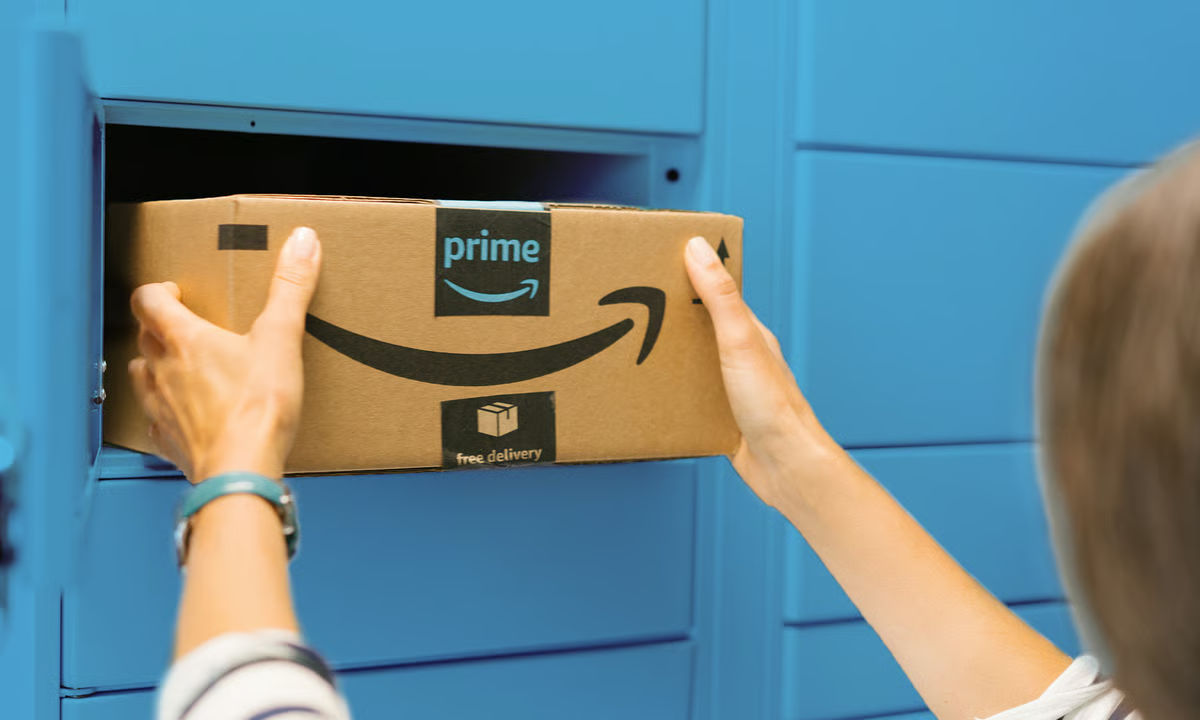
Amazon stock appears undervalued despite a modest 5% gain in 2025, driven by strong growth in e-commerce, online advertising, cloud computing, and AI. The company's expanding high-margin ad business and AI-driven cloud services, including proprietary chips, position it for long-term growth, suggesting it may be a rare buying opportunity for investors.

Pinterest's stock dropped over 22% after its Q3 earnings missed estimates, despite user growth, due to concerns about slowing growth, macroeconomic factors, and potential risks from AI advancements. Analysts remain bullish on the stock's long-term prospects, but some express caution about future challenges.
Meta's Q3 profit was significantly impacted by a $16 billion one-time tax charge related to U.S. legislation, leading to a drop in shares. Excluding this charge, net income would have surged, and the company plans to increase capital expenditure substantially in 2026 to support its AI and infrastructure growth. Meta continues to leverage its large user base and AI-driven ad platform, while investing heavily in AI development and data centers, despite rising costs and economic uncertainties.
Netflix missed Q3 earnings expectations due to a Brazilian tax dispute that affected margins, despite achieving revenue targets and strong ad growth driven by popular series. The company remains optimistic about AI's role in enhancing its services and content creation, and its stock declined after the earnings report.
Meta's stock surged over 11% after its earnings report, driven by strong AI investments that are boosting ad revenue and profitability, cementing its position as a leader in artificial intelligence.
Meta Platforms is preparing to report its Q2 earnings amid high expectations and concerns over rising AI-related costs and slowing ad revenue growth. Analysts anticipate strong earnings and revenue growth, but the company's heavy investment in AI and potential impacts from global trade tensions and ad market pressures pose risks. Despite these challenges, Meta's stock remains a strong buy according to Wall Street analysts.
CBS is ending its long-running 'Late Show' with Stephen Colbert next May due to declining ad revenue, changing viewer habits, and increased costs, marking a significant shift in the late-night TV landscape. Despite Colbert's strong relationship with CBS, the network is shifting away from traditional late-night formats amid broader industry cost-cutting and audience shifts, leaving a notable gap in the late-night lineup.
Netflix is on track to double its advertising revenue in 2025, with 95 billion hours streamed in the first half of the year and a significant increase in ad-supported content and formats, including interactive ads, as it continues to expand its ad tech platform and revenue streams.
YouTube has expanded its crackdown on ad blockers to include third-party apps that attempt to circumvent ads, causing playback issues for users. The platform is urging users to subscribe to YouTube Premium for an ad-free experience, emphasizing that ad revenue supports creators. YouTube's enforcement aims to protect its platform, creators, and viewers from ad-blocking apps violating its terms of service.
Pinterest announces a new ad partnership with Google as it approaches 500 million monthly active users, aiming to boost ad revenue, particularly in international markets. Despite Q4 2023 earnings falling below analyst expectations, the stock rebounded after the announcement. CEO Bill Ready highlighted the potential of the Google deal to increase revenue per user in international markets and discussed the company's efforts to grow user engagement through AI-driven features and new formats.
Snap Inc., the parent company of Snapchat, faces challenges in competing for digital advertising revenue against larger players like Meta. Insider Intelligence Senior Director Jeremy Goldman highlights the difficulty of Snap's limited reach and niche positioning in attracting ad dollars, as well as the company's struggle to offer better reach or cost advantages compared to its competitors. While Snap has strengths in teen safety and augmented reality, it faces an uphill battle in the digital ad market.
Snapchat's parent company, Snap, is laying off 10% of its workforce, affecting over 500 employees, in a move to "reduce hierarchy" and support further growth. The layoffs are expected to incur charges of $55-75 million, primarily for severance and related costs, with the majority of costs to be incurred in the first quarter of 2024. This marks the second wave of layoffs in a matter of months, following a smaller headcount reduction late last year, and comes after Snap's Q3 earnings beat but widened net loss. The company's restructuring aims to streamline decision-making and promote in-person collaboration, while also addressing challenges in the ad market and hardware product investments.
Alphabet's stock dropped over 5% after the company's fourth quarter earnings missed expectations on ad revenue, despite reporting higher revenue and continued growth in its cloud business. The company is focusing on streamlining its business to achieve cost savings and efficiency, including laying off hundreds of workers and investing in AI. Google executives addressed concerns about AI disrupting search products, emphasizing that AI tools expand Google's capabilities. Despite the miss on ad revenue, the company's cloud revenue beat expectations, signaling its growing importance to investors.
Alphabet's stock slipped over 5% after the company missed analysts' expectations on ad revenue in its fourth quarter earnings report, despite reporting higher revenue and continued growth in its cloud business. The company is focusing on streamlining its business to achieve cost savings and efficiency, including laying off hundreds of workers and investing in AI. Google's executives addressed concerns about AI potentially disrupting the company's search products, emphasizing that AI tools expand Google's arsenal and offer a breadth and depth of information to users.
Alphabet disappointed Wall Street with lower-than-expected holiday season ad revenue, attributing the shortfall to tough competition from platforms like Facebook, Instagram, TikTok, and Amazon. The company also announced increased spending on data centers to support its AI plans, leading to a 45% jump in capital expenditures. While Google's cloud revenue slightly exceeded expectations, it faces stiff competition from Microsoft's Azure. Despite a re-acceleration in cloud revenue growth, concerns about geopolitical and economic uncertainty impacting ad buyers persist. Overall revenue for the quarter ended Dec. 31 was $86.3 billion, slightly surpassing estimates.