
labor-market2.62 min read
"Job Hoppers Reap Double the Pay Gains, Private Sector Hiring Surges: March Economic Report"
1 year ago•Source: Yahoo Finance

The latest labor market stories, summarized by AI
The global layoff announcements by big companies have led to a stabilization in the labor market, with fewer people quitting their jobs and fewer job openings being left behind. Job openings remain at high levels, while voluntary quits have risen for the second month in a row. Hires have also increased, indicating a still tight employment environment. Layoffs and discharges, though up from pandemic lows, are still lower than pre-pandemic levels. The data, based on surveys of work sites, shows that the labor market has stopped loosening further, with job openings varying by industry.

Yahoo Finance•2 years ago

The number of older workers in the U.S. has nearly doubled in the past 35 years, with 19% of Americans aged 65 and older now employed. These older workers are earning higher wages, with the typical worker aged 65 or older earning $22 per hour in 2022, compared to $13 in 1987. They are also working more hours, more likely to have a college degree, and have increased access to employer-provided benefits. Older workers now account for 7% of all wages and salaries paid by U.S. employers, triple the share in 1987. They are also more satisfied with their jobs compared to younger workers. The demographic makeup of the workforce has also changed, with more women and increased racial and ethnic diversity among both older and younger workers.

A survey of chief financial officers (CFOs) conducted by CNBC indicates a shift in the balance of power between workers and employers in the job market, with 60% of CFOs stating that it has become easier to find and hire qualified workers compared to a year ago. This marks a significant increase from the previous quarter and suggests a decline in worker control over wage growth and job opportunities. The survey also reveals CFOs' growing optimism about the economy and markets, with bullishness among CFOs reaching a high for the year. However, concerns about inflation, consumer demand, and the possibility of a recession remain. CFOs expect inflation to persist and do not anticipate rate cuts until at least September 2024.
A recent study by researchers at Washington University in St. Louis suggests that the labor shortage in the post-pandemic economy is not due to a lack of workers, but rather a decrease in the number of hours worked by employed individuals. The study found that 55% of the drop in labor supply since the pandemic was due to a decline in hours worked, particularly among highly educated men in intensive jobs. This phenomenon, known as "quiet quitting," has been attributed to workers reevaluating their work-life balance and opting for fewer hours or more flexible schedules. The rise of hybrid and remote work has further facilitated this trend. While some companies are attempting to regain control over employees' time, the researchers believe that this shift towards a healthier work-life balance could be the new normal.

A recent study by researchers at Washington University in St. Louis suggests that the labor shortage is not due to a lack of workers, but rather a decline in the number of hours worked by employed individuals. The study found that 55% of the drop in labor supply since the pandemic was due to a reduction in hours, particularly among highly educated men working intensive jobs. This phenomenon, known as "quiet quitting," has been fueled by a reevaluation of work-life balance and the flexibility of hybrid or remote work arrangements. While some corporations are attempting to regain control over employees' time, the trend of reduced working hours is seen as a positive realignment that brings American professionals more in line with their counterparts in other developed nations.
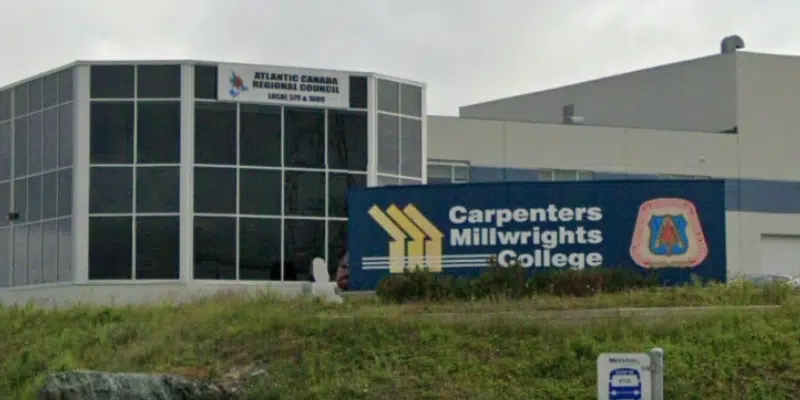
A shortage of millwrights in a Canadian province has highlighted the urgent need to expand recruitment in skilled trades. The Carpenter Millwright's College reports high demand for skilled trades workers, with waitlists for industrial mechanic and carpentry programs. The aging workforce is a contributing factor to the shortage, with the average age of union members being in the mid-50s. There is also a shortage of industrial mechanics, welders, carpenters, scaffolders, and millwrights to fill the available jobs.
Wage gains for job-hoppers in the US are slowing down, indicating a loss of steam in the labor market. The three-month average of annual wage growth for job switchers dropped to 5.6% in August, down from 8.5% in July 2022, and is now barely higher than the wage growth seen by those who didn't change jobs last month. This decline in wage growth for job switchers suggests a slowdown in job-hopping and labor demand. The drop in the quits rate and the rise in the unemployment rate also indicate a less dynamic labor market. However, total employment remains high, signaling that the labor market is slowing but still strong.
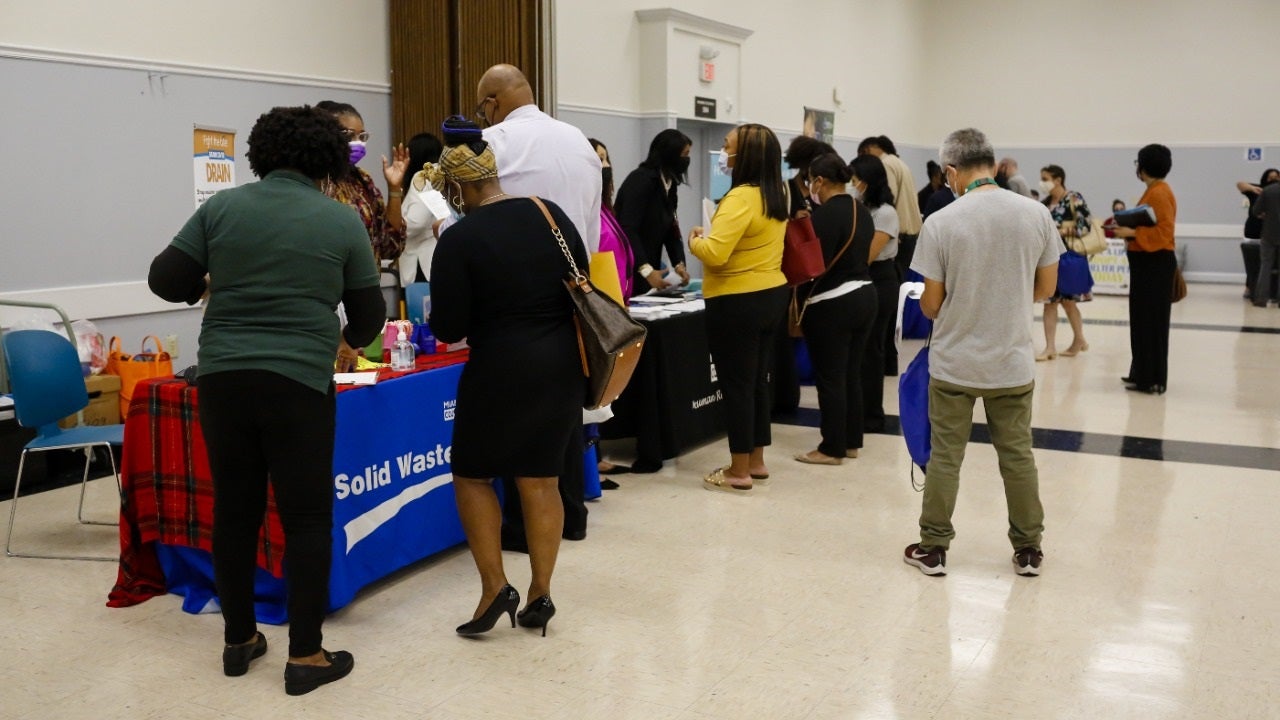
The lowest wage American workers are willing to accept for a new job has reached a record high, with the average "reservation wage" hitting $78,645 in Q2 2023, an 8% increase from the previous year. Workers over the age of 45 saw the most significant year-over-year increase. Those with a college degree expect a minimum annual salary of $98,600, while those without one won't accept less than $63,300. The tight labor market, known as the "Great Resignation," has allowed workers to demand better wages, conditions, and hours. However, rapid wage growth has contributed to high inflation. The Federal Reserve has warned about the risks of substantial pay increases and a potential wage-price spiral. Despite this, signs of a cooling labor market are emerging as employers added the lowest number of jobs in two years in July.

The average "reservation wage," or minimum acceptable salary offer to switch jobs, in the US reached a record high of $78,645 during Q2 2023, an 8% increase from the previous year and the highest level since 2014. Rising wages have been recognized as a driving force in inflation, and the data suggests that inflation is still present in the labor market. Employers have been trying to keep up with wage demands, with the average full-time offer rising 14% to $69,475. The tight labor market raises the likelihood of the Federal Reserve keeping interest rates higher for longer. Job seekers and job openings have declined, while expectations of switching jobs and being offered a new job have also decreased.

The pandemic has debunked several myths about the job market, as predictions of permanent changes have proven temporary or illusory. Women have returned to the workforce in record numbers, early retirements have not materialized, white-collar recession has not prominently affected overall employment, and young and middle-aged men are slowly regaining their employment rates. The U.S. labor market has rebounded faster than expected, echoing the recovery from the 2008 recession, and highlighting the resilience of the U.S. worker.
The threat of a strike from 340,000 United Parcel Service (UPS) workers is testing the strength of the labor market and the power of unions. While the labor market is still tight, recent data shows some softening, with job creation coming in below expectations. The International Brotherhood of Teamsters is pressing UPS for higher wages and benefits, and workers have authorized a strike to begin on August 1 if no deal is reached. This strike threat comes amidst a new wave of union activism that has emerged during the pandemic. The Biden administration has chosen not to intervene in the UPS talks, and the outcome of this strike could provide insight into the future of unions and employers.