Many older Americans are planning to unretire or return to work in 2026 due to financial insecurity, rising costs, and concerns about savings lasting through retirement, with experts calling for better support and flexible job opportunities for seniors.
A Pew Research Center report reveals that young men without college degrees are earning more now than a decade ago, although their wages have stagnated over the long term. Despite higher earnings, fewer young men are participating in the workforce, influenced by factors like falling wages, criminal records, and opioid addiction. The report also highlights that fewer Americans believe college is worth the cost, leading to a decline in college enrollment and a shift in the labor market dynamics.
A federal program that provided $24 billion in child care funding is set to expire, causing concern for parents and child care providers. The program, part of the American Rescue Plan, helped stabilize child care programs and reduce costs for families. Estimates suggest that 70,000 child care programs could close, impacting 3.2 million children. However, experts believe the impact may be less severe due to state investments in child care systems. Congressional Democrats have proposed a bill to provide $16 billion annually for child care providers, but it faces challenges. The expiration of funding could lead to higher costs for parents and difficulties in retaining child care workers. The impact on female workforce participation remains uncertain.
West Virginia has seen a surge in economic growth, with $6.2 billion generated in private capital investment in 2022 alone, largely due to a rebound from the pandemic recession and an increase in new industries, including green energy projects. However, despite the positive economic news, a recent poll shows that nearly half of West Virginians believe the state's economy is getting worse, possibly because the benefits of the new industries may not reach all parts of the state, particularly those affected by the decline of the coal industry and traditional manufacturing. The state's low workforce participation rate also contributes to the lack of optimism among individuals not in the workforce.
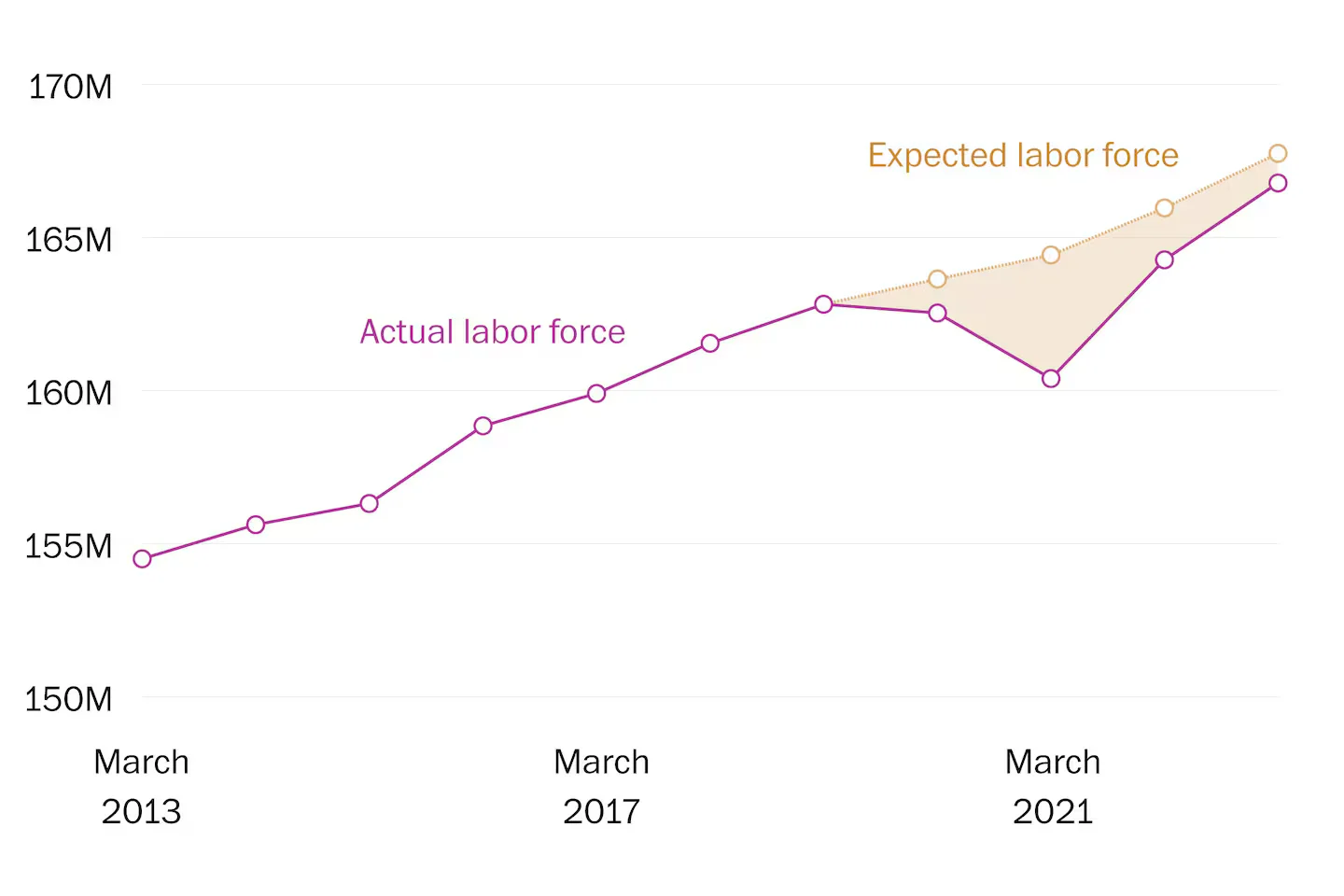
The US economy has recovered 75% of the 4 million workers who stopped working due to retirements, lack of child care, and health concerns. With 83.3% of workers between the ages of 25 and 54 back in the labor force, rates not seen since the Great Recession, the job market continues to defy expectations amid economic headwinds. Women and workers of color have led many of the recent gains in the labor market. The burst of new workers is helping fill a gap of more than 4 million people who were “missing” from the job market as of March 2021.
The British government has announced plans to expand free child care, extended household energy subsidies, and bolstered business investment incentives to promote greater workforce participation and economic growth. The chancellor of the Exchequer, Jeremy Hunt, laid out his tax and spending plans to lawmakers in Parliament in a speech aimed at coaxing economic growth that’s been flat over recent months. The plan outlined would steadily increase access to free child care for children over 9 months, and the government would proceed with raising corporate taxes in April to 25 percent from 19 percent.