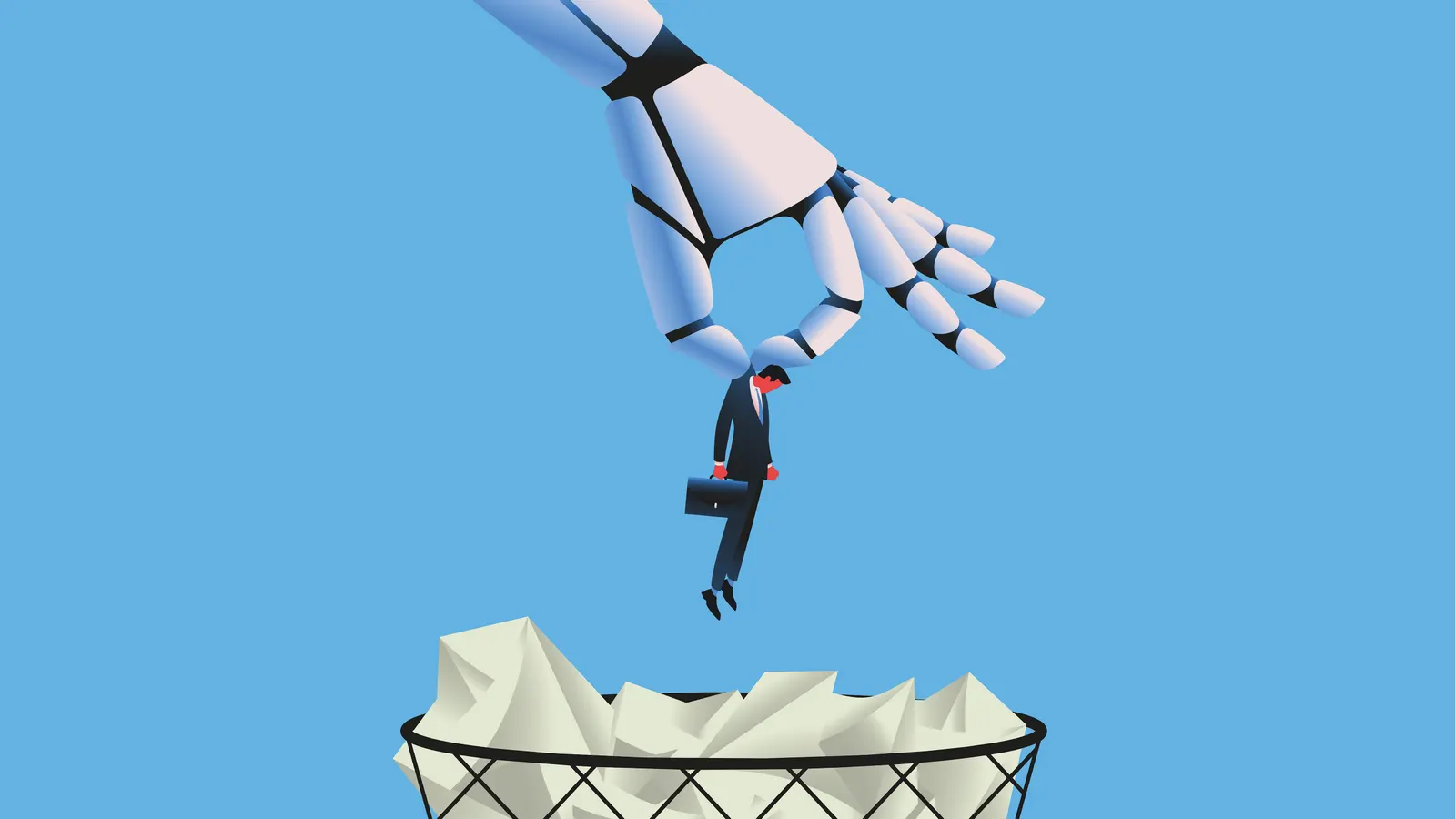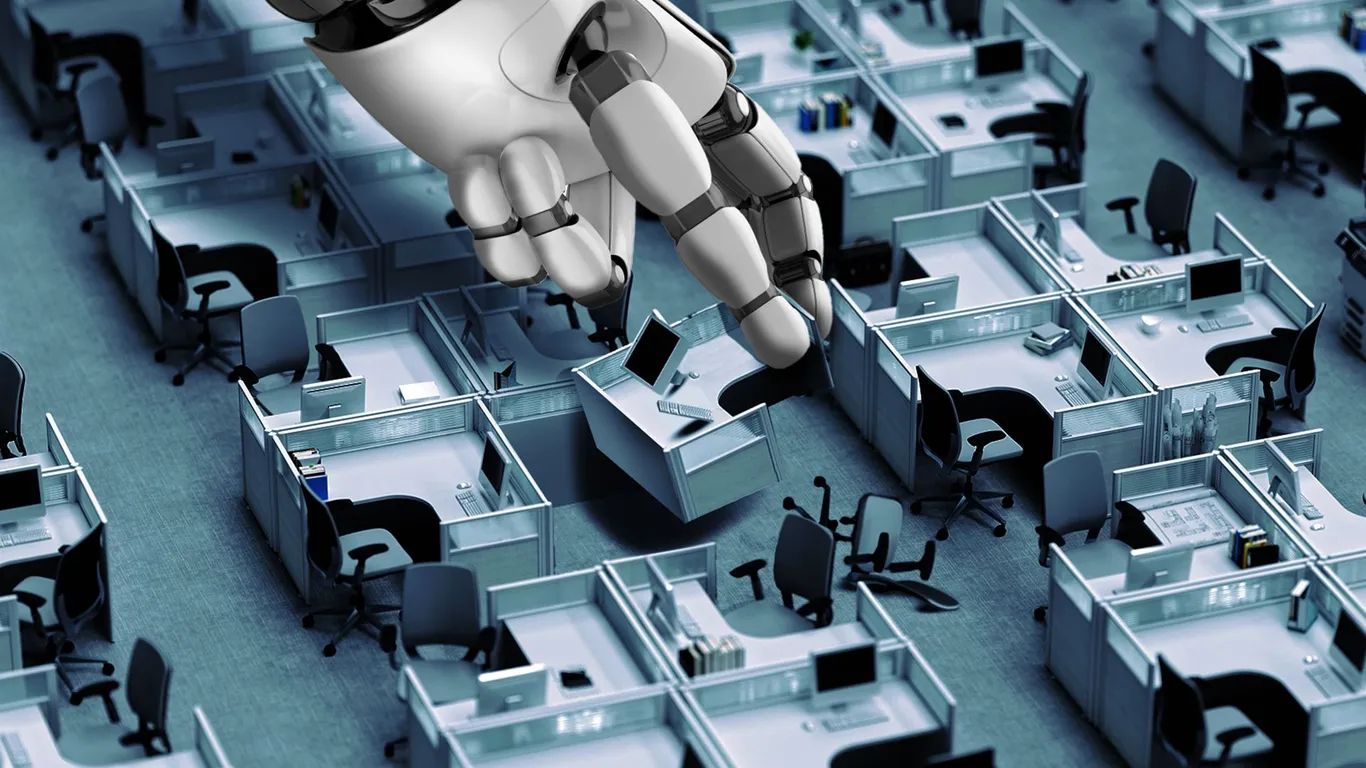
As layoffs increase, training AI models has become a lucrative side hustle, with humans performing tasks like data labeling and model fine-tuning to help develop autonomous systems, potentially at the cost of future jobs, while some workers see it as a way to stay relevant in an increasingly automated world.

A Senate Democrats report warns that AI and automation could eliminate nearly 100 million U.S. jobs in the next decade, highlighting concerns over economic inequality and calling for policies like a robot tax and shorter workweeks to mitigate the impact.
A report from Anthropic reveals that 77% of companies using its Claude AI software primarily employ it for automating tasks, raising concerns about potential job displacement and the future of work, with a focus on automation of administrative and coding tasks.
Julie Sweet, CEO of Accenture, highlights that AI implementation in large companies is slower and more challenging than expected, mainly due to organizational and mindset barriers. Despite high AI spending plans, many firms face difficulties in scaling AI effectively, which may lead to job cuts and process overhauls. However, Sweet remains optimistic about AI's long-term potential to drive innovation and growth, emphasizing the need for leadership, accountability, and reinvention to unlock its full benefits.
Federal agents raided the Nutrition Bar Confectioners factory in Cato, NY, detaining about 70 workers, mostly Hispanic, in an immigration enforcement operation, leaving the owners shocked and concerned about the impact on their business and employees.
Preliminary data shows that over 1.2 million immigrants have left the US labor force under Trump's administration, affecting key sectors like agriculture, construction, and healthcare, due to increased immigration enforcement and deportation efforts, which are disrupting the availability of immigrant workers and potentially impacting the US economy and essential services.
A Microsoft study analyzed how AI can support or automate various jobs, identifying roles like healthcare professionals and blue-collar workers as more AI-proof, while knowledge and sales roles are more susceptible to automation. The study emphasizes AI as a tool for augmentation rather than replacement, though corporate trends suggest increasing automation efforts, raising concerns about job displacement and labor market disruption.
CDC workers, many of whom were rehired after Trump-era disruptions, face ongoing uncertainty, project cancellations, and morale issues amid funding cuts and political turmoil, compounded by a recent shooting at CDC headquarters. Despite some legislative support, future HIV prevention efforts and public health initiatives are at risk due to proposed budget reductions and restructuring, threatening progress against HIV and other health threats.
Microsoft's report highlights that AI is likely to replace jobs involving knowledge work, such as translators, writers, and customer service roles, with even highly educated professionals at risk. While some jobs like water treatment operators are safe, the overall trend suggests AI will significantly impact employment across various sectors, emphasizing the need for adaptation and new skills.
Microsoft researchers found that AI chatbots are most likely to automate jobs involving communication and information sharing, such as translators and writers, but are less impactful on physical labor jobs. The study analyzed 200,000 conversations to determine which careers might be affected by AI, emphasizing that AI supports rather than replaces many tasks, and highlighting the need for ongoing research into its societal and economic effects.
The ICE raid on Glenn Valley Foods in Nebraska resulted in the detention of over half the workforce, causing a 70% drop in production and raising concerns about the company's future operations.
AI is increasingly impacting the tech industry by automating jobs and leading to layoffs, with CEOs acknowledging its role in reducing employment, especially for entry-level positions, while also prompting a shift towards hiring experts and automating tasks across various sectors.
The article discusses the growing integration of AI in the workplace, highlighting its potential to augment jobs rather than replace them entirely, while emphasizing the importance of adapting by learning AI skills to stay relevant and mitigate job anxiety amid ongoing layoffs and technological shifts.
Several major CEOs are making increasingly stark predictions about AI causing significant job losses in the U.S., with some suggesting that up to half of white-collar jobs could be replaced, signaling a major workforce restructuring driven by technological advancements.
A new study from Upwork shows that generative AI is replacing low-complexity tasks while increasing demand for AI-related skills and jobs, with freelancers earning more when using AI tools. Although AI is automating some jobs, it is also creating opportunities for workers skilled in AI augmentation, leading to a shift in the job market. However, trust in AI automation remains cautious, and ongoing research aims to better understand AI's economic impact.