Microsoft CEO Satya Nadella emphasizes the importance of advancing AI by focusing on human empowerment, developing AI systems that work collaboratively, and making societal decisions to maximize AI's real-world impact, as the industry moves beyond initial discovery into widespread adoption.
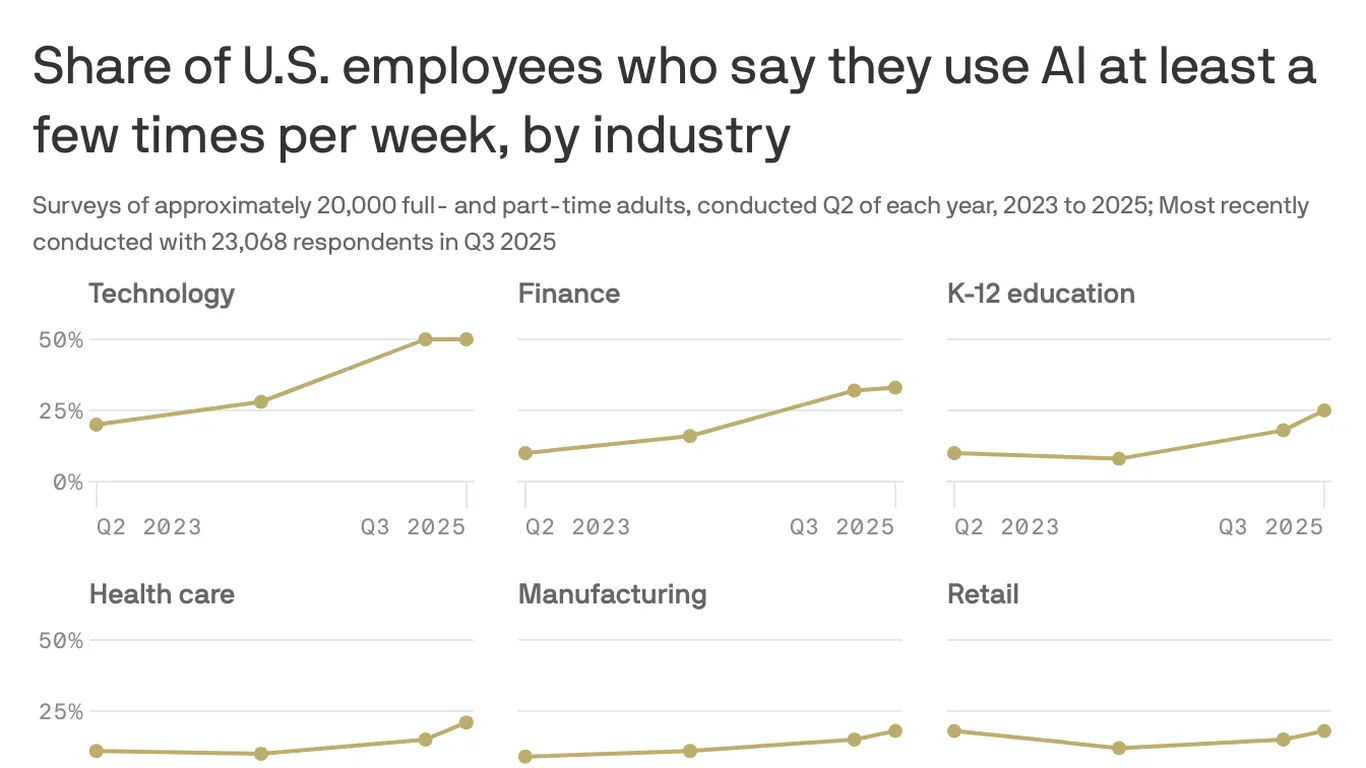
AI usage in the workplace is rapidly increasing, especially among knowledge workers in tech, finance, and professional services, with 45% using AI at least a few times a year and 23% weekly, though daily use remains low at 10%. Chatbots like ChatGPT are the most common AI tools, and higher company positions tend to use AI more, signaling a significant shift in how professionals work, similar to the internet's early days.
Salesforce reports a strong revenue outlook for the current period, exceeding analyst estimates, driven by increased adoption of its AI tools like Agentforce, which has secured over 9,500 paid deals. The company's revenue is expected to be between $11.1 billion and $11.2 billion, with growth partly fueled by its recent $8 billion acquisition of Informatica. Despite some challenges in customer adoption and competition, Salesforce remains optimistic about the future impact of its AI products.
The article discusses how companies are increasingly integrating AI into their operations, often accompanied by significant layoffs, highlighting the economic and employment shifts driven by AI adoption.
Despite slow historical adoption, the commercial real estate industry is rapidly integrating AI, with 88% piloting it and shifting focus from operational efficiency to revenue growth, though only 5% have fully achieved their AI goals due to the evolving and complex nature of these objectives.
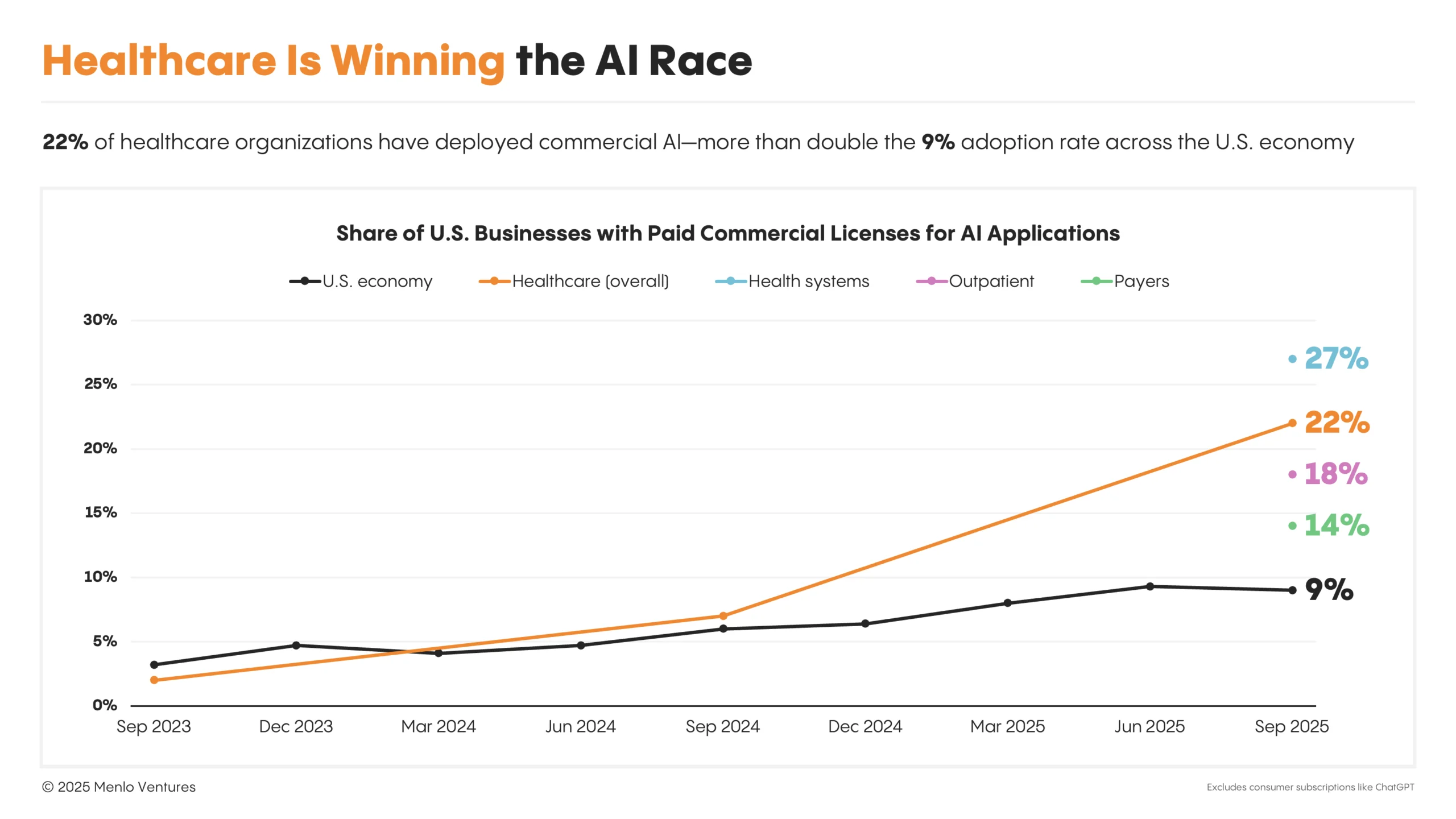
Healthcare is rapidly adopting AI, leading to a significant transformation in operations, diagnostics, and patient engagement, with providers investing heavily and startups capturing most of the market, while incumbents respond with their own AI solutions.
A study analyzing over 14 million website visits found that AI is rarely used in daily online activity, accounting for less than 1% of browsing, with higher usage linked to certain personality traits like narcissism and psychopathy. The research highlights discrepancies between self-reported and actual AI use and suggests AI is primarily used as a productivity tool rather than for entertainment.
The article argues that the focus on achieving artificial general intelligence (AGI) is overhyped and unlikely to be imminent, suggesting that the US should prioritize practical AI adoption and infrastructure improvements over chasing the elusive AGI milestone to maintain global leadership in AI.
A recent study suggests that investors are becoming more pessimistic about AI's impact on future economic growth, leading to declining long-term interest rates after AI model releases in 2023-2024. This challenges the narrative of AI-driven optimism and indicates that companies like Apple may be justified in delaying AI adoption, as the technology's transformative potential appears less certain than previously thought. The findings also highlight potential increases in economic inequality driven by AI's impact on individual companies rather than the overall economy.
The article discusses the rapid rise of AI in the stock market, emphasizing the importance of investing in AI infrastructure companies like Nvidia and energy firms benefiting from increased data-center power consumption, as well as Big Tech companies leveraging AI for advertising and cloud services. It highlights the current AI investment playbook, focusing on infrastructure, monetizers, and application leaders, and stresses the need for investors to stay ahead of the trend to succeed in 2025.
Julie Sweet, CEO of Accenture, highlights that AI implementation in large companies is slower and more challenging than expected, mainly due to organizational and mindset barriers. Despite high AI spending plans, many firms face difficulties in scaling AI effectively, which may lead to job cuts and process overhauls. However, Sweet remains optimistic about AI's long-term potential to drive innovation and growth, emphasizing the need for leadership, accountability, and reinvention to unlock its full benefits.
A new Census Bureau report indicates that AI adoption among large U.S. companies has declined from 14% to 12%, marking the largest drop since the survey's inception in 2023, suggesting a possible slowdown or reevaluation of AI's role in corporate strategies.
Nvidia's strong Q2 results, driven by AI chip sales, reinforce the ongoing AI revolution, which benefits Palantir's growth prospects as its AI platform gains record demand, despite high valuation concerns.
Google has reduced its management roles overseeing small teams by over 35% in the past year as part of an effort to increase efficiency, with a broader trend among Big Tech companies to flatten organizational structures. The company is also encouraging employees to use AI more to boost productivity, aiming for a 10% increase in efficiency from AI integration.
A MIT report found that 95% of AI pilot projects fail to deliver financial benefits, mainly due to a lack of understanding on how to effectively integrate AI into workflows, rather than technical shortcomings. Success is higher when companies buy AI solutions rather than build them, and startups tend to see better ROI than large enterprises. The report highlights the importance of proper implementation and usage over the technology itself, contrasting with market fears of an AI bubble.