Researchers have developed a method to manipulate terahertz waves, allowing them to curve around obstacles, potentially revolutionizing wireless communication. Terahertz waves have much higher data-carrying capacity than microwaves, but are currently blocked by solid objects. The new method involves creating self-accelerating beams that bend around obstacles, maintaining communication links with high reliability and integrity. This breakthrough could lead to faster and more stable internet connections in obstructed environments, but further research and challenges remain in the development of terahertz communication technology.

The US government has allocated $42 million to support the development of the 5G Open RAN (O-RAN) standard, aiming to create a more open and competitive market for cellular hardware and software. This move is seen as a strategy to counter Huawei's dominance in global cellular infrastructure. The grant will establish a testing center in Dallas to demonstrate the standard's viability, with major wireless providers like AT&T and Verizon forming a consortium to advance O-RAN compatibility. This initiative is part of a broader effort to promote interoperability, innovation, and faster network build-outs, with significant investments and commitments from key industry players.
Scientists have developed a chip architecture that combines electronic and light-based components, paving the way for 6G technology. By integrating photonic components into a conventional electronic circuit board, researchers increased radio frequency bandwidth and improved signal accuracy at high frequencies. The prototype chip demonstrated improved filtering capabilities, which is crucial for future wireless technologies that rely on higher frequencies. This advancement in chip architecture will be instrumental in powering 6G devices and enabling faster data speeds in the future.
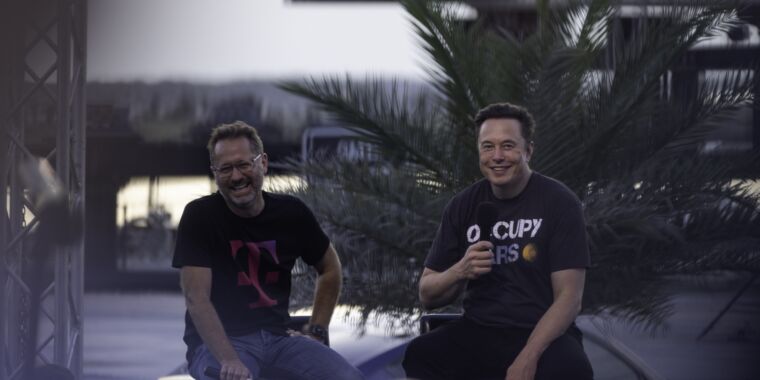
The FCC has proposed a new regulatory framework to help satellite operators and wireless companies collaborate to provide hybrid services to smartphone users in remote, unserved, and underserved areas. The proposal seeks public comment on a plan to regulate these collaborations and provide more access to spectrum needed to deliver the hybrid services. Starlink operator SpaceX and T-Mobile plan to start testing the satellite-to-cell service sometime this year, with text messaging expected to be the first supported service, followed by voice and Internet coverage.