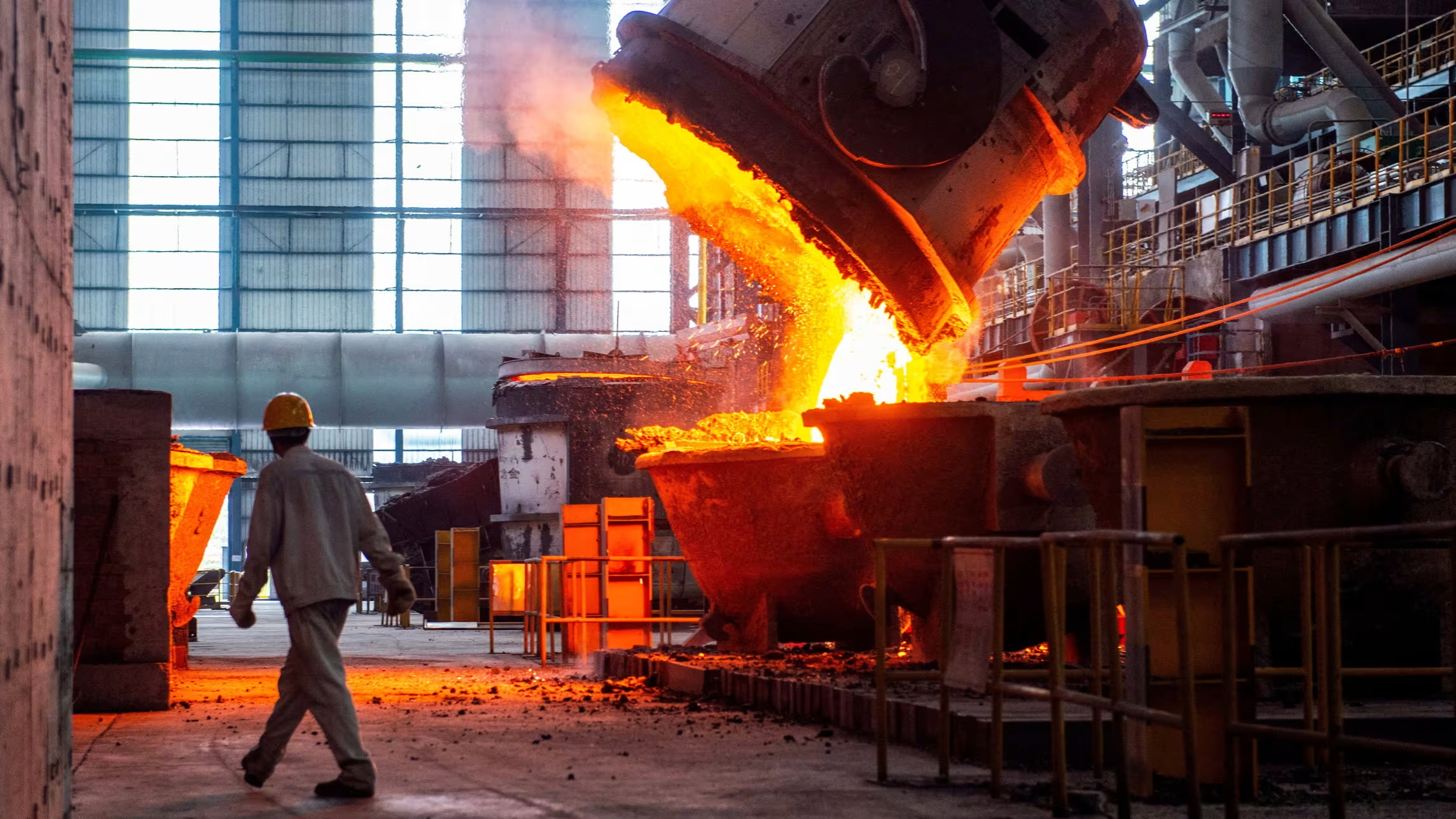
China's Industrial Profits Drop Amid Weak Demand, but High-Tech Gains Accelerate
China's industrial profits have sharply declined due to weak demand and deflationary pressures, highlighting ongoing economic challenges in the country.

All articles tagged with #weak demand
China's industrial profits have sharply declined due to weak demand and deflationary pressures, highlighting ongoing economic challenges in the country.

Natural gas prices in the U.S., Europe, and Asia are being weighed down by record-high U.S. production, record-high inventories, weak industrial demand in Europe, and tepid consumption in Asia. The warmest autumn in nearly 150 years has extended the refill season for gas storage, resulting in above-average inventories. Traders have turned bearish on natural gas due to ample inventories, muted demand, and increased confidence in Europe's ability to go through the winter without major supply disruptions. The benchmark prices for natural gas in the U.S. and Europe have dropped to multi-month lows.

Crude oil prices continue to decline due to concerns over oversupply and weak demand, with traders awaiting the outcome of the Fed meeting and the Energy Information Administration's weekly oil inventory report. Russian oil exports have reached their highest level since July, casting doubt on the implementation of additional OPEC+ output cuts in January. Rising U.S. oil production has added to oversupply concerns, pushing the futures market into a contango until mid-2024. Despite OPEC+ efforts, oil prices have fallen by about 25% since September, with WTI trading below $70 per barrel and Brent crude slipping below $75 per barrel.
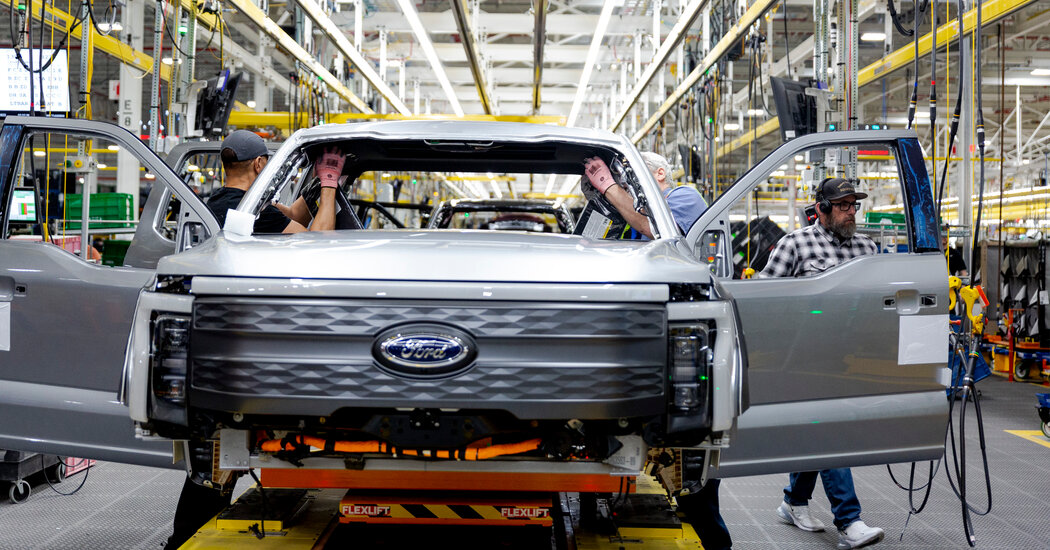
Ford Motor is reducing its planned production of electric F-150 Lightning pickup trucks due to weaker-than-expected demand for electric vehicles. The company now expects to produce an average of 1,600 electric F-150s per week in 2024, about half of its previous target. This reflects the overall slowdown in sales of battery-powered cars and trucks, as consumer enthusiasm has not matched automakers' production plans. Factors such as high prices, availability and reliability of charging stations, and limited charging infrastructure have contributed to the slower adoption of electric vehicles. Other automakers, including General Motors, have also scaled back their electric vehicle production plans in response to market conditions.

Shipping group A.P. Moller-Maersk announced a significant drop in third-quarter profit and revenue, leading to plans to cut at least 10,000 jobs due to overcapacity, rising costs, and weaker prices. The company, which controls a substantial portion of global container trade, cited a steeper downturn in demand than anticipated. Maersk expects global container volumes to decline by up to 2% this year, primarily due to weak consumer demand and destocking following the COVID-19 pandemic. The company's shares fell over 10% to their lowest level in three years.

China's industrial profits have fallen for the seventh consecutive month, with a 6.7% decline in July compared to the previous year. Weak demand and a faltering post-pandemic recovery have squeezed companies in the world's second-largest economy. Profits for the first seven months of the year have shrunk by 15.5% year-on-year, following a 16.8% decline in the first half. Major banks have downgraded their growth forecasts as a worsening property slump, weak consumer spending, and tumbling credit growth continue to hamper the economy. State-owned enterprises, foreign firms, and private-sector companies have all recorded significant profit declines.

Shares of online luxury goods retailer Farfetch plunged nearly 40% to a record low as weak demand in its top two markets, the United States and China, led to a gloomy annual sales outlook. The company also missed revenue estimates in the second quarter due to retailers cutting back on orders. Farfetch projected a lower total gross merchandise value for 2023, causing several brokerages to cut their price targets on the stock. Analysts expressed concerns about management's credibility and limited visibility.

China's new bank loans in July fell to their lowest level since 2009, with weak credit growth and a decline in household and corporate loans. Despite interest rate cuts and promises of further support for the economy, weak demand at home and abroad has hindered China's economic momentum. Analysts expect more rate cuts and increased government bond issuance, but unless there is an improvement in business and household sentiment, credit growth is unlikely to improve significantly. The weak credit readings come after other grim economic data, including deflation and plummeting exports and imports, adding pressure on Beijing to implement more forceful stimulus measures.

Factories in Asia, including China, Japan, South Korea, Malaysia, Taiwan, and Vietnam, reported sluggish demand in July as new domestic and global orders slumped, indicating weak momentum in the global economy. Only India, Indonesia, and the Philippines showed expansion. Falling new orders, bleak employment prospects, and high inventory levels point to subdued factory activity in the coming months. Weak demand has contributed to reduced production costs, potentially alleviating inflationary pressures and leading to looser monetary policy in some emerging Asian economies.

China's deflation risks increased in June due to weak demand, with consumer inflation remaining flat and factory-gate prices declining further. The data suggests a potential weaker performance in second-quarter economic data.
US manufacturing activity contracted for the eighth consecutive month in June, reaching its weakest level in over three years. The Institute for Supply Management's manufacturing gauge fell to 46, indicating shrinking activity, with declines in production, employment, and input prices. The index of new orders contracted for the tenth straight month, while order backlogs shrank. The prolonged stretch of readings below 50 is the longest since 2008-2009. The report reflects weak demand for merchandise and a pullback in manufacturing employment, as Americans limit spending on goods and face the impact of high inflation.
Foot Locker's shares have plunged as the company has been forced to make deep price cuts due to weak demand.

Seagate Technology Holdings reported an unexpected loss for Q3 of its fiscal year due to weak demand among large customers. The company reported an adjusted loss of 28 cents per share from sales of $1.86 billion, while analysts were expecting a profit of 25 cents per share from sales of $1.98 billion.