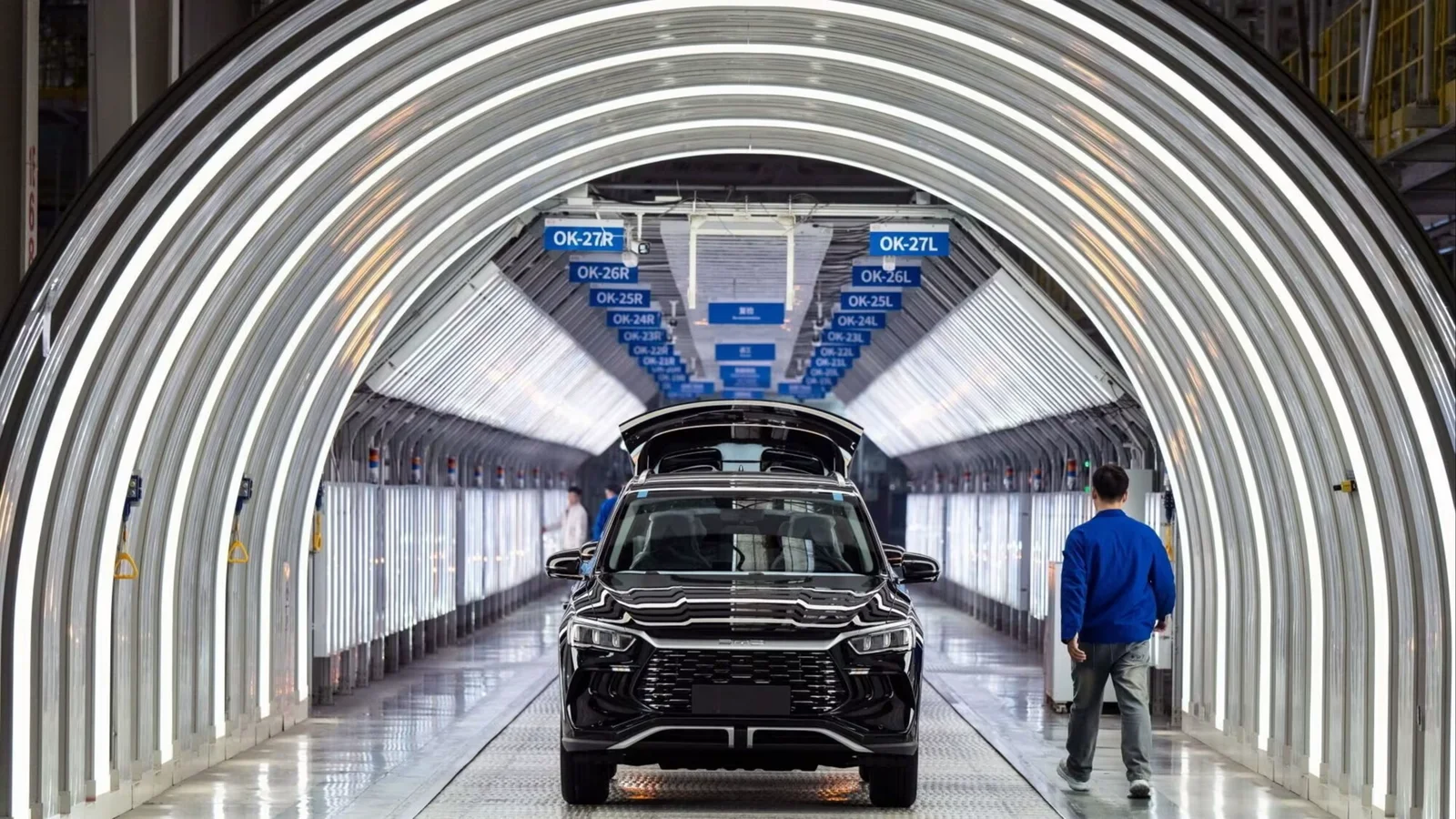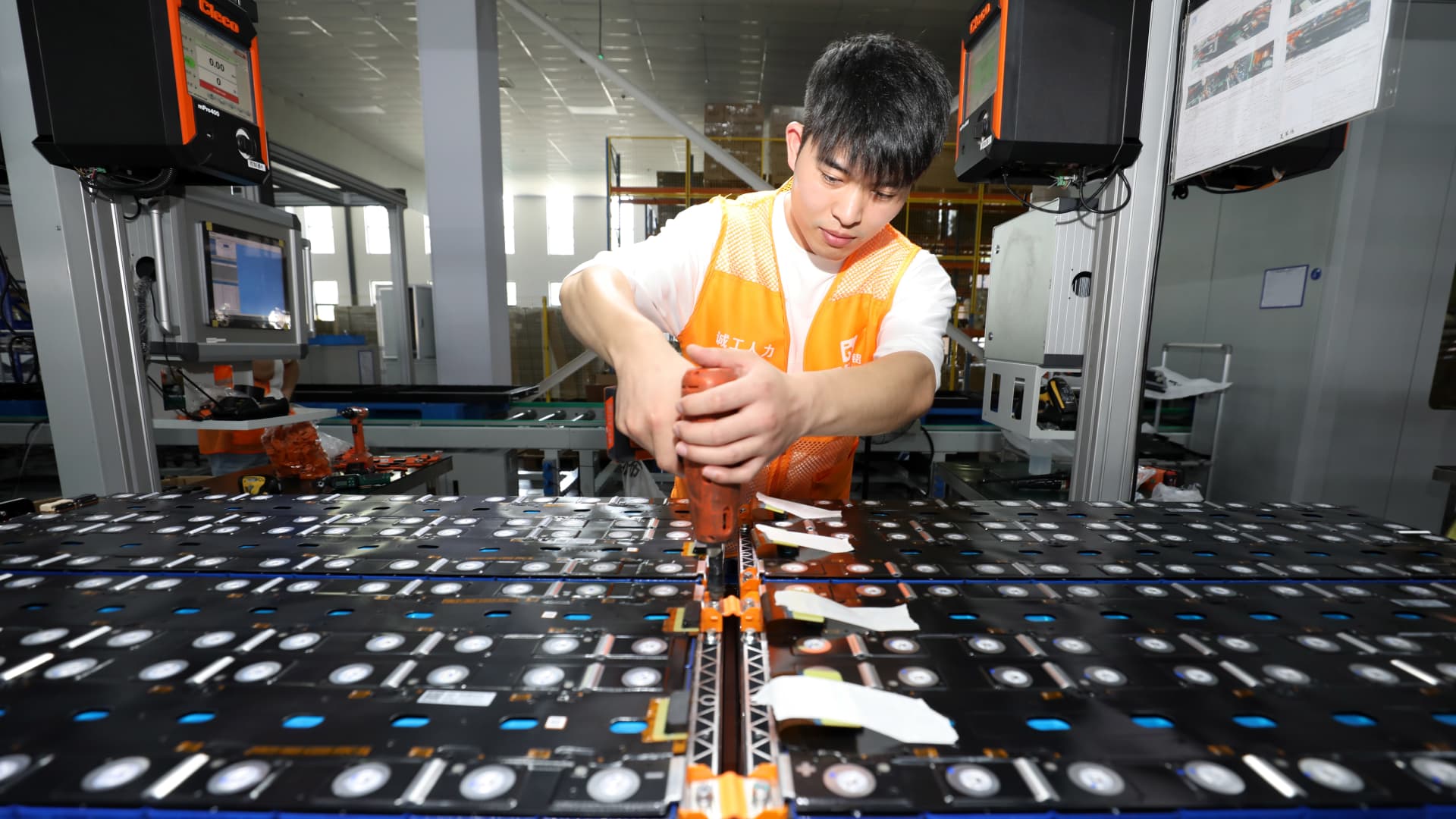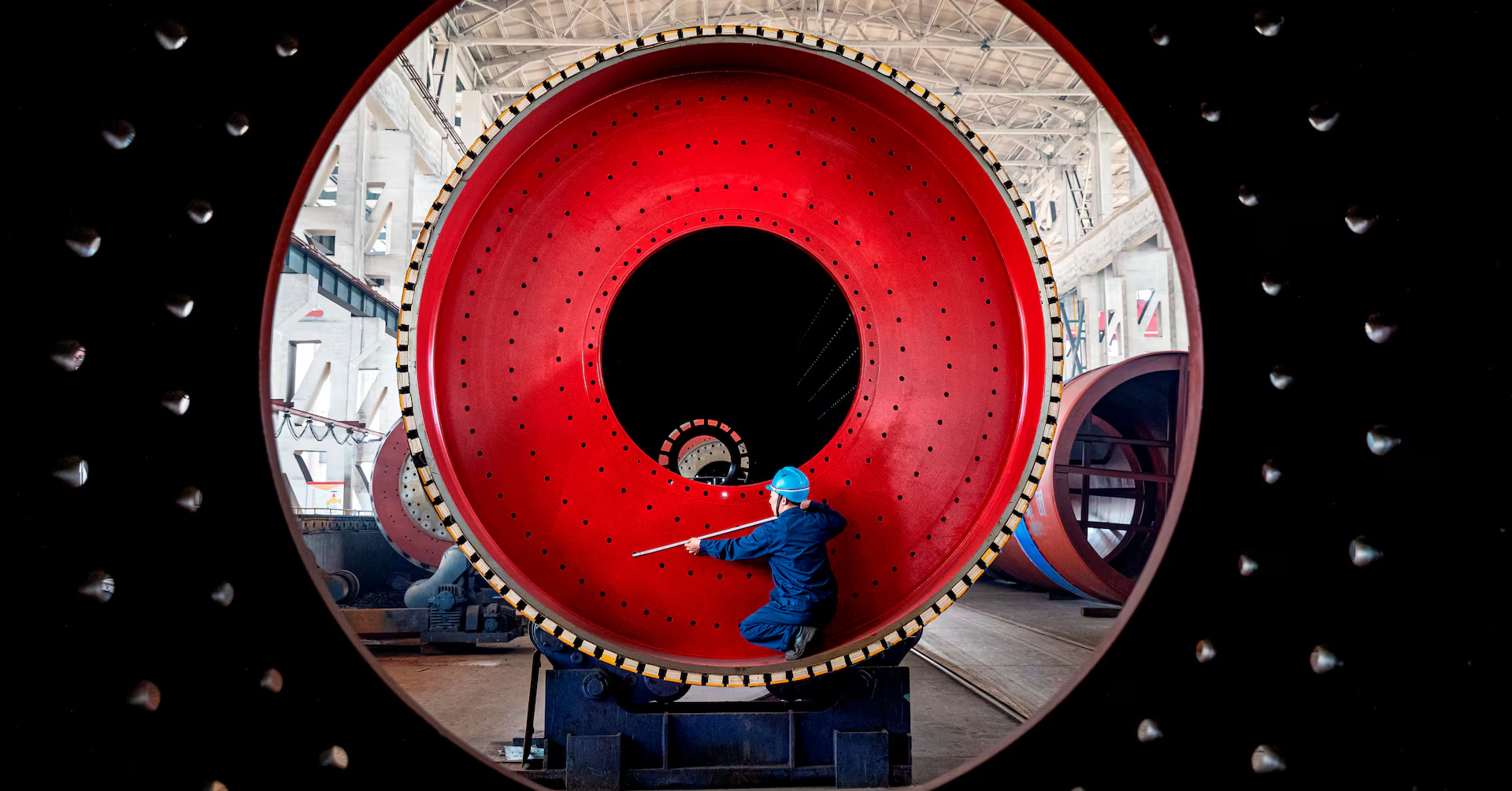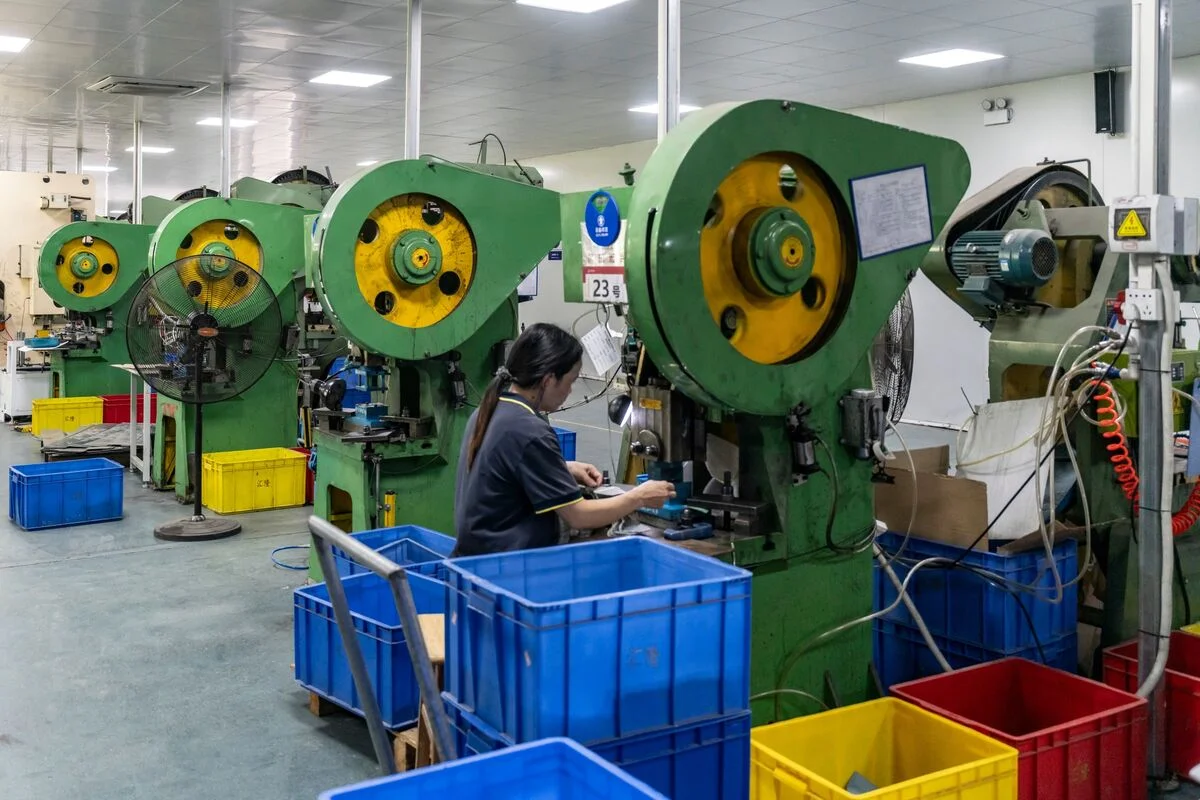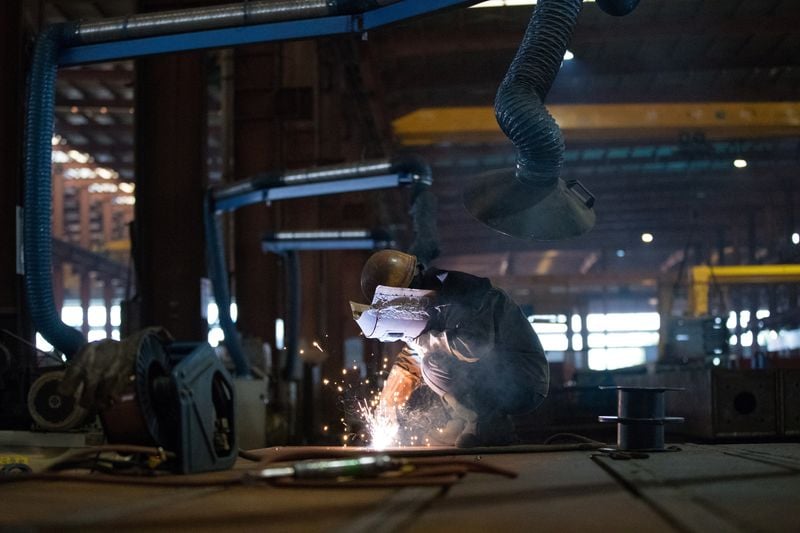
China's factory activity unexpectedly grew in December, ending an eight-month decline, driven by pre-holiday stockpiling and domestic demand, but overall economic challenges such as property downturn and weak exports persist, indicating a short-lived recovery rather than a sustained upturn.
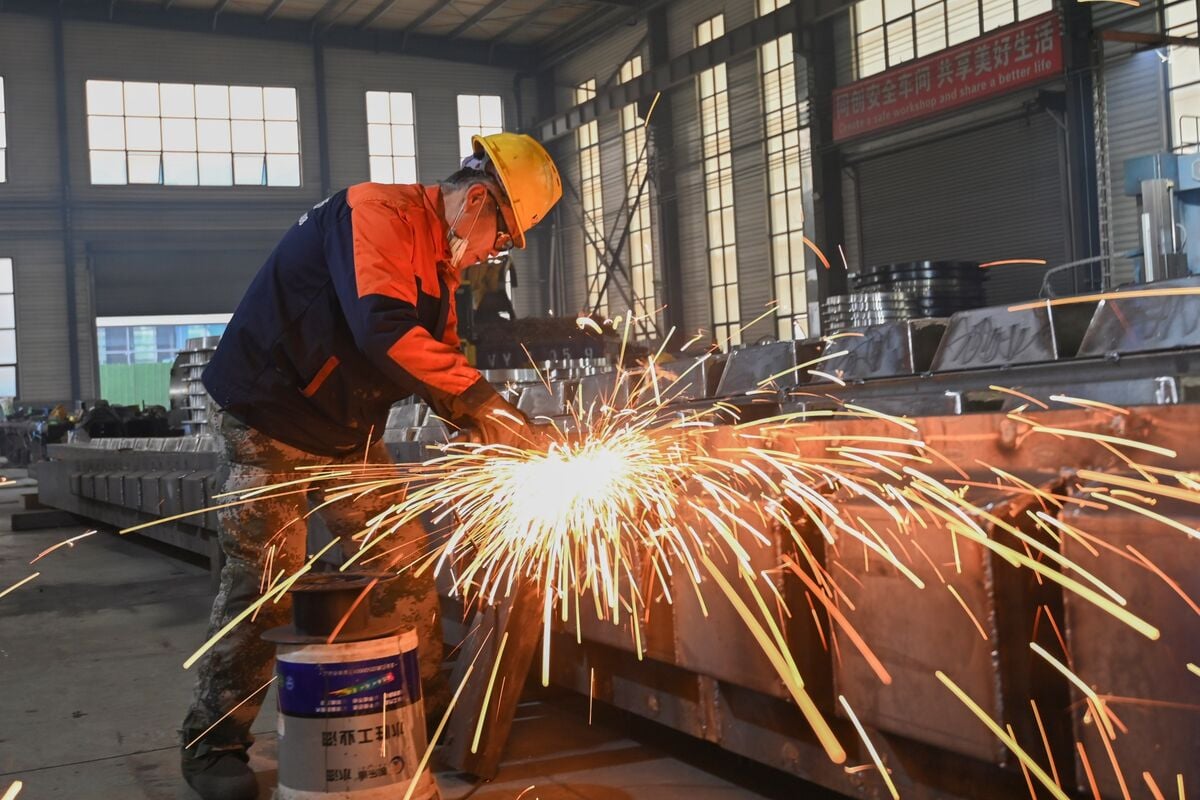
China's factory activity grew in December for the first time in nine months, signaling a potential recovery and helping the country meet its 2025 economic targets of about 5% growth, despite ongoing challenges and a cautious policy approach.
China's manufacturing sector experienced its first expansion since March in December, with official PMI rising above expectations to 50.1, indicating a broader economic recovery supported by increased new orders and production, especially among large enterprises, despite ongoing challenges in smaller firms and the property sector.
China's factory activity has contracted for the eighth consecutive month in November, with manufacturing PMI at 49.2 and services shrinking for the first time in nearly three years, reflecting ongoing economic challenges and the need for structural reforms amid a global slowdown and trade tensions.
China's factory activity continued to contract in November, marking the longest decline on record amid a deepening economic slowdown, with weak domestic demand and global trade tensions impacting growth, though policymakers are cautious about implementing further stimulus as the annual growth target remains within reach.
China's factory activity experienced its longest decline in over nine years, with the official PMI dropping to 49 in October, driven by weak domestic demand and global uncertainties, prompting calls for increased policy support despite a recent US-China trade truce. The slowdown highlights ongoing challenges in the Chinese economy, including reduced exports and domestic consumption, amid geopolitical tensions and internal policy measures.
China's manufacturing PMI fell to a six-month low of 49.0 in October, indicating contraction due to declining export orders amid ongoing trade tensions, while the non-manufacturing sector showed slight growth. The slowdown raises concerns about the sustainability of China's economic recovery and the need for additional stimulus to meet growth targets.
China's manufacturing activity declined for the sixth consecutive month in September, with official PMI slightly improving but still indicating contraction, as firms await further government stimulus and clarity on a US trade deal. Meanwhile, private surveys show some export-oriented growth, reflecting mixed economic signals amid ongoing uncertainties and policy support efforts.
China's private manufacturing PMI for August rose to 50.5, indicating the fastest expansion in five months driven by a recovery in new export orders, despite weak domestic demand and cautious employment trends. The official PMI showed a slight contraction, but private surveys suggest a more optimistic outlook, supported by increased exports to Southeast Asia and Europe amid ongoing US-China trade tensions.
China's factory activity remained in contraction in August despite tariff relief, with weak demand and government crackdowns on overcapacity contributing to a slowdown that could impact future economic growth, amid ongoing trade tensions with the US.
China's economy showed signs of a sharp slowdown in July, with declines in factory output, retail sales, and investment, amid ongoing trade tensions, regulatory crackdowns, and adverse weather, prompting calls for additional government stimulus measures.
China's May manufacturing activity contracted at its fastest rate since September 2022, driven by declining export orders and ongoing trade tensions with the US, despite some government measures to stimulate the economy.
China's factory activity contracted in May for the first time in eight months, driven by US tariffs that have dampened global demand and led to declines in export orders, output, and employment, signaling potential economic slowdown amid ongoing trade tensions.
China's factory activity contraction slowed in May following a trade war truce with the US, boosting trade flows despite ongoing domestic demand challenges and uncertain export outlooks, with PMI indicating slight economic improvement but concerns over deflation and growth targets remaining.