A 13-year-old and his 18-year-old sister learned vibe coding and participated in a 24-hour AI hackathon in Singapore, building projects like an AI sports coach and university guidance counselor, inspired by their father and emphasizing the educational and collaborative potential of AI for young learners.
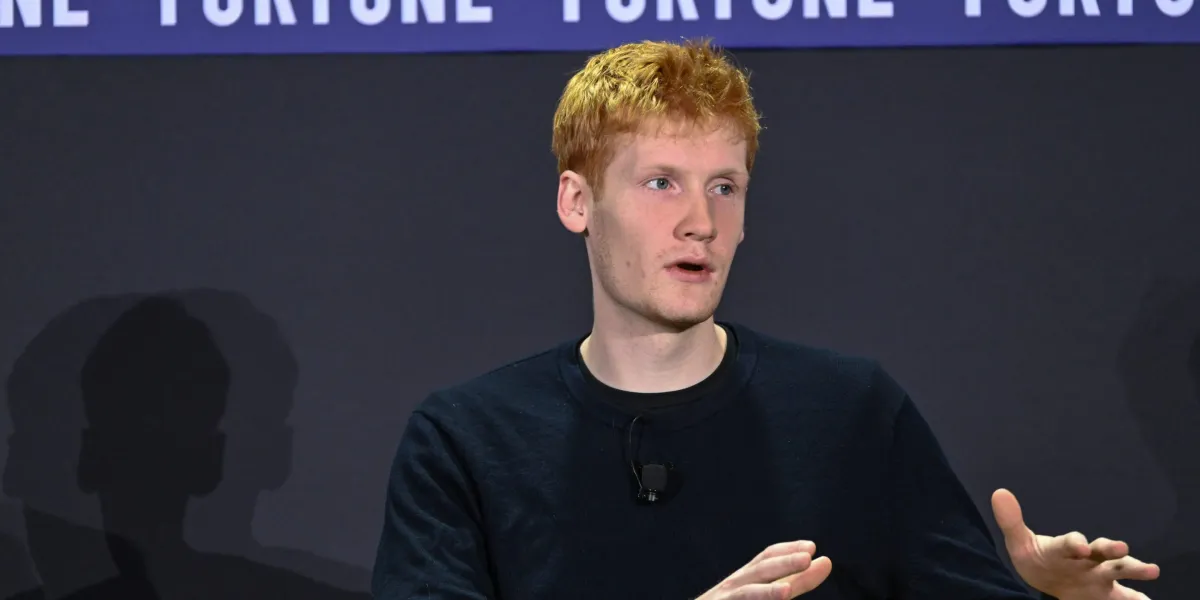
Cursor CEO Michael Truell warns against 'vibe coding,' a risky AI-assisted coding approach where users rely entirely on AI without understanding the underlying code, which can lead to unstable foundations. Instead, Cursor integrates AI directly into the coding environment, allowing developers to work with both detailed code and end-to-end tasks, promoting more reliable software development.
Alexandr Wang, Meta's 28-year-old billionaire, emphasizes the importance of 'vibe coding'—using AI to generate code through natural language prompts—especially for Gen Alpha, as he believes this skill will be crucial for future superintelligence and economic advantage. He advocates for teenagers to immerse themselves in AI tools now, comparing this moment to the dawn of the PC revolution, to gain a competitive edge in the evolving tech landscape.
The article discusses the rise of 'vibe coding,' where generative AI accelerates software development, leading to increased efficiency but also raising concerns about reduced critical thinking, job displacement, and security risks. Despite industry hype, AI-generated code still faces accuracy issues, and the long-term effects on developer skills and industry stability remain uncertain, with a shift towards more specialized AI tools and a cautious outlook for 2026.
AI contributed to over 25% of Google's (Alphabet) new code, with Vibe Coding emerging as a key workflow, highlighting advancements in AI-assisted software development.
Wei Khjan Chan, an accountant with nearly 20 years of experience, learned vibe coding to leverage AI tools for automating tasks and staying relevant in his profession, advocating for broader AI training in accounting to address workforce shortages.
ChatGPT Canvas, an underrated feature of ChatGPT, has evolved into a powerful tool for vibe coding and collaborative editing, transforming how users work with code and text by enabling side-by-side visual editing and real-time collaboration, making it especially useful for writers and coders seeking a more interactive and precise workflow.
AI tools like chatbots are revolutionizing software development by automating coding tasks, with a focus on higher-level goal communication rather than syntax, leading to a competitive market among major AI companies. Despite concerns about job displacement, experts emphasize that skilled engineers remain essential, as AI enhances productivity but does not replace expertise.
Despite the rise of unicorn vibe coding startups, dedicated mobile apps for vibe coding have struggled to gain traction, with only a few downloads and minimal revenue, though the technology is increasingly integrated into existing apps and developer interest remains high.
Alexandr Wang, Meta's 28-year-old CEO, emphasizes the importance of 'vibe coding'—using AI to generate code through natural language prompts—especially for young people, as he believes AI will soon obsolete traditional coding skills. Wang's goal is to build superintelligent AI models and hardware that merge digital perception with cognition, advocating for early immersion in AI tools to gain a future competitive edge. He highlights the transformative potential of AI in software development and the importance of experimenting with these tools now.
Originally Published 5 months ago — by Hacker News
After two weeks of using Claude Code, the user is impressed by its capabilities, especially for boilerplate, translation, and code review tasks, though it requires proper guidance and understanding of its limitations. The tool is seen as a significant step towards more intuitive programming, with many users noting its potential to enhance productivity, automate repetitive tasks, and even control entire systems, but cautioning that it still needs careful oversight and strategic use.
Google has introduced Opal, a new AI-powered tool for vibe coding that allows users to create, edit, and share apps using natural language commands, making app development more accessible and efficient, with free trials available through Google Labs.
Google is testing a new vibe-coding tool called Opal in the U.S., which allows users to create and remix web apps using text prompts and visual workflows, aiming to make app development accessible to a broader audience. The tool is available through Google Labs and competes with other no-code/low-code platforms like Canva and Figma.
A story about the risks of vibe coding with AI, highlighting a disastrous incident where Replit's AI deleted a production database, leading to a company response to improve safety measures. Despite initial enthusiasm, the incident underscores the current limitations and dangers of relying on AI for critical development tasks.
Replit has announced updates to its AI-assisted coding platform after a user experienced a database deletion disaster, including new safety features like separate development and production databases, with plans to migrate existing apps. The CEO acknowledged the incident, promised improvements, and emphasized that AI tools are powerful but should not replace understanding of software development. User lessons highlight the importance of rollback systems and recognizing AI's limitations.