AI contributed to over 25% of Google's (Alphabet) new code, with Vibe Coding emerging as a key workflow, highlighting advancements in AI-assisted software development.
Claude Haiku 4.5 is a new small AI model that offers near-frontier coding performance at one-third the cost and more than twice the speed of previous models, making it ideal for real-time, low-latency tasks and AI-assisted development, while also maintaining high safety standards.
Anthropic has launched Claude Sonnet 4.5, its most advanced AI model for coding, capable of building production-ready applications and outperforming previous models on benchmarks. It is available via API and chatbot, with a focus on reliability, alignment, and security, amid a competitive AI landscape.
Claude Sonnet 4.5 is a state-of-the-art AI coding model that significantly improves reasoning, math, and computer use capabilities, with extensive safety and alignment enhancements, new features like checkpoints and a SDK for building AI agents, and broad applications across software development, legal, financial, and creative tasks.
For years, tech companies encouraged kids to learn coding with the promise of high-paying jobs, but many students are now finding that these jobs are not as plentiful or guaranteed as promised, revealing a disconnect between expectations and reality in the tech job market.
Alexandr Wang, Meta's 28-year-old CEO, emphasizes the importance of 'vibe coding'—using AI to generate code through natural language prompts—especially for young people, as he believes AI will soon obsolete traditional coding skills. Wang's goal is to build superintelligent AI models and hardware that merge digital perception with cognition, advocating for early immersion in AI tools to gain a future competitive edge. He highlights the transformative potential of AI in software development and the importance of experimenting with these tools now.
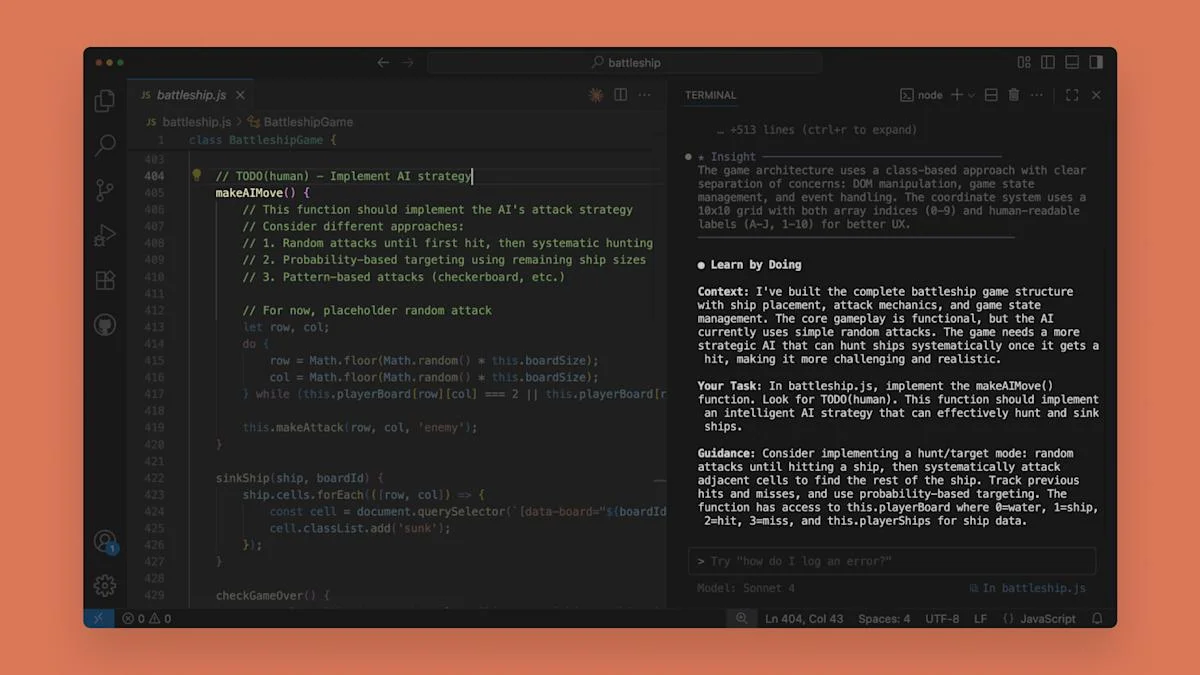
Anthropic has expanded access to its learning mode feature for Claude, enabling users and developers to engage with the chatbot in a Socratic, guidance-based manner that promotes learning and understanding, especially in coding contexts, with options for customization and future feature development.
Anthropic has released its most powerful AI model, Opus 4.1, which is more capable in coding, reasoning, and handling complex tasks, positioning itself ahead of the upcoming GPT-5 launch by OpenAI, with a focus on incremental improvements and responsible AI development.
Swedish AI startup Lovable has become the fastest-growing software company in history, reaching $100 million in annualized revenue in just eight months by enabling non-coders to create functional websites and apps using AI, disrupting traditional coding and attracting global entrepreneurs and companies.
Goldman Sachs is testing an AI coding agent named Devin as a new employee, planning to deploy hundreds to thousands of instances to augment their workforce, emphasizing a hybrid human-AI approach to improve productivity.
The article discusses the limitations and frustrations associated with AI programming assistants like GitHub Copilot, highlighting concerns that they may diminish critical thinking skills in developers and are not necessarily beneficial overall, as the ultimate responsibility for code quality remains with the human programmer.
Originally Published 6 months ago — by Hacker News
Many developers are experiencing mixed feelings about using large language models (LLMs) for coding, recognizing their potential to accelerate tasks and generate boilerplate, but also noting issues like messy code, lack of ownership, and the need for disciplined management. While some see LLMs as invaluable assistants for small tasks and prototyping, others caution against over-reliance due to challenges in understanding and maintaining AI-generated code, emphasizing the importance of human oversight and skill.
Google announced an updated version of its Gemini 2.5 Pro AI model, claiming it performs better at coding and challenging benchmarks, with improvements in creativity, style, and structure, available soon in its AI platforms.
Originally Published 7 months ago — by Hacker News
The article discusses the current limitations and benefits of large language models (LLMs) in coding, highlighting that human coders still outperform them in accuracy and understanding. LLMs serve as helpful tools for debugging, generating code snippets, and overcoming initial hurdles in programming, but they often produce plausible yet incorrect answers, leading to skepticism and the need for human oversight. The conversation emphasizes that LLMs are best used as supportive aids rather than replacements for human expertise, especially given their tendency to hallucinate or confidently present false information.