Researchers developed a urine-based test identifying three biomarkers (TTC3, H4C5, EPCAM) that can accurately detect prostate cancer, potentially reducing the need for invasive biopsies and improving diagnostic accuracy, especially in PSA-negative cases.
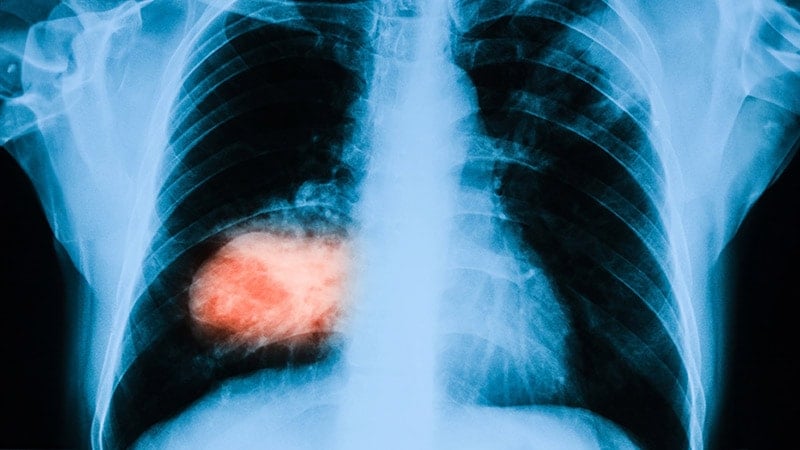
Scientists at the University of Cambridge and Early Cancer Institute have developed a pioneering urine test that could detect early signs of lung cancer by identifying proteins from "zombie" cells, which are damaged cells that promote cancer development. This test, which has been successful in mice and is set for human trials, uses an injectable sensor to release a detectable compound into urine, potentially allowing for earlier and more affordable cancer detection compared to traditional scans. Lung cancer is the leading cause of cancer deaths globally, making early detection crucial for improving survival rates.
Researchers at Virginia Commonwealth University are developing a urine-based test to detect ovarian cancer at an earlier stage using nanotechnology to analyze specific peptides found in the urine of people with ovarian cancer. The technique is still in its early stages, but the goal is to combine this test with existing methods for early-stage detection, diagnosis, and treatment of ovarian cancer. While experts are optimistic about the potential of this technology, they caution that it is not yet ready for widespread clinical use and will require further testing and validation. Nanotechnology holds promise for noninvasive diagnostic and therapeutic applications in various medical fields, including the potential for revolutionizing the diagnosis and treatment of ovarian cancer.
Researchers at MIT have developed nanosensors that can be delivered via inhaler or nebulizer to detect lung cancer proteins and produce a signal in the urine, potentially providing a simple and noninvasive method for early-stage lung cancer detection. The technology has shown promise in mice, with plans to analyze human biopsy samples for further validation. While innovative, challenges such as fluid regulation and cancer heterogeneity need to be addressed before potential human studies.
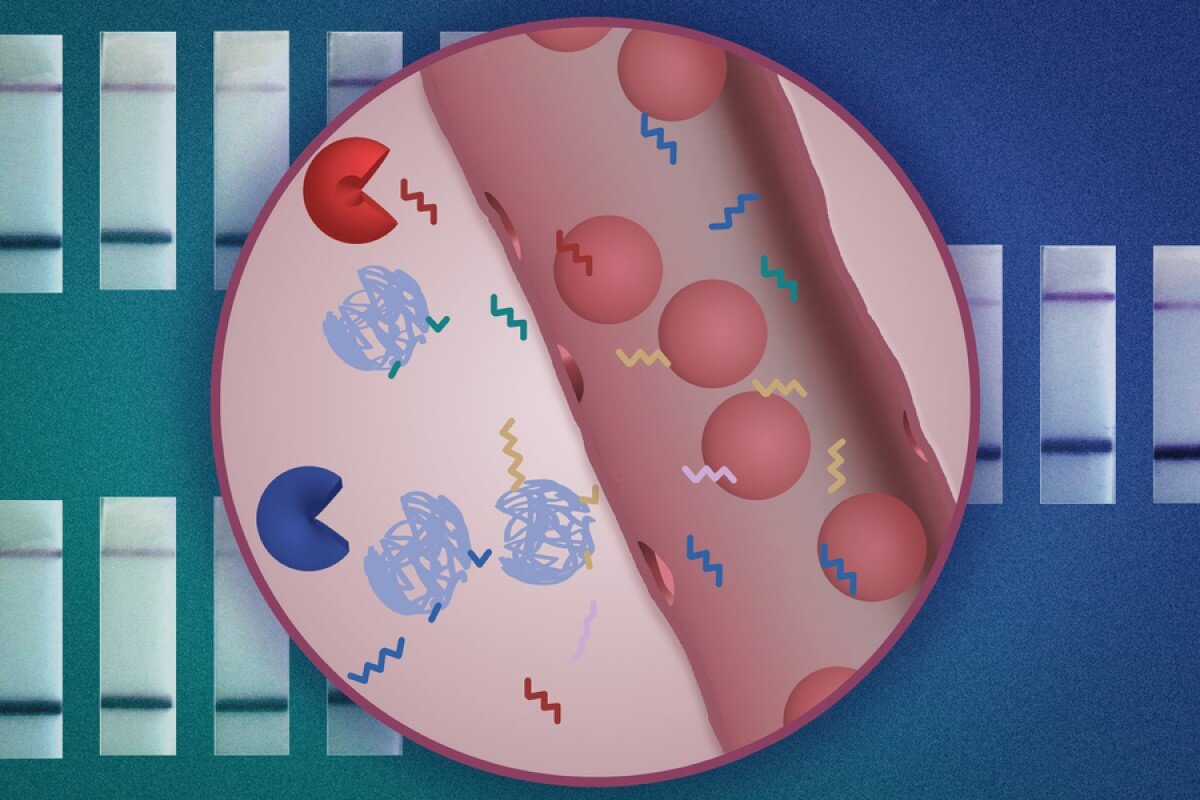
Researchers from MIT have developed a new diagnostic tool that can detect cancer through a simple urine test. The test relies on the presence of enzymes specific to different cancers and uses synthetic nanoparticles to amplify the signals and report back on cancer types and how they're progressing. The technology has the potential to distinguish between types of tumors and spot if a tumor has metastasized. The researchers are confident that the technique will translate and can be further refined in the future.
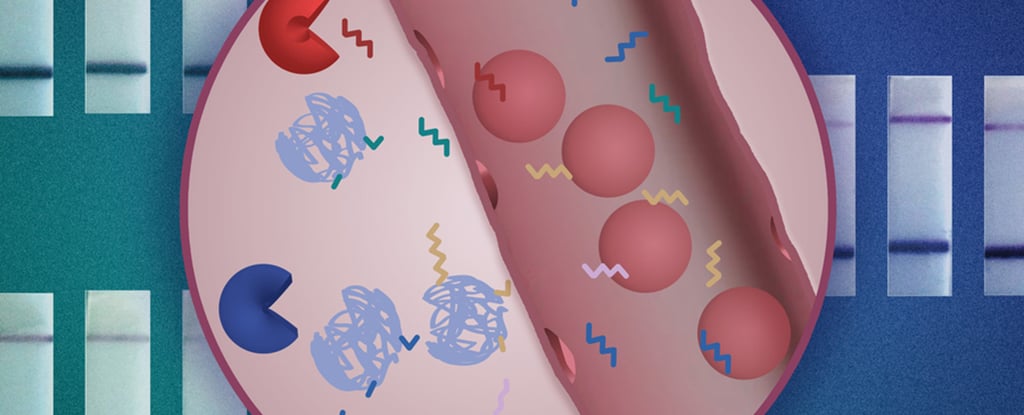
MIT engineers have developed a nanoparticle sensor that can detect cancer early using a simple urine sample and a piece of paper. The test uses CRISPR technology to analyze DNA barcodes that are shed by nanoparticles when they encounter a tumor. The test can not only detect cancer but also measure how well a patient's tumor responds to treatment and if a tumor has come back. The team is now looking to develop the particles further to test on humans.