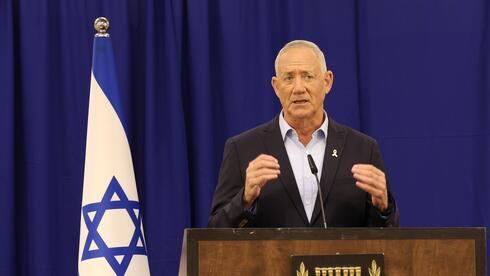
Benny Gantz calls for a six-month unity government with Netanyahu, Lapid, and Liberman to focus on hostage negotiations and military draft laws, emphasizing the urgency of saving hostages and proposing a responsible alternative to current government instability, despite declining poll support.
South Africa's ANC, led by President Cyril Ramaphosa, is considering forming a "unity" government with all major parties to resolve a political deadlock after losing its parliamentary majority in recent elections. This approach, reminiscent of Nelson Mandela's post-apartheid government, aims to foster national unity and avoid economic uncertainty. However, internal divisions within the ANC and opposition from other parties present significant challenges to this plan. An agreement must be reached by June 16 for the new Parliament to elect a president.
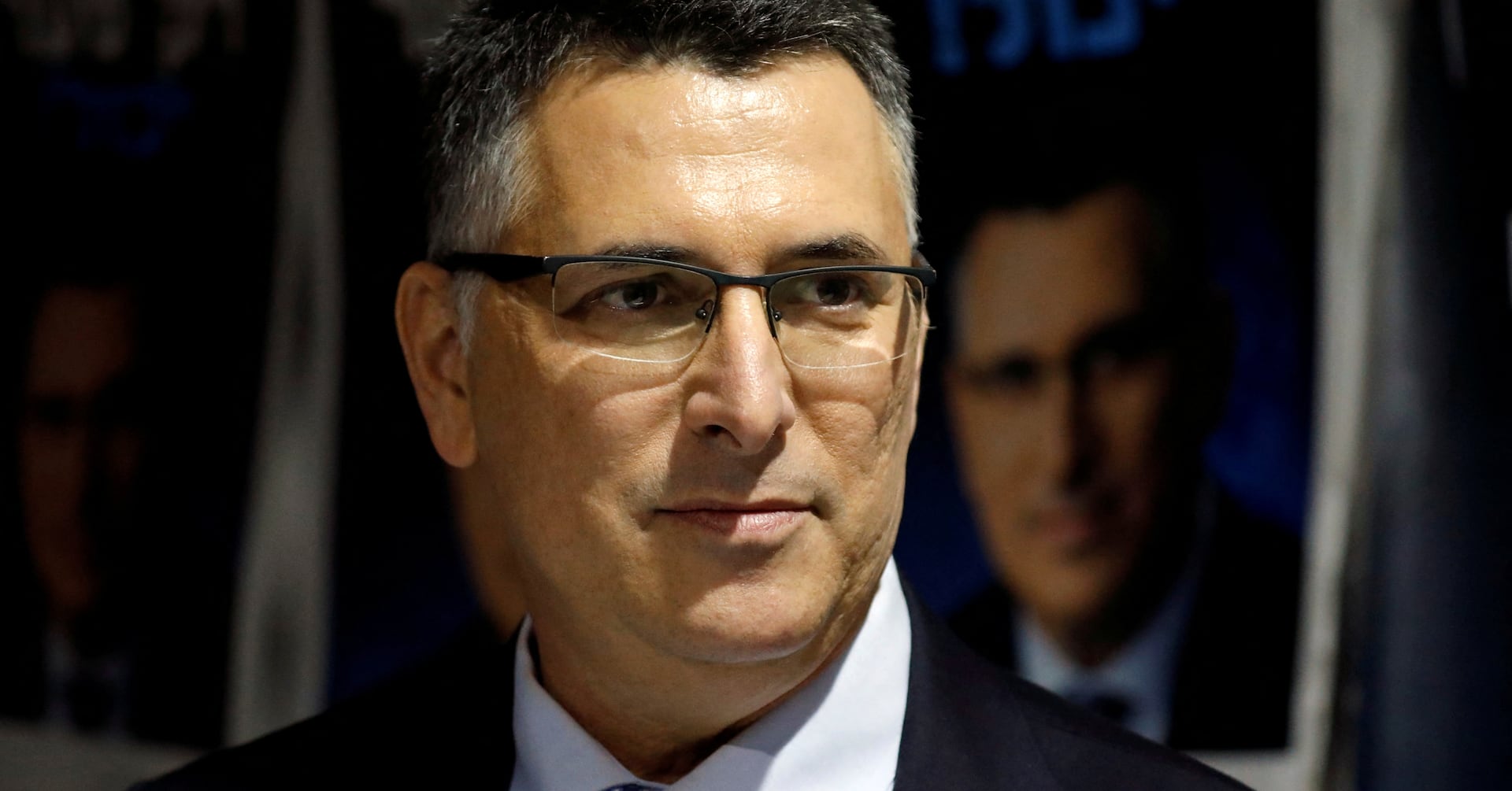
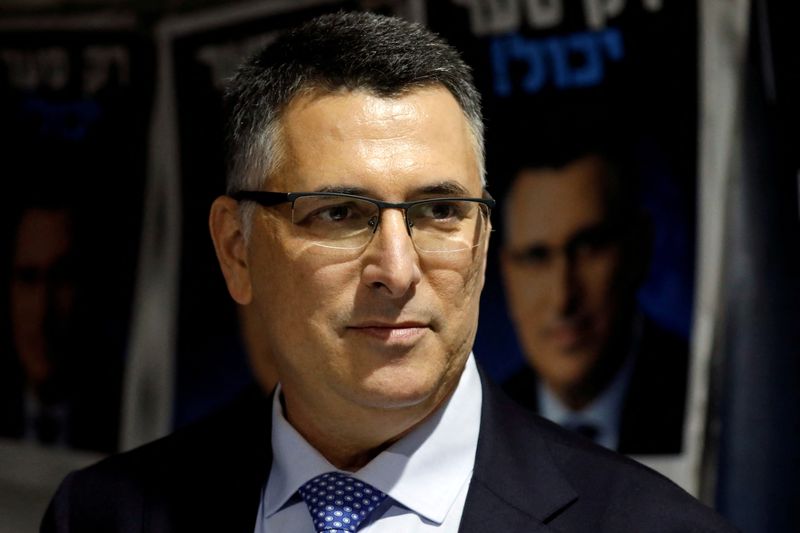
Israeli minister Gideon Saar has resigned from Prime Minister Benjamin Netanyahu's emergency unity government, citing his exclusion from the highest-level war cabinet overseeing the conflict with Hamas in Gaza. Saar, a former rival to Netanyahu, joined the government along with other opposition members to manage the war effort, but felt sidelined when he was not included in the decision-making war cabinet. His departure, along with another ally, is not expected to destabilize Netanyahu's government, which still holds a majority in parliament.
Israeli minister Gideon Saar has resigned from Prime Minister Benjamin Netanyahu's emergency unity government, citing his exclusion from the highest-level war cabinet overseeing the conflict with Hamas in Gaza. Saar, a former rival to Netanyahu, joined the government alongside other opposition members to manage the war effort, but felt sidelined when he was not included in the decision-making war cabinet. His departure, along with another ally, is not expected to destabilize Netanyahu's government, which still holds a majority in parliament.
Benny Gantz, the top political rival of Israeli Prime Minister Benjamin Netanyahu, has seen a surge in popularity as Netanyahu's backing has declined. Gantz, a centrist politician and former military chief of staff, joined Netanyahu's government to bring national unity during the war against Hamas in Gaza. His trip to Washington has drawn criticism from Netanyahu, signaling a growing rift in the government. Gantz is expected to leave the government after the fighting subsides, potentially leading to mass anti-government demonstrations and increasing pressure for early elections.
Hamas has distanced itself from the possibility of a unity government with the Palestinian Authority (PA), expressing concerns about the potential resignation of Prime Minister Mohammed Shtayyeh and the appointment of a replacement deemed "more corrupt" by a Hamas source. While Hamas aims to form an impartial and national government through consensus of Palestinian factions, it views the proposed unity government as a response to American demands and not in the best interest of the Palestinian people. The upcoming talks in Moscow to establish a unity government are met with differing perspectives from Hamas and Fatah, with Hamas denying any rift and emphasizing openness to discussions for the benefit of the Palestinian people.
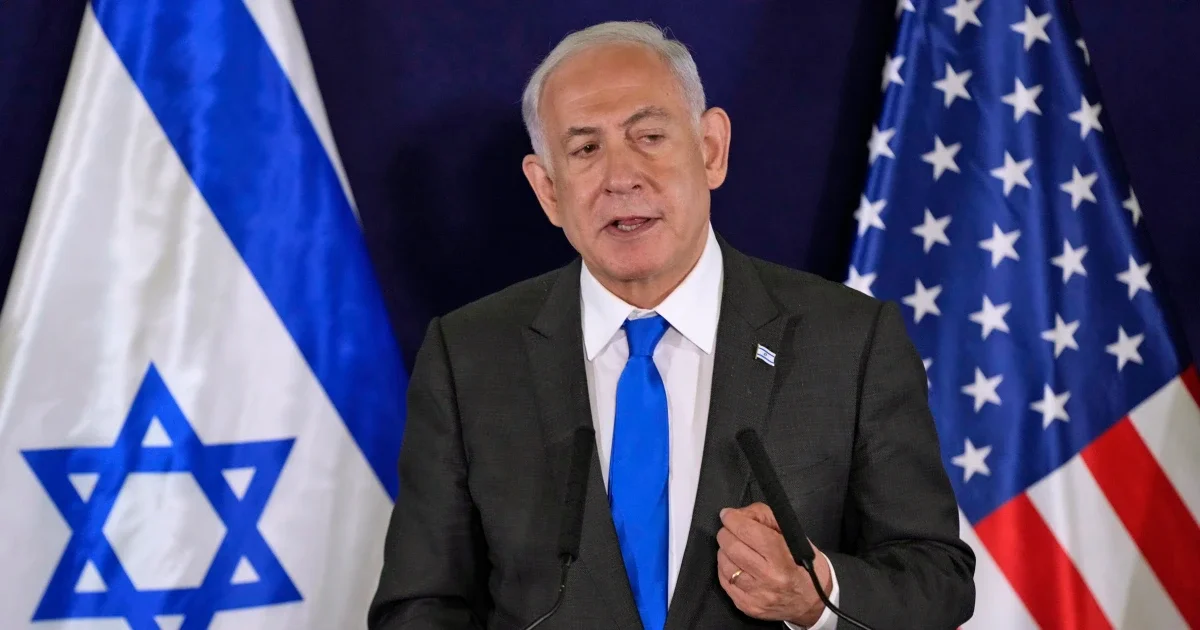
Israelis are grappling with whether to hold their government accountable for security and intelligence failures or rally behind it during a time of war. Prime Minister Benjamin Netanyahu, already facing corruption charges, has seen his grip on power threatened by widespread protests over judicial changes. While some Israelis are demanding immediate accountability, others are hesitant to destabilize the country further. Netanyahu has formed a wartime unity government with his political rival Benny Gantz in an attempt to unite the nation. The government's failure to detect Hamas' planned attack has led to public blame and questioning of Netanyahu's priorities. While some government officials have acknowledged responsibility, they argue that accountability should come after the war. The Israeli public's frustration is increasingly visible, with confrontations between citizens and government ministers occurring in hospitals.
Israel forms a unity government in response to the deadly Hamas attack, while launching intense airstrikes on Gaza. The attack by Hamas resulted in the deaths of over 1,200 people, including civilians and Israeli soldiers, with thousands more injured. The unity government, led by Prime Minister Benjamin Netanyahu and opposition leader Benny Gantz, aims to navigate the crisis and crush Hamas. The situation has led to a humanitarian crisis in Gaza, with hospitals struggling to function due to the lack of electricity and supplies. The fate of the hostages held by Hamas, including American citizens, remains a concern. President Biden vows to support Israel and work towards the return of the hostages.
Israeli Prime Minister Benjamin Netanyahu and opposition figure Benny Gantz have formed a war-time Cabinet to oversee the fight against Hamas militants, as the conflict intensifies. The sealed-off Gaza Strip is experiencing widespread destruction, with entire neighborhoods demolished and the territory's only power plant running out of fuel. The new Cabinet will focus solely on war-related issues, while the rest of Netanyahu's government partners will handle other matters. The war has already claimed thousands of lives, and a ground offensive into Gaza is becoming increasingly likely. The situation has led to a desperate humanitarian crisis, with shortages of food, water, fuel, and medical supplies.
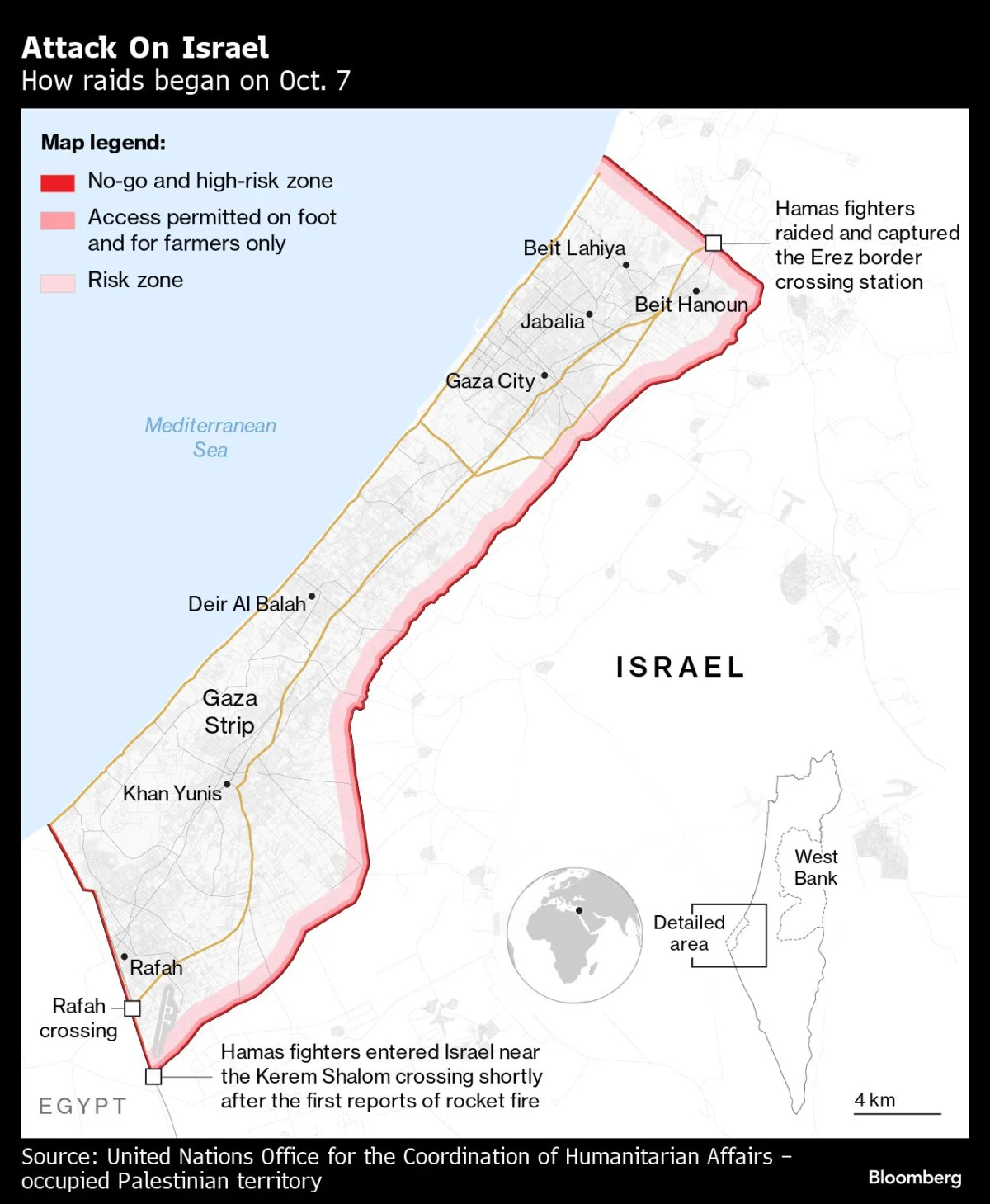
Israel is uniting behind a singular goal of crushing the enemy as it prepares to destroy the Hamas military infrastructure in the Gaza Strip following a deadly attack. Political divisions have temporarily vanished, with talks of forming an emergency war government and anti-government protesters shifting their focus to supporting the military. However, questions remain about how long this unity will last and whether Prime Minister Benjamin Netanyahu will face political consequences for intelligence and security failures. There are concerns that the conflict could spread to Lebanon, prompting the Biden administration to send warships to the region. The attack has shocked the nation and galvanized public support for a grinding campaign against Hamas, but the investigation into the intelligence lapse will follow.
Palestinian Authority President Mahmoud Abbas is hosting a conference in Cairo with leaders from various Palestinian factions, including Hamas, to discuss national unity and the Palestinian situation. Abbas hopes to persuade Hamas to join a new unity government, but previous attempts have failed due to differences between Fatah and Hamas. Some factions, such as Palestinian Islamic Jihad (PIJ), Popular Front for the Liberation of Palestine - General Command (PFLP-GC), and As-Sa'iqa, are boycotting the conference due to the Palestinian Authority's security crackdown on militants in the West Bank. Despite the crackdown, Hamas has accepted the invitation, causing further tension among the factions.