US officials, including Trump, plan to boycott the G20 summit in South Africa due to disagreements over alleged discrimination and other issues, with some citing concerns over topics like diversity and climate change.
South African President Cyril Ramaphosa suspended his police minister amid allegations of links to organized crime and announced the formation of an independent commission to investigate the claims, aiming to address corruption within law enforcement and restore public trust.
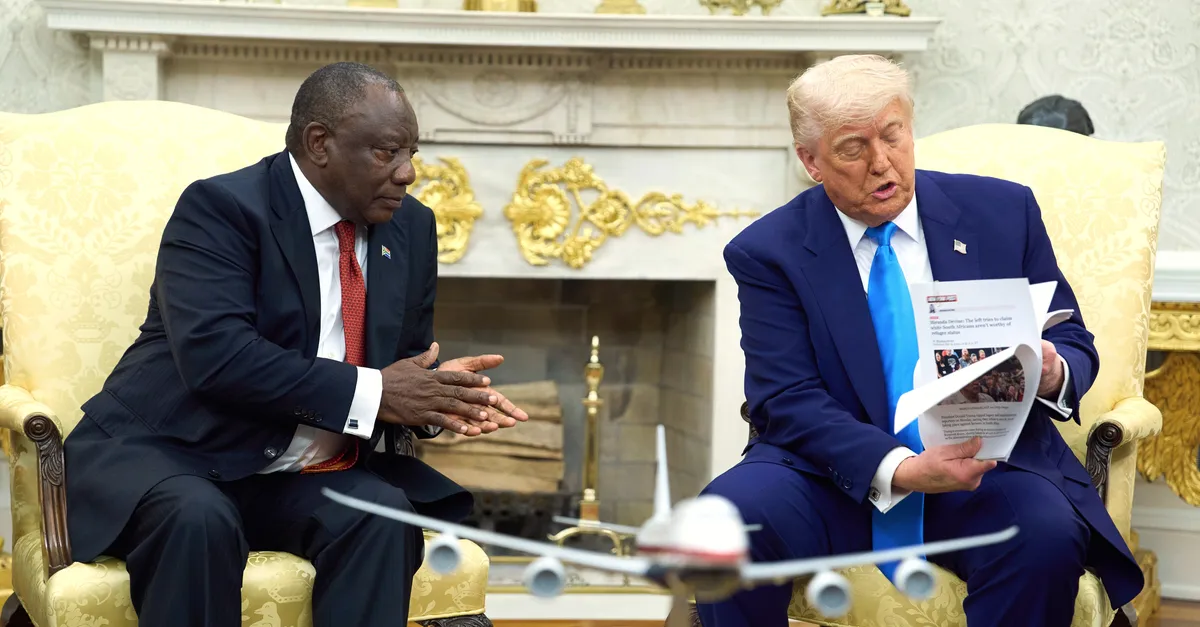
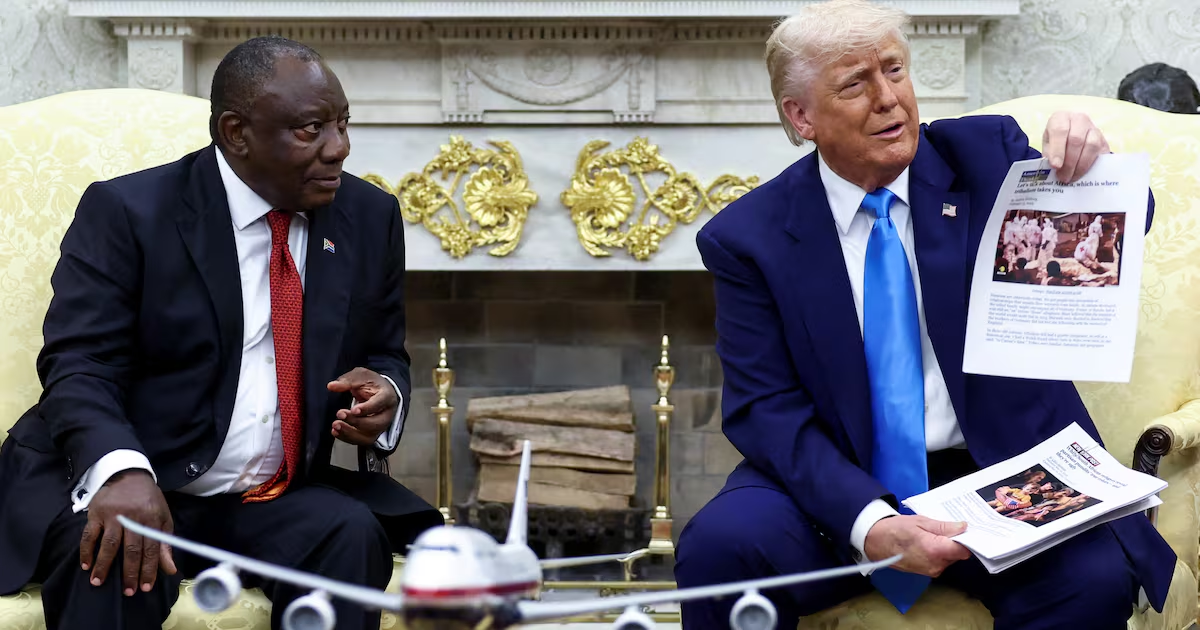
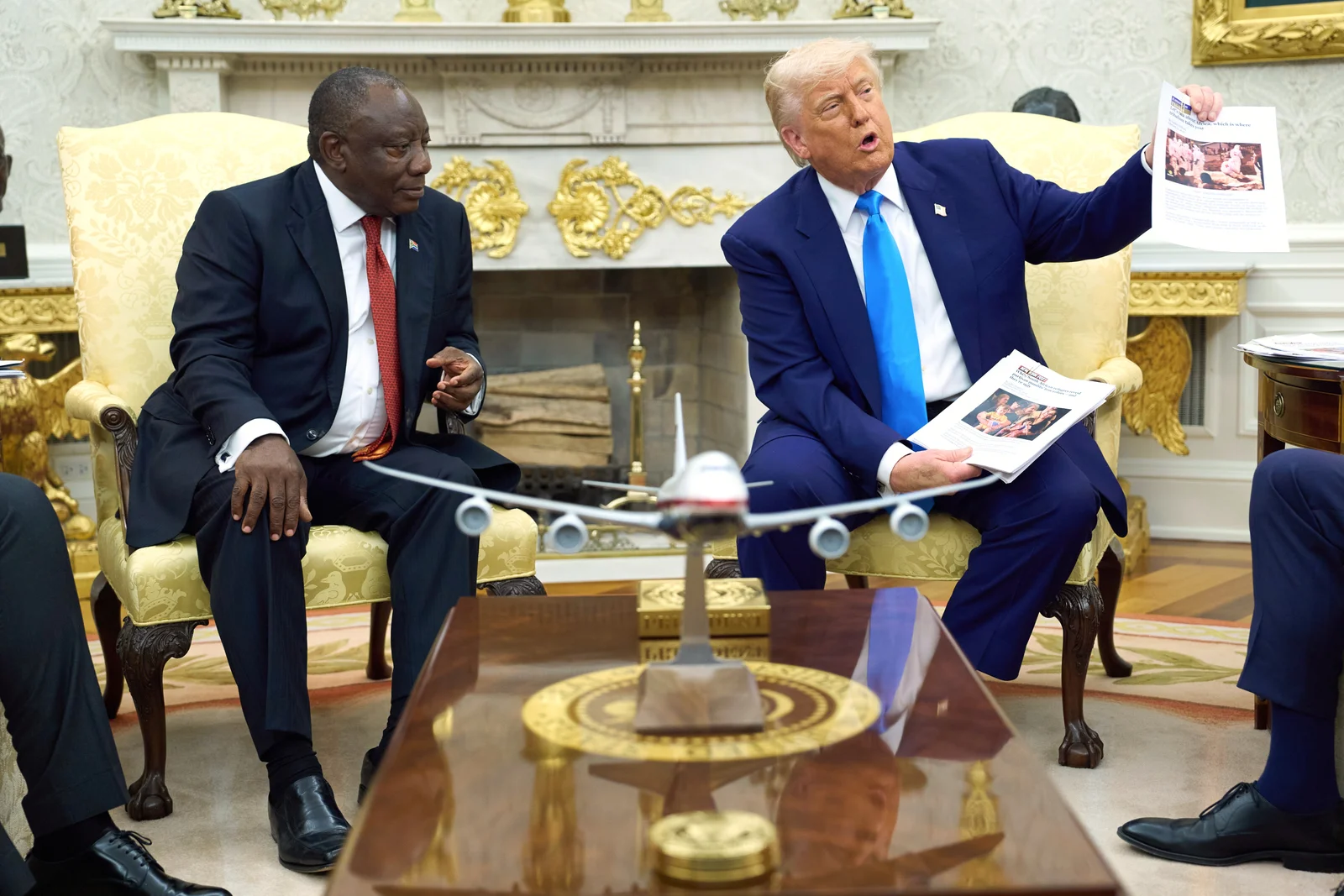
South African President Cyril Ramaphosa recounted a chaotic and bizarre meeting with Donald Trump in the Oval Office, where Trump promoted baseless conspiracy theories about white farmers in South Africa, including dimming the lights and showing misleading videos and images, which Ramaphosa described as bemusing and an apparent ambush.
South Africa's President Cyril Ramaphosa humorously recounted his bizarre encounter with Donald Trump, who used unsubstantiated and misleading images during their White House meeting to claim a 'white genocide' in South Africa, drawing criticism and laughter from the audience.
South African President Cyril Ramaphosa humorously referenced his recent tense meeting with Donald Trump, who accused South Africa of discrimination against white farmers, a claim disputed by human rights groups. Ramaphosa joked about the dimming lights in the White House, likening it to a previous Trump incident, amid discussions on economic ties and controversial claims about South Africa's treatment of white farmers.
South African President Cyril Ramaphosa announced that the African National Congress (ANC) will seek to form a government of national unity with various opposition parties to address key issues such as job creation, economic growth, and crime. This comes after the ANC failed to secure an outright majority in the recent general election, winning just over 40% of the vote. Ramaphosa emphasized the need for national dialogue to rebuild social cohesion and has already initiated talks with five opposition parties.
South Africa's ANC, led by President Cyril Ramaphosa, is considering forming a "unity" government with all major parties to resolve a political deadlock after losing its parliamentary majority in recent elections. This approach, reminiscent of Nelson Mandela's post-apartheid government, aims to foster national unity and avoid economic uncertainty. However, internal divisions within the ANC and opposition from other parties present significant challenges to this plan. An agreement must be reached by June 16 for the new Parliament to elect a president.
The African National Congress (ANC) in South Africa faces a critical decision after losing its parliamentary majority in the recent election. With only 40% of the vote, the ANC must form a coalition to secure a majority in parliament. Options include partnering with the Democratic Alliance (DA), which poses significant policy conflicts, or aligning with more radical parties like the Economic Freedom Fighters (EFF) and Jacob Zuma's uMkhonto weSizwe (MK), both of which demand constitutional changes. The ANC is also considering forming a minority government with a confidence-and-supply agreement. The outcome will significantly impact South Africa's political and economic future.
South Africa's President Cyril Ramaphosa has called for unity and cooperation among political parties after the African National Congress (ANC) lost its majority for the first time in 30 years, securing only 40.2% of the vote. The ANC now needs to form a coalition to govern effectively, with potential partners including the Democratic Alliance (DA) and the Inkatha Freedom Party (IFP). Despite the poor election results, ANC officials support Ramaphosa and are committed to forming a stable government.
South Africa's President Cyril Ramaphosa acknowledged the African National Congress (ANC) faced a challenging election, losing its majority for the first time since apartheid ended. The ANC won 159 seats, down from 230, and must now form a coalition government. Ramaphosa called the results a victory for democracy and urged rival parties to find common ground. The Democratic Alliance (DA) is open to coalition talks but opposes key ANC policies. Former President Jacob Zuma's MK party, which came third, may also play a crucial role in coalition negotiations.
South Africa's President Cyril Ramaphosa has called for political unity after the African National Congress (ANC) lost its majority for the first time in 30 years. The ANC's support dropped to 40.2%, forcing it to seek a coalition to maintain power. Despite internal and external pressures, the ANC stands by Ramaphosa. Political parties have two weeks to form a coalition before the new parliament elects a president.
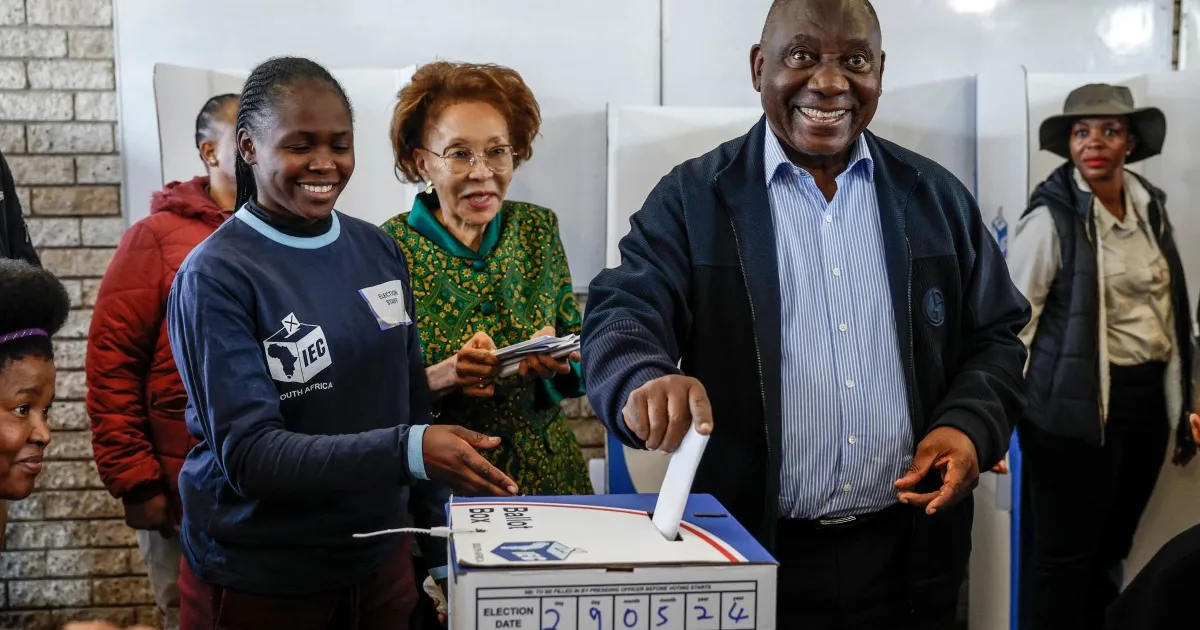
South African President Cyril Ramaphosa has urged political parties to find common ground and form the country's first national coalition government after no party secured a majority in the recent election. The African National Congress (ANC) received 40% of the votes, losing its 30-year majority, and must now negotiate with other parties to co-govern. The Democratic Alliance (DA) is seen as a stable coalition partner, but talks are ongoing with multiple parties amid objections and complaints about voting irregularities. Ramaphosa seeks a second term, and the new Parliament must elect a president within 14 days of the election results.
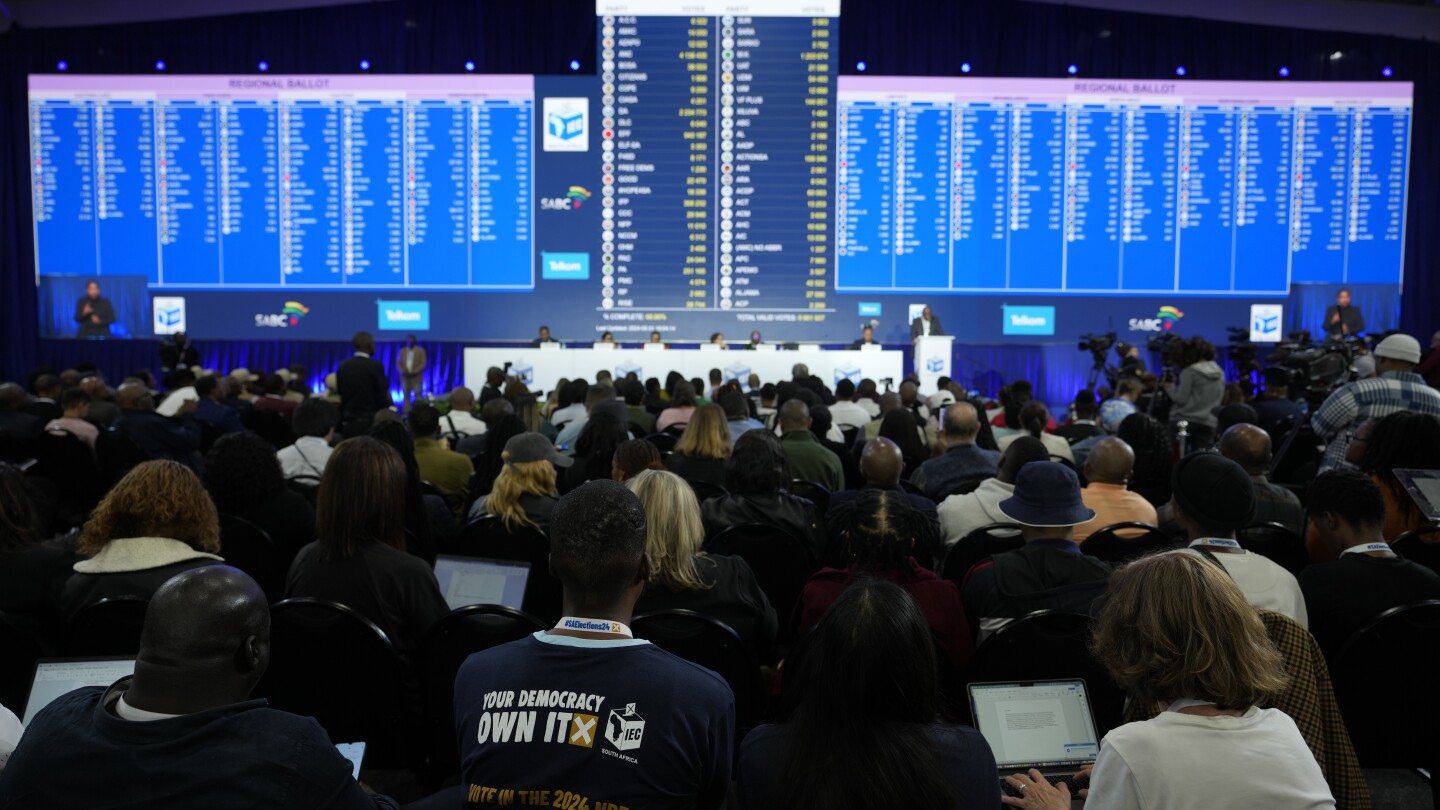
The African National Congress (ANC) has lost its parliamentary majority for the first time since coming to power in 1994, securing just over 40% of the vote in the recent general election. The Democratic Alliance (DA) and the newly formed uMkhontowe Sizwe party (MK) of former President Jacob Zuma gained significant support, with the DA retaining control of one province. The ANC is now seeking coalition partners to form a government, but faces challenges as the MK party and other opposition groups have set conditions for any potential alliances.
South Africa's ruling African National Congress (ANC) has lost its majority for the first time since the end of apartheid, leading to coalition negotiations and casting doubt on President Cyril Ramaphosa's future. The ANC's decline is attributed to deteriorating public services and rising crime, compounded by the rise of Jacob Zuma's uMKhonto we Sizwe (MK) party. Analysts suggest that Ramaphosa may face pressure to resign, and potential coalitions with either the Democratic Alliance or a national unity government are being considered to stabilize governance.
The African National Congress (ANC) has lost its majority in South Africa's parliamentary elections for the first time since the end of apartheid, receiving just over 40% of the vote. This historic result signals a shift towards coalition government, with the ANC needing to partner with other parties to maintain power. The ANC's decline is attributed to widespread dissatisfaction with poverty, inequality, and service shortages. The outcome has led to complex negotiations among various political parties, with no clear coalition yet formed.