Africa has been significantly impacted by Trump's expanded travel restrictions, affecting 20 countries, with largely muted reactions from the continent as nations consider their next steps. The African Union expressed concerns about the negative effects on diplomatic and people-to-people ties, while some countries hope for engagement with the U.S. to review the measures. Critics view the restrictions as unfair and potentially damaging to U.S.-Africa relations, with fears of increased geopolitical competition from rivals like Russia and China.
A federal judge ruled that the Trump administration unlawfully withheld visas from individuals selected through a diversity lottery due to the travel ban, affecting applicants from several countries, and ordered the State Department to process the remaining applications expeditiously.
A federal judge ruled that the State Department cannot deny visas based solely on Trump's travel ban, citing recent Supreme Court decisions limiting agency interpretations of law, affecting applicants from several countries who were affected by the ban, though the ruling does not immediately change their ability to enter the U.S.
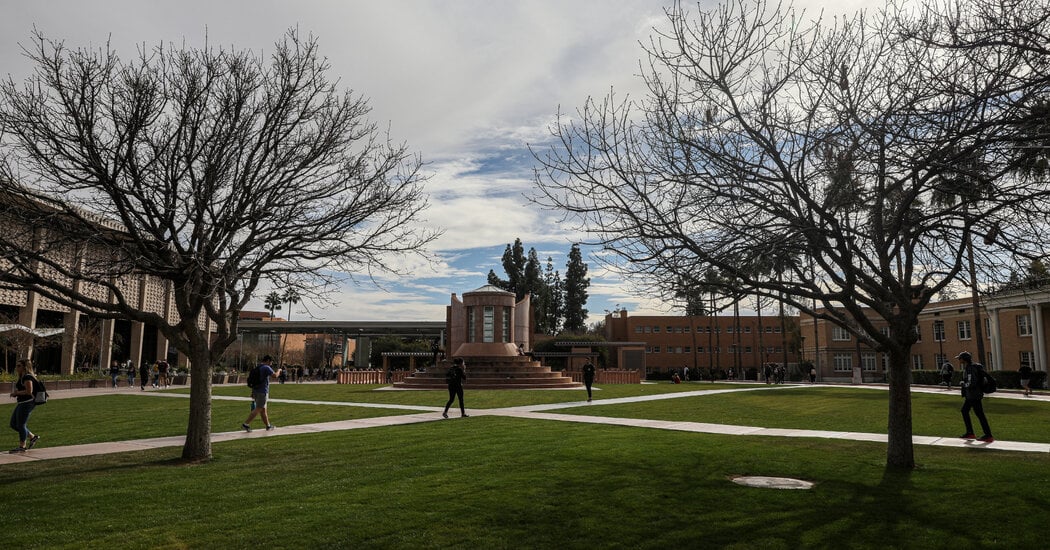
Many international students are unable to attend U.S. universities this fall due to Trump's travel bans, visa delays, and increased vetting, leading to a significant drop in enrollment and concerns about talent loss and cultural exchange.
Senegalese women's basketball team members had their US visas denied, leading to the cancellation of their training in the US, amid ongoing US travel restrictions under Trump's administration, which also impact international sporting events like the 2026 World Cup.
The article discusses how President Trump's travel restrictions on 19 countries could hinder global health efforts by limiting the exchange of knowledge and collaboration among researchers, potentially impacting disease detection, response, and scientific progress worldwide.
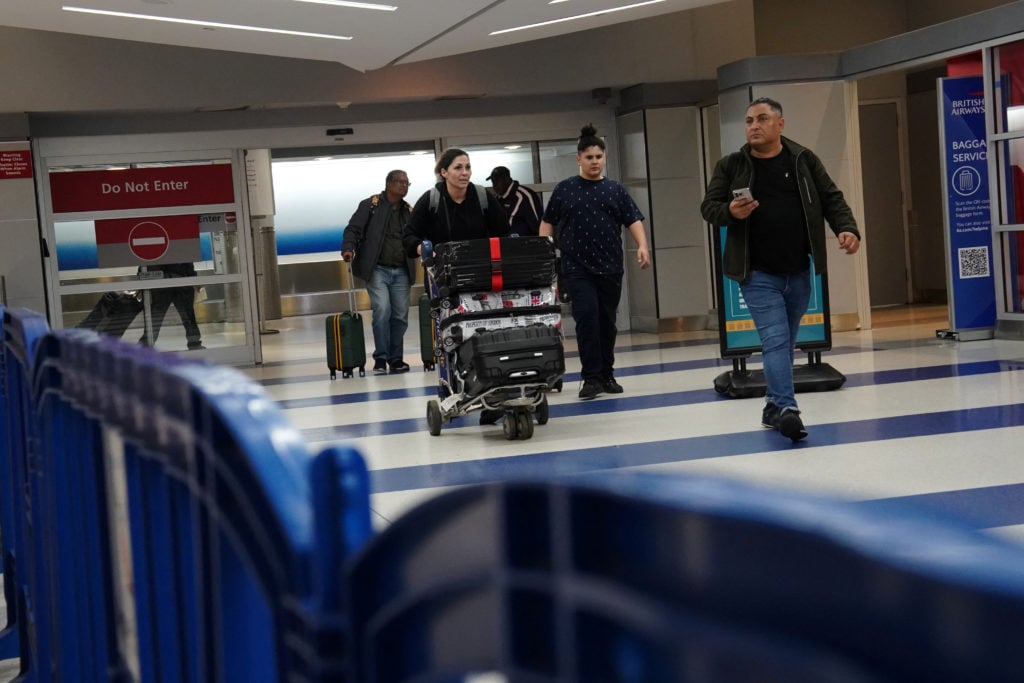
The new Trump travel ban, targeting citizens from a dozen countries, went into effect with some travelers experiencing increased airport scrutiny, but overall avoided the chaos of the previous ban, while sparking mixed reactions and concerns over its impact on communities and security.
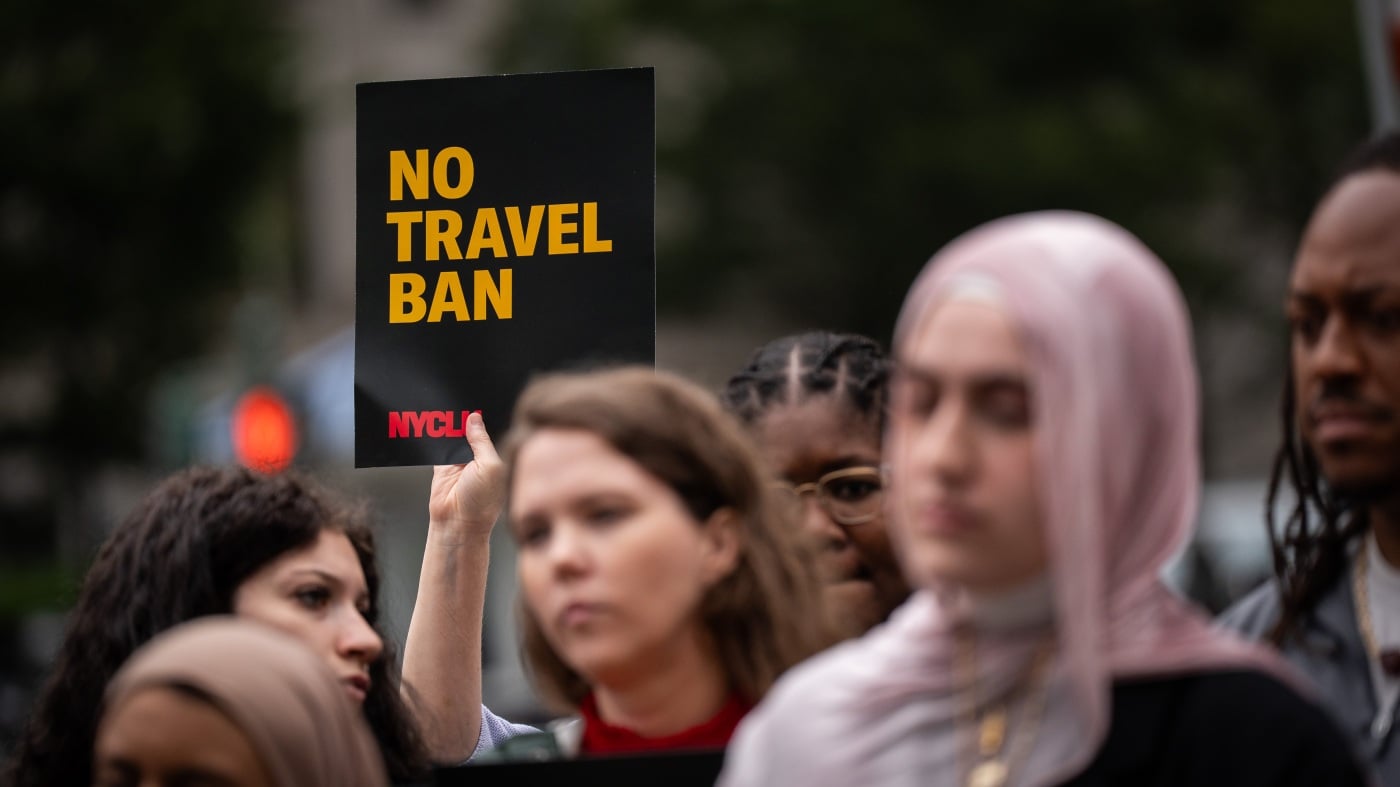
The US has implemented a new travel ban affecting citizens from 12 countries, mainly in Africa and the Middle East, with broader restrictions than the 2017 ban, citing security concerns. The ban, which partially restricts travelers from additional countries, has faced less protest but raises concerns about discrimination and its impact on communities seeking opportunities in the US.
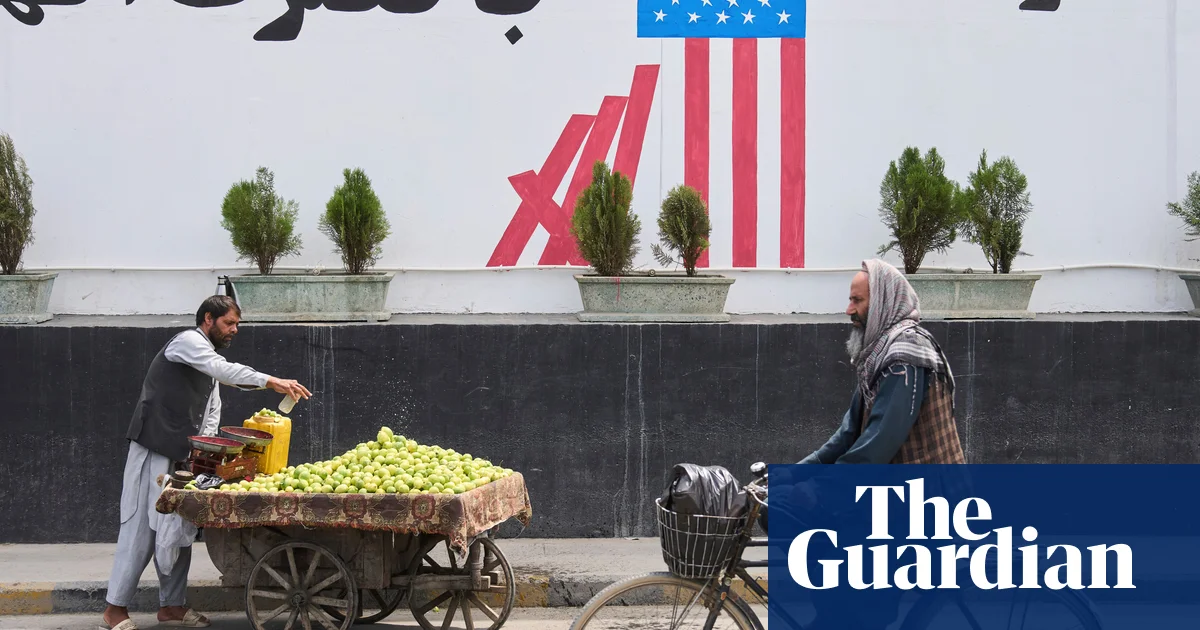
The article argues that Trump's travel ban targets countries in the global south, primarily composed of Black, brown, and Muslim populations, as a reflection of ongoing American imperialism and exploitation, rather than genuine security concerns, highlighting the historical and ongoing US interventions that have caused poverty, violence, and displacement in these nations.
President Trump's new travel ban includes exemptions for athletes and coaches participating in major sporting events like the World Cup and Olympics, but the criteria for these exemptions remain unclear, potentially impacting upcoming international sports competitions in the U.S. such as the Gold Cup and Club World Cup.
In response to Trump's travel ban targeting 12 countries, Chad suspended issuing visas to US citizens citing dignity, Somalia expressed willingness to cooperate with the US, and the African Union called for constructive dialogue, highlighting varied reactions and concerns over the measure's impact.
President Trump implemented a new travel ban targeting citizens from a dozen countries, expanding restrictions compared to previous bans, with certain exceptions and a focus on national security concerns. The ban affects visa issuance and has a complex legal history, with previous bans being challenged and eventually lifted by President Biden.