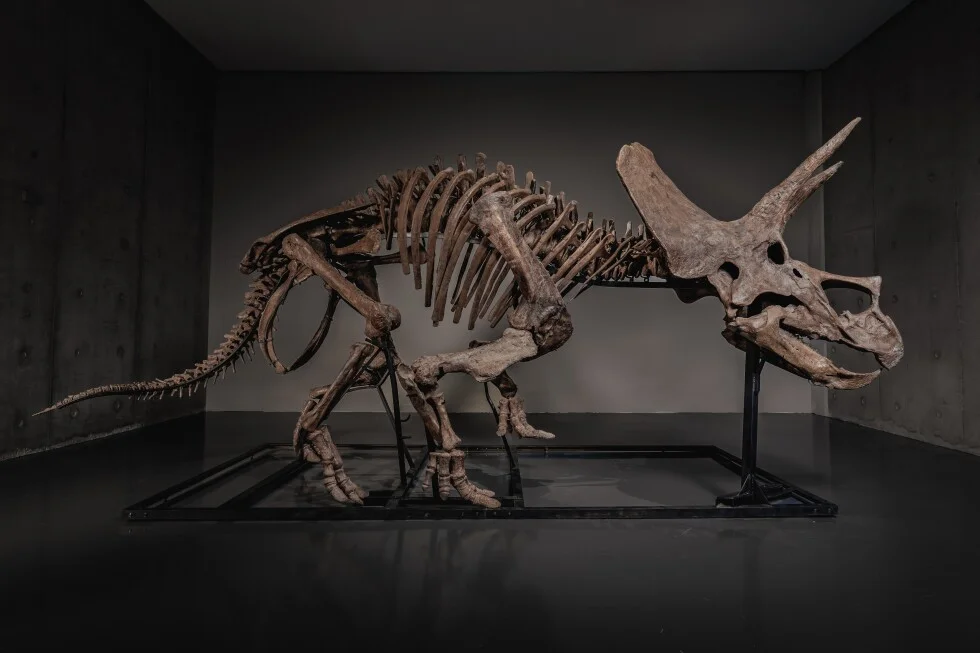
Trey the Triceratops Heads to Online Auction as Fossil Fever Heats Up
A triceratops skeleton named Trey, once a Wyoming museum exhibit, is set to be sold in an online auction as the market for dinosaur fossils heats up and prices rise.

All articles tagged with #triceratops
A triceratops skeleton named Trey, once a Wyoming museum exhibit, is set to be sold in an online auction as the market for dinosaur fossils heats up and prices rise.
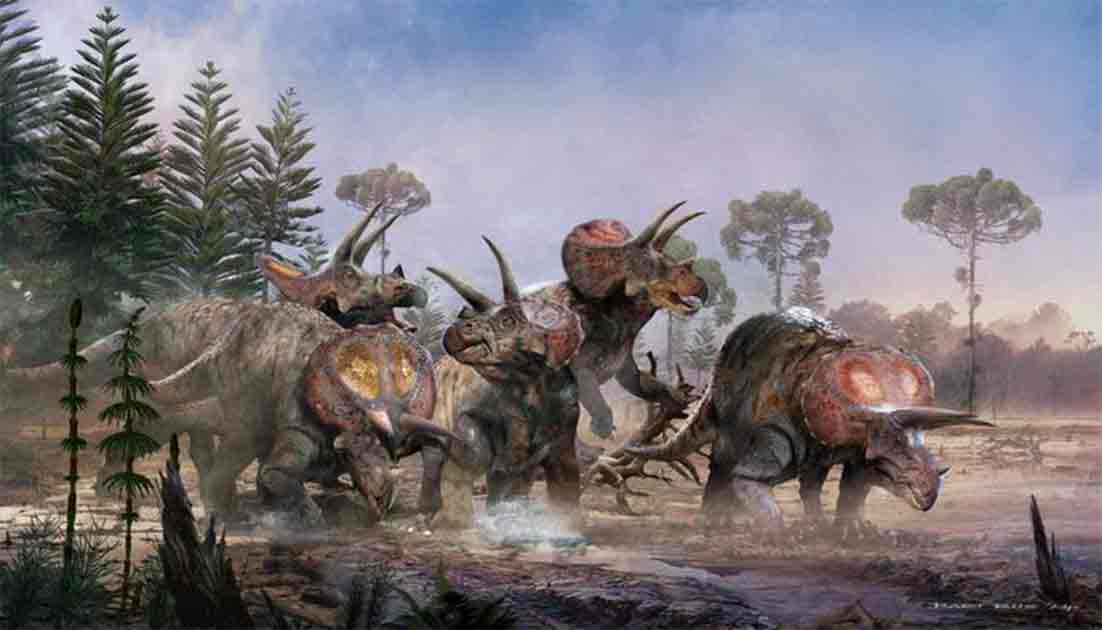
A 11-year excavation in Wyoming has uncovered 1,200 bones and bone fragments from at least five Triceratops horridus specimens, shedding light on their social behavior and migratory lifestyle. The fossils suggest that these dinosaurs lived in herds and followed the same migratory route, challenging the previous belief of solitary behavior. The discovery also provides insights into their size, diet, and growth rate, leading to the upcoming exhibition at the Naturalis Biodiversity Center in the Netherlands.
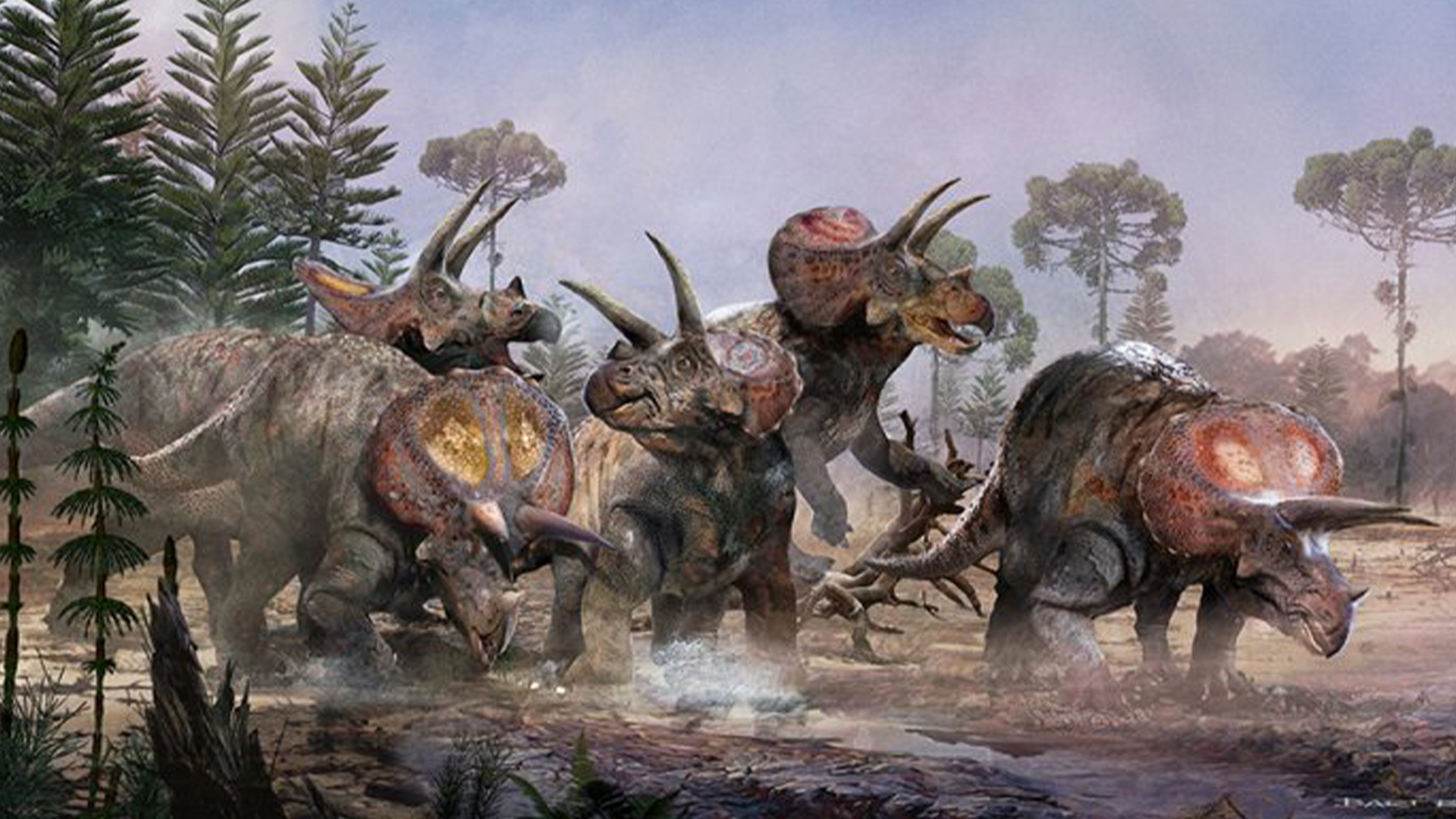
Scientists investigating a Triceratops grave in Wyoming have discovered a mysterious grave of five giant triceratops buried in the same spot, shedding light on their social behavior and living habits. The discovery has raised questions about the sociability of these dinosaurs and has led to new research on their group dynamics. Additionally, the article briefly discusses the theories surrounding the mass extinction event that wiped out the dinosaurs, including the impact of a massive comet or asteroid and the potential role of climate changes.
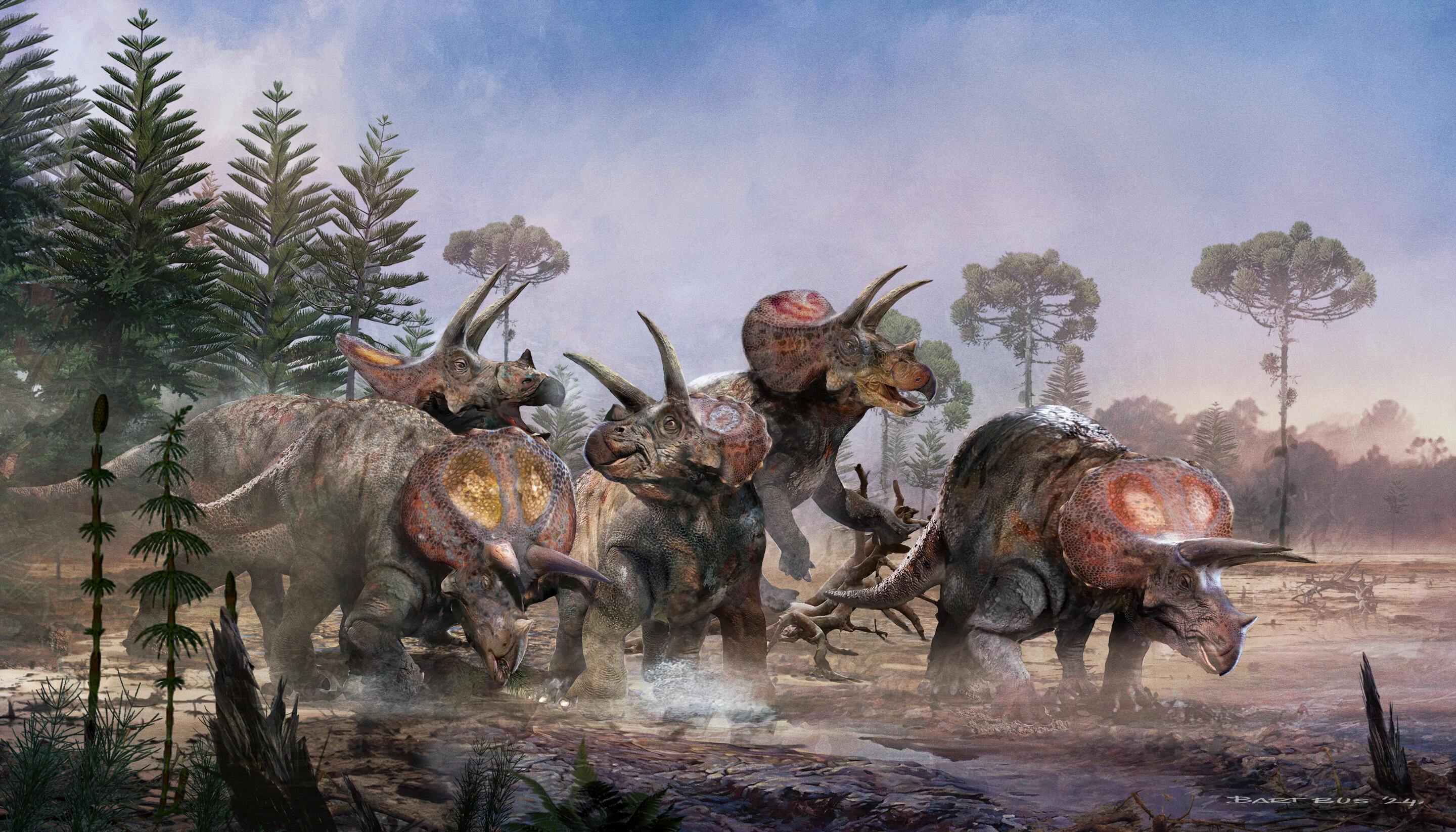
A team from the Naturalis Biodiversity Center in the Netherlands discovered a significant find of Triceratops fossils in Wyoming, with over 1,200 bones and bone fragments from at least five individuals. Research into the fossils revealed that these dinosaurs grew slowly and lived a migratory existence, suggesting complex social behavior. The details of the bonebed indicate that the five dinosaurs died together, possibly mired in a swamp. This discovery has led to new questions about the social behavior of these dinosaurs, and the findings will be showcased in an exhibition at the Naturalis museum.