Tag

Technological Applications

All articles tagged with #technological applications

science4 months ago

Scientists Unveil First Visible Time Crystal with Tech Potential

Physicists have created the first visible time crystal using liquid crystals, which could lead to new technological innovations such as anti-counterfeiting, optical devices, and quantum exploration. The time crystal exhibits a repeating pattern in time, breaking time symmetry, and was observed as neon-hued stripes under a microscope. This breakthrough opens new avenues for research and practical applications in various fields.


science-and-technology2 years ago

"Caltech Physics Unveils Potential for Revolutionary Technologies with Hubbard Excitons"

Researchers at Caltech have discovered Hubbard excitons, which are excitons bound magnetically rather than by electrical forces. This groundbreaking discovery opens up new possibilities for exciton-based technologies. By manipulating the magnetic properties of these excitons, researchers could develop novel technologies that harness both excitons and magnetism. The study used ultrafast time-domain terahertz spectroscopy to observe the generation and decay of these magnetically bound excitons in real-time. The findings have potential implications for the development of solar panels, photodetectors, light-emitting diodes, and other exciton-based devices.

science-and-technology2 years ago

"Revolutionary Nanomaterials Created through Bottom-Up Method by Scientists"

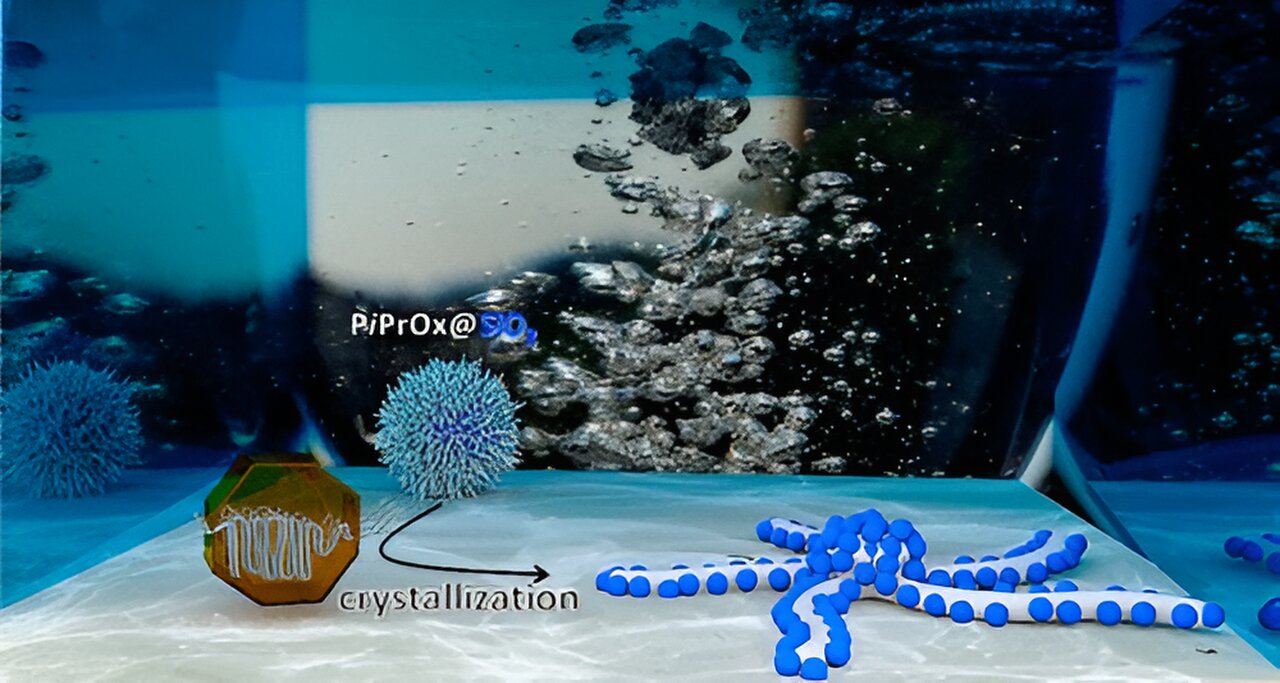
Scientists from Friedrich Schiller University Jena and Friedrich Alexander University Erlangen-Nuremberg have developed nanomaterials using a bottom-up approach, exploiting the directional growth of crystals during crystallization. The resulting nanostructures, which consist of worm-like rods with embedded nanoparticles, have potential applications in various fields, including information processing and catalysis. The researchers used individual silicon dioxide particles and grafted polymer molecules to control the building-up process. The collaboration between the two universities and the use of computer simulations were crucial in understanding the complex molecular processes involved in the formation of these nanostructures.