Tag

Stellarator

All articles tagged with #stellarator

German Scientists Break Nuclear Fusion Record, Advancing Toward Infinite Clean Energy

Originally Published 6 months ago — by Rude Baguette

Featured image for German Scientists Break Nuclear Fusion Record, Advancing Toward Infinite Clean Energy
Source: Rude Baguette

German scientists achieved a new record in nuclear fusion performance with the Wendelstein 7-X stellarator, demonstrating progress toward sustainable, limitless clean energy by maintaining stable plasma and surpassing previous benchmarks, highlighting international collaboration and the potential for future fusion power.

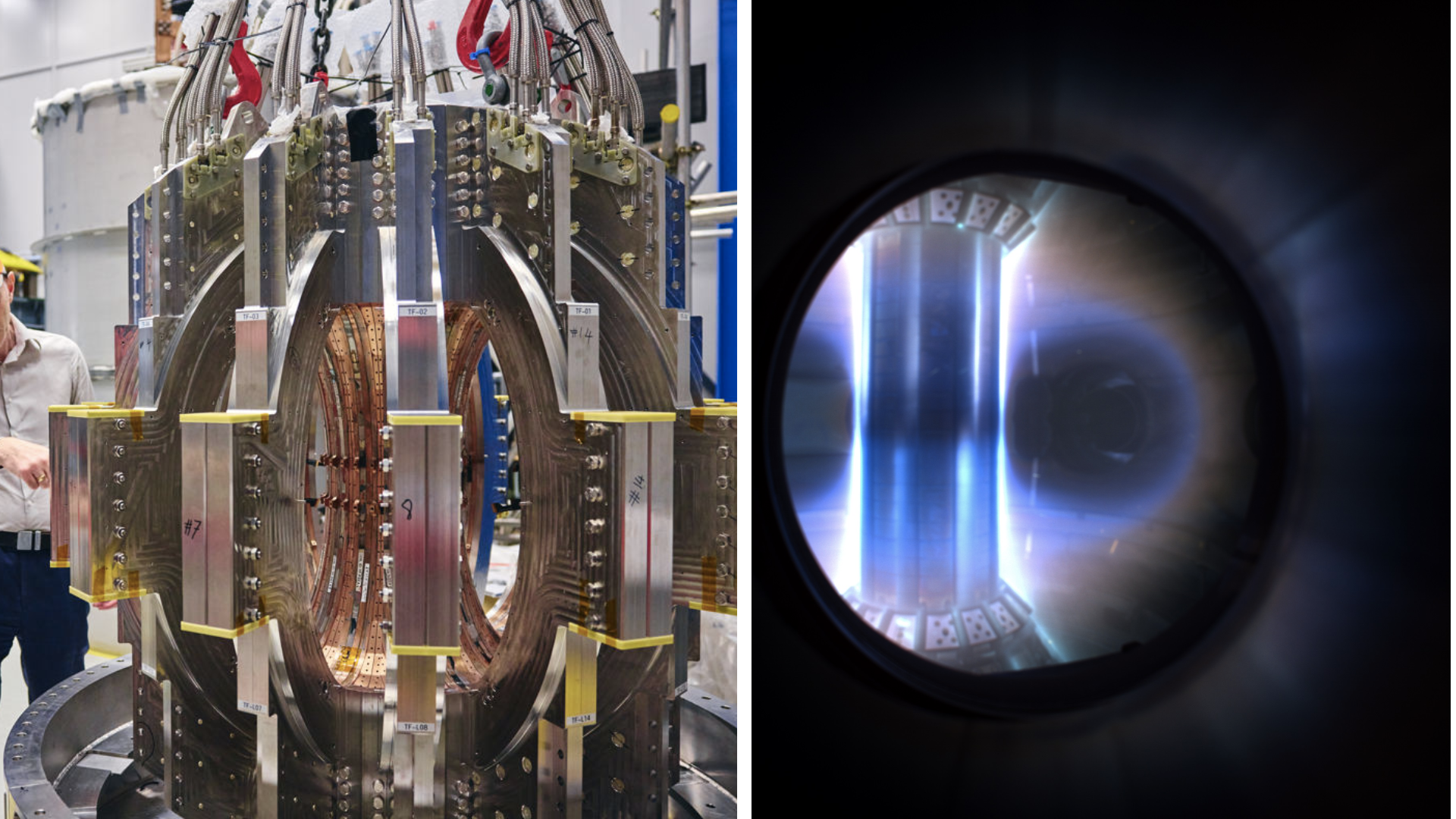
US Fusion Breakthrough: Stellarator Advances Promise Limitless Energy

Originally Published 1 year ago — by Interesting Engineering

Featured image for US Fusion Breakthrough: Stellarator Advances Promise Limitless Energy
Source: Interesting Engineering

Researchers at the Princeton Plasma Physics Laboratory have made a significant breakthrough in stellarator fusion technology by developing a computational method to optimize plasma confinement. This method uses a proxy function to predict particle loss rates, allowing for the exploration of various magnetic configurations that improve particle retention. This advancement could enhance the efficiency and stability of stellarators, bringing fusion energy closer to practical use.

Magnetic Fields Breakthrough Boosts Fusion Plasma Confinement

Originally Published 1 year ago — by Interesting Engineering

Featured image for Magnetic Fields Breakthrough Boosts Fusion Plasma Confinement
Source: Interesting Engineering

Researchers at Laboratorio Nacional de Fusión–CIEMAT have developed a new family of magnetic fields that enhance plasma confinement in fusion reactors, potentially simplifying reactor design and advancing the realization of fusion energy. These omnigenous magnetic fields allow for better particle confinement without complex equipment, broadening the possibilities for future stellarator reactors. The study, published in Physical Review Letters, suggests that optimizing magnetic fields in a 'piecewise omnigenous' manner could improve the efficiency of fusion devices.

"Breakthroughs in Fusion Research: From Stellarators to Household Magnets"

Originally Published 1 year ago — by Gizmodo

Featured image for "Breakthroughs in Fusion Research: From Stellarators to Household Magnets"
Source: Gizmodo

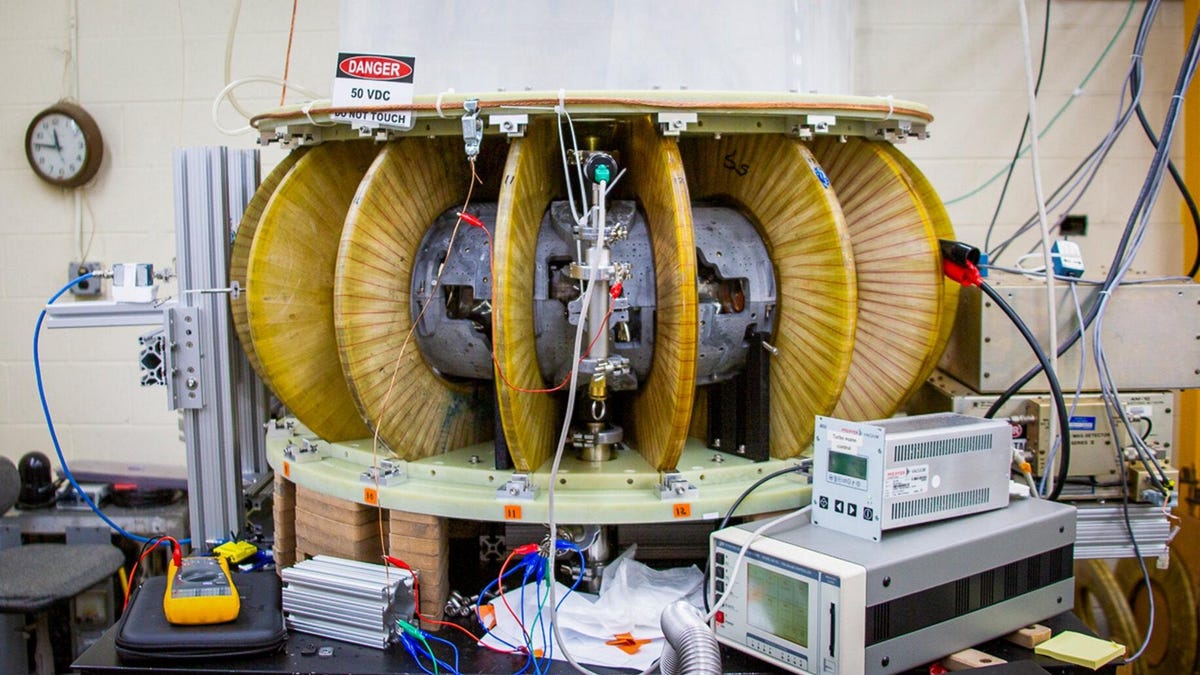
Physicists and engineers at Princeton University have built a twisting fusion reactor called a stellarator, named MUSE, using permanent magnets, which offers a potentially cost-effective method for constructing powerful machines. This new technique allows for quick testing of plasma confinement ideas and easy device construction. The use of permanent magnets eliminates the need for electric current to generate magnetic fields, making it easier for scientists to replicate experimental setups and perform high-temperature experiments, bringing us closer to the goal of usable and scalable fusion energy.

"Revolutionary Shortcut Unveiled for Twisty Fusion Facility Design"

Originally Published 2 years ago — by Phys.org

Featured image for "Revolutionary Shortcut Unveiled for Twisty Fusion Facility Design"
Source: Phys.org

Scientists have discovered a mathematical shortcut that could aid in the design of twisty fusion facilities called stellarators. By measuring how well a stellarator's magnetic field can retain the fastest-moving atomic nuclei in the plasma, researchers can predict its ability to hold heat crucial for fusion reactions. This shortcut allows for the identification of the best magnetic field shape for confining heat, leading to more efficient stellarators. Fusion energy, which combines light elements in plasma to generate clean electricity, has the potential to mitigate the effects of climate change.

Revolutionary 1950s Tech May Solve Fusion Energy Grid Integration.

Originally Published 2 years ago — by Inverse

Featured image for Revolutionary 1950s Tech May Solve Fusion Energy Grid Integration.
Source: Inverse

Scientists are revamping reactor designs from the 1950s and ‘60s in hopes of launching fusion plants in the coming decades. One oddly shaped set-up, the stellarator, has attracted recent attention from scientists and startups alike. The stellarator has a few key advantages over the tokamak, including the ability to sustain plasma for long periods of time and not requiring a strong electric current to help induce the magnetic field that contains the plasma. Several startups want to tackle this physics challenge, including New Jersey-based Princeton Stellarators and Wisconsin-based Type One Energy.