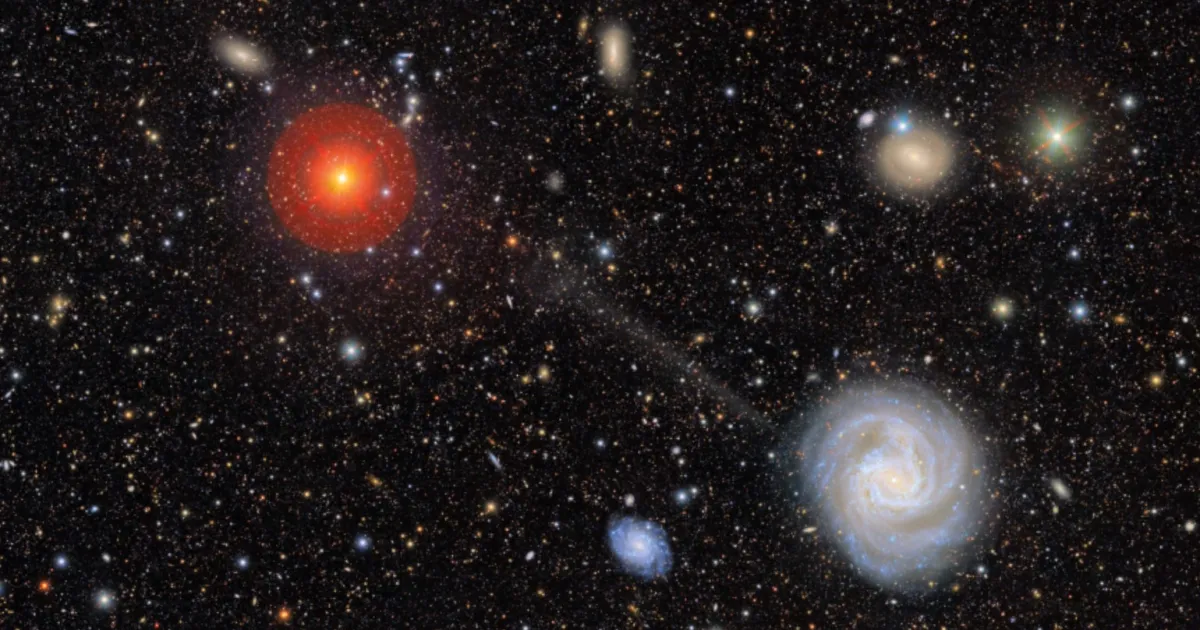
The Vera Rubin Observatory's first observations have revealed a faint stellar stream emanating from the galaxy Messier 61, showcasing its unprecedented capability to detect low-surface-brightness features and opening new avenues for understanding galaxy interactions and evolution.
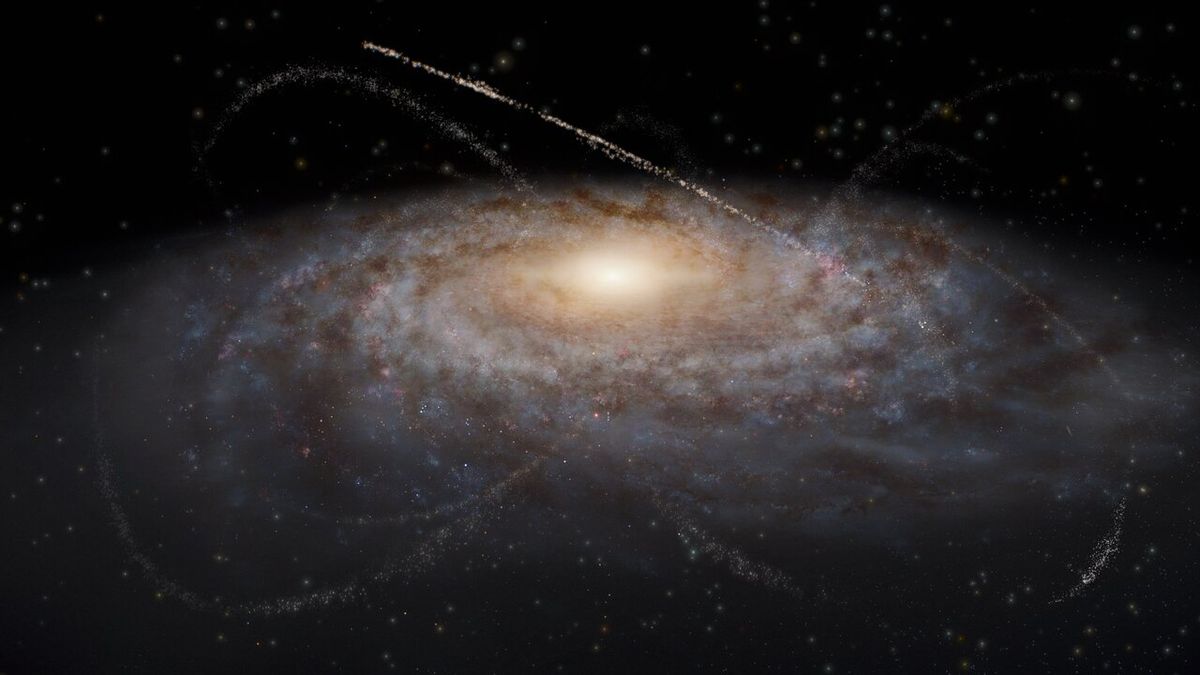
The Vera C. Rubin observatory in Chile plans to study gaps between streams of stars orbiting the Milky Way to gather clues about the nature of dark matter, an invisible substance surrounding galaxies. These stellar streams, resembling "strings of pearls," can reveal the influence of dark matter through disruptions in their starry trails. The observatory's unprecedented digital camera is expected to spot starry trails five times farther away than current telescopes, potentially unveiling new populations of stellar streams in the galaxy's outskirts. Additionally, NASA's upcoming Roman Space Telescope could help study stellar streams beyond the Milky Way, providing further insights into dark matter.
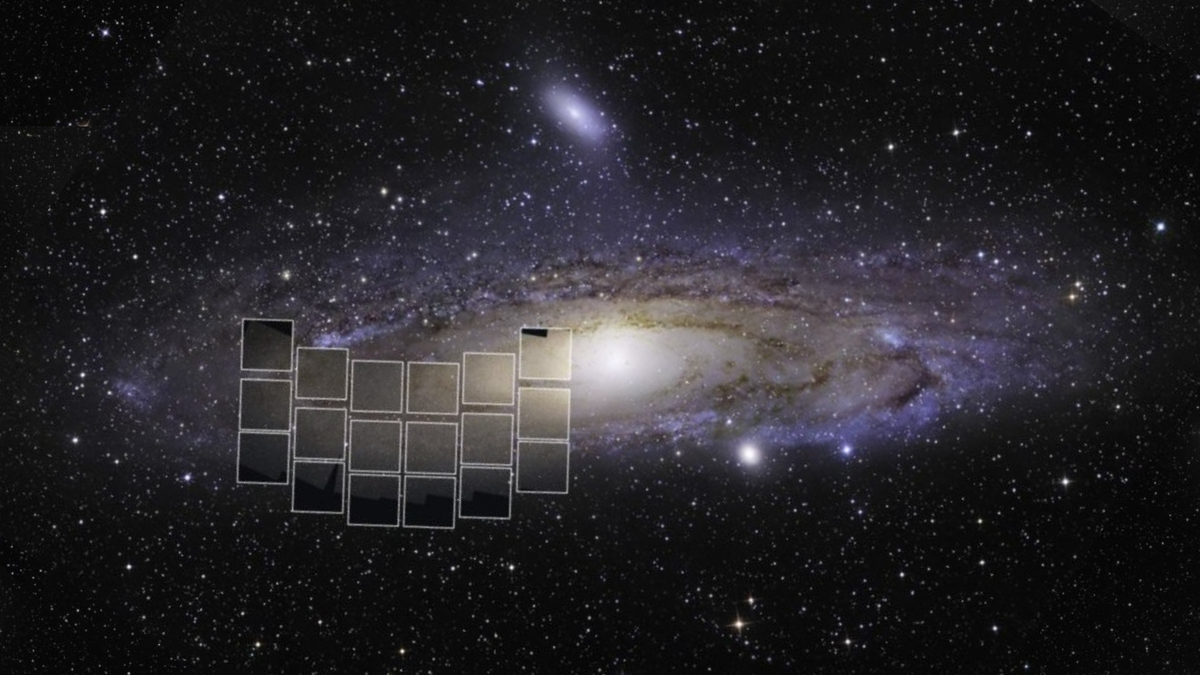
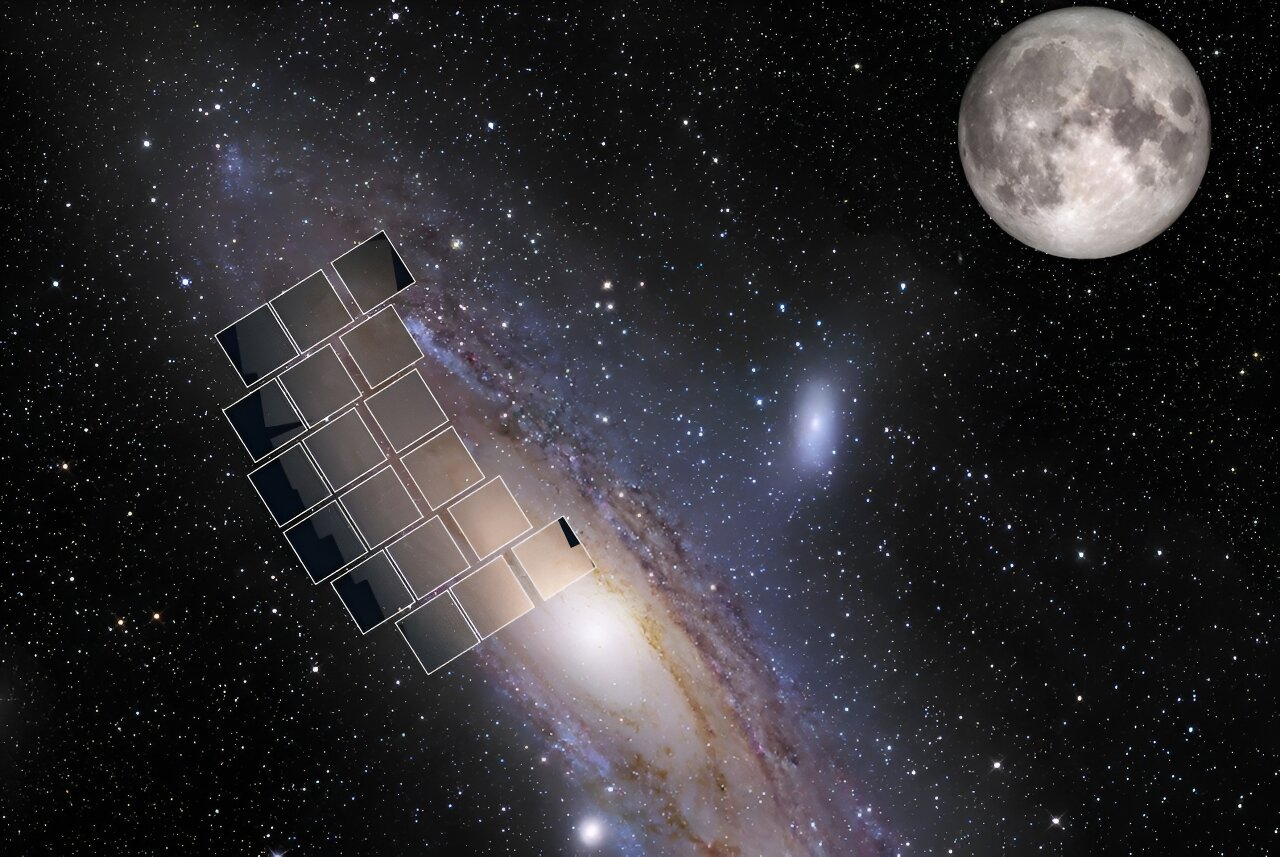
NASA's upcoming Nancy Grace Roman Space Telescope is set to launch in 2027 and may help scientists search for dark matter between stars in the Andromeda galaxy. An international team of researchers believes that gaps in stellar streams, influenced by dark matter clumps, could provide clues about this elusive substance. The telescope's wide-field instrument will produce images 200 times the size of those created by the Hubble Space Telescope, allowing it to investigate dark matter haloes and smaller "sub-haloes" around galaxies. This research could shed more light on the nature and properties of dark matter.
An international team of researchers, including astrophysicists from Northwestern University, is preparing to use NASA's upcoming Roman Space Telescope to search for clues about dark matter in the gaps between stars. By examining thin stellar streams in the neighboring Andromeda galaxy, astronomers hope to detect disturbances created by clumps of dark matter, expanding their understanding of its properties. The telescope's advanced capabilities are expected to provide valuable data within as little as one hour of observing time, potentially shedding light on the elusive material's existence and characteristics.
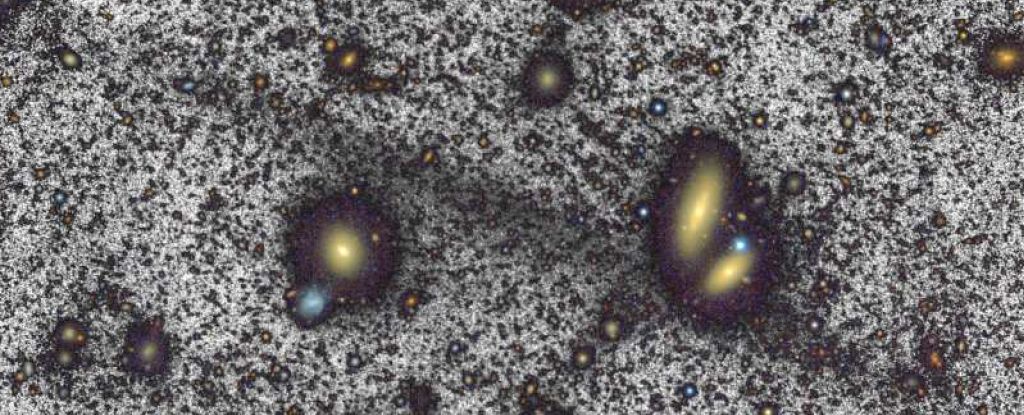
Scientists have discovered a remarkable river of stars, named the Giant Coma Stream, flowing through intergalactic space in a cluster of galaxies located 300 million light-years away. This 1.7 million light-year-long stream is the longest ever observed and the first of its kind found outside of a galaxy. The find challenges expectations as stellar streams are not expected to survive in the dynamic environment of a galaxy cluster. The discovery provides an opportunity to study galaxy clusters and the mysterious dark matter within them, and suggests that similar structures may exist in other clusters.
Astronomers are using gravitational lenses and advanced telescopes like the James Webb Space Telescope (JWST) to search for evidence of dark matter in the form of small clumps or halos. Recent studies have produced contradictory findings, with some suggesting the existence of fuzzy dark matter and others ruling it out. Researchers are also studying stellar streams and binary stars to look for anomalies that could be caused by interactions with dark matter. While no definitive evidence has been found yet, upcoming technology and observatories like the JWST, the Nancy Grace Roman Space Telescope, and the Vera C. Rubin Observatory hold promise for deeper exploration of dark matter structures in the universe.