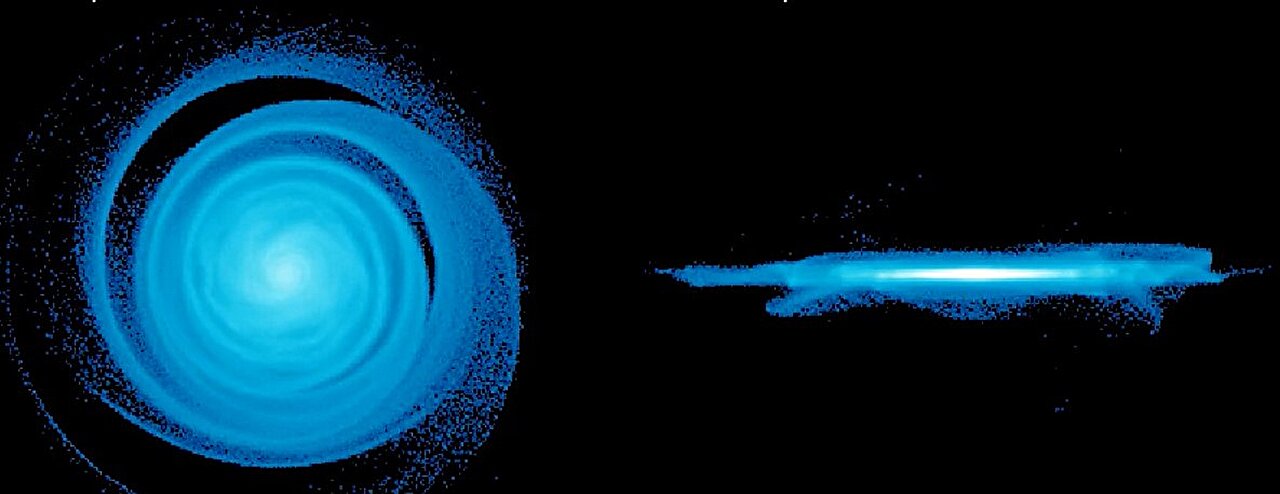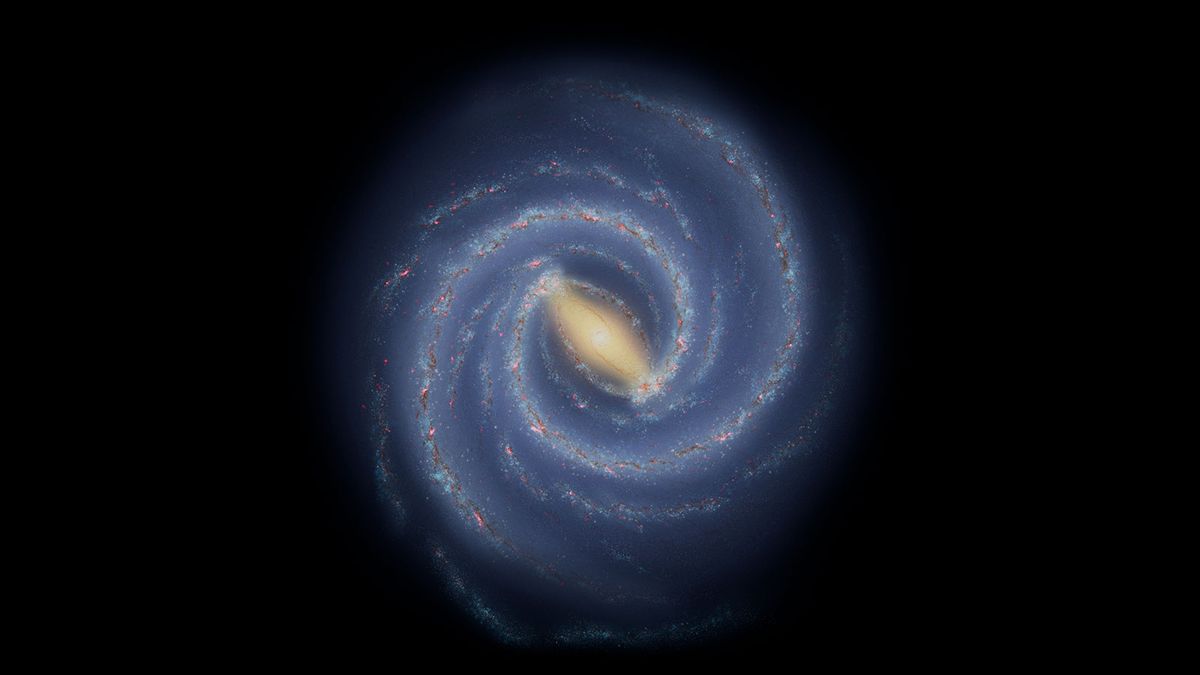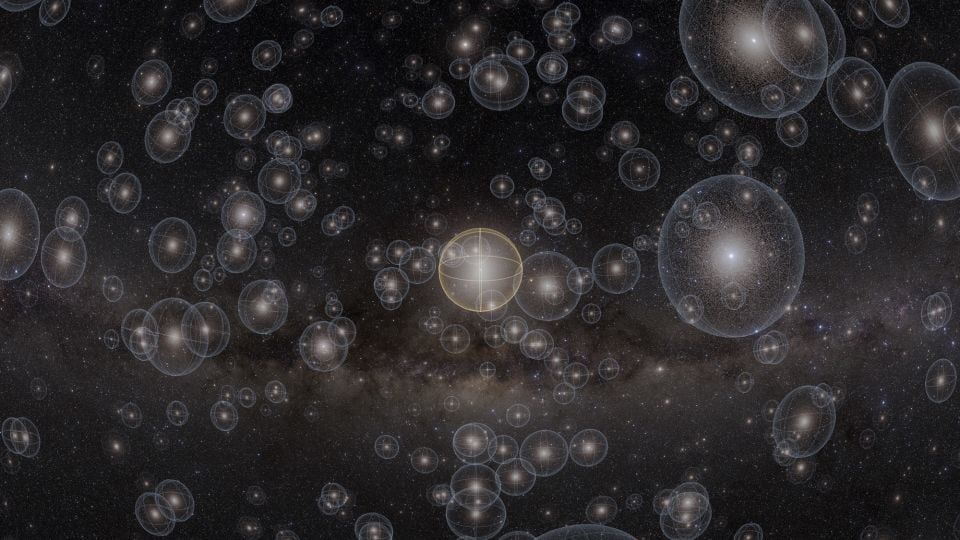
An accidental discovery during a planetarium show revealed a spiral structure in the Oort Cloud, challenging the traditional view of it as a spherical shell. This spiral, caused by the galactic tide affecting distant icy bodies, could reshape our understanding of the solar system's outer regions, although confirming this will be challenging with current technology.
An accidental discovery during a planetarium show revealed a spiral structure within the Oort Cloud, challenging the traditional view of it being spherical. This spiral, confirmed through simulations, is caused by the galactic tide affecting the distant icy bodies, offering new insights into the dynamics of our solar system and its broader galactic environment.
Astronomers have detected seismic ripples in the ancient galactic disk of BRI 1335-0417, the oldest and furthest known spiral galaxy in the universe. Using the ALMA telescope, researchers observed the motion of gas within the galaxy and discovered a seismic wave forming, indicating the dynamic growth of the young galaxy. The study also revealed a bar-like structure in the disk, which can disrupt gas and transport it towards the galaxy's center. These findings provide insights into how gas fuels star formation and the formation of spiral structures in early galaxies.
Astronomers have long wondered why spiral galaxies like the Milky Way are scarce in our region of the universe, which is dominated by elliptical galaxies. A new supercomputer simulation suggests that frequent interactions among galaxies in the supergalactic plane smooth out potential spiral arms, leading to the formation of elliptical galaxies. When two galaxies of comparable mass are near each other, the ordered motions of stars become disordered, removing the appearance of spiral arms. Large galaxy mergers can also trigger starbursts and reduce the amount of new stars that can be formed, resulting in more elliptical galaxies. The simulation aligns with observations, and further research aims to improve our understanding of galaxy evolution.