
Unraveling the Mystery of Spiral Galaxies in the Universe
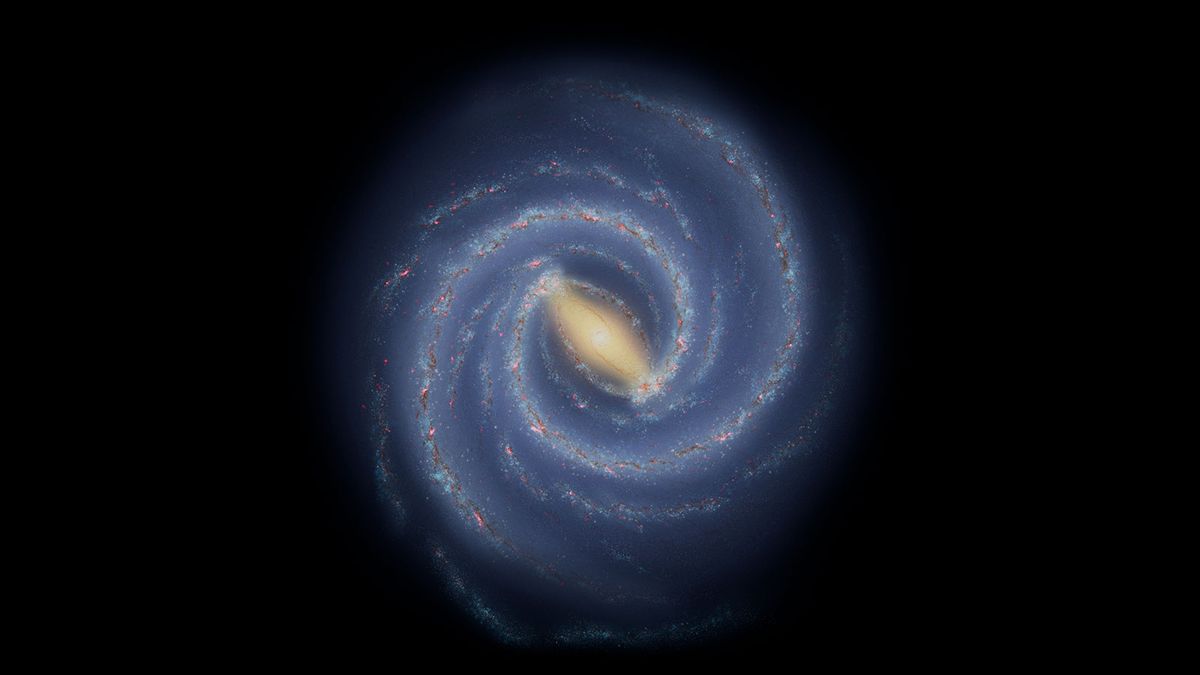
Astronomers have long wondered why spiral galaxies like the Milky Way are scarce in our region of the universe, which is dominated by elliptical galaxies. A new supercomputer simulation suggests that frequent interactions among galaxies in the supergalactic plane smooth out potential spiral arms, leading to the formation of elliptical galaxies. When two galaxies of comparable mass are near each other, the ordered motions of stars become disordered, removing the appearance of spiral arms. Large galaxy mergers can also trigger starbursts and reduce the amount of new stars that can be formed, resulting in more elliptical galaxies. The simulation aligns with observations, and further research aims to improve our understanding of galaxy evolution.
- The Milky Way's stunning spiral structure appears to be an anomaly. But why? Space.com
- Physicists answer question of Supergalactic Plane's absent spiral galaxies EurekAlert
- Distinct distributions of elliptical and disk galaxies across the Local Supercluster as a ΛCDM prediction Nature.com
- Astronomers gain new understanding of how galaxies age and form into spiral shapes Salon
- Why Milky Way-type galaxies are rare in our local universe Cosmos
Reading Insights
0
6
3 min
vs 4 min read
86%
797 → 113 words
Want the full story? Read the original article
Read on Space.com